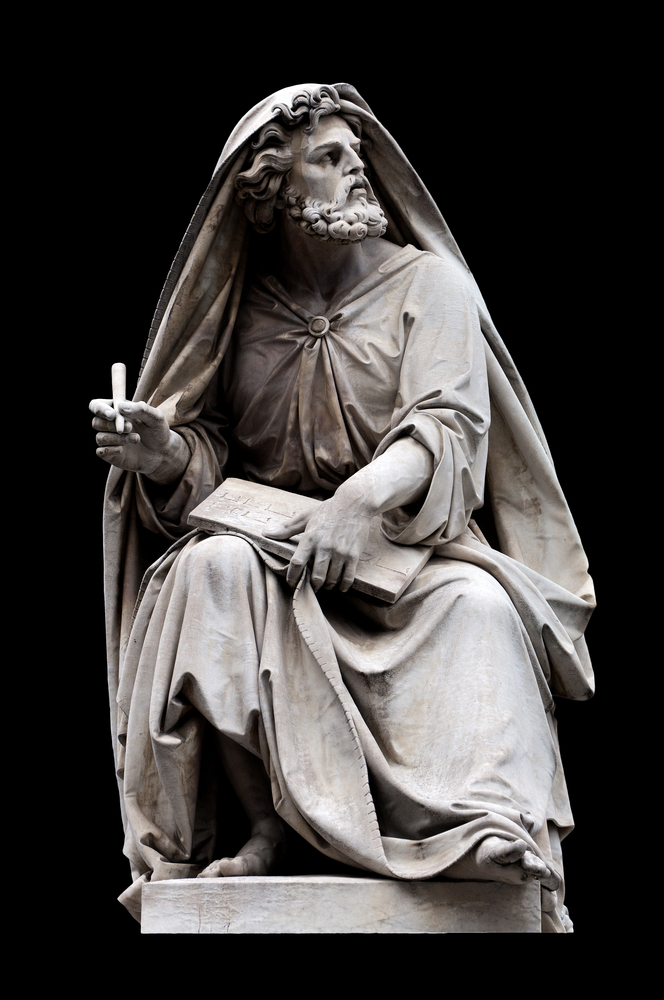
Sculpture of the Prophet Isaiah

Sears and Profits

Sculpture of the Prophet Isaiah
Isaiah or Inizio?

You might think from the title this is a commentary about the bankruptcy that happened to Sears earlier this year. That would be ironic, wouldn’t it? No, it is a mistyping by Office 365’s Dictate function. I’m looking for ways to write faster. Someone suggested that you could use the Dictate function on your computer or word processor. It will type what you speak. People speak on average about 150 words per minute. That’s 9,000 words an hour. You could write a whole novel in a weekend at that rate! Not exactly.

First, I won’t be talking that fast. I will have to pause from time to time to think what to say next. So no way I’m speaking or typing 9,000 words in an hour. Also, even if I do talk nonstop for an hour to get those 9,000 words, that is the first draft, not the finished product. Even if it types everything I dictate perfectly, I’m still going to have to go back and edit. That’s fine, because I have to do that when I type as well. But it doesn’t type everything just as I say. It makes a lot of mistakes.

Second, when you speak, you don’t normally say punctuation marks. If you want Office 365 to type punctuation, you have to say at the right points: comma, period, colon, semicolon, or question mark. It doesn’t seem to recognize other punctuation, like hyphen or ellipsis. It spelled out ellipsis. I said hyphen, and it heard iPhone. And sometimes it won’t recognize the punctuation, so it will just make up a word, like call Lynn (colon); semi cone (semicolon); thoma, MA, tamah, AMA, tohma, karma, come air, Tom (comma); or herian, here yet, erienne, Syria, area (period). And it has difficulty distinguishing when period is not punctuation. If I say, “people point to,” Office 365 types people .2. If I say, “Isaiah, Hosea, Amos, and Micah were prophets from the same period,” it will render that last phrase from the same.

Third, sometimes it types spellings even it knows are wrong, e.g., defeted (defeated), in dreta (in dread of), occured (occurred), friture (creature), skurge (scourge), rycz verse (reverse), and illusionz (illusions). If it knows the correct way to spell it, why doesn’t it type it correctly?

Fourth, it doesn’t handle numbers or words that sound like numbers much better. I said “heretofore.” It typed here to 4. I said, “to a merchant when weighing produce.” It typed 2 AM urgent when right wing produce. Oh yeah, it has a right wing bias. I said, “abomination.” It typed “Obamanation.” Don’t even get me started. For some reason, it thinks most numbers are times. I said, “one or two.” It typed 1:00 or 2:00. And it can’t get the word “and” right. It’ll give me an, am, or in. When I said Aaron and Moses, it typed Aaron Ann Moses.

Third, Dictate obviously does not do as much Bible study as I do. I know Biblical names can be hard to understand. I can’t blame Dictate if it gets the names of Assyrian kings wrong, for example, or if it can’t hear the difference between Syria and Assyria. Here are a few of the major Assyrian kings and various ways Dictate heard them.

  • Sennacherib – snack rib, send atrib, the nacro rib
  • Tiglath-pileser III – take a left pleezer the 3rd, YG left pleezer, tiglath pleezer, tig left alacer III
  • Sargon II – sargo on the second

Snack rib? What kind of name is that for king? Take a left Pleezer the 3rd? You mean there was actually a first and second with that name? His name is hyphenated. If I say Tiglath (hyphen) pileser, it will give my YG left iPhone laser.

Some of the Hebrew or Jewish names are weird to English speakers.

  • Isaiah – inizio, atizip
  • Hosea – Jose, Jose at
  • Amos – a must, famous
  • Micah – my car, my tat
  • Zephaniah – season finale a
  • Habakkuk – abaqa it, About cook, obac cook, halback took, abaqa
  • Nehemiah – NIA Maya
  • Ahaz – a has

Back to that earlier sentence with four prophets, it would give me Inizio, Jose, Famous, and My car were profits from the same. I couldn’t wait for the “Zephaniah” of Game of Thrones, but it was a huge disappointment. The book of “About cook” is only three chapters.

Some Biblical names are not only difficult but obscure. I can’t blame Dictate too much for these mistakes:

  • Shebanyahu – chevannes Yahoo
  • Piankhi – yongki, chunky

I like “Chunky” and “anything-Yahoo,” I have to admit. Of course I have to refer to non-biblical names too. Compare what I said with what Office 365 typed:

  • R. Simeon b. Eliezar (quoted in the Mishnah and the Talmud) – Our simian be Eleazar
  • Hammurabi – homma Robbie
  • Mays (last name of a commentator) – maze
  • Diblaim – Deb lion
  • Jehu – J who

I didn’t know simians were quoted in the Mishnah and Talmud, but apparently Dictate thinks so, and their simian be Eleazar. “Eleazar, put that banana down for a moment. What does the Torah say about fair treatment of laborers?” If your last name is Mays, Dictate puts you in a maze.

“What’s that town?”

“Diblaim.”

“What kind of lion?”

“No, Diblaim.”

“Oh, a Deb lion. Is that her name? Deb?”

“I’m studying king Jehu.”

“J who?”

“That’s right.”

Who’s on first?

I admit those names can be either obscure or confusing, but Hammurabi? I thought he was a pretty famous historical figure. Homma Robbie? Maybe we could change that to Homie Robbie. Homie Robbie’s Code.

“Homie Robbie?”

“Yeah, he’s my homie. I call him Robbie.”

One upside to this is if the name’s are difficult for you, you can at least get suggestions for nicknames from here. Zephaniah? Call him “Season finale.” Habakkuk? Call him “About cook.” Aminadab? Call him “A little dab.” Shadrach, Meshach, and Abednego? Call them “Your shack, My shack, and A bungalow.”

You run into the same difficulties with Biblical place names.

  • Rimmon – Ramon
  • Aioth – I wrote
  • Ai – AI
  • Migron – My grown
  • Michmash (comma) a village – mismash mama village
  • Pass across the Wadi es-Suwenit – has across thawadi S so one right
  • Gibeah (comma) – give me a comma
  • Samaria – summaria, some area
  • Zion – xyon up, zyan

Give me a comma? Obviously, I wanted a comma after Gibeah, but it didn’t give me one. It just typed instructions to give me one. Sounds like the worst cheer ever. “Give me a comma!”

The town of Ai must have been one of those advanced Atlantean civilizations, because it had AI. Another town is called Aioth. I don’t want you to type I wrote this. I guess my mama’s village is a mishmash. Maybe it’s the Wadi es-Suwenit, because thawadi S so one right sure looks like a mishmash to me.

“The Assyrians invaded Samaria.”

“What area?”

“I told you, Samaria.”

“What area!!?”

What’s on second?

I know most of these names are obscure and confusing to many people, but it can’t even get Zion right?

God is a pretty important word for Biblical studies, wouldn’t you say? Dictate heard Gone. In the beginning, Gone created the heavens and the earth. Context doesn’t seem to help Dictate at all. I guess the bottom line is I won’t be trading in my keyboard and mouse any time soon.

What do you say we have a little fun with this, if you’re up for it? I’ll give you some sentences Office 365 heard me say for my research on Biblical history, which I hope to turn into novels. See if you can decode them. I’ve included a key below. You can check your answers after the picture.

  1. N seven 32 BCE (Tom) the Cirian King take a left (iPhone) pleezer III defeted judasz enemies.
  2. N 722 BC E he (karma) the Kingdom of is real in the North felt Syria.
  3. The profits who were active at this time were inizia, a must, Jose a, and my car.
  4. The Sears and profits told the judean King a has not to B in dreta a serious King snack rib.
  5. Inizio squirrel was unrolled in red.
  6. Gone heard hezekiah sprayer.
  7. Built on the foundation of hustle some profits.
  8. Aaron Ann Moses.
  9. The profit abaqa it warms judah to run from the call Deans.
  10. Our simian be eleazar was a sage quoted in the mishna am a talmid.
  11. Hosea pronounced punishment against King J who and his dionis T 4 the blood of jazz real.
  12. Allies prove davaine hope for some area.
I said Office 365 heard
Apostles and prophets Hustle some profits
Assyrian A Syrian, the Syrian, a Cerian
Chaldeans Call Deans
Dynasty Dionis T
Fell to Felt
Habakkuk Abaqa it, About cook, obac cook, halback took, abaqa
Jezreel jazz real
Jehu J who
   
R. Simeon b. Eliezar Our simian be Eleazar
Samaria Some area
Scroll Squirrel
Seers and prophets Sears and profits
Sennacherib snack rib, send atrib, the nacro rib
Tiglath (hyphen) pileser the third Take a left (iPhone) pleezer the 3rd, YG left pleezer, tiglath pleezer, tig left alacer III
Unrolled and read Unrolled in red
Warned Warms
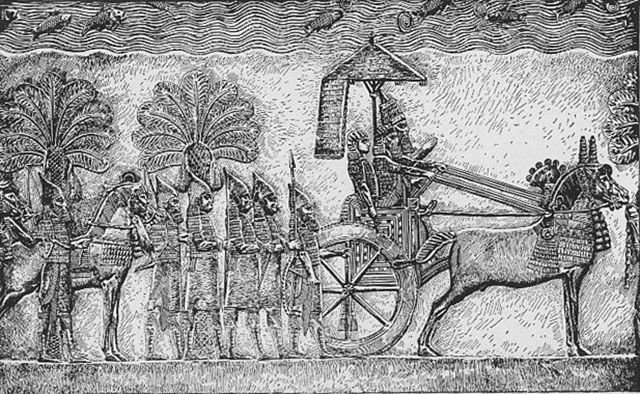
Bas-relief of Assyrian king Sennacherib
The Assyrian king Snack-rib, uh, Sennacherib

Answers:

  1. In 732 BCE, the Assyrian king, Tiglath (hyphen) pileser III defeated Judah’s enemies.
  2. In 722 BCE, the kingdom of Israel in the north fell to Assyria.
  3. The prophets who are active at this time were Isaiah, Amos, Hosea, and Micah.
  4. The seers and prophets told the Judean king Ahaz not to be in dread of Assyria’s king Sennacherib
  5. Isaiah’s scroll was unrolled and read.
  6. God heard Hezekiah’s prayer.
  7. Built on the foundation of the apostles and prophets
  8. Aaron and Moses
  9. The prophet Habakkuk warned Judah to run from the Chaldeans.
  10. R. Simeon b. Eliezer was a sage quoted in the Mishnah and the Talmud
  11. Hosea pronounced punishment against King Jehu and his dynasty for the blood of Jezreel
  12. Allies proved a vain hope for Samaria.
David slays Goliath with a sling and stone

David after Goliath: A Writing Devotion

Badge-2018 Writer's Digest Writing Competition Award Winner

This was originally a devotional for the June 24, 2017 meeting of the South Carolina chapter of American Christian Fiction Writers (ACFW). I am proud to say it won an Honorable Mention in the 2018 Writer’s Digest Annual Competition.

David put his hand in his bag, took out a stone, slung it, and struck the Philistine on his forehead. The stone sank into his forehead, and he fell face down on the ground (1 Sam 17:49).

I remember when the writing bug bit me. I thought about Jesus and the sinful woman in Luke, and something stirred in me. I grabbed a pen and notebook and started writing the story as if Jesus were telling it. I didn’t think about it. I wouldn’t even have attempted it if I had. But somehow the story just flowed out of me. I looked at it and realized I had to be a writer.

After that, it was like I was on a writer’s high. I wrote constantly and thought everything on the pages was brilliant. I would write, look at it, and I was like, “I can’t believe I wrote this.”

Some months later, the high wore off. As I studied more about what makes good writing, I found my writing actually had “amateur” written all over it. My clever turns of phrase were really clichés. My profound comments on the human condition were breaking connection with my POV character. My masterpieces were filled with rookie mistakes: Weak verbs, info-dumps, irrelevant details, characters that were spokespersons for my beliefs rather than real people, not enough emotion and suspense, too much internal dialogue, telling not showing. And I looked at it, and I was like, “I can’t believe I wrote this.” Not in the good way.  I was writing, but I still had a lot to learn about the craft of writing publishable stories.

We’ve all heard the story of David and Goliath. Do you remember that when David told Saul he would fight the giant, Saul gave him his armor and weapons? And what happened? That’s right. He did not take it. The armor probably didn’t fit. Don’t forget Saul was the tallest man in Israel. That’s why they wanted him to be king. And David had never worn armor or used a sword or spear. So he went into the fight with what he knew, a sling and five smooth stones from the brook.

David slays Goliath with a sling and stone
Armor? Shields? Swords? Spears? Nah, I just need a sling and some stones.

But after that initial glory, David would be called upon to lead the armies of Israel. He had to learn new skills and techniques. He had to learn how to speak in a commanding and inspiring manner, make battle plans, lead marches, choose terrain for battle, maneuver units to outflank the enemy, coordinate infantry, chariots, archers and slingers, and start wearing the armor and using the sword and spear he had not been ready to use against Goliath.

As writers, we will probably never be called upon to lead armies or kill giants. Unless we write stories about them. But like David, this calling to be a writer will require we learn new skills and concepts like, plotting, characterization, style, dialogue, creating scenes, point of view, how to work in description and backstory without bringing the action to a screeching halt, and what exactly does “Show don’t tell” mean?

So if you find yourself annoyed with all the technical stuff about writing, think about David. He may have had moments when he pined for his sling and a giant to take down, just like I sometimes pine for when I first started writing, and I didn’t have to worry about style or technique. I just enjoyed so much seeing my thoughts come to life on the page. But after Goliath, there were no more giants. If David was going to make the transition from baddest slinger in the Middle East to commander of the armies and eventually to king of all Israel, it was time to put his sling down, put his armor on, and practice with his sword and shield. So like David, we also need to put away our old ways of writing, when we were amateurs, and learn how to be professional writers. And also like David, whatever new adventures writing brings you, keep your faith in God.

***

Prayer: Lord God, thank you for your gift of the written word. Bless this ACFW chapter to train and equip these people gathered here to make the most of their gift and calling, so that we may point others to the light of Christ. And it’s in his name we pray. Amen.

Easter 2018 – Mary Madgalene

#biblestudy #easter #hesalive #marymagdalene

So she ran and went to Simon Peter and the other disciple, the one whom Jesus loved, and said to them, “They have taken the Lord out of the tomb, and we do not know where they have laid him.”


Mary Magdalene has just been to the tomb and seen the stone rolled away (v. 1). She does not understand. Would any of us have understood? Of course not. The only explanation that makes sense is that someone has taken his body and moved it somewhere else. Why would anyone do that? Who knows, but how else do you explain the empty tomb?

Imagine how she must feel. She is already in terrible grief because her teacher, her friend, Jesus has died in a horrific and humiliating way. Now even the one last comfort of visiting the place of his burial has been taken away. So she runs to tell two of the disciples, Simon Peter and the “beloved disciple” we assume to be John. They are the first disciples to investigate, but they don’t understand any better than Mary (v. 9).

Did she know Joseph of Arimathea and Nicodemus had placed him in this tomb and completed the Jewish rituals of burial on the body? I don’t think so, because she never looks for them. It would make sense to ask them if they knew what happened. Maybe they had to move the body for some reason.

Instead, she goes back to the tomb looking for answers to the questions that must be swirling in her mind. When she looks in the tomb, two angels are sitting where the body had been. All the burial cloths are there, but she is too grief-stricken to be impressed.


13 They said to her, “Woman, why are you weeping?” She said to them, “They have taken away my Lord, and I do not know where they have laid him.”


Then for some reason, she turns around and there’s a man she thinks must be the gardener. She asks him if he took the body, and if so, where? He speaks her name, and finally she recognizes him as Jesus (v. 16).

It intrigues me that she did not recognize Jesus when she saw him. She did not recognize him when she first heard him. But when he called her by name, she knew. Her heart must have leapt straight up to heaven where Jesus was about to go. For some reason, Jesus tells her she cannot embrace him for the moment. Wouldn’t you want to if you had just received someone you love back from the dead? But he does tell her to go to the disciples and deliver this message:


17b  ‘I am ascending to my Father and your Father, to my God and your God.’”


In doing this, he commissioned her to be “the apostle to the apostles.”

Until the moment she recognizes Jesus, she is in a state of grief, questioning, and disorientation, almost to the point of despair. The mystics called this the Dark Night of the Soul. This occurs after you have encountered God in a personal way, and then you sense God’s absence. You are disoriented and maybe even despairing. But as the saying goes, it’s always darkest before the dawn. Mary Magdalene was the first to encounter the resurrected Jesus because she persevered through the grief, questioning, and everything that came with her dark night.

I feel like that has been what my journey of faith has been about, persevering through the dark night. Several times, I have felt the disorientation and questioning Mary went through. And so I find encouragement in her persevering. And now I have reached a place where some of those questions are starting to be answered. I can see the first rays of the dawn. The only thing that brought me here was perseverance. I didn’t know how to get out of those dark nights and into the light, so I persevered, because it was the only thing I knew how to do.

If you are struggling with grief, questions about God and your purpose in life, or any kind of darkness and disorientation, persevere through it. Like Mary Magdalene, you just might encounter the resurrected Christ.

And now, here’s another woman of faith to deliver the Good News more powerfully than I ever could.


To a Raging Anti-Feminist

Is International Women’s Day a good thing? I could think of many positive things about it, but I came across a blog that described it as “an estrogen fest of caustic female pride.” And this came from a young woman I have a lot of respect for. She went on to say that having a day to honor women dishonors men creates a double-standard. Sort of like, “Why isn’t there an International Men’s Day?” And she fretted that she would have to tell men, “We’re not all raging feminists.”

I’m not linking to it, because 95% of the time, what she writes is pure gold. I don’t want that to be the first impression anyone has of her. However, this time, she could not be more wrong. In her quest not to become a raging feminist, she has become a raging anti-feminist. There is nothing about International Women’s Day that should make anyone feel threatened. There are very good reasons for men to celebrate International Women’s Day. But if you are still asking, “Why isn’t there an International Men’s Day,” there is. It’s on November 19.

Here is my response to her and anyone else who feels threatened by women and/or feminism.

*****

If you don’t mind, I’m going to try to speak the truth in love.

First, I don’t know what happened to you that made you think things like feminism and International Women’s Day are about bashing you, motherhood, men, and femininity. Whatever it is, I apologize on behalf of all of us. There are some man-haters and people who denigrated stay-at-home moms. And with the way some men behave, and some women who blame them for every ill of society because they worked outside the home, they probably have good reason. But real feminism is not about any of that. If it were, Jesus would not have been a feminist.

Jesus was a feminist.

I know that’s shocking to most people, but once you realize feminism is the radical notion that God created women equal to men in dignity and worth, it’s not hard to see (Luke 8:1-3; 10:38-42; John 4:1-26).

Perhaps the best example is that when women told the disciples they had seen Jesus risen from the dead, the (male) disciples didn’t believe them. When Jesus did appear to the disciples, one of the first things He did was upbraid them for not believing the women (Mark 16:14). Why wouldn’t they believe them? Maybe it was because at that time, the testimony of a woman was not considered valid evidence in a court of law. In this, Jesus was telling anyone who wanted to follow Him, “No more of that chauvinism in My church.” This is why Paul was able to say, “There is neither Jew nor Greek, male nor female, slave nor free, but all are one in Christ” (Gal. 3:28-29).

Have we learned that lesson yet?

In some ways yes, and in some ways no. We still haven’t reached Jesus’ goal of equality between men and women. It would help if every once in a while, we stopped to ask, What does equality look like in real life? How have we progressed toward it? How do we still fall short of the glory God calls us to? It seems to me International Women’s Day is the perfect opportunity to do just that. Honoring women is not just good for “raging feminists.” It’s good for women period. And it’s even good for men. That’s why many men celebrated by posting tributes to the women who have inspired them, taught them, and helped make them the men they are today.

A Reckoning

And a word about #metoo and #timesup, because all of America needs to understand what’s happening there. The Bible tells us over and over again, when a society allows injustice to flourish, God will give the perpetrators time to repent. If they do not, then at some point God says, “Time’s up,” and the reckoning comes. The reckoning is happening now, and movements like #metoo and #timesup are just the beginning

To close, I will say this one more time. Real feminism is the radical notion that God created men and women equal in dignity and worth (Gen. 1:26-27; 5:2). In real feminism, there is room for the stay-at-home mom and the mother working outside the home. There is room for the mother of eight and one who never has and never will bear children. It’s good for anyone who believes women should be free to use the gifts God gave them, the same freedom that men take for granted. I pray one day you will see that, because we really are on the same side.