Book cover-Dark Nights of the Soul: Reflections on Living with the Depressed Brain by David Anderson

Book Excerpt: Dark Nights of the Soul

Book cover-Dark Nights of the Soul: Reflections on Living with the Depressed Brain by David Anderson
Free on Kindle until July 28

I have published an ebook on Kindle. It is available for free through July 27. Since I am self-publishing, I can show you an excerpt without asking the publisher for permission. I am the publisher, and I give myself permission. The book is called Dark Nights of the Soul: Reflections on Faith and the Depressed Brain. You can use the link to go straight to the page on Amazon to download it.


Depressed Christian, Part 1

There are a lot of misconceptions about depression that prevent people who suffer from getting the help they need. In my own experience, religion sometimes brought healing and comfort when nothing else would, and sometimes it made my depression worse in ways nothing else could. And so I say I am in recovery from two things: depression and bad faith.

The first misconception is thinking depression is only an emotional state. Typically, people say they’re depressed when they are very sad. So depression in this sense is extreme sadness. Anyone can feel depressed after the death of a family member or friend, loss of a job, divorce or breakup, or some tragic event in their lives. This is situational depression.

But depression in the sense I’m talking about is not that kind of sadness. It is a medical condition. It is not something that happens because of life. It is an ongoing condition of the brain. This is clinical depression.

The Depressed Brain

Did you know that your brain processes more than 100,000 chemical reactions every second?[1] Obviously, that is too much to describe in detail here. For most purposes, you just need to know that an important part of this activity involves the production of chemicals like serotonin and dopamine. I will refer to them generally as “happy chemicals.” You have happy chemicals and stress chemicals. The brain processes them, but most of them are actually produced in the gut. This is why people with depression or anxiety often have gastrointestinal (GI) illnesses as well.[2] Regardless of where they come from, when your brain does not get normal levels of happy chemicals, the stress chemicals affect your mood. You live in a constant, underlying, and invisible state of depression–even when there is no reason for you to be sad. This kind of depression is a medical condition, not an emotional state where you can just “cheer up” or pray your way out of it.

I did not know any of this until I was professionally tested. The psychiatrist summed up the results like this: “You tested high for depression in every possible way.”

It was one of those moments when I knew my life would never be the same. How I viewed myself, life, the world, God, and everything changed forever with that one sentence. I only felt mildly depressed, and I still tested high in every possible way? I never thought it could be that bad. Yet, as the psychiatrist explained it, I saw how it was not only possible but explained a lot about my whole life.

Clinical depression is not about how you feel at any given moment. It means you need help in creating a healthy level of happy chemicals. Without that help, I walked around numb, moody, temperamental, irritable, and looking angry even when I was not. I isolated myself and either dreaded or loathed social interaction. I thought all kinds of bad thoughts about myself, friends, enemies, family, strangers, the world, God, and life itself. I suffered from anxieties for no good reason. I thought no one understood me, so there was no point in talking to anyone.

Of course, I did not feel that way 24/7. It would have been easier to recognize if I did. I had ups and downs just like everyone, or so I thought. My emotional/mood spectrum felt normal to me because it was the only thing I had ever known. This is what it’s like to live with clinical depression and not know it.

If any of this sounds familiar, especially if you can’t identify any good reason for your sadness, irritability, apathy, or hopelessness, you may be one of the millions of people living with undiagnosed depression of some kind. How do you know for sure? Since it is a medical condition, it needs to be diagnosed by a medical or psychiatric professional (See Appendix B). But if people close to you think you are depressed, even when you don’t, you should seriously consider getting tested. I only got tested because my mother and sister urged me. If they hadn’t, I would still be undiagnosed, still moody and depressed, and still thinking it was normal.

Bad Faith

Clinical depression is not about feeling sad or anxious. It’s about living with a brain that does not get enough happy chemicals. It is very important you understand this, because when religion gets mixed up in depression without understanding what it really is, it creates more problems than it solves. An article on Beliefnet said it well: “As we consider the causes of depression, those of us in the church must face the ways we might be responsible for creating it.”[3]

I’ve experienced some of those ways that church/religion/faith–whatever you want to call spiritual life and practice–can be responsible for creating it or making it a lot worse. I thank God from the depths of my soul that He led me out of that and into a church, faith, and spiritual practice that helps my recovery and healing, rather than beats me down for not having “enough faith,” whatever that means. Because the only thing worse than living for ten years (in my case) in a faith or religion that will only acknowledge “spiritual” causes of depression is living in that kind of faith for ten years…and one day.

A New Mission

What I say next, I don’t say lightly. I’m not the type of person who goes around saying, “God told me this. God told me that. God has called me to do this.” So many times I have heard people say things like that and thought, I bet if I could hear God as well as you claim to, right now I’d hear God saying, “Leave Me out of this!”

It’s not that I believe God does not talk to people. I believe God talks to us all the time, but hearing God is tricky. I’ve learned from hard experience that I don’t hear nearly as well as I would like to. Probably because it’s being filtered through a clinically depressed brain.

With that disclaimer, I’m going to go out on a limb and say I believe God is calling me to help others who are in the same position I was. People who know they are depressed and are trying to be happy. People who don’t know it but have a sense that something is wrong with them. People who think it’s normal because they have lived with depression all their lives. And especially, depressed people who have been hurt by religion. I believe I am in a position to help point you to what is helpful–and away from most of what is hurtful. I don’t think I will ever say I am healed of depression. In Alcoholics Anonymous, they call themselves recovering alcoholics, not recovered.

Just recently, I have been able to look at my life today and realize I have come a long way on this road of recovery, though I have by no means come to the end. This journey has been a quest for happiness, purpose, and meaning in spite of a brain that is tilted toward depression, and God has been with me through it all. There are some lessons I have had to learn the hard way. I hope to spare you some of that drama. The greatest happiness, purpose, and meaning comes from helping others, so I pray this will in some way help you.

Grace and Peace to you.

P. S. The book Dark Nights of the Soul: Reflections on Faith and the Depressed Brain is available for $0.99 on Kindle for a limited time.


[1] “How Many Chemical Reactions Occur in the Brain Every Second,” Answers.com, http://www.answers.com/Q/How_many_chemical_reactions_occur_in_the_human_brain_every_second

[2] “The Brain Gut Connection,” Johns Hopkins Medicine, retrieved March 14, 2019, https://www.hopkinsmedicine.org/health/healthy_aging/healthy_body/the-brain-gut-connection

[3] “Christians: Take Depression Seriously,” Beliefnet, July 26, 2016,  https://www.beliefnet.com/wellness/health/emotional-health/christians-take-depression-seriously.aspx

Character Study Abraham (Genesis chapter 15)

The 11th Chapter of Hebrews is like the Faith Hall of Fame. It lists people from the Old Testament who accomplished great things “by faith.” I’d like to start this character study of Abraham by looking at his entry in this august chapter.

Abraham receiving the promises of God.

By faith Abraham obeyed when he was called to set out for a place that he was to receive as an inheritance; and he set out, not knowing where he was going.

By faith he stayed for a time in the land he had been promised, as in a foreign land, living in tents, as did Isaac and Jacob, who were heirs with him of the same promise. For he looked forward to the city that has foundations, whose architect and builder is God.

By faith he received power of procreation, even though he was too old– and Sarah herself was barren– because he considered him faithful who had promised. Therefore from one person, and this one as good as dead, descendants were born, “as many as the stars of heaven and as the innumerable grains of sand by the seashore.”

(Heb 11:8-12 NRS)

His list of accomplishments continues, but let’s stop here for a while. In verse 12 (above), the one person referred to is Abraham. He is one of the most interesting characters in the Bible, and the reasons are mostly related to his faith. By faith, or because of his faith, he left his home in Ur of the Chaldees with his father to go to Canaan. His father only made it as far as Haran (Gen 11:31-32).

After his father’s death, he heard God call him to the land of Canaan and obeyed. He and Sarah and all their household went with him, wandering and living in tents, because they had no land to call their own. Abraham did this because he believed God’s promise that his descendants would inherit all the land of Canaan, despite three great reasons not to believe it:

  1. He had no descendants. His wife Sarah was infertile, so they had
    no children.
  2. Sarah was past childbearing age. She was doubly infertile now.
  3. Abraham was past childbearing age, “as good as dead” in terms of
    his procreating ability.

In the face of all this, God promised Abraham to make his descendants “as many as the stars of heaven and as the innumerable grains of sand by the seashore” (Gen 15:5; 22:17).

Paul says of Abraham, “He did not weaken in faith when he considered his own body, which was already as good as dead (for he was about a hundred years old), or when he considered the barrenness of Sarah’s womb” (Rom 4:19 NRS).

Wow, what a model of faith. He did not weaken in faith when he considered his own body, so he had no doubt whatsoever, even though he was a hundred and Sarah, who was ninety, had been barren her whole life. He believed what God said immediately and never doubted for a second. Actually, it appears Paul was engaging in revisionist history, because here is what the original account in Genesis says.

Then Abraham fell on his face and laughed, and said to himself, “Can a child be born to a man who is a hundred years old? Can Sarah, who is ninety years old, bear a child?”

(Gen 17:17 NRS)

What does the Bible really say about Abraham? That would take a whole book to go through. For now, I’ll just focus on the two instances where God promised descendants to Abraham.

Genesis 15

After these things the word of the LORD came to Abram in a vision, “Do not be afraid, Abram, I am your shield; your reward shall be very great.”

But Abram said, “O Lord GOD, what will you give me, for I continue childless, and the heir of my house is Eliezer of Damascus?” And Abram said, “You have given me no offspring, and so a slave born in my house is to be my heir.”

(Gen 15:1-3 NRS)

At this point, he is not called Abraham but Abram. He and his wife are Abram and Sarai. It’s not until chapter 17 that God changes their names to Abraham and Sarah. Abram has already thought about who will be his heir. He has no offspring, so he made a trusted slave his heir. He thinks that is the best he can do. God has just promised him, “Your reward shall be very great,” yet he cannot believe it because he continues childless.

It sounds like he expected God to give him children, and God hasn’t delivered. Let’s go back to chapter 12 when God first appeared to Abram.

Now the LORD said to Abram, “Go from your country and your kindred and your father’s house to the land that I will show you. I will make of you a great nation, and I will bless you, and make your name great, so that you will be a blessing. I will bless those who bless you, and the one who curses you I will curse; and in you all the families of the earth shall be blessed.”

So Abram went, as the LORD had told him; and Lot went with him. Abram was seventy-five years old when he departed from Haran.

(Gen 12:1-4 NRS)

God called Abram when he was seventy-five years old, which should give hope to some of us late-bloomers. God commanded him:

  1. to leave his country, his father’s house, and his kindred
  2. to go to a land God would show him (turned out to be Canaan).

God made promises to Abram:

  1. God will make him a great nation
  2. God will bless him and make his name great, so that he will be a
    blessing
  3. God bless those who bless him, and curse those who curse him
  4. In him, all families of the world will be blessed.

Those are some pretty big promises. But many of them appear to be contingent on his bearing children. Perhaps he could build a great nation, but without descendants, how could it continue? How can his name be great if he has no sons to carry on his name after he dies? All families of the world will be blessed through him, but what about his own family? How can a man with no family of his own bless other families?

These are some of the questions that must have crossed Abram’s mind between the time he left his father’s house in the land of Haran and this scene in chapter 15. God made some great promises, but Abraham still can’t comprehend how God will bring them to pass. Now God has decided it’s time to take on Abram’s questions head on.

But the word of the LORD came to him, “This man shall not be your heir; no one but your very own issue shall be your heir.”

 He brought him outside and said, “Look toward heaven and count the stars, if you are able to count them.” Then he said to him, “So shall your descendants be.”

 And he believed the LORD; and the LORD reckoned it to him as righteousness.

 (Gen 15:4-6 NRS)
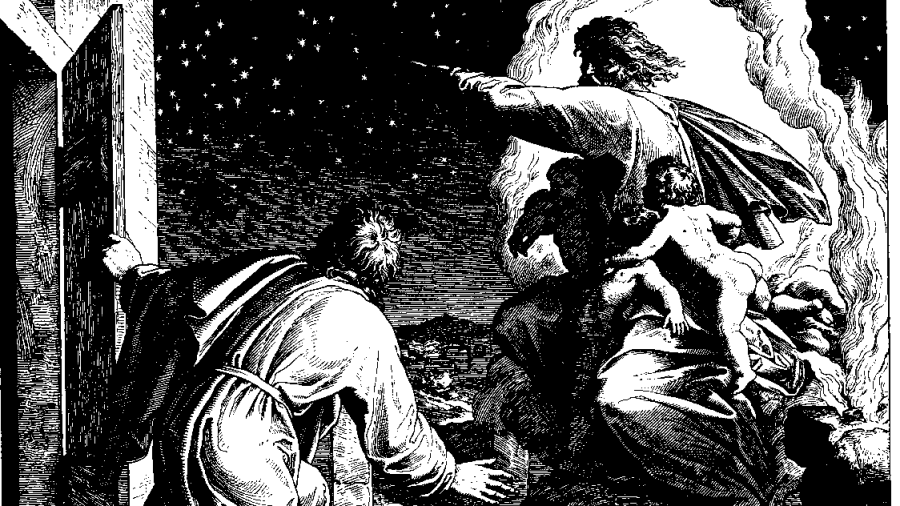
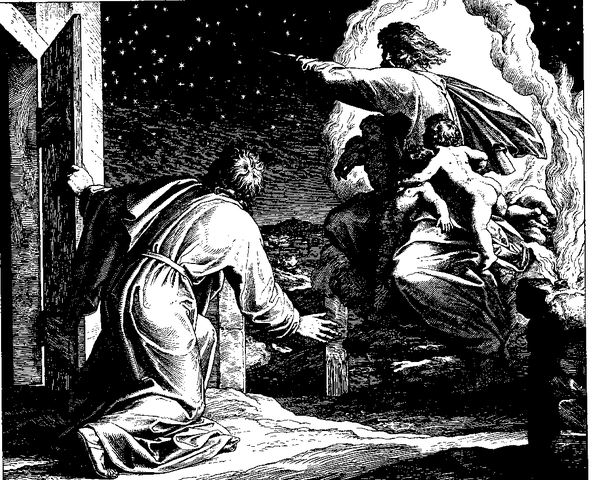
The vision of the Lord directing Abraham to count the stars (woodcut by Julius Schnorr von Carolsfeld from the 1860 Bible in Pictures)
“Look toward heaven and count the stars, if you are able to count them.” Then he said to him, “So shall your descendants be.” (Gen 15:5 NRS)

Abraham’s Righteousness

This is probably the incident Paul was thinking of in Romans 4:19 (above). Abram is not a hundred, and Sarai is not ninety in this scene. We’re not told how old Abram is at this point. We just know it’s between seventy-five and eighty-six, because Ishmael has not been born yet.

In response, we are told Abram “believed the LORD; and the LORD reckoned it to him as righteousness.” This is a very important verse to Paul. It is one of the cornerstone verses for his doctrine of salvation through faith, not by works of the Law (Rom 4:3; Gal 3:6. For a different application, see Jam 2:23).

The LORD reckoned his belief/faith (translations vary) as righteousness. This happened long before the Law of Moses even existed. Therefore, Paul contended, righteousness comes by faith, not by works of the Law. This is the scene we are told Abram indeed did not weaken in faith when he considered his own body. He was not good as dead yet, but he and Sarah had never had children, and her clock was ticking.

So it appears if you want to be righteous before God, you should be like Abram. When God says something, just believe it. Do not weaken in faith; do not doubt; do not consider your circumstances. Abram believed the word of God. The Bible is the word of God. So if the Bible says it, just believe it. Don’t question, don’t doubt. Believe like Abram, and you will be righteous like Abram.

Really?

But I’ve already shown you a couple of chapters later, when God makes the same promise, Abram laughs. Not only that, here’s what happens just in the next verses.

Then he said to him, “I am the LORD who brought you from Ur of the Chaldeans, to give you this land to possess.”

But he said, “O Lord GOD, how am I to know that I shall possess it?”

(Gen 15:7-8 NRS)

How am I to know that I shall possess it? Does that sound like someone who did not weaken in faith? To review, God promises Abram:

  1. He will have an heir of his own issue. In other words, his
    heir will be his son biologically, not by adoption. Abraham believed that.
  2. His descendants will be as numerous as the stars in heaven. Abram
    believed that.
  3. He would possess the land of Canaan. Abram asked God for proof.

Is two out of three good enough? No, with God, it’s all or nothing. You believe everything, or you’re not righteous in God’s eyes. Except God already counted Abram righteous after believing the first two promises. But God can’t do anything unless we believe. I guess Abram will receive the promise of an heir of his issue and many, many descendants. But as for possessing the land of Canaan, he just lost that promise, because he did not believe. You know I’m kidding, right?

No, God’s plans are not derailed because Abram showed a moment of doubt. If you’re trying to make Abram a paragon of belief that never wavers, never weakens, never questions, and never doubts, you are not reading the Bible. That is probably what annoys me most about a lot of Biblical fiction. They think they have to portray characters like Abraham as always believing, always honest, always faithful, and in doing so, they rob them of their humanity. How are we supposed to connect with them if they were too perfect to be human? Thankfully, the Bible does not do that.

Let’s Cut a Covenant, Abram

In order to understand what happens next, you have to know something about blood covenants. In Abram’s world, people would often use covenant ceremonies to seal an agreement. They almost always involved shedding blood in some fashion. In some cultures, they might cut themselves to use their own blood to seal the agreement. More often, the blood would come from an animal. One type of ceremony involved lining up several animals and splitting them in half. Each party in turn would walk between the halves of the animals, their feet bathing in the blood, while speaking their promises in the agreement. This sounds brutal to us today, but it was a brutal world.

I took the time to explain this because when you hear what God tells Abram to do, it sounds strange and brutal to us. However, Abram was already very familiar with this type of ceremony.

He said to him, “Bring me a heifer three years old, a female goat three years old, a ram three years old, a turtledove, and a young pigeon.”

 He brought him all these and cut them in two, laying each half over against the other; but he did not cut the birds in two. And when birds of prey came down on the carcasses, Abram drove them away.

(Gen 15:9-11 NRS)

I wonder how he went about doing this. What kind of blade did they have in the Middle Bronze Age capable of splitting all those animals in two? I’d think you would need steel the quality of a Samurai sword, which obviously was not available then. But since it was a common practice, they must have figured out a way to do it. Of course when you have three dead animals and two dead birds all lined up, that’s going to attract some buzzards, so Abram had to drive them away.

As the sun was going down, a deep sleep fell upon Abram, and a deep and terrifying darkness descended upon him.

(Gen 15:12 NRS)

I love that phrase a deep and terrifying darkness descended upon him. It really creates a mood. Perhaps it foreshadows the night of Passover, when darkness covered the land of Egypt. Abram’s mind must have been conjuring all kinds of creepy thoughts of what might happen next.

God Appears to Digress

Then the LORD said to Abram, “Know this for certain, that your offspring shall be aliens in a land that is not theirs, and shall be slaves there, and they shall be oppressed for four hundred years; but I will bring judgment on the nation that they serve, and afterward they shall come out with great possessions.

(Gen 15:13-14 NRS)

This is definitely foreshadowing his descendants’ bondage in Egypt and the deliverance called Passover. Of course, ancient Israelites listening to this story would know what this was referring to. After telling Abram he would die in peace and in old age (v. 15; he lived to be 175 years old), God tells him,

“And they shall come back here in the fourth generation; for the iniquity of the Amorites is not yet complete.”

(Gen 15:16 NRS)

So Abram’s descendants will be slaves of another nation. God will bring judgment on that nation, they will escape with great possessions, and they shall come back here (the land God is promising to his descendants). Why doesn’t God just give him the land now, so they won’t have to go through slavery and oppression? God says the iniquity of the Amorites is not yet complete.

What happens when their iniquity is complete?

The reason God says he will give this land to Abram’s descendants is because of the iniquity of the current inhabitants, here the Amorites. When Moses writes down the Law for the Israelites, he warns them not to engage in the same iniquities as the Amorites (and a bunch of other nations), or God will drive them out of the land as well (Lev 18:24; 1 Ki 21:26; 2 Ki 21:11).

What iniquity is God talking about? After reading the prophets, I have to say it is mainly injustice and unrighteousness, corruption in religion and government. The natives of the land are all living according to what is right in their own eyes rather than loving their neighbors as themselves. That is what the prophets complained about the most. Verse 16 means if trends keep going as they are, the Amorites will reach a point where they are totally irredeemable. God will give the land to Abraham’s descendants in order to establish a people who live by righteousness and justice (Gen 18:19).

I’m not sure what God meant by the fourth generation. God just said they will be there for 400 years. A generation is normally considered 40 years, so it would take 10 generations for them to come back here. That requires further study.

Abraham’s First Theophany

When the sun had gone down and it was dark, a smoking fire pot and a flaming torch passed between these pieces.

(Gen 15:17 NRS).

This is an example of a theophany. A theophany is defined in Merriam-Webster as “a visible manifestation of a deity.” It means God is appearing in person in a visible form. During the wandering in the Wilderness, God appeared to the Israelites as a cloud by day and a pillar of fire by night. Smoke and fire, so this theophany foreshadowed their wandering in the Wilderness. So far, Abram has only heard God speaking but hasn’t seen God take on any visible form. That changes in this verse. The theophany here is a smoking fire pot and a flaming torch. The text doesn’t specify how Abram heard God’s voice up until now, but this time the voice comes out of the theophany.

On that day the LORD made a covenant with Abram, saying, “To your descendants I give this land, from the river of Egypt to the great river, the river Euphrates, the land of the Kenites, the Kenizzites, the Kadmonites, the Hittites, the Perizzites, the Rephaim, the Amorites, the Canaanites, the Girgashites, and the Jebusites.”

(Gen 15:18-21 NRS)

This ceremony was familiar to Abram as I said before. Of course, you did not promise something in this manner unless you were serious. I think the symbolism said, “If I break the terms of this covenant, may I be split in half like these animals.” I’m not sure, but I think both parties of the covenant usually passed between the halves while declaring their part of the agreement. In this case, God passes through, but Abram does not. God makes promises, but Abram does not. You would expect if God gave so much to Abram, God would expect something in return. I think God did want something from Abram, but God does not say anything about it here. We should revisit that later. For now, though, Abram’s mind must have been blown.

Conclusion

When Paul talks about Abraham in his letter to the Romans, he makes him out to be a model of someone who believes with no doubt, in spite of his circumstances. Because of his unquestioning belief, God considered him righteous.

Hoping against hope, he believed that he would become “the father of many nations,” according to what was said, “So numerous shall your descendants be.” He did not weaken in faith when he considered his own body, which was already as good as dead (for he was about a hundred years old), or when he considered the barrenness of Sarah’s womb. Therefore his faith “was reckoned to him as righteousness.”
(Rom 4:18-19, 22 NRS)

But as we saw, that is not entirely true. God promised him a son of his own issue. Abram believed. God promised his descendants would be as numerous as the stars in heaven. Abram believed, and God reckoned it to him as righteousness. God promised him his descendants would possess the whole land of Canaan. Abram asked for proof.

What? Abram asked for proof? You’re not staggering at the promise of God through unbelief, are you Abram? So God says, “You doubt me? Well, you can forget that promise, Abram. I only keep my promises to those who believe without any questions or doubt.” For a long time, that is how I thought God was. I was taught that if I had any doubt at all, God would not answer my prayers. But that is not what happened to Abram. Instead of rejecting Abram or revoking His promise, God showed Abram something that convinced him God was serious.

So Abram, you asked how you would know your descendants would possess the land? God just appeared in a theophany of a smoking fire
pot and a flaming torch
that passed between the pieces of the animals you slaughtered. You heard from the theophany God would give the land of the Kenites, the Kenizzites, the…all the rest of them, to your descendants, thereby sealing the promise in a blood covenant. Now do you believe?

So yes, Abram did believe God but not without working through some doubt. If Abraham is the model of faith that God reckons as righteous, maybe faith isn’t about believing the word of God with zero doubt no matter what the circumstances are or how impossible it looks to us. Maybe faith is about having a relationship with God where you can be honest. Honest about what you believe, and what you don’t believe. Or maybe, like Abraham, you want to believe but need some help getting there.

Another problem for Paul is Abraham was not ninety-nine years old in this scene. It appears Paul conflates this chapter, where Abraham believes God and it is reckoned to him as righteousness but is seventy-five years old, with chapter 17 where he is ninety-nine and his body is “as good as dead.” So for my next post, I will compare chapter 17 with Paul’s portrayal of Abraham.

The man born blind, a character study

I have a confession to make. I haven’t been good about keeping up my writing, at least fiction. Since I finished a novel manuscript a few years ago, I have hardly written any fiction. I’ve been writing mostly about writing itself and Biblical reflections. I’ve told myself it’s research, because the area I most want to write is Biblical Fiction. In order to help me bridge the gap between fiction and Bible study, I’m going to do a little character study. Fiction requires compelling characters. That is what I’m using this research for, so I can picture the scene and try to get inside these characters’ heads. This will be longer than most of my blog posts so far.

In this study, I’m using one of my favorite unnamed characters in the Bible, the man born blind in John 9. I’m also hoping to make these episodes into a podcast. Sounds exciting, huh? Without further ado…

Who sinned and caused this man to be born blind?

In John chapter 9, Jesus and the disciples encountered a man born blind. Just prior to this, Jesus had an intense debate with the Jewish leaders in the Temple (Joh 8:12-58). This man would have been sitting somewhere begging, because there was very little work a blind man could do. Clearly, this was an organic condition. It doesn’t say whether he was partially blind or completely blind. The impression I get from reading it is he was totally blind. In first century Judaism, if a child was born blind, it had to be punishment for sin. Either the parents sinned, or somehow the child sinned while it was in the womb. This is why the disciples asked Jesus, “Rabbi, who sinned, this man or his parents, that he was born blind?” (Joh 9:2 NRS).

How can a child in the womb sin, you ask? Let’s say, for example, the child’s mother goes into a pagan temple while pregnant. In their minds, the child participates in that sin, even though clearly he/she had no choice in the matter. There were also ways a child could sin in the womb without the parents’ knowledge. That’s all speculation of course. I would even call it superstition. The thing about superstitions is, if you believe it, it’s not a superstition to you. Jesus’ answer says a lot, not only about the fallacy of that belief but also his mission in the world.

Jesus answered, “Neither this man nor his parents sinned; he was born blind so that God’s works might be revealed in him.”

(Joh 9:3)

First, he addresses the question of “who sinned?” As so often happened with Jesus, when they presented a question in the form of “Which is it, A or B?” he answered, “C, none of the above.” The man’s blindness, he tells them, has nothing to do with anyone’s sin, not the man’s or his parents’. Then he told them God did have a purpose in having him born blind. The purpose was that God’s works might be revealed in him.

This is admittedly difficult for many people to take, the idea that God would cause misfortune on someone, because there is some mysterious purpose behind it. However, in this case, that mystery would not remain hidden much longer. God’s works were about to be revealed, not in the man’s blindness, but in what Jesus was about to do for him.

Then Jesus said something else that spoke to the nature of his mission.

“We must work the works of him who sent me while it is day; night is coming when no one can work. As long as I am in the world, I am the light of the world.”

(Joh 9:4-5 NRS).

I think here, he hinted that the miracles and healings he was doing would not continue much longer. Why? Because this was the only time in history when the eternal Word (in Greek logos) walked the earth as a flesh and blood human being (John 1:1-18). That would not last forever. Night was coming. He knew his mission would end at the cross. Until that day, however, he and his disciples had to work the works of him who sent him. Notice he stresses the words work and works. That is going to be important later in the story. For now, let’s continue and see what he does for the man.

Where did you get that mud?

When he had said this, he spat on the ground and made mud with the saliva and spread the mud on the man’s eyes, saying to him, “Go, wash in the pool of Siloam” (which means Sent).

Then he went and washed and came back able to see.

(Joh 9:6-7 NRS)

How did Jesus heal him? He spat on the ground, made mud from the dirt and saliva, spread it on the man’s eyes, and told him to wash in the pool of Siloam. Is there any indication that Jesus was doing this in response to the man’s faith? None whatsoever. The man did not ask to be healed. I bet he didn’t even know it was Jesus rubbing mud on his eyes because, hello! He was blind! He was just sitting in the same spot he had sat begging every day for all of his adult life; and all of a sudden, some fool comes along and rubs mud on his eyes. Why would anyone do this to me? Who is this man rubbing mud on me? What kind of man takes advantage of a blind man like this? Do you think this is funny?

Jesus tells him, “Go wash in the pool of Siloam.”

“Oh, I’m going to wash this off, all right, because that’s what I do when someone covers me with mud. Where did you get the mud from anyway? Wait a minute! Did I hear you spit? Oooohhh! You mangy dog!” he wags his finger at Jesus. “Don’t you go anywhere, because after I wash this mud off, I’ve got some words for you!”

I’m sure after washing the mud off, he would have given Jesus an earful. Except…after he washed his eyes, he saw a shimmering light. “What’s this? I know it’s water. This is what water feels like,” as he dipped his hands in it. I imagine he scooped some up in his hands and let it fall back into the pool. “Is this what water looks like? Wow, this pool is beautiful. I’ve been to this pool many times, but I’ve never seen it before. I’ve never seen anything before! I see people all around. I think they’re people. I don’t know, because I’ve never seen people before. What’s your name?”

“Simon.”

“Simon! I can see you! I can see all the people around here. I can see the sun. I can see the Temple over there, where they won’t let me in because I’m blind. Was blind.” He inhales with mouth and eyes wide open as the realization sets in. “I was blind. But now I see. Where is the man who did this? I’ve got some words for him!”

Is this not the man who used to sit and beg?

He did not understand how he was healed. He did not know it was Jesus putting mud on his eyes until after he was healed. He didn’t even know Jesus was healing him, because Jesus never told him why he was putting mud on his eyes. Jesus had his own reasons for healing this man, whether he believed in him or not. You’ve heard of “faith healing?” Call this a non-faith healing.

Some people around the man noticed him, and they were like, “Look at that man! He can see!”

“So what?”

“He’s the blind man who used to beg over in that corner. I saw him every day as I passed on my way home from the Temple.”

So John tells us,

The neighbors and those who had seen him before as a beggar began to ask, “Is this not the man who used to sit and beg?”

Some were saying, “It is he.”

Others were saying, “No, but it is someone like him.”

He kept saying, “I am the man.”

(Joh 9:8-9 NRS)

I picture this debate going like, “That’s the blind man who sat there and begged.” “It can’t be him. Look, he’s not blind.” “It sure looks like him.” “That’s it. It’s someone else who looks like him.”

And the man is like, “Hey, I’m right here. You can ask me.”

“Are you the man?”

“Yes, I am the man.”

So then John tells us,

But they kept asking him, “Then how were your eyes opened?”

He answered, “The man called Jesus made mud, spread it on my eyes, and said to me, ‘Go to Siloam and wash.’ Then I went and washed and received my sight.”

They said to him, “Where is he?”

He said, “I do not know.”

(Joh 9:10-12 NRS)

Yeah, the man couldn’t point out Jesus in the crowd, because he never saw Jesus. (He was blind, remember?). So they take him to the Pharisees. They are the people who are supposed to know God and the scriptures better than anyone, so maybe they can make sense of this. Because if a man who was blind now sees, God must have had something to do with it. But the Pharisees have already had some controversies with Jesus, and this is not going to change their minds.

The work of a “sinner”

They brought to the Pharisees the man who had formerly been blind. Now it was a sabbath day when Jesus made the mud and opened his eyes.

(Joh 9:13-14 NRS)

Uh oh! That is going to be a problem. Making clay and putting it to use is defined in the Traditions of the Elders as work. Every Jew knew working on the Sabbath was forbidden. That was not a minor commandment. It was one of the Top Ten. Jesus has already gotten into trouble with the Pharisees because he healed a paralytic on the Sabbath in chapter 5. It’s like he’s doing everything he can to thumb his nose at them. But actually, he explained earlier why he needed to do this, even though it was the sabbath, in verses 4-5.

“We must work the works of him who sent me while it is day; night is coming when no one can work. As long as I am in the world, I am the light of the world.”

(Joh 9:4-5 NRS)

This is why he stressed doing the works of God while it is day. By working the works of God, he broke the sabbath. Why? Was it just to antagonize the Pharisees? No. He said, As long as I am in the world, I am the light of the world. But he would not be “in the world” for much longer. Soon, he would be crucified, dead, and buried. He would not be able to contact sick people in such direct fashion after that. So when he saw an opportunity to both heal a man born bind, and teach an important lesson to his disciples, he had to take it, sabbath or not.

Cognitive Dissonance: A great way to create tension in your story

Then the Pharisees also began to ask him how he had received his sight. He said to them, “He put mud on my eyes. Then I washed, and now I see.”

Some of the Pharisees said, “This man is not from God, for he does not observe the sabbath.”

But others said, “How can a man who is a sinner perform such signs?”

And they were divided. So they said again to the blind man, “What do you say about him? It was your eyes he opened.”

He said, “He is a prophet.”

(Joh 9:15-17 NRS)

The Pharisees are experiencing something called Cognitive Dissonance. This is a condition, usually temporary, where the mind is stressed because it’s trying to hold two facts together and knows both of those facts cannot be true at the same time. Fact 1: Jesus opened the eyes of a man born blind. Fact 2: Jesus broke the Sabbath. From fact 1, they should conclude that he was sent from God. From fact 2, they should conclude that he is a sinner. They cannot both be true. Either he was sent from God, or he is a sinner. How they should react to him depends on which side they pick.

For the man, there is no dissonance. He opened my eyes. Only God can do that, so he was sent from God. But…. No buts! He was sent from God. Period.

The first impulse in Cognitive Dissonance is to deny the fact you don’t like. Fake news, the Pharisees say. But they had to investigate. Probably someone suggested, “Why don’t we ask his parents? They should know if he was born blind, because, you know, they were there.” Here’s how that went.

The Jews did not believe that he had been blind and had received his sight until they called the parents of the man who had received his sight  and asked them, “Is this your son, who you say was born blind? How then does he now see?”

His parents answered, “We know that this is our son, and that he was born blind; but we do not know how it is that now he sees, nor do we know who opened his eyes. Ask him; he is of age. He will speak for himself.”

(Joh 9:18-21 NRS)

John says “the Jews” did not believe, but sometimes John refers to the Jewish religious authorities who opposed Jesus as “the Jews.” Most of the authorities continued to oppose Jesus, because they saw him threatening their most cherished traditions. But there is no way everyone who was there “did not believe.” I guarantee you some of the Jews who were there came to faith in Jesus because of this. How could they not? Some of you, if you saw this happen, would come to faith as well. The religious authorities, here represented by the Pharisees, were another matter entirely.

If they could have proven the man really wasn’t born blind, the debate would have been over. But his own parents, who would know, confirmed he was their son, and he was born blind. Their level of cognitive dissonance is off the charts now. What will they do?

Though I was blind, now I see

The Pharisees investigated the case of a man who was born blind and now sees. He claimed he saw because Jesus opened his eyes. That’s a problem for them, because they have already declared “anyone who confessed Jesus to be the Messiah would be put out of the synagogue” (Joh 9:22 NRS). Why? Because he was a “sinner.” Why? Because he healed on the Sabbath, and he claimed to be equal to God (Joh 5:9-10; 17-18). To be fair, no Jew should ever believe any man or woman who claims to be equal to God. But if he is a sinner, how could he have opened the eyes of a blind man? {COGNITIVE DISSONANCE ALERT}.

If they could prove this miracle was fake, there would be no reason for anyone to believe he was the Messiah. But their own investigation proved it was real. {COGNITIVE DISSONANCE ALERT}. What do they do now? We pick up the story at John 9:24-25.

So for the second time they called the man who had been blind, and they said to him, “Give glory to God! We know that this man is a sinner.” {That’s how they resolve their cognitive dissonance}

He answered, “I do not know whether he is a sinner. One thing I do know, that though I was blind, now I see.” 

(Joh 9:24-25 NRS)

This is not only a story of a blind man who receives sight. It’s also a story of willful blindness. They can’t acknowledge Jesus had any role in this miracle, so instead they insist the man give glory to God. I think it’s good to give glory to God when you receive a blessing, but sometimes people use that to avoid giving credit where credit is due. In this case, they “give glory to God” so they won’t have to give Jesus, a “sinner,” any credit for it.

For the man, they could call Jesus a sinner all day. Maybe they were right, maybe they were wrong. There is only one fact he knows for sure. He was blind, and now he sees.

John continues,

They said to him, “What did he do to you? How did he open your eyes?”

He answered them, “I have told you already, and you would not listen. Why do you want to hear it again? Do you also want to become his disciples?”

(Joh 9:26-27 NRS)

I think at this point, the man recognizes the Pharisees are just being willfully blind, and he is not willing to suffer fools gladly. And I wish I could have been there to see the look on their faces when he asked, Do you also want to become his disciples? Continuing, verses 28-29,

Then they reviled him, saying, “You are his disciple, but we are disciples of Moses. We know that God has spoken to Moses, but as for this man, we do not know where he comes from” 

(Joh 9:28-29 NRS)

No one in this story would dispute that God had spoken to Moses. Not this man, not any of the witnesses, and certainly not Jesus. He had already told the Jewish religious leaders,

“Do not think that I will accuse you before the Father; your accuser is Moses, on whom you have set your hope. If you believed Moses, you would believe me, for he wrote about me. But if you do not believe what he wrote, how will you believe what I say?”

(Joh 5:45-47 NRS)

That was a bold claim from Jesus. That Moses, who wrote the Torah, on which all scripture is based, wrote about him. Christians today are so used to hearing Jesus fulfilled Old Testament scriptures that I wonder if we understand how shocking this statement would have been to first century Jews. There was no way they should have believed anyone who said something like this without evidence. In this case, however, that evidence was standing right before them in a man who was born blind and now sees. Let’s see how that evidence responds to the Pharisees’ objections.

Here is an astonishing thing!

The man answered, “Here is an astonishing thing! You do not know where he comes from, and yet he opened my eyes”

(Joh 9:30 NRS)

Okay, I have to interrupt here for a moment to say, I love this man! I think he might be my favorite unnamed character in the Bible. He was a walking, talking “no B.S. zone.” He’s like, “How shocking! You don’t know where he comes from! Forget that he opened my eyes. I thought that proved he was sent from God. But you don’t know where he comes from. Well, that totally discredits him. I was going to become his disciple, but if you don’t know where he comes from, well, I was clearly a fool for thinking that.” You do get he’s being sarcastic, right?

Then he drops the sarcasm and gets to some serious theology, continuing from verse 31,

“We know that God does not listen to sinners, but he does listen to one who worships him and obeys his will. Never since the world began has it been heard that anyone opened the eyes of a person born blind. If this man were not from God, he could do nothing”

(Joh 9:31-33 NRS)

God does not listen to sinners. God listens to those who worship God and obey God’s will. If he were not from God, he could do nothing. You didn’t need any advanced theological training to know this. This was Judaism 101. Shabbas school even. If he were not from God, he could do nothing, so look at what he just did. He opened the eyes of a person born blind.

This was not your run of the mill, ordinary miracle. This was something no one had ever done since the world began. In Jesus’ time, there were others who claimed to be miracle workers and healers. But none of them had done anything close to this. Search through history, and you won’t find anyone who had done this. No angel, no prophet, none of the patriarchs, not Moses, no miracle worker, no healer, no magician, no one has ever opened the eyes of a person born blind. So if he’s a sinner, you tell me how he opened my eyes.

Quite a convincing argument, don’t you think? He’s going toe-to-toe in a theological debate with the best theologians in Jerusalem, and he is crushing it. Did I mention I love this man?

Is this enough to change the minds of the religious authorities?

They answered him, “You were born entirely in sins, and are you trying to teach us?” And they drove him out.

(Joh 9:34 NRS)

So they made good on their threat to throw anyone out of the synagogue who confessed Jesus as the Messiah (9:22). What did they mean that he was “born entirely in sins”? Remember back in Verse 2 when the disciples asked Jesus whether the man sinned or his parents? That was the common belief about children born with blindness, deafness, or some other disability. The child was born in sins, either because of the parents, or because the child somehow sinned in the womb. And again, I’ll remind you Jesus said sin had nothing to do with the man’s blindness (Joh 9:3). But the man would have been treated with that attitude all his life, so I don’t think he felt any great loss when they drove him out [of the synagogue]. And if he was eager to be Jesus’ disciple before, he was all the more eager after that. Time for Jesus to reenter the scene.

Jesus heard that they had driven him out, and when he found him, he said, “Do you believe in the Son of Man?”

He answered, “And who is he, sir? Tell me, so that I may believe in him.”

Jesus said to him, “You have seen him, and the one speaking with you is he.”

He said, “Lord, I believe.” And he worshiped him.

(Joh 9:35-38 NRS)

As I said before, no Jew should have worshiped Jesus, called him Lord, or believed he was the Son of God, or the Son of Man for that matter. Not without evidence, and it would have to be evidence way beyond a reasonable doubt. This man received exactly that, so it was appropriate for him to worship Jesus and believe him when he called himself the Son of Man. He’s like, “Son of Man? Who is he? Just tell me, and I’ll believe. In fact, I’ll believe anything you tell me. I’ll believe anything you want me too. Why shouldn’t I? I was blind, and you opened my eyes.”

This man knew how to put two and two together. If Jesus were not from God, he could not have opened my eyes. I know we are taught not to have any gods except the God of Abraham, Isaac, and Jacob. But he would not ask me to do anything God would disapprove of. If he did, God would not have let him do what he did for me.

Summary

There are a lot of unnamed characters in the Bible. Usually, we don’t get much of their personality. They are mostly props or role-players. This man’s personality leaps off the page. I love how he debates the Pharisees. I keep thinking what must it have felt like if you couldn’t see and someone just started putting mud over your eyes, no explanations. You think he has pulled some kind of cruel joke on you. But then you wash the mud off, and you can see. Even though he was a Jew, John tells his story in a way that his worship of Jesus near the end of the chapter makes sense.

Nothing annoys me more about Christian or Biblical fiction than when someone converts to faith in Christ, but the author does not make it feel authentic. There is nothing inauthentic about this man. In one chapter, he went from blindness, to seeing, to believing, to worshiping, and every bit of it felt real. Like I said, he is a walking, talking “no B.S.” zone. I know it’s not right to call him a fictional character, but I would be proud to have a character like him in one of my novels or short stories.

Sign up

To sign up for updates when I post new content,

[contact-form-7 id=”2760″ title=”Contact form 1″]

A cover, release date soon

Dark Nights Of The Soul: Reflections On Faith And The Depressed Brain has a cover.  I plan to release it in July.

Book cover-Dark Nights of the Soul: Reflections on Living with the Depressed Brain by David Anderson

The book is the product of wrestling with God, the Bible, and my own demons of depression. (The demons are metaphorical, not literal). It is short, about 25,000 words. I could have made it a lot longer, but I thought people would be more likely to read a relatively short book. At this length, it says enough to make an impact but won’t be intimidating like War and Peace.

Whether you struggle with depression or love someone who does, I pray something from this project will help you through the holidays and beyond. If what I went through helps anyone find happiness and meaning for their lives in spite of being depressed, it will all have been worth it.

Grace and Peace to you.

I'm underwater with my right hand above

Baptism with my right hand above the water

My parents live in Honolulu, so if I want to visit them, I have to fly there. I know. Life is hard. Anyway, I went with my wife and stepson recently. My sister and brother-in-law came as well. Of course, in addition to seeing everyone, I was looking forward to getting in the water.

The day before we were to fly out, I got a flat tire. While I was trying to get to the spare in the trunk, my hand slipped and banged against something. My thumb started bleeding. That’s what I get for trying to fix it myself. I called roadside assistance while trying to stop the bleeding, got the car towed to a place where I could get a new tire, and then went to the emergency room to get my thumb stitched.

We stayed at a hotel near the airport, so we could get there on time. While washing my hands, I broke open a stitch or two. I managed to get the bleeding stopped, but how would affect my beach time? The doctor and nurse who stitched me said after about twenty-four hours, I would be okay to put it in water. However, that was with the wound closed. Now that it was re-opened, I couldn’t be sure anymore. It was Friday night, we had to make the flight Saturday morning, so it would probably wouldn’t be until Monday that I could see a doctor again.

Well, the doctor said I should keep the hand out of the water, just as I feared. Even thought it’s salty, the marine life has to take care of their business in the ocean (not to mention some people, but we won’t go there). That was not a problem without broken skin, but… It was still a good trip but a huge disappointment that I couldn’t really get into the water the way I wanted.

On my last day, I went all the way into the water with my right hand sticking out. I got my wife and stepson to take pictures.

I'm underwater with my right hand above
Does Baptism like this count?

This wasn’t just about obeying doctor’s orders. I was re-enacting a bit of Roman history. One story I heard about the Roman army is that when the emperor Constantine wanted his soldiers to be baptized, they asked if they could keep their right hands above the water. Why would they do that? Because the right hand was their sword/spear hand. It was the hand they used to kill in battle. This is one reason I believe early Christianity was a pacifist religion. I mean, when your founder says, “Love your enemies,” doesn’t that pretty much preclude killing them?

However, soldiers after Constantine were not prohibited from killing. Constantine’s rule marked a sea change where Christianity went from being distrusted and sometimes persecuted by the empire to being the religion of the empire. Unfortunately, it adopted the violent ways of the empire, among other things that we are still living with today.

When people say the church needs to get back to the first century, I wonder if they understand what that really means. Persecution could spring up anywhere without warning, and you could not kill to defend yourself. Their belief was that life was a gift from God. Only God could decide when a person’s life would end. That meant you could not kill for any reason: abortion, euthanasia, war (even if it’s just), the death penalty, or self-defense. Not even to defend your loved ones. When their lives were threatened they did not return evil for evil. They trusted God enough to believe in overcoming evil with good. They did not expect non-Christians to live the same way, but these acts were forbidden in the church nonetheless.

What would it look like if the church really did that? I explore this in a novel I am getting ready to publish with the title (subject to change) Through Fear of Death. A gladiator named Silas converts to Christianity. This means he cannot kill. His defiance will incur the wrath of his lanista and the Procurator of the Games. He finds an unlikely ally in his prison guard, a retired soldier named Marcus Valentinius. Will their friendship and loyalty be strong enough to bring down a ruthless emperor, or will Rome’s system of violence and treachery destroy them?

Through Fear of Death cover choice1, gladiator helmet
One possible cover for my upcoming novel
Through Fear of Death possible cover image, gladiator in arena
Another possible cover for my upcoming novel

If you have an opinion about these covers, let me know in the comments below.

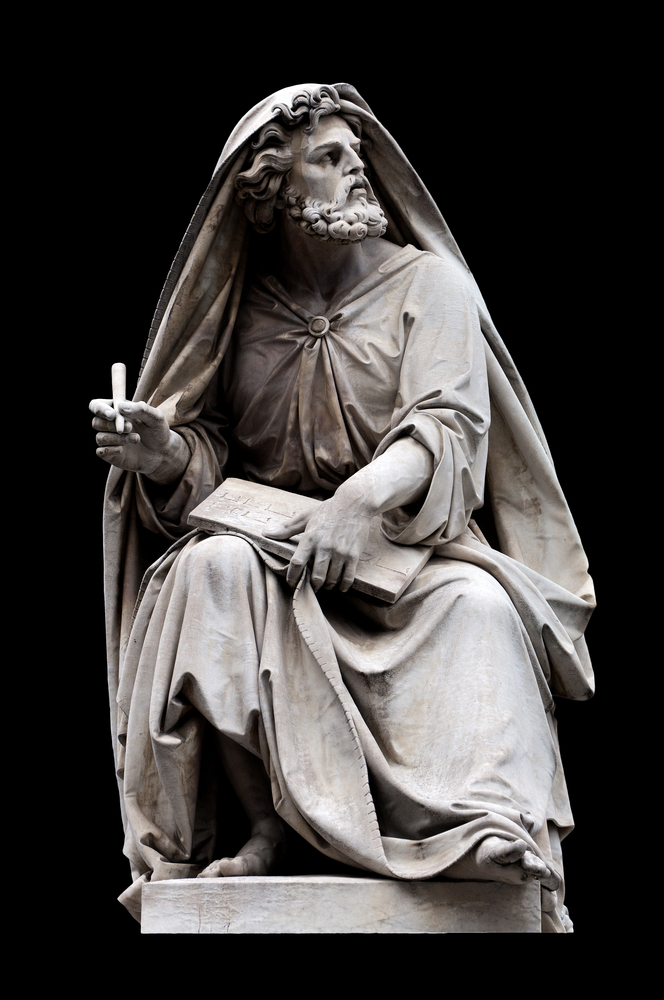
Sculpture of the Prophet Isaiah

Sears and Profits

Sculpture of the Prophet Isaiah
Isaiah or Inizio?

You might think from the title this is a commentary about the bankruptcy that happened to Sears earlier this year. That would be ironic, wouldn’t it? No, it is a mistyping by Office 365’s Dictate function. I’m looking for ways to write faster. Someone suggested that you could use the Dictate function on your computer or word processor. It will type what you speak. People speak on average about 150 words per minute. That’s 9,000 words an hour. You could write a whole novel in a weekend at that rate! Not exactly.

First, I won’t be talking that fast. I will have to pause from time to time to think what to say next. So no way I’m speaking or typing 9,000 words in an hour. Also, even if I do talk nonstop for an hour to get those 9,000 words, that is the first draft, not the finished product. Even if it types everything I dictate perfectly, I’m still going to have to go back and edit. That’s fine, because I have to do that when I type as well. But it doesn’t type everything just as I say. It makes a lot of mistakes.

Second, when you speak, you don’t normally say punctuation marks. If you want Office 365 to type punctuation, you have to say at the right points: comma, period, colon, semicolon, or question mark. It doesn’t seem to recognize other punctuation, like hyphen or ellipsis. It spelled out ellipsis. I said hyphen, and it heard iPhone. And sometimes it won’t recognize the punctuation, so it will just make up a word, like call Lynn (colon); semi cone (semicolon); thoma, MA, tamah, AMA, tohma, karma, come air, Tom (comma); or herian, here yet, erienne, Syria, area (period). And it has difficulty distinguishing when period is not punctuation. If I say, “people point to,” Office 365 types people .2. If I say, “Isaiah, Hosea, Amos, and Micah were prophets from the same period,” it will render that last phrase from the same.

Third, sometimes it types spellings even it knows are wrong, e.g., defeted (defeated), in dreta (in dread of), occured (occurred), friture (creature), skurge (scourge), rycz verse (reverse), and illusionz (illusions). If it knows the correct way to spell it, why doesn’t it type it correctly?

Fourth, it doesn’t handle numbers or words that sound like numbers much better. I said “heretofore.” It typed here to 4. I said, “to a merchant when weighing produce.” It typed 2 AM urgent when right wing produce. Oh yeah, it has a right wing bias. I said, “abomination.” It typed “Obamanation.” Don’t even get me started. For some reason, it thinks most numbers are times. I said, “one or two.” It typed 1:00 or 2:00. And it can’t get the word “and” right. It’ll give me an, am, or in. When I said Aaron and Moses, it typed Aaron Ann Moses.

Third, Dictate obviously does not do as much Bible study as I do. I know Biblical names can be hard to understand. I can’t blame Dictate if it gets the names of Assyrian kings wrong, for example, or if it can’t hear the difference between Syria and Assyria. Here are a few of the major Assyrian kings and various ways Dictate heard them.

  • Sennacherib – snack rib, send atrib, the nacro rib
  • Tiglath-pileser III – take a left pleezer the 3rd, YG left pleezer, tiglath pleezer, tig left alacer III
  • Sargon II – sargo on the second

Snack rib? What kind of name is that for king? Take a left Pleezer the 3rd? You mean there was actually a first and second with that name? His name is hyphenated. If I say Tiglath (hyphen) pileser, it will give my YG left iPhone laser.

Some of the Hebrew or Jewish names are weird to English speakers.

  • Isaiah – inizio, atizip
  • Hosea – Jose, Jose at
  • Amos – a must, famous
  • Micah – my car, my tat
  • Zephaniah – season finale a
  • Habakkuk – abaqa it, About cook, obac cook, halback took, abaqa
  • Nehemiah – NIA Maya
  • Ahaz – a has

Back to that earlier sentence with four prophets, it would give me Inizio, Jose, Famous, and My car were profits from the same. I couldn’t wait for the “Zephaniah” of Game of Thrones, but it was a huge disappointment. The book of “About cook” is only three chapters.

Some Biblical names are not only difficult but obscure. I can’t blame Dictate too much for these mistakes:

  • Shebanyahu – chevannes Yahoo
  • Piankhi – yongki, chunky

I like “Chunky” and “anything-Yahoo,” I have to admit. Of course I have to refer to non-biblical names too. Compare what I said with what Office 365 typed:

  • R. Simeon b. Eliezar (quoted in the Mishnah and the Talmud) – Our simian be Eleazar
  • Hammurabi – homma Robbie
  • Mays (last name of a commentator) – maze
  • Diblaim – Deb lion
  • Jehu – J who

I didn’t know simians were quoted in the Mishnah and Talmud, but apparently Dictate thinks so, and their simian be Eleazar. “Eleazar, put that banana down for a moment. What does the Torah say about fair treatment of laborers?” If your last name is Mays, Dictate puts you in a maze.

“What’s that town?”

“Diblaim.”

“What kind of lion?”

“No, Diblaim.”

“Oh, a Deb lion. Is that her name? Deb?”

“I’m studying king Jehu.”

“J who?”

“That’s right.”

Who’s on first?

I admit those names can be either obscure or confusing, but Hammurabi? I thought he was a pretty famous historical figure. Homma Robbie? Maybe we could change that to Homie Robbie. Homie Robbie’s Code.

“Homie Robbie?”

“Yeah, he’s my homie. I call him Robbie.”

One upside to this is if the name’s are difficult for you, you can at least get suggestions for nicknames from here. Zephaniah? Call him “Season finale.” Habakkuk? Call him “About cook.” Aminadab? Call him “A little dab.” Shadrach, Meshach, and Abednego? Call them “Your shack, My shack, and A bungalow.”

You run into the same difficulties with Biblical place names.

  • Rimmon – Ramon
  • Aioth – I wrote
  • Ai – AI
  • Migron – My grown
  • Michmash (comma) a village – mismash mama village
  • Pass across the Wadi es-Suwenit – has across thawadi S so one right
  • Gibeah (comma) – give me a comma
  • Samaria – summaria, some area
  • Zion – xyon up, zyan

Give me a comma? Obviously, I wanted a comma after Gibeah, but it didn’t give me one. It just typed instructions to give me one. Sounds like the worst cheer ever. “Give me a comma!”

The town of Ai must have been one of those advanced Atlantean civilizations, because it had AI. Another town is called Aioth. I don’t want you to type I wrote this. I guess my mama’s village is a mishmash. Maybe it’s the Wadi es-Suwenit, because thawadi S so one right sure looks like a mishmash to me.

“The Assyrians invaded Samaria.”

“What area?”

“I told you, Samaria.”

“What area!!?”

What’s on second?

I know most of these names are obscure and confusing to many people, but it can’t even get Zion right?

God is a pretty important word for Biblical studies, wouldn’t you say? Dictate heard Gone. In the beginning, Gone created the heavens and the earth. Context doesn’t seem to help Dictate at all. I guess the bottom line is I won’t be trading in my keyboard and mouse any time soon.

What do you say we have a little fun with this, if you’re up for it? I’ll give you some sentences Office 365 heard me say for my research on Biblical history, which I hope to turn into novels. See if you can decode them. I’ve included a key below. You can check your answers after the picture.

  1. N seven 32 BCE (Tom) the Cirian King take a left (iPhone) pleezer III defeted judasz enemies.
  2. N 722 BC E he (karma) the Kingdom of is real in the North felt Syria.
  3. The profits who were active at this time were inizia, a must, Jose a, and my car.
  4. The Sears and profits told the judean King a has not to B in dreta a serious King snack rib.
  5. Inizio squirrel was unrolled in red.
  6. Gone heard hezekiah sprayer.
  7. Built on the foundation of hustle some profits.
  8. Aaron Ann Moses.
  9. The profit abaqa it warms judah to run from the call Deans.
  10. Our simian be eleazar was a sage quoted in the mishna am a talmid.
  11. Hosea pronounced punishment against King J who and his dionis T 4 the blood of jazz real.
  12. Allies prove davaine hope for some area.
I said Office 365 heard
Apostles and prophets Hustle some profits
Assyrian A Syrian, the Syrian, a Cerian
Chaldeans Call Deans
Dynasty Dionis T
Fell to Felt
Habakkuk Abaqa it, About cook, obac cook, halback took, abaqa
Jezreel jazz real
Jehu J who
   
R. Simeon b. Eliezar Our simian be Eleazar
Samaria Some area
Scroll Squirrel
Seers and prophets Sears and profits
Sennacherib snack rib, send atrib, the nacro rib
Tiglath (hyphen) pileser the third Take a left (iPhone) pleezer the 3rd, YG left pleezer, tiglath pleezer, tig left alacer III
Unrolled and read Unrolled in red
Warned Warms
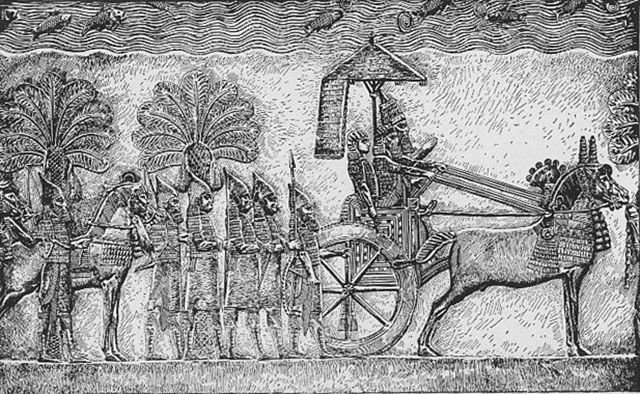
Bas-relief of Assyrian king Sennacherib
The Assyrian king Snack-rib, uh, Sennacherib

Answers:

  1. In 732 BCE, the Assyrian king, Tiglath (hyphen) pileser III defeated Judah’s enemies.
  2. In 722 BCE, the kingdom of Israel in the north fell to Assyria.
  3. The prophets who are active at this time were Isaiah, Amos, Hosea, and Micah.
  4. The seers and prophets told the Judean king Ahaz not to be in dread of Assyria’s king Sennacherib
  5. Isaiah’s scroll was unrolled and read.
  6. God heard Hezekiah’s prayer.
  7. Built on the foundation of the apostles and prophets
  8. Aaron and Moses
  9. The prophet Habakkuk warned Judah to run from the Chaldeans.
  10. R. Simeon b. Eliezer was a sage quoted in the Mishnah and the Talmud
  11. Hosea pronounced punishment against King Jehu and his dynasty for the blood of Jezreel
  12. Allies proved a vain hope for Samaria.

Thoughts on the Game of Thrones Finale. **SPOILERS**

Alright, I didn’t want to pile on about how disappointing it was, but I’ve got some things I just have to get off my chest. The biggest problem was they needed to make the season longer. I was worried when they said there would only be six episodes in this season. “How can they resolve everything there is to resolve in six seasons?” I thought. Turns out they couldn’t. Really, trying to resolve everything in six episodes, they were setting themselves up for failure. So let me join the chorus of wailing and gnashing of teeth one last time.

The Battle of Winterfell

This is not one of my complaints. I don’t understand why folks were disappointed in the Battle of Winterfell. What? You wanted it to be longer? Stretch it out over two episodes? You mean a full hour-plus episode of a bloody, gory battle with Night Walkers and dragons, back and forth, ups and downs, seesawing between hope and despair wasn’t intense enough? You needed your blood curdled and nightmares for two weeks, not just one?

But the Night Army crumbled so easily. Of course the Night Army crumbled. We all knew killing the Night King was key, and Arya (perfect choice for the job) did it. It took every army and every knight in Winterfell to pull it off. Two characters who needed redemption – Theon and Melisandre – found it. I don’t see how they failed there.

The Battle of King’s Landing

After cheering for Danaeris Targaryen so long, after she had overcome so much to get to this place where King’s Landing and the Iron Throne were in her grasp, she reverts back to her mad ancestry and burns everything to the ground. I was disappointed in her. I think they could have set that kind of turn better (if they hadn’t made the season so short), but in the end it felt like the kind of twist I had come to expect from Game of Thrones. She had just enough reasons that I understood it, though that does not seem to be the consensus among fans.

But then we get to the final episode, and that was just wrong in so many ways.

Bran the Superfluous

Bran’s character was unnecessary. All he did was pass on information. They could have done the entire series without him. If they were going to take that turn, his character needed to be developed much better. And he knew all along he was going to become king? If so, why bring up that Jon Snow is really Aegon Targaryon and the rightful heir to the Iron Throne? Why present his brother as an alternate to Dany if he knew all along he would be king? If that was the turn they were going to take, 1) they needed to develop Bran into a full character, and 2) they needed to make the end for Jon not so dreary. Either have him claim the throne or die fighting for his people, but going back to the Night Watch after you’ve flown dragons just is not the way to end his story arc.

Earth shattering revelation (Eh, not so much)

Jon Snow was the guy everyone wanted to be king, and turned out he was the rightful king. Sure put a monkey wrench in Danaeris Targaryen’s “inevitable” march to the Iron Throne, and turned her lover into her rival. That could have set up a much more dramatic showdown, if they had not cut the season so short.

But they raise the expectations that Jon will (if reluctantly) be revealed as Aegon Targaryen and have to take the throne, only to send him back to the Night’s Watch? He led armies to victory over the Wildlings (including a giant), the Boltons, and the Night Army. And did I mention he’s one of two people in the world who can ride dragons? That ending for him, after building our expectations for much more, was just not right. It feel like they cheated just because they had to end it.

Winter is coming?

They forgot about winter that had been all the talk for the first half of the series. If they had used it, that could have added another layer to the threats.

Dany

They could have done more to make her story arc feel complete. I think Kristen Lamb said it well. If they had added even a couple more episodes,

The writers could have:

a) Made the battle against the White Walkers more than the single largest disappointment since New Coke. {I disagree about that being the biggest disappointment, but leads to further points.}

b) Ratcheted the ‘end of the world’ feeling that WOULD entice characters make utterly STUPID decisions.

I’m looking at you, Jaime Lannister.

c) With heightened doom—losses against the Walkers and weather, Cersei refusing to render aid, and the sheer emotional stress that Dany was failing those she’d promised to save—Dany’s final acts of madness would have felt far more organic.

Her zealotry could have grown from subtle (which they already HAD) but then her fanaticism would’ve had a bit more time to bloom in proportion with the threat.

–“Game of Thrones: A Song of ‘I Literally Can’t Even’” https://authorkristenlamb.com/2019/05/game-of-thrones-storytelling-cautionary-tale/

Even though I said I understand her scorched earth strategy at the end, I think Lamb’s suggestions would have made it more understandable, even if we did not like it.

Arya

She became one of the most badass characters on all of television. But except for killing the Night King, she looked weak most of the time. She had always been in complete control, able to slip in and out of any situation at will. But she looked scared of the zombies in her castle (The after-show explained her head injury made her dizzy and not quite as confident). She looked as lost as the city-folk running through King’s Landing. Then they ended Episode 5 with her rising from the ashes to find a white horse, ride it out of the city, thus setting her up to be… I don’t know, maybe a mythical figure of death akin to one of the Horseman of the Apocalypse. You think badass Arya has returned. Again, set up, no pay off.

If you ask me, she should have been the one to kill Dany. She could have done the deed, stood in front of the Iron Throne and let Drogoro burn her with the Iron Throne, sacrificing herself for the peace of the Realm, and opening the way for Jon Snow to be revealed as Aegon Targaryen, and take the, uh, we’ll have to make a new throne, but you get the idea.

Maybe they thought that was too predictable. But if they wanted to give us a surprise at the end, it had to be better than Bran the Broken. And whatever the surprise, they had to do a better job of setting it up. Which means my fears were founded. They could not bring everything to a satisfactory end, or even close to it, in just six episodes.

The Short Season

Having to wrap up everything in six episodes made the ending feel rushed, like they forced characters to do unnatural things just to get to the end. Of course, GoT is known for having characters surprise us. It’s one of the things that made it so addictive. But those surprises still have to feel organic. When you end with characters we’ve followed throughout a series doing things that don’t feel true to them, surprises are not good. When you give the reader a set up (like Jon Snow is Aegon Targaryen), there needs to be a pay-off. Bran as king and Jon Snow moping back to the Wall does not feel like a pay-off at all.

Maybe they thought Jon becoming king would have been too predictable, but at least I wouldn’t have felt cheated. If they didn’t want that, they shouldn’t have set us up for it.

###

For us as authors, we can learn a lot about storytelling done right from the earlier seasons of GoT. But the fans’ universal outcries of disappointment provide some important lessons as well. My biggest takeaway is this is a reminder not to rush your ending. Most often, it is what readers remember most after they read and/or watch. Take the time you need to develop the character arcs and the story arc so that it feels right. You don’t want it to be predictable, but you don’t want it to be inevitable. The best reaction you can get from the reader at the end of your story is, “I should have seen it coming.” The worst reaction you can get is, well, if you’ve read this far, you have a pretty good idea.

Now for a more satisfying way to end that saga, here’s a link to a performance of the GoT theme song featuring Tom Morello of Audioslave/Rage Against The Machine, Scott Ian of Anthrax, Nuno Bettencourt of Extreme, Brad Paisley, and Game Of Thrones composer Ramin Djawadi. Very Cool.

Depression and Anxiety series, new episode tonight

Digging Deeper: The Gut, Gluten, Protocols, Detoxification, Dementia, and ADHD, tonight at 8 pm, replay available 24 hours.

Depression and Anxiety Series, new episode

Episode 7, spiritual practices help depression, tonight, 8 PM, replay available for 24 hours

Depression, Anxiety, and Dementia Part 6

Web series of experts giving the latest of brain health. Depression, Anxiety, and Dementia Secrets, Episode 6: Feeding Your Mind, How to Heal Your Brain With Food.

Tonight, 8PM EDT.