
Sing to him a new song; play skillfully on the strings, with loud shouts (Psalm 33:3 NRSV).
What Does It Mean to Be Blessed? (Published in Koinonia)
“Blessed doesn’t mean healthy, rich, and successful. It means favored by God.”
Should I Kill My Child if God Commands Me To? (published in Backyard Church)
It’s a shame that Abraham seems best known for almost killing his son Isaac. If you’ve ever read that story and wondered if God would ever ask you to kill your child, you must read this.
Why That Missing Comma Drives Me Crazy (published in Koinonia)
Genesis 1:2 in the NRSV leaves out a comma, and it makes a big difference. For Bible geeks and grammar nerds.
My Yoke Is Easy (published in Inspire, Believe, Grow)
You’ve probably heard Jesus’ saying, “My yoke is easy, and my burden is light.” Did you know in the first century, a “yoke” was a metaphor for a rabbi’s way of teaching how to interpret and apply the Torah? Follow the link if you want to explore that a little more.
David’s Sin Against Bathsheba
I didn’t say David’s sin with Bathsheba. To know why, follow the link. This is part three of a series about David’s sins in 2 Samuel 11-12. But we start to see redemption as well. Like the rest of the series, it is published in Inspire, Believe, Grow.
Why David’s Sin Is Worse than You Thought, Parts 1 &2
I’m being published in an online publication on Medium. It’s called Inspire, Believe, Grow. Here are links to the first two articles I’ve published there. You would normally have to subscribe to read more than three articles a month, but I’m giving you these links for free.
P.S. It looks like I’m going to be a regular contributor there. So if you like this, stay tuned.

Writing Tips: The Dreaded Mary Sue
The Mary Sue trope is one of the most dreaded in fiction, sure to alienate readers. Mary Sue characters have ruined Star Wars (Rey) and Star Trek (Michael Burnham). What is a Mary Sue, you ask? The original “Mary Sue” was a parody of a character type that typically showed up in Star Trek fan fiction. Signs of a Mary Sue include:
- Everyone instantly loves her and trusts her, even though they have no reason to.
- She is better than everyone at everything. Training and experience are irrelevant because she’s just awesome.
- Everything she needs comes to her when she needs it.
- The team would be helpless without her.
- She has no flaws or weaknesses whatsoever.
In this writer’s question, I try to stop a writer from creating a Mary Sue.
Question:
I’m writing a fantasy, but my MC is from the contemporary world (who then travels to the fantasy world). …I was wondering how a relatively normal, modern girl would develop a fighting style … without just instantly being good at it for the sake of the plot. She’s also not combat trained, since I figured that would be a little too convenient. I want her to be a normal girl who has to grind her way through the fighting side of things, and who uses her resourcefulness to balance out her shortcomings when it comes to being untrained.
I had an idea that perhaps she has some sort of talent that she could adapt INTO a fighting style throughout the course of the story. Perhaps she’s trained in some form of fan dancing and gymnastics, as I like the idea of something “feminine” like dancing being incorporated into combat. However, in my research I haven’t been able to find a fan dancing technique that I felt could work. They seemed a little too slow. At the moment, I’m considering baton twirling. The fast movement of the batons seems to fit with how I see my MC wielding her two weapons. …
I guess I’m wondering if you’d buy the logical leap of my protagonist using her baton experience (or fan dancing, whichever I go with) to inspire her combat in the fantasy world.
Answer:
Don’t make her a Mary Sue, a female character who is instantly good at everything. That’s why everyone hated Rey in the Star Wars sequels. If she has no training in combat, she needs training, pure and simple. As for incorporating dance or gymnastics, I like that idea (not necessarily fan dancing). If she has baton training, she could make that work to her advantage, but again with training and practice.
Have her go through the training and make mistakes. Maybe early on she tries to use her dancing/gymnastics, and her teachers beat her easily. She goes through training in standard combat. As she masters that, she finds ways to incorporate her other skills. I would recommend reading about Arya in Game of Thrones. In the first book she is given a sword teacher from Braavos, a people known for their “dancing style” of swordsmanship.

Mary Sue vs. Strong Female Character
There is a difference between a strong female character and a Mary Sue. It’s fine to have a woman who is strong, tough, and/or exceptionally talented in some ways. Sarah Connor from Terminator 2 and Princess Leia I think are two great examples of that. Arya was a great character in Game of Thrones at first. But as the show went off the rails in the end, so did she.
I gave a hint above on how to avoid making her a Mary Sue. Have her go through training and struggle to master the fighting techniques she needs. Have her lose to her instructors and other students in practice. Give her a reason to persist no matter how hard it gets. Why does she want to master these weapons? The reason has to be compelling enough that she will not quit, even when everyone else thinks she should. As she masters her weapons and starts beating the other students, we’ll feel like she earned it.
If you want to know whether your character is a Mary Sue (or Gary Stu, as it may be), these links will help you identify her and transform her into a character people will root for.
What Is a Mary Sue Character? – The Moonlighting Writer
The Problem with Perfect Characters: Mary Sues, Gary Stus, and Other Abominations – TCK Publishing
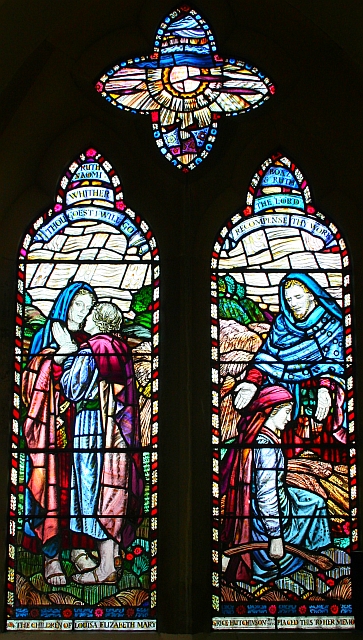
On Biblical Fiction and Rewriting God’s Word
In a Fiction Writing Facebook group, someone was working on a novel based on the story of Naomi in the book of Ruth. If you’re not familiar with the story of Ruth, I’d recommend reading it. It’s only four chapters, and the namesake is an unusual hero in that she is a Moabite, not an Israelite. Not only that, she becomes the great-grandmother of King David. Sorry for the spoiler, but the story has been around for over 2,000 years.
Anyway, she first asked for feedback on her beginning. It promised a story where the main character changes her name twice. For those who know the story, they know the significance of the name changes and expect a story of tragic loss with healing and redemption that follows. If they don’t know the story, it might stir their curiosity. Why would she change her name twice? Either way, it’s good hook, and I told her so.
The Story
But I did not think the ending she proposed would be satisfying. Here is how she described it.
This is historical biblical fiction. It’s about Naomi’s ten years in the wilderness, and written in first person. The last chapter of Call Me Mara ends with “…it was the beginning of the barley harvest” and I will encourage readers to finish the story of Naomi and Ruth in the Scriptures.
This writer wants to tell the story from Naomi’s point of view. No problem there. But she is proposing ending the story in the middle and then saying, “If you want the rest of the story, go read the Bible.”
Here is how I responded.
If this is the ending, I would feel cheated. Biblical fiction can be a great tool for getting people interested in the Bible, but it is not an excuse for doing our job halfway. You still need to give your reader a complete story. Use your storytelling skills to give them an enjoyable reading experience, and they will be more likely to follow through on your suggestion to read the Bible.
She wasn’t convinced. She said,
I just don’t want to rewrite God’s Words in my own words. Ruth 2 and beyond have already been told and I can’t improve on that. For now, this is where I feel my story ends and the Spirit takes over.
This is the dilemma for writing Biblical Fiction. It’s always “already been told.” Rewriting the Bible sounds daunting, even sacrilegious. But if you want to write Biblical Fiction, you have to make peace with that somehow. Just so you know, here is how the story would end as she proposes it.
“Don’t call me Naomi,” she told them. “Call me Mara, because the Almighty has made my life very bitter. I went away full, but the LORD has brought me back empty. Why call me Naomi? The LORD has afflicted me; the Almighty has brought misfortune upon me.”
So Naomi returned from Moab accompanied by Ruth the Moabite, her daughter-in-law, arriving in Bethlehem as the barley harvest was beginning.
(Ruth 1:20-22)
Ruth and Naomi haven’t even arrived in Bethlehem yet, much less met Boaz, who becomes the kinsman-redeemer who marries Ruth, ensuring a secure future for both women. Again, sorry for the spoiler. Her version would leave all of that out.

It also does not deliver on what she promised. Her intro promises a character who changes her name twice. But if she ends the story there, we only get one name change. We get only the tragedy and miss the healing and redemption that follows. If you promise something to the reader, you need to deliver.
The Rest of the Story
But the rest of the story is in the Bible.
Then why should they read your story at all when they can read the whole thing in the Bible? Fiction when done well does not just tell a story. It gives us a chance to experience it through the character. You are not just told what happened. You feel like you are there as it happens. When you write Biblical Fiction, that is what you are promising the reader, the chance to experience the story—the whole story—with Naomi. Or whoever your character is.
If you want to write Biblical Fiction, don’t use the Bible as an excuse not to do your job. Writing fiction of any kind means creating a good story that moves the reader. I’ve read the Bible several times, but I can still appreciate a work that helps me see it in a way I had never considered. If you give them an enjoyable reading experience, they will be more likely to take your suggestion to read the Bible so they can see where your story came from. Here is how you can do that.
- Be faithful to the source material. One way to look at it is the Biblical story provides you with the bricks. You use mortar to connect them. The mortar includes techniques writers use to draw the reader in, like scene setting, characterization, action, dialog, and plotting.
- You are not rewriting the Bible. You are creating a new way for others to experience it.
- Pick a point of view character that you connect with.
- Fully imagine the character in that situation. What do they see, hear, smell, taste, and feel? What is the weather like? What emotions are they going through? How do they see the world around them? In the end, what kind of transformation do they go through?
- Look for ways you can fill in missing details. The Bible often leaves out the kind of details that make fiction come alive. See that as an invitation, not a restriction.
- Write a heartbreaking work of staggering genius.
If you would like to see some of my recommendations for Biblical Fiction done well, click here. Some of them do not actually follow rule number one. They might take a little more creative license with the story than some would like. But they do it in a way that is believable and makes you feel like you are there.

Writing Tips: Coincidence in Fiction
Another question from my Fiction Writing FB group.
Question:
Does this come off as too much of a coincidence in my plot?
My story is a crime thriller and in it, a woman wants police protection because she knows too much about a crime, and after being interviewed at the police station, the main character detective takes her home, and she begs him to protect her, since she is in fear of harm.
He can’t do it and break protocol and is about to leave, and then he gets a call from his superior, giving him the assignment of protecting her.
But I am wondering if it comes off as too much of a coincidental convenience, that she wants something, he doesn’t give it to her, and then he gets a phone call that compels him to give to her, and thus conveniently answering her prayer in a sense?
Answer:
Can you show that it is not a coincidence? If the superior orders the MC to do something against protocol, he should smell something fishy. That and the timing being just a little “too perfect” indicates the superior is watching the witness, the MC, or both. Why and how? And why did the superior not assign protection at first only to change his mind a few hours later? Is the superior being pressured by someone else? It sounds like there is something corrupt in the department that could not only explain the coincidence but drive the plot and the MC’s actions.
It turned out all my guesses were wrong. So without knowing the story, I can’t comment any further on this example. But here is a rule of thumb. If the scene unfolds this way for no reason other than you need it to, it’s too much of a coincidence.
 David Anderson