On the radio at 100.9 FM (In the Muskegon, Michigan area).
On the “Tune In” app. If you don’t have it, you can follow this link to download the Tune In app. http://tun.in/sfh1j. They offer a premium service, but you won’t need it for this. Search for Muskegon 100.9 FM, and it should come up.
We will talk about some of the principles in my book about how I found out you can have clinical depression and not know it, and how I have been able to find happiness and faith in spite of a brain that is tilted towards darkness and depression.
I’ve got Billy Idol’s song “Blue Highway” playing in my head. Sometimes a song will just come into my head for no apparent reason. But then I remembered. My first podcast guest appearance was just released. And the podcast is called “The Dream Highway,” hosted by Steve Pederson. Dream Highway, Blue Highway … I don’t know if you see the connection, but my subconscious mind obviously does.
Social distancing at its best 😉
Anyway, Steve Pederson is a “musician, author, speaker, entrepreneur and family man [who] hosts this weekly podcast that helps you up-level your life.” In the podcast he wants you to “be inspired by teaching and interviews with people whose lives have been transformed. Hear the stories that have enabled them to overcome crippling obstacles and have propelled them towards their destiny. It’s all about real people overcoming real odds to realize their dreams.”
My end of the audio sounds like it’s cutting in and out at first. I think that might be because I couldn’t find my headset and had to rely on my computer’s microphone. It does seem to clear up as you go through, so please don’t give up on me.
I’ve thought about creating a podcast, maybe in conjunction with my YouTube channel. But for now, I am looking to be a guest on other podcasts. Last month, I took a class from Nancy Juetten on how to be a dream podcast guest. From our comments, Nancy saw a similarity in topics we wanted to specialize in and suggested we connect. After a brief email exchange, he encouraged me to fill out the guest application. That gave me a chance to be specific regarding what I wanted to talk about. I had my one-sheet after going through Nancy’s one week course. Just having that done and refined has given me more confidence in approaching podcast hosts looking for guests.
This is the first, but it won’t be the last podcast I do. In fact, there is an episode for another podcast already recorded that will be posted some time in December, and I’m looking for more.
I’m doing this as a way to promote my book. It will take time to know how effective it is as a marketing tool. All I can say now it was a great experience.
Steve and I had a great rapport, and I think that comes through in the episode. Some things we discussed:
Writing a contest-winning book on a depressed brain
The relationship between shame, faith and depression
The chemical imbalance controversy
The difference between situational and clinical depression
Some science-based ways to alleviate depression
Signs you may want to get tested for clinical depression
Depression is not a lack of faith or character
Faith should allow you to be human
Faith should encourage you to be honest with yourself and with God
The best career path is one that fits your personality, you have talent for, and you love doing.
It was one of those conversations I was sad it had to end, and I hope Steve will have me again when it’s time to talk about my next book.
The Secret about Introverts
On knowing your personality, the Meyers-Briggs test was helpful for me. I am an INFP on the scale. The most helpful information was knowing I am introverted rather than extraverted. You might be surprised that I enjoyed talking for these episodes. Here’s something you might not know about introverts. We may appear to be quiet, shy, or wanting to fade into the background. We are usually not good at small talk. But if you get us talking about something we are passionate about, we can talk all day.
I am passionate about faith that promotes mental health rather than tears it down, and I can’t thank Steve enough for letting me talk about it. Next time, I’ll have an extra headset in case one gets lost again.
In the last photo, notice the Nonfiction winner (humble brag)
The May/June issue of Writer’s Digest is out, listing the winners of the 2019 Self-Published E-book Awards. You’ll see in this montage my lovely wife put together, I am listed as the winner in the Nonfiction category. I know I’ve told you about it, but seeing it in print is so exciting.
I have my own YouTube channel called Almost Ordained. You can follow the link to check it out or even subscribe. “Almost ordained” because I have two seminary degrees, but never got ordained. That means I have the theological and biblical training, but I can’t pastor a church or perform sacraments or weddings. My sister took up that mantle.
I have links to the latest episodes below, along with running times so you can gauge whether you have time for it. This is an example of a vlog (video blog). As the name implies, it is a blog done on video. Keeping some kind of diary or journal is often helpful in getting through a stressful time, so I encourage you to do it, whether on video, your blog, or the old-fashioned way.
Episodes
Kingdom Priorities (23:18)
Wisdom from Psalm 30 (30:05)
A New Haircut, The Stockdale Paradox, James 1:2-5; and Letting Perseverance Complete Its Work (28:08)
Confessions of an Ex-Prophet (58:07)
Coronavirus Confessions, and Why Gardening Is Good for Depression (12:08)
So, we are still in this Coronavirus crisis. Even though I work at home, not being able to do things I used to do outside the home has given me opportunity in other ways. This post was a rush job. I have been wanting to start a podcast, and I am using this opportunity to get that ready. I think it will be called The God Wrestler. The first series in it will be about faith in a time of Coronavirus.
There’s
my silver lining. But even so, I will admit all these Coronavirus restrictions
are a pain in the butt. I’m naturally introverted, so I don’t get out much
anyway. But I always liked knowing I could go out if I wanted to. And sometimes,
I want to. And since I have made mental illness and depression a focus in my
writings, I wanted to say something about how the Coronavirus shutdown can
affect people psychologically, and what you can do about it. In addition to all
the disruption to the economy and normal way of life for most people, Coronavirus
is causing an increase in stress, anxiety, and depression. Some of the reasons cited
are.
Isolation.
This
is the greatest risk factor for depression and anxiety. Even those of us who
are not quarantined can’t get out as much. Most public gatherings are cancelled.
Where I live, they haven’t enforced lockdowns where I live yet, but schools are
closed. Some businesses have closed voluntarily, and some are limiting
themselves to drive-through and delivery. Social distancing also limits our
interactions. My parents live in Hawaii. The people there are warm and
friendly. You greet friends or family with a hug and sometimes even a kiss on
the cheek. They’ve had to retrain themselves for social distancing. My wife and
I visited my father-in-law and spoke to him through glass. Not that we think we
have it, but just in case one of us picked it up somewhere.
Disruption of routine.
I
work from home, so this doesn’t affect me as much as many people. But if you
are used to going to work or school every day, and that is taken away—even temporarily—it
is disorienting. Since I work from home, it hasn’t hit me that way. They’re
recommending teleworking, and all my work is teleworking. But I once had a teaching
job. I was overworked and underpaid, but the daily schedule helped provide
structure to my time. There were familiar faces I saw and spoke to. I didn’t
know that was a comfort until I lost it.
Loss of money or business.
So
many businesses are closed or operating at reduced capacity. That means a lot
of people are laid off and not earning a paycheck. Or profits. The stock market
is down, way down. Losing money is stressful. Sorry for stating the obvious.
Uncertainty.
We
don’t know how long it will last. It will get under control at some point. But right
now, there is no cure, no vaccine, and no one can tell us when there will be
any. Each morning, more people are on lockdown or quarantine. Each morning, a
new list of businesses and public services are closed. When will the tide turn
and things begin to get back to normal? No one knows, and that is stressful.
And,
oh yeah, there is the looming spectre of a deadly, contagious disease that has already
infected tens of thousands of people in the US alone, hundreds of thousands all
over the world, and the numbers keep going up.
Well,
never fear. Your intrepid mental health blogger is here. Okay, I can’t do anything
about your job or the stock market or the disease itself. Sorry. I tried praying
it away like the preachers I used to watch on TV, but God hasn’t been
forthcoming in that manner. Which is why I say the preachers I used to
watch. To help with issues of depression, stress and anxiety, here are some tips
I gathered from the experts.
Maintain social connections.
You
may not be able to visit people as often, but you can still call them or
interact on social media. Many experts say social media and technology have
contributed to the rise in depression, anxiety, and polarization in our
society. I should do a post on that. But this time right now is where technology
really can help us maintain connections, so we don’t feel isolated. I’ve used
social media the last few years to keep up with family spread out all over the
state. You can continue to do that. Get on the phone with them. Smart phones
make video phone calls possible with Facetime, Skype, and similar apps. I don’t
use that much myself, but it helps when you’re alone to see a friendly and
familiar face. You can stay connected and still keep up your social distancing.
Don’t just text. Call them.
This
falls under maintaining social connections, of course. I saw this online from
someone calling themselves Dartagnan. “I talked to an old friend today on the
phone today for about an hour. No texting bullshit, just a real conversation.
Best time I’ve spent all week.”
Maintain self-care.
That
includes exercise, a proper amount of sleep, nutrition, and proper hygiene. I
guess we’re all thinking more about hygiene to prevent the spread of COVID-19. All
the hand washing and sanitizing. Studies have shown that when people stop
self-care, it’s both a sign of and a contributor to depression.
Stay informed, but don’t overdo it.
I
watch the news in the morning to see the latest progress of the disease. After about
half an hour to an hour, I’ve gotten everything I can from them, so I turn it
off. It’s important to know what’s happening and what new restrictions are in
place. But dwelling on it will not make you better informed. It will more
likely just make you anxious. And get your information from good news sources,
not social media. Rumors can spread faster than COVID-19, and nothing on SM is
fact-checked.
Do something creative.
Have
you been wanting to write a book? Or learn a musical instrument? Or another language?
Or start some hobby? And you are stuck at home and can’t go anywhere? Hello,
here’s an opportunity. I’ve been writing even more since the crisis started. Starting
the podcast I told you about is me taking advantage of the extra time I have on
my hands.
Prayer, meditation, and mindfulness.
Prayer
is connecting or communicating with the divine or your higher power, whatever
that means to you. Meditation is focusing on one thing to calm your mind.
Mindfulness is being aware of what is happening around you and inside you,
mentally and emotionally. All three have been scientifically proven to reduce
stress, depression, and anxiety.
Help your neighbors if you’re not sick.
Times
like these, we really need people to remember to love their neighbors as
themselves. One person in Boston left $1000 tip, because they knew it was the
waitress’s last night before she was laid off. My relative offered to do grocery
shopping for her elderly neighbors, because she knows going to public places is
a much greater risk for them than her.
Set a schedule.
I’ll
admit I’ve never been good at that. I’ve tried, but I just can’t get up at the
same time every morning or go to be the same time every night. I get started
writing, and I can just keep going for hours. That is actually good for my
mental health. But not so good in other ways, like exercising or maintaining a
schedule. But it is one of astronaut Scott Kelly’s recommendations.
Don’t give in to prejudice.
Since
the Coronavirus arrived here, there has been an increase in racist incidents
towards Chinese and Asian-Americans. That needs to stop. Don’t blame your neighbor
for this because of their country of origin, especially when the vast majority
of them were here before the Coronavirus.
Remember why you’re going to all this trouble.
Maybe
you’re sick of social distancing and staying home except for when you need to
get food or medicine. Maybe you don’t care whether you are putting yourself at
risk. Maybe you are young and healthy and think if you get it, you probably won’t
die. Statistically, you’d be right. But if you don’t practice things like
social distancing, you could spread it to someone not so young and healthy. Starting
at age sixty, chances of death go up significantly. Would you want anyone spreading
it to your parents or grandparents? Or to your brother or sister who is
undergoing cancer treatments? Then don’t take a chance on spreading it to
someone else.
If you think you need help, here are a few resources you can connect with by
phone or online.
While you are at home more, you might want something read or podcasts to listen to. I let you know at the beginning of this post I’m working on a podcast. I will share details with you. And I have a book out about my experiences with depression and finding faith in the midst of it. You can get it on Amazon, either in ebook or paperback. If depression is a concern for you or someone you love, I encourage you to check it out. And on this page, I recommend books from other authors that I found very helpful.
My fifth principle of recovery says, “Never trust a chemically imbalanced brain, even if it is your own.” The post below is an excerpt from my award-winning book, Dark Nights of the Soul: Reflections on Faith and the Depressed Brain. It was originally posted to a blog called “Fawns of Naphtali.” Strange name, I know. It became a chapter in my book, and it explains how my experience with antidepressant (AD) medication taught me clinical depression has a voice. You must learn to identify and neutralize it if you want to recover and live a happy and fulfilling life. Here is how I did it.
Medication and the Voice in My Brain
Taking medication for depression is still controversial for some people of faith. When a psychiatrist first recommended it for me, I had some reservations. However, he had just told me I tested high for depression in every possible way, so I took his advice. There is no doubt it has helped me. Sometimes I have wondered if it’s really working, especially at times when I have been sad, moody, anxious, just fill in the blank with any negative emotion.
I can still say, though, that medication does make a difference for me. I don’t care what Tom Cruise said. I know because a couple of times, I have changed medications. When you change from one anti-depressant (AD) med to another, you first have to wean yourself off of your current med. That usually takes 2–4 weeks. Then you can start taking the new. It can take up to two weeks for the new medication to start taking effect. During that transition, those depressed thoughts you had forgotten about can come back.
The first time, I had suicidal thoughts. I can’t say it was the first time, but it was more frequent and intense than ever. Is the new med not working?
My doctor said it was a low dose and suggested trying a “medium”dose. Within a few days, the suicidal thoughts stopped. That medium dose worked for me. But without that doctor helping me, I might have thought it was the wrong medication.
The second time was more recent. Bad thoughts came but in a different way. Instead of feeling depressed in the way we usually think of (deep and persistent sadness, suicidal thoughts, etc.), it came in a way I had forgotten: Anger. I was angry much of the day. Angry at family and friends over past slights that my balanced brain had forgiven long ago. Angry at the world for the state it’s in and the downward spiral we seem to be in. Unreasonably angry. But when the new medicine kicked in, I was back to being happy. And I am proud to say I did not take my anger out on anyone, even the ones I felt angry towards.
Now some of that anger might not have been unreasonable, especially about the sorry state of the world. So then, why did I not act out my anger or my suicidal thoughts during those times? Before I started transitioning medications, I made a crucial decision. Until I know if the new med is good for me and until I get my brain normalized again with either the new or return to the old, I WILL NOT BELIEVE THAT VOICE IN MY HEAD.
Russell Crowe plays Nobel Prize winning Mathematician John Forbes Nash, Jr., who was found to be paranoid schizophrenic. He had more than just a voice in his head. He had full on hallucinations of three people telling him all these conspiracies around him. When he was diagnosed and got medication, the hallucinations disappeared. However, he was having difficulty with the side effects.
He decided to go off the medication. But those imaginary people will come back.
Yes, but this time he will know they are not real, and he will absolutely refuse to believe them. It was not easy. Those hallucinations had a life of their own. They tried really hard to convince him to listen to them. But he remained resolute. You are not real. I won’t listen to you. I won’t believe anything you say.
Because of past experience with Depression, I knew I needed to reject, ignore, and otherwise neutralize those thoughts TEMPORARILY. Let’s review what happened in these two instances.
I stopped taking AD medication.
The Voice in my head that fuels my Depression went from being a surly kitten to a roaring tiger.
When the new AD medication kicked in, the Voice calmed down and the bad thoughts sunk back to a normal level.
What is going on? In earlier posts, I’ve talked about the chemical imbalances that exist in a clinically depressed brain. It is a medical condition where your brain can’t produce normal levels of “happy chemicals,” and so the “stress chemicals” overwhelm it. Medication helps your brain produce more happy chemicals, so it gets balanced. When your brain chemistry is balanced, your emotional state can get back to normal — in a good way.
That last experience changing meds really drove that home for me. The Voice in my head didn’t bother me when I was on meds. But when I was in that transition phase, the Voice came back with a vengeance. Now that I’m on meds again, the Voice is gone. And that’s when it hit me like a revelation of Biblical proportions. THAT VOICE IN MY HEAD IS THE PRODUCT OF A CHEMICALLY IMBALANCED BRAIN.
If you have that Voice too, let that last sentence sink in. That Voice in your head that tells you, “I’m no good. I’ll never get anything right. I’m a burden to everyone who loves me,” or even worse, “No one loves me.” Or if you pray or try to live by faith, the Voice will tell you, “There is no God. God hates me. God has given up on me, and I don’t blame Him. I’m like the tree that bore no fruit, so God has cut me off. I’m cursed.” Or maybe you have that angry voice, like I just experienced. And you believe it, don’t you? IT’S THE PRODUCT OF A CHEMICALLY IMBALANCED BRAIN.
And the problem isn’t so much the voice itself, but that we believe it so readily. At some point, in thinking about this, I was amazed at how anything we hear inside our head, we just believe it. We don’t question it, we don’t evaluate it, we just accept whatever it says, even when it has no basis in reality.
“Everyone hates you.” Oh really? 7.5 billion people in the world, and every single one of them hates you? Oh you just meant everyone in your school or in your town. But still, how many people is that, a few hundred? A few thousand? A few hundred thousand if it’s a major city? How could every one of them hate you? Simple logic should tell you that’s not even possible. But you believe it. Because it comes from your head, so it must be true, right? Wrong!
Are you telling me my head is lying to me? That’s exactly what I’m telling you. THAT VOICE IN YOUR HEAD IS THE PRODUCT OF A CHEMICALLY IMBALANCED BRAIN.
Or if it’s that angry voice, it might be saying, “They’re disrespecting me. They think I’m an idiot. They never listen to me. They’re idiots. They don’t care about me, so screw ’em all.” (Again, that’s as politely as I can say it). And again, IT’S THE PRODUCT OF A CHEMICALLY IMBALANCED BRAIN.
And bottom line, don’t believe a chemically imbalanced brain, even if it’s your own. You’re just as likely to get the truth from a Magic 8-Ball. Yes, it might tell the truth occasionally, but you’d better ask some questions before you accept that it’s right this time.
I suppose this begs the question, If you can’t believe your own mind, what can you believe? How do you know what the truth is? There is no simple answer to that, and anyone who tells you there is is setting you up for failure. But now I have posted on all five of my principles for recovery. Here they are to review.
God is for your recovery and healing, not against it (Isa 53:3–5).
God will not kick you when you’re down (Isa 42:2–3).
Some churches and spiritual leaders are good for recovery, and some are bad. Make sure you know the difference.
With the right help — spiritually, psychologically, emotionally, and perhaps medically — you can live a happy and fulfilling life.
Never believe a chemically imbalanced brain, even if it is your own.
In my last post, I introduced my fourth principle for recovery: With the right help, you can live a happy and fulfilling life. For most depressed people, getting the right help begins with testing. I talked about standard testing for depression in the last post. If your depression is bad enough, you may need testing for more specific types. At my mother and sister’s suggestion, I got tested for clinical depression. At the time, I don’t think the standard tests I’ve read about would have caught it in my case, so I’m glad I took their advice.
Getting Tested for Clinical Depression Was Different
If
you are considering getting tested for clinical depression, I can tell you a few
things you probably won’t find online. I won’t give away too much. Part of the
effectiveness of the testing comes from going in fresh. But in many ways it was
not what I expected.
It Was Not Talk Therapy or Psycho-Therapy
It
did not involve talking about my emotions or childhood. It did not involve my
history, or how I’ve been feeling the last few weeks, or trying to determine if
there’s a particular reason for depression, or if it is just always there regardless
of any reason. Someone observing would not have thought it had anything to do with
depression. The psychologist (I say psychologist, but I don’t know exactly what
his title was) gave me various tasks to do and questions to answer. After each
task, he asked why I did it that way or why I concluded what I did.
The
only thing I recognized as “psychiatric” was the Rorschach inkblot test. You’ve
probably seen it on TV. They show an inkblot, and you tell them what it looks
like. On TV, they usually say a bat or a rabbit or something simple. My answers
were much more elaborate. In fact afterwards, I asked if I could get copies of
them, because I thought I saw scenes that could be used in a fantasy or sci-fi
story. Turns out they are copyrighted, a trade secret, or something like that. In
other words, they’re not available to the public.
It Takes More Time
With the standard question-and-answer tests I’ve seen, I can’t imagine them taking long. That kind of testing was made for something more general. It is one step in a process for your doctor to determine if you need treatment for depression or something else. The test I took was to look specifically for clinical depression. It took around two or maybe three hours. The time it takes for each person varies, because there is no time limit for the tasks. So if you took the kind of test you see online, and it only took a few minutes, that was not a test for clinical depression. There is a difference between situational depression, which usually does not take long to identify, and clinical depression.
Trust the Process
Like
I said, you might not see what the questions and tasks you’re given have to do with
depression. Clinical depression is not about how you feel or how you’ve been
feeling the last two weeks or more. It is a condition of the brain. One thing
about your brain. It is always with you no matter where you go, what you do,
what’s happening to you, or who you’re with. Your brain is unique. But if you
have clinical depression, it is there in your brain. And just like your brain,
it is always with you, no matter how you feel. Even if you don’t feel
depressed at this time in your life, you still could have clinical depression.
After
the process was over, I realized the tasks and questions the psychologist gave
were designed to give him a window into how my brain works. That is the only way
to detect clinical depression. Somehow, the psychologist has to see your brain
at work, how it processes information, and how it responds to various challenges
and stimuli. That’s why he asked me to explain my thought processes each step
of the way. Each answer gave him a little more data about how my brain worked.
Disorientation
When
it was over, I set a follow-up appointment to get the results. The psychologist
said I could bring someone in with me if I wanted. My sister was happy to do
it. She should have been, since she roped me into it in the first place. So she
was there when the psychologist gave me the news: “You tested high for
depression in every possible way.”
The
world stood still. It was so shocking I didn’t know how to respond. If he had said
anything else, like I tested moderate to severe in every possible way, or I tested
high in half the ways, I would not have been surprised. But high in every possible
way? How was that possible? I only felt mildly depressed. How could I
have tested high in every possible way? That would not have been the
case with one of those standard online tests. I’m not denigrating them. I’m
just saying diagnosing clinical depression as opposed to situational depression
is much more involved than that.
As
I adjusted to the shock, the next thing I felt was shame. Because I am a Christian.
What Will This Do to My Testimony?
I
had struggled mightily with depression in the past. But I always thought it was
in specific episodes. I was depressed in college. I was depressed during and
after my first year of Divinity School. I was depressed when I turned thirty,
and I was nowhere near where I was supposed to be in life. And each time, I said,
Jesus delivered me from it.
If
you are a Christian, you might have picked up the message that you should be
able to overcome depression by faith alone, because Christ is all sufficient. He
is all you need for peace of mind. You’ve heard others give that testimony. You
wanted it to be your testimony.
Do
you see the joy on my face? It’s because of Jesus.
Since
I found Jesus, I don’t get the blues.
I
can’t be depressed, because the joy of the Lord is my strength.
Too blessed to be depressed.
For me, all of that went away with my diagnosis. I wanted that testimony to show people what a difference Jesus made in my life. But I also learned long ago that in my relationship with God, honesty is much more important than having “the right testimony.” Honestly, as much as I wanted it, that was never my testimony. But there was still a part of me that thought it should be my testimony.
Here’s what you need to understand. Christ is all-sufficient when it comes to salvation, forgiveness of sins, and eternal life. When we get to heaven, we probably will never be depressed again. But when it comes to life on earth, we will sometimes need help from people, whether it’s warm bodies to carry things when you move, doctors and nurses to bring you back to health from sickness or injury, or mental health professionals to help you diagnose and treat mental illness. Christ is not at all offended if you need help from a professional, whether your illness is physical or mental.
Getting Reoriented
The
psychologist explained clinical depression is a condition of the brain. It
means my brain does not produce enough natural antidepressants, like serotonin,
dopamine, and norepinephrine. It’s a natural condition and nothing to be
ashamed of. A diabetic has a pancreas that can’t produce insulin. There is no
shame in that. It says nothing about that person’s faith or lack thereof. If my
brain doesn’t produce normal levels of “happy chemicals” (as I call them), I shouldn’t
be ashamed of that either. It can happen to anyone, regardless of what kind of
faith they have.
Just
like there is treatment for diabetes, there is treatment for clinical
depression. That usually starts with antidepressant (AD) medication and
counseling. Counseling, I had no problem with. But I had some resistance to medication.
***DISCLAIMER:
In the medical field, the effectiveness of AD medication is being seriously
questioned. Just keep in mind, any psychotropic drug affects each person differently.
My experience might be the same as yours, and it might be totally different. You
should never take one without a recommendation from a doctor or mental health professional.
And you need to pay attention to how it affects your thoughts and emotions,
especially in the first few days or weeks. Before you start taking AD
medication, be sure you know what to do if your condition doesn’t improve or
gets worse.***
With
that disclaimer, I’ll tell you why I took it, and why I’m glad I did.
Okay,
but remember, I had just tested high for depression in every possible way. The diagnosis
of clinical depression meant I had been living with depression my whole life
and did not even know it. If that is not severe depression, what is? If my
diagnosis had not been so extreme, I would not have even considered it. I would
more likely have accepted counseling and tried doubling down on faith
confessions, positive thinking, motivational messages, and meditating on
scripture. I’m not saying those things were not effective for me. They kept me
going in some of my worst and darkest moments. But I had been doing all that for
almost two decades, and I still tested high in every possible way. That realization
took down most of my resistance.
There
was also the comparison with the diabetic. He/she needs to take insulin, because
their body can’t produce it. If my brain doesn’t make normal levels of “happy
chemicals,” taking medication for that is no different.
She Is So Much Nicer Now
This
was also where having my sister there was helpful. She knew some things I didn’t.
For example, she knew of a relative who had recently started AD medication. “She
is so much nicer now,” I said. Oh, and another who was moody and had a volatile
temper. “That was depression?” I had never made that connection before with him
or myself.
In
the past, I had chalked up my own moodiness to “artistic temperament.” But it had
never occurred to me that was a sign of depression. This is one way you can
be depressed and not know it. You know some of the signs, but not all of them.
Like here, I knew I was moody and temperamental, but I didn’t connect that with
depression. And seeing how much nicer that one relative was with medication, I thought
maybe it wouldn’t be a bad thing for me.
Perfectly Timed for College
The
psychologist also told me clinical depression usually gets its worst between
late-teens and early-twenties. Bang! That was totally true for me. At first,
that was connected to a crisis of faith. But even after that crisis was resolved,
I still had this malaise I couldn’t shake. It was so hard for me to get
motivated for anything back then. I thought it was the work of the devil.
Finally, I realized, it was the work of my chemically imbalanced brain.
Furthermore,
whenever I had a crisis of faith, depression always accompanied it. So how do
you know if this is the situational depression of a dark night of the soul, or
clinical depression felt more intensely because you’re wondering, “What the
hell is God doing to me?” You don’t without getting tested.
What about “Artistic Temperament”?
I
wanted to be a writer. Let’s face it. Some of the greatest writers and artists
in history were very moody and temperamental. I can’t diagnose them, but it’s
likely most of them had clinical depression or similar mental illness. But is
that where their genius came from? Was depression the muse that inspired their
work that we still celebrate today? What if they could have taken AD medication
so as not to be tormented with those dark thoughts and emotions anymore? Would that
have made them less creative?
Many
times, depression compelled me to write something. It was therapy before I began
therapy. If I lose that, will I lose some of my creativity or my urge to write?
Can I really be an artist without the temperament?
The
psychologist’s answer was, in effect, yes, I could. Since I started AD
medication, I’ve been able to go back to some of those dark places when I needed
to without being caught up in the darkness myself. I can write about the
insanity I experienced without re-experiencing it. And I still feel the urge to
write, even when I don’t feel depressed. In fact, the most depressing thing for
me is to go a few days without writing. That’s when I really get moody and temperamental.
So if you are a creative or artistic type, I can tell you taking AD medication
has not dampened my creativity one bit. In fact, now I have so many ideas, there
aren’t enough hours in a day for me to write them all.
One More Tip No One Told Me
So
I had the results of the test. I had the beginnings of a plan for recovery. I accepted
the diagnosis and agreed to medication. The psychologist recommended a pastoral
counselor for me, because I knew I would need help with some of the theological
issues I still had. I left with a copy of the report, and my sister and I sat
down in a coffee shop to talk more about the implications of all this.
One
thing I remember from the conversation was the relationship between depression
and anxiety. In addition to depression, I seemed to be more anxious than people
around me. My sister said that depression and anxiety were located close to
each other in the brain. If you have issues with one, it’s common to have
issues with the other. That reminds me of Chris Cornell. He took Ativan for anxiety,
but in some of his interviews he also talked about depression. The good news is
if you treat one effectively, it often helps the other. That has been true of
me, and I wish it had been true for Cornell.
Overall,
after adjusting to the shock, it was one of the most enlightening days of my
life. My recovery began that day. But there was one thing I wish someone had told
me. Don’t read the results of your test. Normally, I’m the type of
person who would say, “If you have the test, read it. The more information you
have about your condition, the better.” This is an exception. That report was
the most depressing thing about myself I have ever read.
You
don’t need to read it to know what you need to. Ask the psychologist who tested
you about the results, what they mean, and what kind of treatment you need. Don’t
throw it away. Keep a copy of it in case you need to make a disability claim. But
don’t read it unless for some reason you absolutely have to.
Life after AD Medication
Back
in college, I had this voice in my head that was so negative and so condemning,
it felt like it came straight out of the pit of Hell. I could cast it out in
Jesus’ name. Temporarily. But anytime I failed, or my prayers weren’t answered,
the voice returned. And in some ways, I felt I deserved it, because I still
didn’t have enough faith (whatever that means). In the Word of Faith, they tell
you that voice is a demon or the Devil. And then, it changed from the Devil to
Jesus, beating me up for not having “enough faith” to get what I prayed for.
Fortunately,
I did learn not to associate that voice with either one of them. I had an
incredible Epiphany that drove it away for a couple of years. But eventually,
it came back. After a few days on medication, that voice went away for me. I
don’t know if there really are such things as demons or Satan, but I do know
this. If a pill can make it go away, it’s not a demon. For that matter, it’s
not Jesus either. It’s a mental illness.
Here’s
another thing that happened. I used to think I had ups and downs like everyone
else. I could be happy or sad, stressed or at peace, friendly or misanthropic. But
even when I was happy, there was this underlying sadness I couldn’t get rid of.
I never felt like I belonged anywhere, even among friends. I thought it was
normal, because that was how my brain worked. When I started AD medication, those
feelings finally went away. From that, I learned that however your brain works,
you will think it’s normal because everything about your experience is processed
through your brain. If your brain is naturally tilted toward depression, it
will color all your experience with that brush. That was why I didn’t recognize
it as depression except when it got really bad.
Takeaways
That
leads into my fifth principle for recovery: Never believe a chemically
imbalanced brain, even if it is your own. I will dive into that in my next
post. Until then, here are your takeaways.
Situational depression is much
easier to recognize than clinical depression. Situational depression is about
how you feel. Clinical depression is a medical condition.
Because they are different, the
testing for each is different.
Testing for depression is only one
part of a process to determine if you need treatment for depression or
something else.
If your family and friends think
you are sad or depressed even when you don’t, you should seriously consider
testing for clinical depression.
Sadness and lack of motivation are
not the only signs of depression. Anger, moodiness, and a quick, extreme temper
are also signs.
Like any medical condition,
clinical depression has nothing to do with faith or the lack thereof. Don’t believe
anyone who tells you faith should be all you need to treat it.
AD medication is normally for severe
or clinical depression. Research has not confirmed effectiveness for less
severe kinds of depression.
If you have severe depression, it’s
no sin to try AD medication.
Like other psychotropic drugs, AD
medications affect everyone differently. Before you take it, make sure you know
what to do if your depression gets worse after taking it.
You do not have to read the results
of your test. Just follow the advice of the one who tested you, and you’ll be
on your way to recovery.
Grace
and Peace to you.
P.S. I’ve talked about how my sister and mother encouraged me to get tested. You might be wondering about my father. He recently confessed to me that he thought I had problems with depression too, but he did not know how to talk to me about it. So it’s official. Everyone in my family knew I was depressed before I did (see Takeaway #4). But that in a nutshell is why I’m writing these posts and why I wrote my book Dark Nights of the Soul: Reflections on Faith and the Depressed Brain. I’m sharing what my clinical depression looked like as best I can, in the hopes that A) someone undiagnosed will see themselves in it and be prompted to get help, or B) someone who cares for a depressed person can use it to help share their concerns.
My
fourth principle for recovery from depression says, “With the right help,
you can live a happy and fulfilling life.”
Getting
the right help first requires proper diagnosis. If you think you are depressed,
your doctor can help with screening to see if you need therapy.
***Disclaimer:
I am not a doctor or licensed therapist. Any advice I’m offering is based on research
and personal experience. Unlike WebMD articles, it has not been vetted by
professionals.***
I
think the way I can be most helpful is not as a professional but as a bridge
between the professional and layperson. I am a layperson myself but with personal
experience of clinical depression and treatment for it. If you think my
experience might inform you, keep reading.
Should I Get Tested?
The
American Psychiatric Association (APA) has a list of symptoms of major
depression. You could look at that, but these two questions might make it
simpler:
During the past month, have you
been bothered by feeling down, depressed, or hopeless?
During the past month, have you
been bothered by loss of interest or pleasure in doing things?
If
you answer “yes” or “some” to one or both of these, it’s a good idea to talk to
your doctor about being tested for depression. Information about how they test
is available online. However, I don’t think you should look into testing beforehand
more than this. If your doctor wants to ask more questions, I think it’s best not
to prepare for it ahead of time. Just answer the questions honestly and leave
the diagnosis to the professionals.
Is It Depression or Something Else?
First,
however, your doctor will probably want to eliminate any physical causes of
your symptoms. There are a number of conditions with symptoms similar to
depression, including
Hypo- or hyper-active thyroid. If
your thyroid gland is too active not active enough
Nutritional deficiencies,
especially vitamin-D or calcium
Certain types of cancer or tumors
Hormone imbalances
Anemia
Cushing’s disease (a disorder of
the adrenal gland)
Head trauma
Multiple Sclerosis (MS)
Stroke
Syphilis
Certain medications, e.g.,
corticosteroids
Withdrawal from certain medications
(for example, steroids, amphetamines, OTC appetite suppressants, or
anti-depressant medications)
Some of these you probably already know if they apply to you. Others you will probably have to be tested for. Consult your doctor about which tests are appropriate for you. The most common physical causes of depression have to do with the brain and nervous system, thyroid and endocrine system, or sometimes a nutritional deficiency such as Vitamin-D or calcium.
And
here’s a couple of tidbits I learned from personal experience. Many types of
depression are related to a serotonin deficiency. So is Irritable Bowel
Syndrome. So if you have IBS, chances are you will be depressed too. Also, if
you recently had heart surgery, many post-op patients experience depression.
Depression Testing
If
your depression is not related to any physical causes like the ones listed
above, the doctor should screen you for depression. This will involve answering
some questions that may make you uncomfortable. But as usual, you should answer
your doctor honestly if you want an accurate diagnosis. Doctor-patient
confidentiality is there for a reason.
There
are several testing options your doctor can choose from. I’m not going to
explain them because, unlike when you were in school, I think it’s best to go
into these tests without “preparing” for them. Your doctor needs honest
answers, not the ones you scripted beforehand. If further treatment is needed,
he/she can advise you on the next steps.
Self/Online Testing
There
are tests available online, including one called “3 Minute Depression Test.” Tests
like these are convenient, private (unless you’re being hacked), and often free.
That can be a good place to start. However, that is hardly enough for a
diagnosis of major depression or any of the possible physical causes. Getting
the right help will involve seeing a doctor at some point. And after that, you’ll
probably need to see a therapist or counselor for a while. I don’t see how any
self test can tell you if you need it. But if the results prompt you to talk to
your doctor, then it’s served a purpose.
I
think this sums up the standard advice on getting tested. However, this kind of
screening is about situational depression, not clinical depression. We need to
think of that as something separate from standard screening for depression.
Testing for Clinical Depression
The
questions in most screenings are about how you have been feeling recently. Getting
tested for clinical depression is different. When I got tested, the therapist did
not ask anything about how I was feeling. The test involved going through
different tasks and explaining why I did it this way. So it is about how your
brain responds to different puzzles and challenges. This makes sense, because clinical
depression is not about how you are feeling at the moment or in the past few
weeks. It is about how your brain works. This is why clinical depression is
harder to detect than situational depression. It requires a trained professional
test for it.
When
I was diagnosed, I only felt mildly depressed. It seemed odd to me that my
mother and sister were pushing me to get tested. There were times in my life
when I had much worse depression, so why are they bringing it up now? I would
have said at the time that I was mildly depressed. And why not? I was in
my early thirties, unemployed, and never had a girlfriend. Who wouldn’t be at
least a little depressed? I didn’t think depression was something that needed
to be addressed before finding a job. But my sister said to me, “I have always
experienced you as being depressed.”
That
got my attention. She has known me for a long time. She knew things about me no
one else did. The same is true of my mom. If they are seeing something, maybe I
should at least look into it. Since I was unemployed, my mom agreed to pay for
it. The testing took about two or three hours, which is another reason why I don’t
think a three minute test is enough for diagnosis. I’m not saying don’t use that
tool if you suspect you are depressed. Just remember it is only one step in the
process of being diagnosed.
Wouldn’t You Know If You Are Depressed?
Not
necessarily. Remember I said I only felt mildly depressed when I got
tested? Here is how the therapist summed up the results. “You tested high
for depression in every possible way.”
What?
High in every way? How is that possible?
I only felt mildly depressed. On a scale of one to ten, I was at a two, maybe three. And still, I tested high in every possible way. This was probably the greatest shock of my life. And it’s how I learned the difference between situational depression and clinical depression. The therapist explained to me that the brain naturally produces antidepressant chemicals like serotonin, dopamine, and norepinephrine. When it doesn’t get enough of these chemicals, you have clinical depression. While situational depression is about how you feel over a period of a few weeks or sometimes months, clinical depression is a condition of the brain. No matter how you feel—happy, sad, hopeless, confident, angry, peaceful—it is always with you.
While
you may think you have highs and lows like everyone else, your lows are lower
because of your brain chemistry. While situational depression is usually triggered
by something that got you down, with clinical depression, you can be depressed
even when you know you have no reason to be. Again, that is because of your
brain chemistry. It’s not your fault, and it is treatable.
It’s important to note not everyone who is depressed is clinically depressed. While some experts question a definition of depression that is based on brain chemistry, I still believe it was a major factor in my case. It was hard to take in at first. But once I accepted it, the path to recovery became much clearer.
Next Post: Getting Treatment
So
I had my diagnosis, clinical depression. The next step was to get treatment. That
usually means medication and counseling. I’ll talk about that in more detail in
the next post.
To
sum up so far,
Getting help for depression will most likely involve your doctor and a counselor. Understand they each have different roles to play.
Your doctor can test for various physical illnesses that could be behind your depression symptoms. Treating anything that comes up from that might clear up your depression.
Your doctor can screen you for depression and tell you if the tests indicate a need for further treatment. He/she cannot give professional counseling but may be able to recommend a counselor to you.
Only a trained mental health professional can test specifically for clinical depression. If your doctor (or mother or sister) recommends testing for it, take his/her advice, even if you don’t think depression is that serious a problem for you at the moment.
A mental health professional cannot test for physical illnesses. That’s something for your doctor.
Your doctor might recommend counseling. However, you don’t need a doctor’s order to get counseling. If you feel like you need it, you are probably right.
Even if you don’t feel like you need counseling or testing, but people close to you who have your best interests at heart think you do, consider that they may be right. I didn’t get tested for clinical depression because I felt like I needed it. I got tested because my mother and sister thought I needed it.
Does faith help or hurt recovery? In my experience, it depends what kind of faith. In most religions, I would say there three possible meanings of faith.
Faith as a set of rituals and
doctrines accepted by members of a particular religious order. For example, if someone
asks, “What faith are you?” it’s like asking, “What religion are you?” And you
could answer, “I’m of the Catholic faith,” or “the Presbyterian faith,” or “the
Jewish faith,” or whatever.
Faith as belief. The Apostle’s
Creed, for example, has many statements about what Christians believe. Those beliefs
we usually say we accept by faith.
Faith as trust. If someone says, “I
believe in God,” that usually means they believe God exists and would be the
second kind of faith. If someone says, “I have faith in God,” that is usually
more personal. That person claims to have a relationship with God built on trust.
This kind of faith doesn’t have to be religious. You can faith in your family,
a mentor, a friend, a program like AA, anyone or anything you think is
trustworthy.
When
you encounter the word faith in the Bible, or you hear people talk about faith
in church or synagogue, it could mean any of these. Usually, you have to infer
the meaning through context. For example, Genesis 15:6 says of Abraham,
And he believed the LORD; and the LORD reckoned it to him as righteousness.
(Gen 15:6 NRS)
When it says Abraham “believed” God, what kind of faith is it talking about? Not the first. There were no temples or organized religion about the God called “the LORD” at that time. Is it the second, belief? God had just promised him his descendants would be as numerous as the stars in heaven (Gen 15:5). He believed that promise, so it could be belief. God said it, and he believed it. But the Hebrew word for “believe” in verse six can also mean “trust.” Maybe the point is not Abraham’s belief itself. Maybe it was trusting God, believing the one who promised was trustworthy, and the LORD reckoned it to him as righteousness.
Faith and the Third Principle
I’m talking about this because my third principle is: Some kinds of faith are good for recovery, and some are bad. Make sure you know the difference.
So of the three, which is best for recovery? Number three. Lesson’s over. You can go home.
Sorry, I wish it was that simple. Any of them can help with recovery.
Regarding the first kind of faith, if you are part of a church, synagogue, or other organized religion, you can probably gauge whether it helps or hurts your depression. How do you normally feel when you leave the service? Uplifted or beat up? I’ve experienced both. If it’s the former, it’s good. If it’s the latter, it’s bad.
Regarding the second, if you believe in the tenets of a religion, it can be a comfort. I can sometimes calm myself by repeating the Lord’s Prayer or the Apostles’ Creed. On the other hand, feeling pressured to believe something you don’t is likely to make you more depressed. But ideally, one and two should lead you to three.
The third, a trusting relationship with your higher power (whatever that means to you), I think, is essential to recovery. However, trust in a higher power, just like in a person, does not happen automatically. It takes time and experience. And like recovery, it is mostly one day at a time. But any of these three meanings could legitimately be called faith. Each of them plays a different role in the life of a believer, but number 3 is the one I have found most helpful.
Another Kind of Faith?
There is one more type of faith that seems to be uniquely American, and I don’t mean that in a good way. I say that because most preachers of this kind of faith historically began in America. It is no longer unique to America, but even most of those who are from other countries learned it from Americans. I would advise you to avoid it altogether.
When I was involved in it, it was often called the Word of Faith or Full Gospel movement. Some other names I’ve heard are “Health and Wealth,” and “Prosperity Gospel.” Unless it is a local church broadcast, this is the version of faith you usually see preached on television. They own the Christian networks, and the biggest names have audiences in the millions.
This type of faith says, If you believe something enough and do not doubt, your faith becomes some magic force you can use to coerce God to give you whatever you ask for, as long as you can find a passage in the Bible that promises what you want. You stand on that promise until God gives it to you. And you don’t take “No” for an answer.
“Now faith is the substance of things hoped for, the evidence of things not seen” (Heb 11:1 KJV) is one of the most popular verses for explaining this. Faith is what makes the unseen seen. When you hope for something, it is not seen yet. But faith (belief) will make it manifest. And so basically, this says God is under your control.
But before you buy into this, you need to ask, “Did God really promise this? Did God promise health, wealth, victory and success in everything I do?” The Word of Faith preachers say yes, and they have a whole litany of scriptures about how you will be healed and prosperous and victorious in every situation—if your faith is strong enough. They quote all these Bible verses that sound like that’s exactly what God promised every believer. On the surface, it looks like trust, because you are taking God “at his word.” That is, if God promised it in the Bible, they believe it. That means they trust God, because they know God is not a liar.
“(I Never Promised You A) Rose Garden,” by Lynn Anderson
Did God Promise That?
But
what if God never promised you that? Would you still trust God? See, I was in
the Word of Faith for a long time, over a decade probably. When I prayed, I
would have my verses lined up, and I prayed, and I believed, and I received the
way they taught, and it never manifested. I thought it was my fault, because I
didn’t have enough faith, or I had too much doubt for it to happen.
But
faith that is trust recognizes God is in control, not you. You can’t use faith
to force God to give you what you want just because you quote some Bible verses
around it. God may answer you like the leper who came to Jesus and said, “Lord,
if you are willing, you can make me clean.” And Jesus said, “I am willing. Be
clean” (Mat 8:2-3).
But we don’t always get our prayers answered like that. And so, if you’re in a model of faith that says God promised this to you, it feels like a betrayal if you don’t get it. But if you understand God never promised that specifically to you, you can still pray and ask God, and trust that God hears you.
But
not all of us get our prayers answered like that. And so, if you’re in a model of
faith that says God promised this to you, it feels like a betrayal if
you don’t get it. But if you understand God never promised that specifically to
you, you can still pray and ask God and trust that God hears you.
And this is the boldness we have in him, that if we ask anything according to his will, he hears us.
(1Jo 5:14 NRS)
But there’s the rub. If we ask according to his will, God hears us. “If you are willing, you can make me clean,” said the leper. That’s the model of faith the church has taught from Jesus to the apostles to the saints of the last 2000 years to today. It is the most authentically biblical model of faith. It has been practiced in both Judaism and Christianity from their origins, and it is the essence of AA’s third step, which says surrender your will and life to the care of your higher power.
Promises. Promises.
The Word of Faith does not belong to any legitimate, Biblical understanding of faith I outlined above. Of course, I understand why it’s so popular. I practiced it for over a decade. I was a true believer in that model of faith. The problem is, they don’t read the Bible in context. If you don’t read it in context, you can find promises of health, wealth, success, or whatever you want. If you can find it in the Bible, God has to give it to you. God has no choice. And if you can make the Bible say anything you want and then use that to make God give you whatever you want or do whatever you want, then wow! Suddenly, you’re like the young John Connor in Terminator 2.
“My
own terminator? You have to do what I say? Cool!”
You have access to power most people can only dream of. All you have to do is believe what the Bible says. You literally have the keys to the Kingdom, on earth and in heaven, right there in your Bible. Who wouldn’t want that? I saw the appeal, and I went for it.
When the Other Shoe to Drops
Unfortunately, all those promises of health, wealth, and success were taken out of context. I learned that the hard way, but thank God I learned. Now, I’ve come to the conclusion that when you read the Bible in context, there are only two things God promises to you and me personally: forgiveness for our sins, and he will be all with us always (as in eternal life). That’s it. Those are the only things the Bible promises to you or me as individual believers.
I think this is why people get fooled. It’s not just about people reading or not reading their Bibles. I read my Bible daily, and I still got fooled. The problem is most people don’t know how to read the Bible in context. So when they say God promised you things that God never promised to you as an individual believer, you don’t know they are taking it out of context. The result is they misrepresent God and set you up for disappointment. I lived with that disappointment long enough. I can tell you, it is no fun.
Faith in Magic or Faith in God?
The way I see it, if you want to live a life of faith, you have to choose between two types of faith. Will you choose the faith that trusts God’s promises of forgiveness and restored relationship with God? Trust in the promise that God will be with you always? Faith that trusts that God loves you and desires ultimately for your good, even if you don’t understand how your current circumstances have anything to do with your good? Faith that acknowledges God is in control, not you?
Or
will you choose faith as a “substance” that claims if you know how to use it,
God will have no choice but to give you the desires of your heart? Which one
will you choose? Faith as trust, or faith as magic? I chose the latter, and it
almost ruined me. Because over and over again, I kept trying to force God to
fulfill promises that God never made. Trust me, that is a losing game no matter
how many aces you have up your sleeve.
So when I talk about faith that is good for recovery, I mean a trusting relationship with God, or your higher power if you prefer. This is the kind of faith Jesus taught, his Apostles taught, and the church has taught for the last 2000 years. Yes, that tired, old, dead tradition (as Word of Faith preachers call it) is what taught me what true faith is. And really, full disclosure, if I had received the miracles and healings and wealth they promised, I’d still be in the Word of Faith camp. But when that didn’t come, I almost lost my faith. Actually, I did lose my faith. I lost my faith in magic and found my faith in God.
What Kind of Faith Is Good for Recovery?
I don’t know where you are on your journey. Maybe you want to believe in something but don’t know what it is. If so, that’s not a bad place to be. Your search could lead you to your higher power, one that is worthy of your trust.
Maybe you’re in a good traditional faith, but you’ve encountered this magic faith, and those promises of health, wealth, and success are tempting you. Maybe you’re already in the magic faith like I was, and it’s not working for you, and you think it’s your fault. It’s not. It’s not your fault that it’s not working. It has nothing to do with whether you have “enough faith” or not, because God is in control, not you. The only thing you did wrong was believe people who preached a different gospel. That is the only thing you did wrong, and you can stop following them at any time.
You can come to faith as trusting God, trust that God loves you, trust that your sins are forgiven, because while we were yet sinners Christ died for us (Rom 5:8). Trust that God ultimately is working for your good. I have been in that kind of faith for a while, and ironically, this is not the faith that promised me healing. But I have experienced healing here, healing that never would have been possible if I had continued to believe I could control God with my “faith.”
My
third principle of recovery says, Some kinds of faith are good for recovery,
and some are bad. Make sure you know the difference.
Here are some questions to ask before you apply any type of faith to your recovery.
Is it about faith in God or faith in faith?
Is faith about making God give you what you want, or is faith about acknowledging God is in control?
Do they only talk about success and victory, as if no one who has faith ever fails at anything, is poor, or gets sick?
Is the Bible like a magic spell book to them, as if it will give you anything you ask, if you quote the right verse?
How do they explain when it doesn’t work? Is it always your fault?
Do they talk about “believing God for something,” as opposed to believing in God?
Is there any room for reasonable doubt, or do you have to believe everything they say, no questions asked, even if you know it’s not true?
Trusting God doesn’t mean you never have doubts or questions. It means you trust God loves you and will never leave you or forsake you in spite of your doubts and questions. It doesn’t mean you expect God to stop anything bad from happening to you. It means in the midst of trials and tribulations, you trust God is with you and will work this for your good, as Paul said in Romans.
We know that all things work together for good for those who love God, who are called according to his purpose.
(Rom 8:28 NRS)
That is the only kind of faith I have found to be sustainable, healthy, and good for recovery.
My First Principle of Recovery is “God is for
your recovery and healing, not against it.” The scripture I connected it to is
Isaiah 53:3-6. It is part of the fourth suffering servant song (Isa 52:13-53:12).
In
the last post, I introduced the suffering servant in Second Isaiah. In the
first song, the servant counter-intuitively brings justice by patiently and
quietly enduring injustice. Second Isaiah addressed the Jews in Exile, letting
them know their judgment had passed and they would soon be allowed to return
home to Jerusalem.
The Fourth Song: He Was Despised and Rejected
This is the longest of the servant songs. I think in this song, more than anywhere else in Second Isaiah, the Jews really begin to make sense of the suffering they have been through. Their suffering has led to justice, not only for themselves. It has taught justice to the nations who persecuted them in ways nothing else could.
I
won’t go through the whole thing. But in the part I am commenting on, we hear
from the nations (Gentiles) who saw the Jews in captivity and are astonished at
their reversal of fortune. Here is a sample of what they say.
He was despised and rejected by men; a man of sorrows, and acquainted with grief; and as one from whom men hide their faces he was despised, and we esteemed him not. Surely he has borne our griefs and carried our sorrows; yet we esteemed him stricken, smitten by God, and afflicted. But he was wounded for our transgressions; he was crushed for our iniquities; upon him was the chastisement that brought us peace, and with his stripes we are healed. All we like sheep have gone astray; we have turned—every one—to his own way; and the LORD has laid on him the iniquity of us all.
(Isaiah 53:3-6 ESV)
He/him refers to the
Jewish people personified in the suffering servant. The nations despised
and rejected him. They thought he was stricken, smitten by God. (Certainly,
many of the Jews thought that about themselves during Exile.) But somehow, the
nations have come to understand the servant’s suffering has brought peace,
healing, and forgiveness for their transgressions and iniquities.
In
the song from 42:1-4, the servant quietly and patiently endures suffering and
as a result brings justice. Is it justice for himself (the Jews) or for the
nations who oppressed him? It’s not entirely clear but seems to be for himself.
It says he would endure until he brings forth justice. But in this fourth song,
that has already happened. The servant suffered to the point that people hid
their faces from him, because his face was so marred he no longer looked
human (52:14).
We
see the startling claim that the servant underwent this suffering because the
LORD laid on him the iniquity of us all. He took the punishment that should
have been theirs. They went astray in the injustice they committed against him
(53:8). But instead of fighting back, he patiently endured. And through his
silent witness, the Gentiles who oppressed the Jews have seen the error of
their ways and repented. In this way, he brings justice to all nations. As my HarperCollins
NRSV Study Bible says,
“Israel’s suffering suggested God had rejected it. Now, however, contrary to the nations’ original impression, they see that the servant’s suffering was vicarious, God’s surprising way of restoring all people to himself” (cf. 42:2-3; Mat 8:17; 1 Pet 2:22-25).
(HC 53:4-6 footnote)
And that ultimately was God’s goal, to restore all people to himself—not just the Jews but the Gentiles, even the Gentiles who oppressed them. Even the Babylonians? Yes, even the Babylonians. By recognizing God’s hand in restoring the Jews as a people and a nation, they repent of their injustice and receive forgiveness for their sins. So none of the Jews’ suffering in Exile was in vain. They could not see any purpose in it before, but now they can.
Notice that God did not give this message to them until God could point to clear signs that their redemption was already beginning to happen. Before then, they would not have been able to hear this. They were angry with God. If God made a promise, they would not believe it until they saw it. So God did two things. 1) God waited until they could see the promise beginning to happen, so they could believe it; and 2) God told them ahead of time how it would ultimately be fulfilled—through Cyrus, king of Persia (Isa 45). So when Cyrus told the Jews anyone who wanted to could return to Jerusalem and rebuild the city, they knew it was the hand of God.
He Grew Up Like a Young Plant
The second verse of Isaiah 53 says this. “For he grew up before him like a young plant, and like a root out of dry ground.” Many people believe the reference to the root and young plant connects the servant with the line of David. Almost as soon as the hope of a Messiah began, the Jews believed the Messiah would be from the root of the Davidic dynasty. They had seen that dynasty come to an end (with Exile). But the promise here is the Messiah would reestablish it, like when a tree is cut down, then from the root, the tree is reborn and grows out of the stump like a young plant. I don’t know if the Jews in Second Isaiah’s time would have made that connection, but they might have noticed the similarity with this in First Isaiah.
A shoot shall come out from the stump of Jesse, and a branch shall grow out of his roots. … On that day the root of Jesse shall stand as a signal to the peoples; the nations shall inquire of him, and his dwelling shall be glorious.
(Isa 11:1, 10 NRS)
They certainly would have known the stump of Jesse and the root of Jesse referred to the Davidic dynasty. Could they really be saying the Messiah and the Suffering Servant are one and the same? That appears to be a contradiction in terms.
The Servant as Messiah
First Isaiah spoke of justice coming through a Righteous King from David’s lineage. Second Isaiah spoke of justice coming through the Suffering Servant. Christians believe Jesus was the Messiah because he fulfilled both roles. Modern Jews reject that, because they expect the Messiah to be the Righteous King but not the Suffering Servant. That appeared to have been the disciples’ expectation as well. Every time Jesus talked about how he had to suffer and die at the hands of sinners, they either told him they would not allow it, or they changed the subject. They thought his being the Messiah meant he would be the Righteous King who would reclaim the throne of David and throw off the yoke of Roman occupation. It appears from reading the Gospels the crowds who followed Jesus expected it too.
So
I was surprised when I found Rabbinic Judaism actually connects the Messiah with
the Suffering Servant. The beginning of Second Isaiah’s song says,
See, my servant shall prosper; he shall be exalted and lifted up, and shall be very high.
(Isa 52:13 NRS)
When
the Targum Jonathan quotes this, it says “… my servant messiah shall
prosper. …” This makes the connection explicit where before it was only
implicit.
The Rabbis also point to this verse from Ruth:
At mealtime Boaz said to her, “Come here, and eat some of this bread, and dip your morsel in the sour wine.” So she sat beside the reapers, and he heaped up for her some parched grain. She ate until she was satisfied, and she had some left over.
(Rut 2:14)
The
Midrash Rabbah connects this verse with the servant messiah.
Another explanation: He is speaking of king Messiah; ‘Come hither,’ draw near to the throne; ‘and eat of the bread,’ that is, the bread of the kingdom; ‘and dip thy morsel in the vinegar,’ this refers to his chastisements, as it is said, ‘But he was wounded for our transgressions, bruised for our iniquities’ [Isa 53:3].
If it seems like a stretch to connect Boaz’s invitation to Ruth to dip her bread in vinegar with the chastisements of the servant messiah, remember Ruth and Boaz were the great-grandparents of David. Everything they did was connected to the Messiah. And as I said before, considering the Rabbis have way more experience reading and interpreting the Hebrew scriptures than you or I will ever have, I can’t dismiss what they say.
A Leper Messiah
Here
is my favorite connection, from the Babylonian Talmud. Isaiah 53:4 says,
Surely he has borne our infirmities and carried our diseases; yet we accounted him stricken, struck down by God, and afflicted.
(Isa 53:4 NRS)
The Talmud comments,
The Messiah, what is his name? The Rabbis say, The Leper Scholar, as it is said, ‘surely he has borne our griefs and carried our sorrows: yet we did esteem him a leper, smitten of God and afflicted…’.
(Sanhedrin 98b)
Where the text says, “… we accounted him stricken,” the Talmud quotes it as, “… we did esteem him a leper ….” That was even stronger than “stricken,” because the ultimate punishment from God was leprosy, a sure sign you were smitten and afflicted of God. I find the “leper scholar” an interesting term. Whoever the Messiah is, he will be a scholar (which makes me feel good), meaning he will diligently study and know the scriptures.
The leprosy might have been metaphorical, but as a metaphor it would refer to someone who people believed God had smitten and was punishing, when in fact God was pleased with the servant because he willingly suffered to save others and bring forth justice. The Messiah, the Rabbis say, is also one they called “The Leper Scholar.” Of course, I can’t hear that without thinking of the leper messiah in “Ziggy Stardust.”
“… like a leper messiah,” 2:25
David
Bowie said he created the character of Ziggy Stardust as a way to help him cope
with mental health issues in his family and the madness of the Rock and Roll
lifestyle. He was quoted as saying,
One puts oneself through such psychological damage in trying to avoid the threat of insanity. As long as I could put those psychological excesses into my music and into my work, I could always be throwing it off.
Isn’t it interesting that Bowie created this character who helped him avoid insanity, called the character a “leper messiah” in his eponymous song, and thousands of years before, the Rabbis compared the Messiah of scripture to a leper. Like a leper, he was despised and rejected. He had no form or majesty that we should look at him, nothing in his appearance that we should desire him (Isa 53:2 NRS). Also like a leper, people thought his suffering, affliction, and pain meant God rejected him, and therefore he was smitten and punished by God.
But
God called him “the righteous one” (53:11), because he willingly took on our
pain, suffering, sickness, affliction, sins and iniquities, by making himself an
offering for sin (Isa 53:9, 10). They thought God had forsaken him, but “it was
the will of the LORD to crush him with pain” (53:10), not to punish him for his
sin, but to save us from our sin and the brokenness and injustice that comes
with it.
And
out of his affliction and pain, he would see light, because he would lead many
to righteousness, forgiveness, and healing (53:11-12). To people like the exiled
Jews, who were first beginning to see the light at the end of their dark night
of the soul, the suffering servant (or leper messiah) was the perfect savior.
The First Principle of Recovery
Perhaps my experience with mental illness makes Second Isaiah’s leper messiah the perfect savior for me as well. Having recently come out of my own dark night of the soul, I appreciate his suffering so much more. I think I understand now in a way I never have, God not only sent the leper messiah to save us. In Jesus, God became the leper messiah who bore the brokenness of many and made intercession for sinners and all of us who like sheep have gone astray and turned each one to our own way.
Why would God do that? So our relationship with God could be restored. That is good news for everyone who knows they are broken: mentally, emotionally, physically, or spiritually. And it brings me back to my first principle for recovery: A god who is willing to do that for us surely is for our recovery and healing, not against it.
My book, Dark Nights of the Soul: Reflections on Faith and the Depressed Brain, won the Nonfiction category in Writer’s Digest’s Self-Published Ebook Awards. In honor of this, it will be available on Kindle for only $0.99 throughout the month of January! (You can also get it in paperback if you prefer). I am humbled, amazed, and grateful. Thank you to Writer’s Digest and to anyone who reads it.
In the last post, I laid out the background that led to Isaiah chapters 40-55, often referred to as Second Isaiah. This is its own section that addresses the Jews living in Exile in Babylon. They have experienced the harshness of God’s judgment and humiliation and suffering at the hands of the Babylonians. But the message of Second Isaiah is one of hope. He says their period of judgment is over, and they will soon be allowed to return to their home and rebuild Jerusalem.
You
might ask why I believe this theory of Second Isaiah when it isn’t mentioned in
the Bible. The main reason is the difference in tone between First and Second
Isaiah. First Isaiah (chapters 1-39) is clearly addressed to people
pre-judgment, while Second Isaiah only makes sense post-judgment, where sweeping
announcements of forgiveness and restoration can be spoken in ways not possible
for First Isaiah.
One
of the most striking features of Second Isaiah is the figure of the Suffering
Servant, a mysterious figure whose suffering brings healing for the nations. Bernhard Duhm is credited with
first identifying the songs of the Suffering Servant in his 1892 commentary
on Isaiah. He recognized the four songs in Isaiah 42:1-4; 49:1-6; 50:4-7; and
52:13-53:12. In some commentaries, the songs might be longer. But this designation
will work for our purposes.
The Suffering Servant in My Principles of Recovery
My first principle for recovery is “God is for your recovery and healing, not against it.” I connected that with Isaiah 53:3-6. My second principle for recovery is “God will not kick you when you are down.” I connected that with Isaiah 42:2-3. So now I’m going to show you how those passages helped me formulate those first two principles for recovery. I’m going to go backwards in terms of the principles and start with the song of Isaiah 42.
The Second Principle: God Will Not Kick You When You Are Down
You
might be wondering what does the Jews’ experience of Exile and Return have to
do with your experience of depression.
A
dark night of the soul happens at the intersection of faith and depression. Usually,
something has happened to you that you think shouldn’t have happened, and you
wonder why God would treat you this way. Sometimes, it’s not something that happened
to you, but rather feeling overwhelmed at the enormity of injustice in the
world and wondering why God would allow it to continue for as long as it has. You
want to do something about it, but you feel helpless. You pray, but you don’t
see it making any difference. Maybe you reach a point where you’re so
depressed, you can’t pray at all. Maybe you are so angry you are no longer on
speaking terms with God. Or maybe you have become so disoriented you no longer
believe in God at all.
The
Jews in Exile experienced all these things: disorientation, humiliation,
confusion, anger, unbelief, you name it. Even if they still believed in God,
they could not trust God anymore. God had let them down when they needed God
most. In some of the Psalms, we see they were not shy at all about telling God
exactly how they felt (Psa 137).
God
could have responded with anger in kind. God could have reminded them how they
let God down by failing to be the example of justice and righteousness God had
called them to be. Instead, God’s answer to them begins with comfort (Isa
40:1-2). That sets the tone for all of Second Isaiah. Not that there are no reprimands
from God, but they are much gentler than First Isaiah and balanced with the
promise that they would return home.
Is It about Me?
I
believe before we make any personal application of scripture, it’s important to
understand the context where it was given initially. I imagined the Jews in
Exile when they heard the words of Second Isaiah, learning to hope where hope
before seemed impossible, learning to trust God again, basically rebuilding
their faith from scratch, and finding the courage to respond when God reached
out to them.
As
I came out of one of my dark nights of the soul, these words leapt off the page
at me.
… a bruised reed he will not break, and a dimly burning wick he will not quench;
(Isa 42:3 NRS)
I
don’t know if I can adequately describe the circumstances when I felt the full
weight of those words. As I said, I had just come out of a dark night of the
soul. During the dark night, I was filled with guilt over “disobeying” the Holy
Spirit and “not believing” God’s word.
For all who are led by the Spirit of God are children of God.
(Rom 8:14 NRS)
For
almost any Christian, that is great news. If you see yourself as a child of
God, you want to be led by the Spirit of God. Through some bad teaching, I
began to hear a voice I thought was the Spirit of God. The catch is, if you are
being led by the Spirit of God, you must obey. And your obedience must be
unhesitating and without doubt and fear. Whatever the Spirit commands, you must
obey. If you hesitate, that is the same as disobedience. Some hesitation and doubt
is okay in the beginning, as long as you obey. But over time, you should come
to a place where you obey without hesitation and without doubt or fear.
For rebellion is no less a sin than divination, and stubbornness is like iniquity and idolatry.
(1Sa 15:23 NRS)
Do
not rebel against the Holy Spirit. I would hear the voice saying, “Witness to
this person, witness to that person. Lay your hands on that sick person. Give
money to this ministry. Give money to person.” And I would hear stories from
people who said they heard the same voice, and they weren’t sure at first if they
should do it, but they obeyed. They prayed and laid hands on the sick person,
and they were instantly (or after a few tries) healed. They gave money to whom the
Spirit told them, and they received more money just a few days later. They witnessed
to the person, and the person gave their lives to Christ. In their stories, success
and reward always followed obedience and faith. You hear those stories, and
eventually you start asking yourself, “Why am I not getting the same results?”
When I looked for answers, one of my TV mentors said, “Either you or the Bible is wrong. Which is it?”
Well,
if it’s between me and the Bible, it has to be me. I still have too much doubt.
Doubt creates fear. Fear creates hesitation. And after you’ve followed for some
time, hesitation is the same as disobedience. You’ve been a believer for six years
or however long. You should know by now God’s word is the truth no matter what
the circumstances say. If the voice you hear agrees with God’s word, hear and
obey.
How
do I know I’m supposed to witness to everyone the Spirit tells me to?
Go therefore and make disciples of all nations, baptizing them in the name of the Father and of the Son and of the Holy Spirit, and teaching them to obey everything that I have commanded you.
(Mat 28:19-20a NRS)
And
again,
But you will receive power when the Holy Spirit has come upon you; and you will be my witnesses in Jerusalem, in all Judea and Samaria, and to the ends of the earth.
(Act 1:8 NRS)
How
do I know I’m supposed to pray for and lay hands on every sick person the
Spirit tells me to?
And these signs will accompany those who believe: … they will lay their hands on the sick, and they will recover.
(Mar 16:17-18 NRS)
And
again,
Then Jesus summoned his twelve disciples and gave them authority over unclean spirits, to cast them out, and to cure every disease and every sickness.
(Mat 10:1 NRS)
How
do I know I’m supposed to obey the voice of the Spirit in giving money to this
person or that ministry?
… give, and it will be given to you. A good measure, pressed down, shaken together, running over, will be put into your lap; for the measure you give will be the measure you get back.
(Luk 6:38 NRS)
and
again,
The point is this: the one who sows sparingly will also reap sparingly, and the one who sows bountifully will also reap bountifully.
(2Co 9:6 NRS)
So
there you have it. The voice of the Spirit I’m hearing and the Word of God are
in agreement. Now, I understand they were taking all these verses out of
context. But at the time I didn’t know that. And every time I failed or
hesitated to obey, I would be wracked with guilt afterwards. I would pray for
forgiveness and repent and promise never to do it again, but of course I did it
again. And each time, the guilt doubled, because I promised to obey but did not.
I would beat myself up, and the voice of the Spirit would pile on.
Why do you call me ‘Lord, Lord,’ and do not do what I tell you? (Luk 6:46)
I can’t help it. I’m afraid, and I don’t know how to stop being afraid.
Didn’t I tell you in my Word I have not given you a spirit of fear but of power, of love, and of a sound mind? (2 Tim 1:7)
Yes.
So why are you afraid?
It might not work.
What do you mean it might not work?
I might not have enough faith for it to work.
Why wouldn’t you have enough faith? I have promised you everything in my Word. I have given you my Spirit, the same spirit that raised Christ Jesus from the dead. Why do you still not believe me?
I don’t know.
Let’s be honest. You’re afraid of looking foolish, aren’t you?
No! Well, maybe.
So you are disobeying because you love the praise of men more than the praise of God (Joh 12:43).
NO! That’s not it! I love you, Lord!
But you love the praise of men more. So, because you are lukewarm, and neither cold nor hot, I am about to spit you out of my mouth. (Rev 3:16)
No, Lord! Please! Anything but that! Lord? Lord? Are you there?
{Silence}.
No
matter how low I felt, the voice of God could always make me feel lower. And no
matter how many times I fell down, the voice of God would kick me. Except … it
wasn’t the voice of God.
What Was Really Happening?
There
are two explanations I think are most likely: 1) The voice came from internalizing
bad teachings; or 2) the voice was the product of a clinically depressed brain.
I believe it was a combination of the two. A chemically imbalanced brain will
speak to you, and it will sound like the truth. Add to that a belief that it is
the voice of God, and you are sure to get kicked when you are down. You are
sure to be led astray.
Why
did I believe it was the voice of God? Because, as I said, it spoke from the
Bible. It has to be true, because the Bible is the Word of God, right? On the
factcheck.org scale, I would categorize that statement under “True, but misleading.”
This is going to be a controversial statement, but it needs to be said. The
Bible is the word of God, if and only if it is rightly interpreted and rightly
applied. Let that sink in. The Bible is the word of God, if and only if
it is rightly interpreted and rightly applied.
There
are many different interpretations, many different rules people have formed for
how to apply the Bible. How do we know which is right? I have spent the last
forty years trying to answer that question. I can’t give you everything that came
of that in one blog post, but I can tell you this. The Bible has to be read
in context. That is why, in the last post, I gave you a basic historical
background of events leading up to Second Isaiah, and the background of Exile
and Return in which Second Isaiah was written. That is called context.
When
I made the decision to go to seminary, people in the church I was in at the
time said, “They’ll teach you not to believe the Bible.” Again, true, but
misleading. What they did was teach me how to read the Bible in context. As a
result, I started to believe the Bible again but not in the way they taught it.
The
hallmark of bad teaching is they quote the Bible, but they never teach the
context in which it was written. We have to understand what Second Isaiah
would have meant to the Jews in Exile, because that was who it was written for
originally. Then, maybe we can glean some message for us today. The same goes
for all of the Bible.
The Suffering Servant and the Voice in My Head
In addition to the bad teachings and the clinically depressed brain, I had even more dysfunction. I listened to that voice in part because I thought I deserved it. I deserved to be kicked when I was down, because I repeatedly disobeyed the voice of the Holy Spirit.
So
going back to that voice that said Christ was going to spit me out of his mouth,
at the same time, I heard another voice underneath my guilt and depression, a
still, small voice that did not come from the deepest depths of my soul. That voice
said, “I love you.” Not “I love you, but you need to start obeying me.” Not “I
love you, but you need to change.” No “but”s at all. Just “I love you.” Period.
That
voice comforted me at first, but then I rejected it. I chose the voice I
thought I deserved over the voice God graciously offered. But then I lost faith
in the voice kicking me when I was down. I couldn’t take it anymore, so I rejected
that one. What was left of the voice of God? I read again this suffering
servant song, and when I came to the line that said, “a bruised reed he will
not break, and a dimly burning wick he will not quench,” then I understood. Even
though Second Isaiah wasn’t speaking to me directly, I am the bruised reed he
will not break. I am the dimly burning wick he will not quench. God will not
kick me when I’m down. That’s how I know that other voice is a false God.
And with that old voice bound, gagged, and kicked out of my head, I listened, and again I heard the voice of the Spirit saying, “I love you.” A voice as gentle and mild as the suffering servant, not crying aloud and making itself heard in the street, so soft you can only hear it if you quiet the false gods in your head and listen for it. “I love you,” with no qualifiers, as if I had already received from the LORD’s hand double for all my sins. That was the voice of the Holy Spirit. That was the voice I finally learned to listen to.
There is therefore now no condemnation for those who are in Christ Jesus. For the law of the Spirit of life in Christ Jesus has set you free from the law of sin and of death.
(Rom 8:1-2 NRS)
What about You?
Have
you ever heard a voice you thought was God? What was it like? Did it kick you when
you were down? Hopefully, I have convinced you that was not God. If you have
clinical depression, you might be more prone to hearing that voice (and thinking
you deserve it) than most people. I overcame it, and so can you. So I want to
invite you to take this little spiritual exercise.
Go
into a quiet room with a notebook and pen. Not a phone or laptop, nothing electronic.
Sit quietly and listen. Try to quiet your mind and listen from deep within. Just
give it a few minutes, as long as you feel comfortable. Write down whatever you
hear.
Do
you think it is the voice of God? Why or why not? Feel free to tell me about it
in the comments.
a
bruised reed he will not break, and a dimly burning wick he will not quench; (Isa 42:3 NRS)
Halladay’s
lexicon would translate qaneh ratzutz as “a crushed reed,” as in 2 Ki 18:23.
However, most translations render it “a bruised reed,” probably because of the
phrase lo’ yishbor, “he will not break.” It doesn’t make sense to say, “he
will not break a crushed reed.” How can you break something that’s already
crushed?
Uphishtah
kehah,
Halladay’s lexicon says phishtah is a wick of flax, but it calls phishtah
kehah is a dimly glowing wick. Lo’ yichbennah, “he will not
extinguish.”
These
are two beautiful metaphors for gentleness toward vulnerability. The reed is
already bruised. Just a little pressure will make it break. But the servant of
God will not break it. A dimly glowing wick is easily extinguished, but he will
not quench it. In modern vernacular, we might say, he will not kick you when
you’re down.



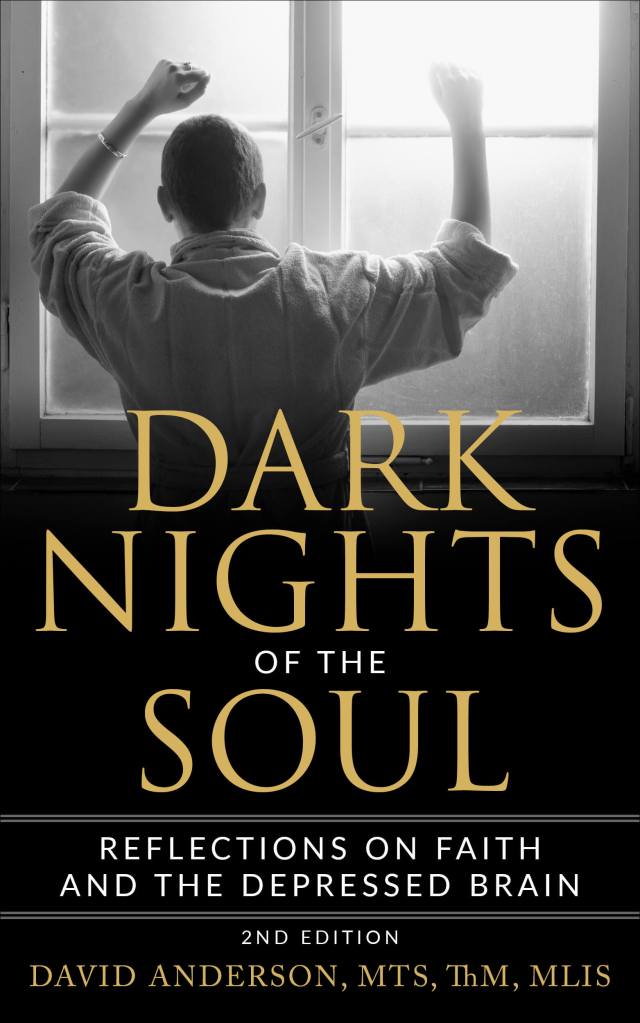





 David Anderson