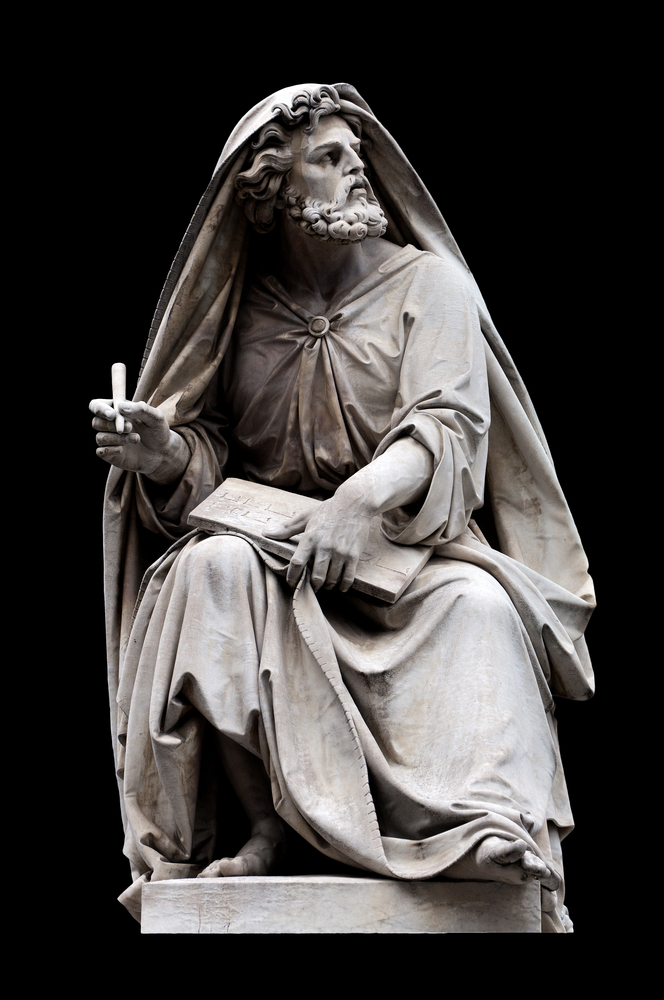
Sculpture of the Prophet Isaiah

Sears and Profits

Sculpture of the Prophet Isaiah
Isaiah or Inizio?

You might think from the title this is a commentary about the bankruptcy that happened to Sears earlier this year. That would be ironic, wouldn’t it? No, it is a mistyping by Office 365’s Dictate function. I’m looking for ways to write faster. Someone suggested that you could use the Dictate function on your computer or word processor. It will type what you speak. People speak on average about 150 words per minute. That’s 9,000 words an hour. You could write a whole novel in a weekend at that rate! Not exactly.

First, I won’t be talking that fast. I will have to pause from time to time to think what to say next. So no way I’m speaking or typing 9,000 words in an hour. Also, even if I do talk nonstop for an hour to get those 9,000 words, that is the first draft, not the finished product. Even if it types everything I dictate perfectly, I’m still going to have to go back and edit. That’s fine, because I have to do that when I type as well. But it doesn’t type everything just as I say. It makes a lot of mistakes.

Second, when you speak, you don’t normally say punctuation marks. If you want Office 365 to type punctuation, you have to say at the right points: comma, period, colon, semicolon, or question mark. It doesn’t seem to recognize other punctuation, like hyphen or ellipsis. It spelled out ellipsis. I said hyphen, and it heard iPhone. And sometimes it won’t recognize the punctuation, so it will just make up a word, like call Lynn (colon); semi cone (semicolon); thoma, MA, tamah, AMA, tohma, karma, come air, Tom (comma); or herian, here yet, erienne, Syria, area (period). And it has difficulty distinguishing when period is not punctuation. If I say, “people point to,” Office 365 types people .2. If I say, “Isaiah, Hosea, Amos, and Micah were prophets from the same period,” it will render that last phrase from the same.

Third, sometimes it types spellings even it knows are wrong, e.g., defeted (defeated), in dreta (in dread of), occured (occurred), friture (creature), skurge (scourge), rycz verse (reverse), and illusionz (illusions). If it knows the correct way to spell it, why doesn’t it type it correctly?

Fourth, it doesn’t handle numbers or words that sound like numbers much better. I said “heretofore.” It typed here to 4. I said, “to a merchant when weighing produce.” It typed 2 AM urgent when right wing produce. Oh yeah, it has a right wing bias. I said, “abomination.” It typed “Obamanation.” Don’t even get me started. For some reason, it thinks most numbers are times. I said, “one or two.” It typed 1:00 or 2:00. And it can’t get the word “and” right. It’ll give me an, am, or in. When I said Aaron and Moses, it typed Aaron Ann Moses.

Third, Dictate obviously does not do as much Bible study as I do. I know Biblical names can be hard to understand. I can’t blame Dictate if it gets the names of Assyrian kings wrong, for example, or if it can’t hear the difference between Syria and Assyria. Here are a few of the major Assyrian kings and various ways Dictate heard them.

  • Sennacherib – snack rib, send atrib, the nacro rib
  • Tiglath-pileser III – take a left pleezer the 3rd, YG left pleezer, tiglath pleezer, tig left alacer III
  • Sargon II – sargo on the second

Snack rib? What kind of name is that for king? Take a left Pleezer the 3rd? You mean there was actually a first and second with that name? His name is hyphenated. If I say Tiglath (hyphen) pileser, it will give my YG left iPhone laser.

Some of the Hebrew or Jewish names are weird to English speakers.

  • Isaiah – inizio, atizip
  • Hosea – Jose, Jose at
  • Amos – a must, famous
  • Micah – my car, my tat
  • Zephaniah – season finale a
  • Habakkuk – abaqa it, About cook, obac cook, halback took, abaqa
  • Nehemiah – NIA Maya
  • Ahaz – a has

Back to that earlier sentence with four prophets, it would give me Inizio, Jose, Famous, and My car were profits from the same. I couldn’t wait for the “Zephaniah” of Game of Thrones, but it was a huge disappointment. The book of “About cook” is only three chapters.

Some Biblical names are not only difficult but obscure. I can’t blame Dictate too much for these mistakes:

  • Shebanyahu – chevannes Yahoo
  • Piankhi – yongki, chunky

I like “Chunky” and “anything-Yahoo,” I have to admit. Of course I have to refer to non-biblical names too. Compare what I said with what Office 365 typed:

  • R. Simeon b. Eliezar (quoted in the Mishnah and the Talmud) – Our simian be Eleazar
  • Hammurabi – homma Robbie
  • Mays (last name of a commentator) – maze
  • Diblaim – Deb lion
  • Jehu – J who

I didn’t know simians were quoted in the Mishnah and Talmud, but apparently Dictate thinks so, and their simian be Eleazar. “Eleazar, put that banana down for a moment. What does the Torah say about fair treatment of laborers?” If your last name is Mays, Dictate puts you in a maze.

“What’s that town?”

“Diblaim.”

“What kind of lion?”

“No, Diblaim.”

“Oh, a Deb lion. Is that her name? Deb?”

“I’m studying king Jehu.”

“J who?”

“That’s right.”

Who’s on first?

I admit those names can be either obscure or confusing, but Hammurabi? I thought he was a pretty famous historical figure. Homma Robbie? Maybe we could change that to Homie Robbie. Homie Robbie’s Code.

“Homie Robbie?”

“Yeah, he’s my homie. I call him Robbie.”

One upside to this is if the name’s are difficult for you, you can at least get suggestions for nicknames from here. Zephaniah? Call him “Season finale.” Habakkuk? Call him “About cook.” Aminadab? Call him “A little dab.” Shadrach, Meshach, and Abednego? Call them “Your shack, My shack, and A bungalow.”

You run into the same difficulties with Biblical place names.

  • Rimmon – Ramon
  • Aioth – I wrote
  • Ai – AI
  • Migron – My grown
  • Michmash (comma) a village – mismash mama village
  • Pass across the Wadi es-Suwenit – has across thawadi S so one right
  • Gibeah (comma) – give me a comma
  • Samaria – summaria, some area
  • Zion – xyon up, zyan

Give me a comma? Obviously, I wanted a comma after Gibeah, but it didn’t give me one. It just typed instructions to give me one. Sounds like the worst cheer ever. “Give me a comma!”

The town of Ai must have been one of those advanced Atlantean civilizations, because it had AI. Another town is called Aioth. I don’t want you to type I wrote this. I guess my mama’s village is a mishmash. Maybe it’s the Wadi es-Suwenit, because thawadi S so one right sure looks like a mishmash to me.

“The Assyrians invaded Samaria.”

“What area?”

“I told you, Samaria.”

“What area!!?”

What’s on second?

I know most of these names are obscure and confusing to many people, but it can’t even get Zion right?

God is a pretty important word for Biblical studies, wouldn’t you say? Dictate heard Gone. In the beginning, Gone created the heavens and the earth. Context doesn’t seem to help Dictate at all. I guess the bottom line is I won’t be trading in my keyboard and mouse any time soon.

What do you say we have a little fun with this, if you’re up for it? I’ll give you some sentences Office 365 heard me say for my research on Biblical history, which I hope to turn into novels. See if you can decode them. I’ve included a key below. You can check your answers after the picture.

  1. N seven 32 BCE (Tom) the Cirian King take a left (iPhone) pleezer III defeted judasz enemies.
  2. N 722 BC E he (karma) the Kingdom of is real in the North felt Syria.
  3. The profits who were active at this time were inizia, a must, Jose a, and my car.
  4. The Sears and profits told the judean King a has not to B in dreta a serious King snack rib.
  5. Inizio squirrel was unrolled in red.
  6. Gone heard hezekiah sprayer.
  7. Built on the foundation of hustle some profits.
  8. Aaron Ann Moses.
  9. The profit abaqa it warms judah to run from the call Deans.
  10. Our simian be eleazar was a sage quoted in the mishna am a talmid.
  11. Hosea pronounced punishment against King J who and his dionis T 4 the blood of jazz real.
  12. Allies prove davaine hope for some area.
I said Office 365 heard
Apostles and prophets Hustle some profits
Assyrian A Syrian, the Syrian, a Cerian
Chaldeans Call Deans
Dynasty Dionis T
Fell to Felt
Habakkuk Abaqa it, About cook, obac cook, halback took, abaqa
Jezreel jazz real
Jehu J who
   
R. Simeon b. Eliezar Our simian be Eleazar
Samaria Some area
Scroll Squirrel
Seers and prophets Sears and profits
Sennacherib snack rib, send atrib, the nacro rib
Tiglath (hyphen) pileser the third Take a left (iPhone) pleezer the 3rd, YG left pleezer, tiglath pleezer, tig left alacer III
Unrolled and read Unrolled in red
Warned Warms
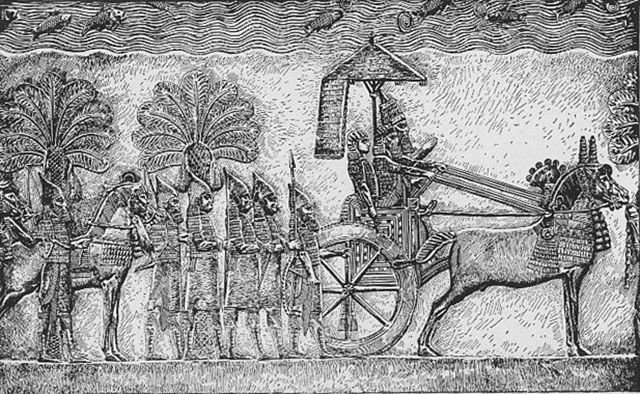
Bas-relief of Assyrian king Sennacherib
The Assyrian king Snack-rib, uh, Sennacherib

Answers:

  1. In 732 BCE, the Assyrian king, Tiglath (hyphen) pileser III defeated Judah’s enemies.
  2. In 722 BCE, the kingdom of Israel in the north fell to Assyria.
  3. The prophets who are active at this time were Isaiah, Amos, Hosea, and Micah.
  4. The seers and prophets told the Judean king Ahaz not to be in dread of Assyria’s king Sennacherib
  5. Isaiah’s scroll was unrolled and read.
  6. God heard Hezekiah’s prayer.
  7. Built on the foundation of the apostles and prophets
  8. Aaron and Moses
  9. The prophet Habakkuk warned Judah to run from the Chaldeans.
  10. R. Simeon b. Eliezer was a sage quoted in the Mishnah and the Talmud
  11. Hosea pronounced punishment against King Jehu and his dynasty for the blood of Jezreel
  12. Allies proved a vain hope for Samaria.

Thoughts on the Game of Thrones Finale. **SPOILERS**

Alright, I didn’t want to pile on about how disappointing it was, but I’ve got some things I just have to get off my chest. The biggest problem was they needed to make the season longer. I was worried when they said there would only be six episodes in this season. “How can they resolve everything there is to resolve in six seasons?” I thought. Turns out they couldn’t. Really, trying to resolve everything in six episodes, they were setting themselves up for failure. So let me join the chorus of wailing and gnashing of teeth one last time.

The Battle of Winterfell

This is not one of my complaints. I don’t understand why folks were disappointed in the Battle of Winterfell. What? You wanted it to be longer? Stretch it out over two episodes? You mean a full hour-plus episode of a bloody, gory battle with Night Walkers and dragons, back and forth, ups and downs, seesawing between hope and despair wasn’t intense enough? You needed your blood curdled and nightmares for two weeks, not just one?

But the Night Army crumbled so easily. Of course the Night Army crumbled. We all knew killing the Night King was key, and Arya (perfect choice for the job) did it. It took every army and every knight in Winterfell to pull it off. Two characters who needed redemption – Theon and Melisandre – found it. I don’t see how they failed there.

The Battle of King’s Landing

After cheering for Danaeris Targaryen so long, after she had overcome so much to get to this place where King’s Landing and the Iron Throne were in her grasp, she reverts back to her mad ancestry and burns everything to the ground. I was disappointed in her. I think they could have set that kind of turn better (if they hadn’t made the season so short), but in the end it felt like the kind of twist I had come to expect from Game of Thrones. She had just enough reasons that I understood it, though that does not seem to be the consensus among fans.

But then we get to the final episode, and that was just wrong in so many ways.

Bran the Superfluous

Bran’s character was unnecessary. All he did was pass on information. They could have done the entire series without him. If they were going to take that turn, his character needed to be developed much better. And he knew all along he was going to become king? If so, why bring up that Jon Snow is really Aegon Targaryon and the rightful heir to the Iron Throne? Why present his brother as an alternate to Dany if he knew all along he would be king? If that was the turn they were going to take, 1) they needed to develop Bran into a full character, and 2) they needed to make the end for Jon not so dreary. Either have him claim the throne or die fighting for his people, but going back to the Night Watch after you’ve flown dragons just is not the way to end his story arc.

Earth shattering revelation (Eh, not so much)

Jon Snow was the guy everyone wanted to be king, and turned out he was the rightful king. Sure put a monkey wrench in Danaeris Targaryen’s “inevitable” march to the Iron Throne, and turned her lover into her rival. That could have set up a much more dramatic showdown, if they had not cut the season so short.

But they raise the expectations that Jon will (if reluctantly) be revealed as Aegon Targaryen and have to take the throne, only to send him back to the Night’s Watch? He led armies to victory over the Wildlings (including a giant), the Boltons, and the Night Army. And did I mention he’s one of two people in the world who can ride dragons? That ending for him, after building our expectations for much more, was just not right. It feel like they cheated just because they had to end it.

Winter is coming?

They forgot about winter that had been all the talk for the first half of the series. If they had used it, that could have added another layer to the threats.

Dany

They could have done more to make her story arc feel complete. I think Kristen Lamb said it well. If they had added even a couple more episodes,

The writers could have:

a) Made the battle against the White Walkers more than the single largest disappointment since New Coke. {I disagree about that being the biggest disappointment, but leads to further points.}

b) Ratcheted the ‘end of the world’ feeling that WOULD entice characters make utterly STUPID decisions.

I’m looking at you, Jaime Lannister.

c) With heightened doom—losses against the Walkers and weather, Cersei refusing to render aid, and the sheer emotional stress that Dany was failing those she’d promised to save—Dany’s final acts of madness would have felt far more organic.

Her zealotry could have grown from subtle (which they already HAD) but then her fanaticism would’ve had a bit more time to bloom in proportion with the threat.

–“Game of Thrones: A Song of ‘I Literally Can’t Even’” https://authorkristenlamb.com/2019/05/game-of-thrones-storytelling-cautionary-tale/

Even though I said I understand her scorched earth strategy at the end, I think Lamb’s suggestions would have made it more understandable, even if we did not like it.

Arya

She became one of the most badass characters on all of television. But except for killing the Night King, she looked weak most of the time. She had always been in complete control, able to slip in and out of any situation at will. But she looked scared of the zombies in her castle (The after-show explained her head injury made her dizzy and not quite as confident). She looked as lost as the city-folk running through King’s Landing. Then they ended Episode 5 with her rising from the ashes to find a white horse, ride it out of the city, thus setting her up to be… I don’t know, maybe a mythical figure of death akin to one of the Horseman of the Apocalypse. You think badass Arya has returned. Again, set up, no pay off.

If you ask me, she should have been the one to kill Dany. She could have done the deed, stood in front of the Iron Throne and let Drogoro burn her with the Iron Throne, sacrificing herself for the peace of the Realm, and opening the way for Jon Snow to be revealed as Aegon Targaryen, and take the, uh, we’ll have to make a new throne, but you get the idea.

Maybe they thought that was too predictable. But if they wanted to give us a surprise at the end, it had to be better than Bran the Broken. And whatever the surprise, they had to do a better job of setting it up. Which means my fears were founded. They could not bring everything to a satisfactory end, or even close to it, in just six episodes.

The Short Season

Having to wrap up everything in six episodes made the ending feel rushed, like they forced characters to do unnatural things just to get to the end. Of course, GoT is known for having characters surprise us. It’s one of the things that made it so addictive. But those surprises still have to feel organic. When you end with characters we’ve followed throughout a series doing things that don’t feel true to them, surprises are not good. When you give the reader a set up (like Jon Snow is Aegon Targaryen), there needs to be a pay-off. Bran as king and Jon Snow moping back to the Wall does not feel like a pay-off at all.

Maybe they thought Jon becoming king would have been too predictable, but at least I wouldn’t have felt cheated. If they didn’t want that, they shouldn’t have set us up for it.

###

For us as authors, we can learn a lot about storytelling done right from the earlier seasons of GoT. But the fans’ universal outcries of disappointment provide some important lessons as well. My biggest takeaway is this is a reminder not to rush your ending. Most often, it is what readers remember most after they read and/or watch. Take the time you need to develop the character arcs and the story arc so that it feels right. You don’t want it to be predictable, but you don’t want it to be inevitable. The best reaction you can get from the reader at the end of your story is, “I should have seen it coming.” The worst reaction you can get is, well, if you’ve read this far, you have a pretty good idea.

Now for a more satisfying way to end that saga, here’s a link to a performance of the GoT theme song featuring Tom Morello of Audioslave/Rage Against The Machine, Scott Ian of Anthrax, Nuno Bettencourt of Extreme, Brad Paisley, and Game Of Thrones composer Ramin Djawadi. Very Cool.

David slays Goliath with a sling and stone

David after Goliath: A Writing Devotion

Badge-2018 Writer's Digest Writing Competition Award Winner

This was originally a devotional for the June 24, 2017 meeting of the South Carolina chapter of American Christian Fiction Writers (ACFW). I am proud to say it won an Honorable Mention in the 2018 Writer’s Digest Annual Competition.

David put his hand in his bag, took out a stone, slung it, and struck the Philistine on his forehead. The stone sank into his forehead, and he fell face down on the ground (1 Sam 17:49).

I remember when the writing bug bit me. I thought about Jesus and the sinful woman in Luke, and something stirred in me. I grabbed a pen and notebook and started writing the story as if Jesus were telling it. I didn’t think about it. I wouldn’t even have attempted it if I had. But somehow the story just flowed out of me. I looked at it and realized I had to be a writer.

After that, it was like I was on a writer’s high. I wrote constantly and thought everything on the pages was brilliant. I would write, look at it, and I was like, “I can’t believe I wrote this.”

Some months later, the high wore off. As I studied more about what makes good writing, I found my writing actually had “amateur” written all over it. My clever turns of phrase were really clichés. My profound comments on the human condition were breaking connection with my POV character. My masterpieces were filled with rookie mistakes: Weak verbs, info-dumps, irrelevant details, characters that were spokespersons for my beliefs rather than real people, not enough emotion and suspense, too much internal dialogue, telling not showing. And I looked at it, and I was like, “I can’t believe I wrote this.” Not in the good way.  I was writing, but I still had a lot to learn about the craft of writing publishable stories.

We’ve all heard the story of David and Goliath. Do you remember that when David told Saul he would fight the giant, Saul gave him his armor and weapons? And what happened? That’s right. He did not take it. The armor probably didn’t fit. Don’t forget Saul was the tallest man in Israel. That’s why they wanted him to be king. And David had never worn armor or used a sword or spear. So he went into the fight with what he knew, a sling and five smooth stones from the brook.

David slays Goliath with a sling and stone
Armor? Shields? Swords? Spears? Nah, I just need a sling and some stones.

But after that initial glory, David would be called upon to lead the armies of Israel. He had to learn new skills and techniques. He had to learn how to speak in a commanding and inspiring manner, make battle plans, lead marches, choose terrain for battle, maneuver units to outflank the enemy, coordinate infantry, chariots, archers and slingers, and start wearing the armor and using the sword and spear he had not been ready to use against Goliath.

As writers, we will probably never be called upon to lead armies or kill giants. Unless we write stories about them. But like David, this calling to be a writer will require we learn new skills and concepts like, plotting, characterization, style, dialogue, creating scenes, point of view, how to work in description and backstory without bringing the action to a screeching halt, and what exactly does “Show don’t tell” mean?

So if you find yourself annoyed with all the technical stuff about writing, think about David. He may have had moments when he pined for his sling and a giant to take down, just like I sometimes pine for when I first started writing, and I didn’t have to worry about style or technique. I just enjoyed so much seeing my thoughts come to life on the page. But after Goliath, there were no more giants. If David was going to make the transition from baddest slinger in the Middle East to commander of the armies and eventually to king of all Israel, it was time to put his sling down, put his armor on, and practice with his sword and shield. So like David, we also need to put away our old ways of writing, when we were amateurs, and learn how to be professional writers. And also like David, whatever new adventures writing brings you, keep your faith in God.

***

Prayer: Lord God, thank you for your gift of the written word. Bless this ACFW chapter to train and equip these people gathered here to make the most of their gift and calling, so that we may point others to the light of Christ. And it’s in his name we pray. Amen.

On Meeting Editors and Agents at Writers Conferences

Most writing conferences offer opportunities to meet with agents and/or editors one-on-one. Some people are confused about the purpose of meeting with an editor. Before you register for a writing conference, you need to be clear about this. And of course, meetings with agents and editors are for writers who want to be published through a traditional publisher. If you are self-publishing or indie-publishing, you don’t need to meet with agents and editors.

Logo for Carolina Christian Writers Conference 2018
Source: https://www.fbs.org/christian-writers-conference-2018/

But first, you need to understand there are two kinds of editors. Some operate like independent contractors. You can hire one to edit your manuscript. I’m still trying to decide if I want to do that, because it is an added expense, I’ve already done a good bit of self-editing, and I don’t know if it will really help me get accepted by an agent or publisher. But if I were self-publishing – which I’m still considering – I would definitely hire one of these editors, because I don’t have a traditional publisher to provide one for me. However, when conferences offer a chance to meet with agents or editors, these are not editors who edit your manuscript.

The other type of editor works for one publisher, and part of his/her job is to acquire new manuscripts for his/her employer, i.e., sometimes called an “acquisitions editor.” Ultimately, an editor is a gatekeeper to the publisher, but most of them will only accept manuscripts submitted by an agent. An agent has relationships with many publishers. He/she can submit your MS to editors who are looking for your type of book. Though the role of agent and editor is different, they are both at the conference because they are looking for new manuscripts and authors they believe are ready to publish now.

An agent is usually necessary to get your foot in the door with an editor. However, the one exception is at conferences, editors will hear pitches directly from authors. And if they like your pitch, they may ask you to submit a book proposal and sample or even a complete MS.

Logo for Blue Ridge Mountains Christian Writers Conference
Source: http://ridgecrestconferencecenter.org/event/blueridgemountainchristianwritersconference#.Wo2lvHxG3IU

So in moving up the ladder to publication:

  1. An agent shops your MS to (acquisitions) editors.
  2. An editor presents your MS to representatives of his/her specific publisher.
  3. Publisher representatives accept your MS and offer a contract.

At that point, you will want your agent to negotiate your contract with the publisher, and the editor will be your liaison with the publisher.

Moral of the story: Agents and editors are both necessary to get published, so talk to any of the ones who are most likely to be interested in your manuscript.

Q: So this is not an editor who is offering to edit my manuscript?

A: Correct. There may be some of those editors as attendees, but the kind of editors conferences will make available to you are the ones that could potentially get you accepted by a publisher.

Q: If these editors will only accept manuscripts from agents, should I only talk to agents?

A: Normally, yes. But as I said, the one exception to this rule is at conferences. When editors offer one-on-one meetings at conferences, they are offering a rare chance to bypass the agent and pitch your MS directly to them. If they like your idea, they might ask you to submit something to them. Every editor is different in terms of what they want to receive initially, but most will ask for a book summary and/or outline, some sample pages, and a brief author bio. Only submit directly to an editor if they ask, and give them what they ask for specifically.

Q: If through the conference I can get an editor to accept my MS without an agent, why do I need to talk to agents?

A: Two big reasons:

  1. Your chances of being accepted by an editor are still much greater through an agent than on your own.
  2. Even if you do get an offer from a publisher because an editor was excited about you and your MS, you should still have an agent represent you in contract negotiations. If publishers can take advantage of you, they will – even Christian publishers. They’re not bad people, but this is a business to them. They want the most advantageous deal they can get. An agent knows the tricks they will try to pull and how to protect you from them.

Q: What if I do get a publishing offer, but I don’t have an agent?

A: Contact a few agents who represent your type of book and tell them you have a publishing offer and need an agent. My guess is your phone will ring off the hook.

Q: How do I know what agents and editors are interested in?

A: Find a recent copy of the Writer’s Market. For the editors listed in the conference, look at their publishers and see what they publish. That will tell you what the editor is looking for. You might be able to find a copy in your library. However, if you are serious about getting your MS published through a traditional publisher, it is worth buying. If you want to focus on agents, the Guide to Literary Agents can give you more detailed info.

Q: So at the conference, is it better to talk to an agent or editor?

A: It’s best to talk to whoever is most likely to take an interest in your manuscript. You will need both of them to successfully navigate the publishing process. If you get an editor first, you should have no problem finding an agent. If you get an agent first, his/her job is to get your foot in the door with an editor. Where you start your journey is not nearly as important as finding someone who really wants to help you get in.

Writing Manifesto

I have not made a writing manifesto yet. Until then, this will do.

Wordplayers Manifesto
Source: https://www.helpingwritersbecomeauthors.com/wordplayers-manifesto/


Is Multiple POV Dead?

When I first started seriously shopping my novel manuscript in 2014, secular agents/publishers said

  1. It’s too Christian for us.
  2. We don’t want more than two points of view.

Christian agents/publishers said

  1. It has too much sex and violence for us (none of it gratuitous, I assure you).
  2. We don’t want more than two points of view.

I expected #1 from both to be an issue that I would just have to negotiate and maybe make some changes for them. #2, however, came totally out of the blue for me. All my life I’ve read and liked novels with multiple points of view (POV). Donald Maass in Writing the Breakout Novel devotes a whole chapter to how to write in multiple POV. But they just wouldn’t seem to budge on that. They really prefer one POV. Even two is pushing it.

When I first started writing this manuscript, I envisioned it as two POV, a criminal condemned to death and his prison guard. It wasn’t working. After trying different things with the plot and working on my writing technique, it improved, but I still didn’t feel like it was ready for publication. When I wrote some chapters in a third POV (the wife of the condemned criminal), that opened up new scenes and characters that made the story and main characters more real to me. I felt I was moving in the right direction.

Then I tried out a chapter from the perspective of the Procurator of the Games, to get access to important Arena scenes and intrigues around the emperor. My critique group loved it, so I wrote some more. So that meant I had four POV characters.

At the time, I had no idea it would even be an issue. When I kept running into the same brick wall, I stopped sending query letters and tried to figure out what to do with it. Can I eliminate two POV’s? And if not, what then?

A sock in the gut from an author and an agent

A few months ago, award-winning author Lynette Eason spoke at the local chapter of American Christian Fiction Writers (ACFW). She writes mainly romantic suspense for the Christian market. She wrote one novel with four POV, like mine. It was 90,000 words while mine is 76,000. She suggested they might be thinking it’s not enough words to develop all four of these characters. It was the first thing anyone in publishing said that made sense to me.

However, I recently attended a workshop through Writer’s Digest that suggests I may not be able to overcome this no matter how many words I add. I got to ask all my burning questions to a reputable agent. She asked if there were any bestsellers comparable to mine that

  1. Were written by debut novelists, and
  2. Were published in the last two years.

There’s the rub. I can think of multiple POV bestsellers. Preston and Child’s Pendergast series, the most recent of which was The Obsidian Chamber (2016). George R. R. Martin’s Song of Fire and Ice series, which has been adapted very successfully for television. Jodi Picoult’s latest novel, which has seven POV in one chapter. But all of these authors have consistently written bestsellers going back to the 90’s. They have a proven track record. As a debut novelist, I do not. In fact, the last multiple POV bestseller from a debut novelist I can remember was The Help by Kathryn Stockett (2009). Eight years ago.

And I can’t fall back on Donald Maass, as great as his book was, because Breakout Novel was published in 2002. Book publishing has changed a lot since then. That’s why in your query letters, when you name published books comparable to yours, you can’t go back more than two years. What sold three or four years ago is already outdated. The one bit of good news I have is I found three novels set in ancient Rome all published this year. But, of course, they are all single POV.

I spent about twelve years working on this novel, writing and failing, writing and failing, over and over again until I finally had a manuscript I believed in. And in that twelve years, the very thing that breathed life into my novel like God breathing life into clay became the thing that makes publishers say, “Thanks, but it’s not for us.”

What to do now?

I don’t know. I could maybe bring down the number of POV’s to three. That’s still too many for the major publishers. Are there any agents, and maybe independent publishers, that are willing to take a chance on a debut novelist with a multiple POV story that is a damn good novel if I do say so myself? I’m going back in the ring to find out. Because after all the work I’ve put into it, I just can’t accept that I created something no one will care about.

If you are a writer, what POV do you write in? First person? Third person, deep POV? Third Person omniscient? Do you use one POV character? Two? Do you ever use more than two?

And whether you are a writer or reader, what do you think about this situation? Are publishers right that multiple POV novels don’t sell any more (unless you are an established bestseller)? Or are they misreading the market? I would love to hear your comments.

_______

In the meantime, we are coming up on the 20th anniversary of the deaths of Princess Diana and Mother Teresa. I wrote a short story imagining them meeting in heaven called “A Requiem for Two.” It’s available on Kindle for only $0.99. And it’s only one Point of View (Princess Diana) in case you were wondering. If you like it, I would so appreciate a rating or review.

Writing Devotion, 1 Sam 17:49

I was asked to give a devotional for the June 24, 2017 meeting of the South Carolina chapter of American Christian Fiction Writers (ACFW). The pattern they prefer is 1) a bible verse, 2) reflection from personal testimony or other illustration, 3) a lesson learned or life application, and 4) a prayer. I chose to draw from the story of David and Goliath.

***

David put his hand in his bag, took out a stone, slung it, and struck the Philistine on his forehead. The stone sank into his forehead, and he fell face down on the ground (1 Sam 17:49).

I remember when the writing bug bit me. I thought about Jesus and the sinful woman, and something stirred in me. I grabbed a pen and notebook and started writing the story as if Jesus were telling it. I didn’t think about it. I wouldn’t even have attempted it if I had. But somehow the story just flowed out of me. I looked at it and realized I had to be a writer.

After that, it was like I was on a writer’s high. I wrote constantly and thought everything on the pages was brilliant. I would write, look at it, and I was like, “I can’t believe I wrote this.”

Some months later, the high wore off. As I studied more about what makes good writing, I found my clever turns of phrase were really clichés. My profound comments on the human condition were breaking connection with my POV character. My masterpieces were filled with rookie mistakes. Weak verbs, info-dumps, irrelevant details, characters that were spokespersons for my beliefs rather than real people, not enough emotion and suspense, too much internal dialogue, tell don’t show. And I looked at it, and I was like, “I can’t believe I wrote this.” Not in the good way. I was writing, but I still had a lot to learn about the craft of writing publishable stories.

We’ve all heard the story of David and Goliath. Do you remember that when David told Saul he would fight the giant, Saul gave him his armor and weapons? And what happened? That’s right. He did not take it. The armor probably didn’t fit. Don’t forget Saul was the tallest man in Israel. That’s why they wanted him to be king. And David had never worn armor or used a sword or spear. So he went into the fight with what he knew, a sling and five smooth stones from the brook.

david and goliath

But after that initial glory, David would be called upon to lead the armies of Israel. He had to learn new skills and techniques. He had to learn how to speak in a commanding and inspiring manner, make battle plans, lead marches, choose terrain for battle, maneuver units to outflank the enemy, coordinate infantry, chariots, and slingers, and start wearing the armor and using the sword and spear he had not been ready to use against Goliath.

As writers, we will probably never be called upon to lead armies or kill giants. Unless we want to write stories about them. But like David, this calling to be a writer will require we learn new skills and concepts like, plotting, characterization, style, dialogue, creating scenes, how to work in description and backstory without bringing the action to a screeching halt, and what exactly does “Show don’t tell” mean?

So if you find yourself annoyed with all the technical stuff about writing, think about David. He may have had moments when he pined for his sling and a giant to take down. But after Goliath, there were no more giants. If he was going to make the transition from baddest slinger in the Middle East to commander of the armies and eventually to king of Israel, it was time to put his sling down, put his armor on, and practice with his sword and shield. And also like David, whatever new adventures writing brings you, keep your faith in God.

Prayer: Lord God, thank you for your gift of the written word. Bless this ACFW chapter to train and equip these people gathered here to make the most of their gift and calling, so that we may point others to the light of Christ. And it’s in his name we pray. Amen.

_____

Amazon Author page

Published!

It’s been a good week. I made two of my short stories available on Kindle for only 99 cents. One is called “Many Waters.” It tells Luke’s story of the Sinful Woman (7:36-50) from Jesus’ perspective. I think I must have been crazy to do that. The Preface tells the story how I came to make such a bold move. I included an Epilogue with some FAQ’s from people who have read it.

The other is also one I wrote years ago. This year is the 20th anniversary of the death of Princess Diana and Mother Teresa. Since they died within a few days of each other, I wondered what it would be like if they met in heaven. It’s called “A Requiem for Two.”

I also picked up an issue of Anderson Magazine (several, actually) that ran my story “Church Street Heritage Project: Looking Forward by Looking Back.” I wish I could give you a link to it, but it’s not available on the website yet. Anyway, if you’re in Anderson, South Carolina, the May/June issue is available now.

Blog Review: Warrior Writers

Very pleased to recommend Kristen Lamb’s author blog, which I just discovered. Have just started with it but I can already tell it will be helpful for me and any other aspiring author.

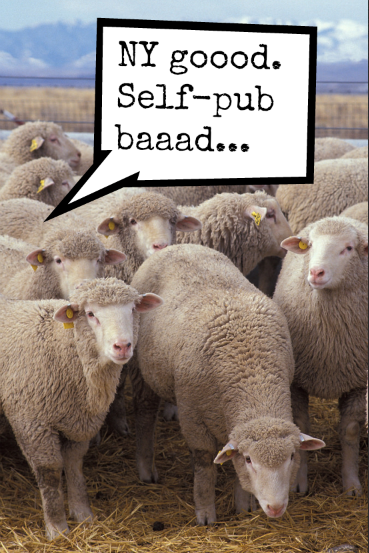
In a post titled Author Animal Farm—New York Goood, Self-pub Baaaaaad she responds to a piece in The Huffington Post trashing self-publishing. She addresses whether self-pub is a legitimate path for an author, whether traditional or legacy publishing is really better, and whether we as writers should contribute to sites like Huffington Post that only pay in “exposure.” Here is the comment I left on this post (with a few proofing corrections, bold and links added here).

*****

This gave me a lot to think about. On Huff, I thought it would help me to get published there. I’m already not getting paid for my blog posts. At least I would get some name recognition from that. On the other hand I hate to see publications who have the money to pay writers but still don’t pay. On self-publishing, I’ve seen both sides. C. Hope Clark is the author of two mystery series set in coastal Carolina. She says Legacy Publishing made her a better writer because after 36 rejections, she looked over the manuscript again and realized it wasn’t ready. Having that measure of quality control made that first novel better and those lessons carried over to the others. If it makes my work better, I’m for it. However, I’m in a bind because my novel doesn’t fit neatly into one genre. I knew it would be a challenge for traditional publishers because of that. But I find myself having my manuscript rejected for ridiculous reasons.
I read about the multiple points of view approach from Donald Maass’ Writing the Breakout Novel, and I was encouraged because it applied to my novel. I followed his advice for using it effectively. Most agents and editors are telling me now that I have to stick to one point of view, two at most. WHY????? The lead agent of a highly respected agency wrote a book on how to write a commercial best-seller, said this is a legitimate way to do that, and now all the gatekeepers think it can’t possibly work?

The Pendergast series from Preston and Child is one of my contemporary favorites and always a guaranteed bestseller. They always use multiple points of view. And what would Game of Thrones be if we could only experience the Seven Kingdoms through one POV character? And at the risk of sounding immodest, I know I have a good novel. In fact, it’s better than a lot that actually gets published through Legacy Publishing. I know that because I’ve read some of what’s out there. No one could read it all, but I’ve read enough to know mine compares favorably.
I also know because my first draft sucked. It took a lot of time, educating myself on the craft, blood, sweat, and tears, and critique groups who kicked my butt to teach me how to create tension, drama, and characters they would care about. So I know it wasn’t always worthy of being published, and self-publishing that first or second or seventh draft would have been a disaster. But now? I’ll give the “real” publishers some more chances, but if I have to go self-pub, it’s still a good novel and worthy of being published.

*****

Btw, I also know it’s good because it recently won an award for unpublished fiction.

Author Kristen Lamb's avatarKristen Lamb's Blog

Original image via Kabsik Park courtesy of Flickr Creative Commons. Original image via Kabsik Park courtesy of Flickr Creative Commons.

Okay at first I wasn’t going to say anything regarding the latest Let’s Bash Self-Publishing rant over at HuffPo, but (like all “real” writers) I am in the business of serving my audience—YOU—what you want to hear and after about the tenth person who sent me Laurie Gough’s Self-Publishing—An Insult to the Written Word, I figured y’all might want my take 😉 .

For another angle on this controversy, I strongly recommend Fisking the HuffPo’s Snooty Rant About Self-Publishing.

Moving on…

Consider the Source

screen-shot-2016-12-29-at-10-40-25-am

First of all, am I the only one to see the laughable hypocrisy of anyone who writes for Huffington Post lecturing anyone about real writing? Huffington Post is a predatory business, a literary parasite that has made hundreds of millions of dollars by paying writers in “exposure dollars.” And, by doing so, has…

View original post 2,151 more words

Reblog: “Clean Fiction” as Evangelical White Magic

Great post from Mike Duran, “Clean Fiction” as Evangelical White Magic.

This is a point I’m trying to make about my fiction and Biblical fiction in general. If Philippians 4:8 means to only watch, read, consume, or create media that is “clean,” i.e., devoid of violence, gore, nudity, profanity, sex, and other types of immorality, why does the Bible contain stories with all these elements?

So how do you consume or create material with immorality and not be corrupted by it? The same way you do when you encounter it in the Bible, by exercising discernment. And such “unclean” elements exist in media for the same reason they exist in the Bible. Because they exist in the world, and telling the truth sometimes requires we make that plain.