Podcast tagline: “Learning and sharing our ‘failures’, setbacks, comebacks, and pivots, and talking about the tactical steps you took to get through the bump in the road.”
Look for Episode 14, “Faith and Clinical Depression with David Anderson”
This is my third appearance as a guest on a podcast, and each one has been a great experience. Each one has challenged me in different ways while encouraging me to talk about something I’m passionate about, which is helping people with depression find a faith and plan for recovery that works for them. If you want to know how to get an introvert talking, that’s how you do it.
In keeping with her tagline, the theme was about being diagnosed with clinical depression and living in recovery from it. Among the things we talked about are
The difference between situational and clinical depression
How I found out I have clinical depression
Signs that you should be tested for clinical depression
How some kinds of faith can help recovery
How some kinds of faith can hinder recovery
Some tips on coping with depression under pandemic conditions
Reconciling faith and science, and how both were important to me in recovery
Depression during the holidays
I ended up talking more about religion more than I thought I would. Though Jenelle is not religious, she did not shy away from asking me about it. And she had some really nice things to say about my book. The episode lasts for about an hour, but it could easily have gone on all night. I have learned in those situations I need to be mindful of the time, because not everyone wants to hear my perspective for six hours, no matter how brilliant I think it is. But I have listened to it, I’m delighted with the result, and I hope you will get some value from it.
In the end, she said the book was helpful to her understanding of friends or family members who struggle with depression, which affirmed something I had hoped. Even though I had to talk about my faith and how it affected my experience with depression, I had hoped it would be helpful to people who don’t necessarily share my faith or beliefs. I can’t thank her enough for that vote of confidence.
If you are looking for podcasts with hosts that are eager to help you get your message out, and you have a topic that matches the tagline of “Ebb and Glow,” I would strongly recommend Jenelle. She put me at ease and drew out some things I didn’t even know I wanted to talk about.
In the time of King Herod, after Jesus was born in Bethlehem of Judea, wise men from the East came to Jerusalem,
(Mat 2:1 NRSV)
The Greek word for “wise men” is magoi, the plural of magus. It may read “magi”, “kings”, or “wise men,” depending on your translation. The word is usually more closely associated with magic than royalty or wisdom, so magi seems the most accurate. Gingrich’s Lexicon says it can mean “wise men” or “astrologers.” Friberg’s Lexicon says it refers to the high priestly caste of Persia. Thayer’s Lexicon says it was a name the Babylonians, Medes, and Persians used to refer to “wise men, teachers, priests, physicians, astrologers, seers, interpreters of dreams, augurs, soothsayers, sorcerers etc.” (Thayer’s Greek Lexicon, entry 3280 magus).
Herodotus, an ancient Greek historian, uses it in a more neutral way for “one of a Median tribe” (Liddell-Scott, Greek Lexicon (Abridged)). For an example of how it is used in the Old Testament, we have this from the book of Daniel. The Babylonian king Nebuchadnezzar had a disturbing dream, so he did what all kings did back then: He called in his experts to help him interpret the dream.
So the king commanded that the magicians, the enchanters, the sorcerers, and the Chaldeans be summoned to tell the king his dreams. When they came in and stood before the king,
(Dan 2:2 NRSV)
In the Septuagint, magus translates the Hebrew ‘ashaph, which corresponds with “enchanters” in this translation. The reference to the Chaldeans could connect it to the “Medians” per Herodotus. The BDB lexicon defines it as a “conjurer, [or] necromancer,” and says it is probably a loan word from the Babylonian asuipu. All of the categories listed probably had some connection with magic and/or astrology, and they are advisors to the king. We could probably guess the magi in the Nativity story are the same. It is clear that they practiced astrology, because the appearance of a star prompted their journey.
In the Book of Acts, magi include Simon Magus (8:9-11), Bar Jesus (13:6), and Elymas (13:8), all of them villains. However, they would not have had the same status as Median or Persian magi in the court of the king. Given what Persian religion was, they might have been priests, as Friberg and Thayer said. There is an old image of the magi wearing caps shaped like cornucopias that identify them as priests of Mithras. Though it is dated several hundred years later, it is a possibility.
The Case for Persia
If you’re feeling like I turned a firehose of information on you, fear not. We can make sense of all this.
Scholars have speculated that these magi were likely either Persian or Arabian. I think Persian is more likely. They came “from the East,” so the land of Persia (Parthia to the Romans) is a likely candidate. The books of Daniel and Esther make references to the laws of the Medes and the Persians, and as one lexicon said, there is a possible connection of magoi with the Medes. Ever since Cyrus conquered Babylon for the Persians in about 538 BC, there had been a thriving community of Jews in Babylon. The book of Daniel is all about how he and his friends served alongside the advisors of the king’s court. It’s not hard to imagine that some wise men, priests, or magicians (perhaps a combination of all three) might have had some Jewish friends. They might have learned about their expectation of a Messiah. And then, they saw a “star” that indicated there was a new king of the Jews. Then about nine months later, they saw another “star.” Two stars in nine months both saying the same thing? For counselors/magicians/astrologers, that had to be significant. (I talk about what these “stars” most likely were in a previous post).
So they travel to Jerusalem along established trade routes bringing gifts, because you always bring gifts when you want to appear before a foreign king, perhaps on camels (or not, since archeologists said a few years ago there were no camels in the middle east until the 9th century AD, which makes no sense, because how could they be mentioned in the Bible so many times if the Biblical authors never saw or even heard of a camel? I like archeologists, but they got some ‘splaining to do on that).
Anyway, they arrive at the palace of Herod, king of the Jews, because isn’t that where you would look for a newborn king? Turns out it was news to Herod a new king had been born, which meant there was a usurper somewhere. They knew because they saw his star “at its rising” (not “in the east,” which makes no sense geographically).
Herod consulted his advisors, scribes and chief priests, who said the Messiah had to be born in Bethlehem according to Micah 5:2. Herod had survived so long on the throne by being both crafty and ruthless. He pointed the magi to Bethlehem and asked them to send him word when they find him, so he could “worship him” (or pay him homage) as well. Of course, that was a pretense. Herod planned to use the magi to discover where to find this would be king, so he could kill him. Thanks to an angel, the magi got wise to his plan (maybe that’s why they were called “wise men,” ha ha). So after they visited the child (not baby, by the way), gave him their gifts and worshipped him—indicating they believed he was the Messiah—they left for home, avoiding Herod altogether.
The Gifts: Gold, Frankincense, and Myrrh
One thing I love about the Christmas Carol “We Three Kings of Orient Are” is how it explains the appropriateness of these gifts, and how they foreshadowed Jesus’ destiny as the Messiah. Gold represented royalty; frankincense was burned in the temple, hence divinity; and myrrh was used for embalming the dead, hence his death would be central to his mission.
Glorious now behold Him arise,
King and God and Sacrifice!
Al-le-lu-ia, al-le-lu-ia,
Heaven to earth replies.
“We Three Kings of Orient Are”
Excellent Christology. I remember back in college, after I had rededicated my life to Christ, I would hear the traditional Christmas Carols, ones that I had heard all my life, and felt like for the first time, I got it. I realized then some of the best Christology ever written is in those traditional Christmas hymns. I still had a lot to learn, but that was such a beautiful feeling.
But Didn’t You Say They Weren’t Kings?
Yes, they were most likely advisors to the king but not kings themselves. Some traditions have changed their title from magi to kings. In Spanish, the holiday called Epiphany is translated Dia de los Reyes (“kings”), when technically it should be “Dia de los Magos.” I think early Christians were not comfortable calling them “magicians” or “astrologers,” since both practices are forbidden in the Bible. “Wise men” is one alternative that became popular, and I think that is an acceptable translation. After all, their job was to give wise counsel to the king. Kings became another alternative, even though there is no textual evidence to justify that translation.
And while we’re at it, our images and Nativity scenes show three magi, but we don’t know how many there were. The Gospel of Matthew never specifies how many magi. We probably got three from the three gifts: gold, frankincense, and myrrh. But two could have brought those gifts. So could twelve. Tradition settled not only on three but also names for them: Gaspar, Baltasar, and Melchior.
Image By Nina-no – Own work, CC BY-SA 2.5, https://commons.wikimedia.org/w/index.php?curid=2176501 The Three Magi, Byzantine mosaic c. 565, Basilica of Sant’Apollinare Nuovo, Ravenna, Italy (restored during the 18th century). As here Byzantine art usually depicts the Magi in Persian clothing which includes breeches, capes and Phrygian caps.
The earliest reference that says three magi comes from about 250 AD, too late for us to be sure. But we can stick with three just because it’s familiar, and three gifts from three wise men really does make the most sense.
We Have Seen His Star at Its Rising
Where is he that is born King of the Jews? for we have seen his star in the east, and are come to worship him.
(Mat 2:2 KJV)
This doesn’t make sense. They came from the east (2:1), which means they traveled west. If they saw his star “in the east,” why did they follow the star “westward leading,” as the hymn says. That’s like if I wanted to find Santa’s workshop.
“Where is it?” I ask.
“The North Pole.”
“Which way is that?”
“Uh, north. Obviously.”
And then I travel south looking for the North Pole. Travel south to go north, travel west to go east. Crazy, right?
This is another case where we have learned a few things since the King James Version of 1611 that allow us to translate more accurately. The Greek phrase in question is en te anatole. In verse 1, Anatole is translated “East,” but it is in plural form. When it is singular, as in this particular phrase, en te anatole, it is best translated “at its rising.” In astrological terms, this refers to when a new “star” appears in the sky, as in a planetary conjunction. This is reflected in most modern translations.
In a previous post, I explained why I think the Jupiter-Regulus and Jupiter-Venus conjunctions of 3 and 2 BC are the best candidates for what the magi saw. So here is a better translation (humble brag).
2.1-2 And Jesus was born in Bethlehem of Judea, in the days of Herod the King. Behold, magi from the east arrived in Jerusalem, asking, “Where is the one who was born king of the Jews? For we have seen his star at its rising and have come to pay homage to him.”
(my translation).
When can you call yourself a Bible Geek? When you do your own translations of Biblical Greek and Hebrew for fun! So yes, I am an unabashed Bible Geek.
And in Your Seed Shall All Nations Be Blessed
Since there was an astronomical event around the time of Jesus’ birth that gives a plausible explanation for what the magi saw, I have this question. What does it say about God that God would time the birth of the long-awaited Messiah to correspond with a sign in the heavens that Gentile astrologers (how un-kosher can you get) would not only recognize but be so moved that they would trek hundreds of miles just to see this baby or young child?
There were many prophecies that people from all the nations of the world would come to the land of Israel to seek the wisdom of God’s chosen people there. Matthew’s community probably saw the magi as the first Gentiles to fulfill all those prophecies. I could refer to any of those. But what I think of now is something God said to Abraham.
“And in your seed all the nations of the earth shall be blessed, because you have obeyed My voice.”
(Gen 22:18 NAS)
In the book of Galatians, Paul says this is a reference to the Messiah, because “seed” (Heb. zera`) is singular, not plural (Gal 3:16). In other words, the promise to bless all nations would not come through all descendants of Abraham, but through one particular descendant, the Messiah. The magi probably learned about this from their Jewish friends. If the Messiah has come, he will be a blessing not only to the Jews but to us as well. And God did not hold it against them that they engaged in astrology and/or magic. Instead, God used it to tell them the blessing of Abraham had come to them as well.
I don’t want anyone to see this as an endorsement of astrology. I don’t believe in it and never have. When did astrologers ever read something specific and get it right? Never. Well, I guess now I have to admit that on this one occasion, the astrologers were right. And it reveals a God who reaches out to people where they are, not just where they should be.
Credit to the Jews
For Jews living in a city like Babylon, their kosher laws made it difficult to interact with Gentiles. There was always a fine line between being good neighbors and losing their Jewish identity. The books of Daniel and Esther show some wise Jews serving in the courts of kings and how they reconciled faithfulness to God with respect for the laws of the land. In a Parthian court, these magi must have worked with some Jews. How else would they have known about the promise of the Messiah?
So when they saw the conjunction of Jupiter with Regulus, their “manual” told them a new king of the Jews had been born. He must be an important king if it is announced in the heavens. Could he be the Messiah? Then that was confirmed with the Jupiter-Venus conjunction nine months later. So in June of 2 BC, they knew the Messiah had been born. But it took until possibly some time between October and early December in 1 BC for them to arrive in Jerusalem at the court of Herod.
Why didn’t they leave immediately? Most likely their duties as priests/magi/counselors kept them home for a while. Since the Roman and Parthian empires were mortal enemies, it probably was not easy to get permission to travel to a Roman territory. But then somehow the opportunity came for them to take a diplomatic trip. They got permission to search for this newborn king, probably with a stipulation that they return ASAP. The time of the conjunction of Jupiter and Venus had passed, but astrologers back then had to be meticulous and precise in charting their observations. I think they still could have “followed the star” on their charts.
We can only imagine what they felt seeing this child, but here’s how Matthew describes it.
On entering the house, they saw the child with Mary his mother; and they knelt down and paid him homage. Then, opening their treasure chests, they offered him gifts of gold, frankincense, and myrrh.
(Mat 2:11 NRSV)
I imagine in a lot of ways, Jesus looked like an ordinary baby. But the wise men saw him as the Messiah, so they must have been overwhelmed after searching for him to finally see him in the flesh. I wonder what they told their Jewish friends about him when they returned. And this is where I want to give credit to those Jews who befriended them.
It’s not easy being a Jew in a Gentile country, always having to stay true to your faith and identity while mixing with people who represent a threat to both. Some took the path of isolation, and others the path of assimilation. In order to be friends with these magi, these Jews had to navigate a path between those extremes, not veering to the left or the right. That is not as easy as some people seem to think it is. But with God’s help, they found a way.
The magi were eager to learn new knowledge. They saw in the Jews a wisdom they had never encountered. If those Jews had assimilated, they would not have looked any different from the other counselors in the court. The magi would have found them interesting but not compelling. If they had isolated, the magi would never have learned about the Messiah. Because who else could have taught them about the promise of the Messiah in the scriptures? They didn’t proselytize or preach to a captive audience. They didn’t demand the magi convert, becomes circumcised, or give up their gods, magic, or astrology. They simply shared what they knew with people who wanted to learn. Never underestimate the power of that kind of witness. Without it, the Magi would have had no reason to care that a new king of the Jews had been born.
References
“Bible Scholar Brent Landau Asks Who Were the Magi,”
[GING] μάγος μάγος, ου, ὁ—1. a Magus, pl. Magi, a wise man or astrologer Mt 2:1, 7, 16.—2. magician Ac 13:6, 8.* [pg 121]
17609 μάγος, ου, ὁ from Persian magus (great); (1) magus, plural magi, the high priestly caste of Persia; wise man of the Magian religion (MT 2.1); (2) magician, sorcerer, one using witchcraft or magic arts (AC 13.6)
ἐν τῇ ἀνατολῇ (Mat 2:2 BNT), Noun, Dat F S; see note on v. 1; “at its rising” (NRSV) or “when it rose” (ESV).
6 tn Or “in its rising,” referring to the astrological significance of a star in a particular portion of the sky. The term used for the “East” in v. Mat 2:1 is ἀνατολαί (anatolai, a plural form that is used typically of the rising of the sun), while in vv. Mat 2:2 and Mat 2:9 the singular ἀνατολή (anatole) is used. The singular is typically used of the rising of a star and as such should not normally be translated “in the east” (cf. BDAG 74 s.v. 1: “because of the sg. and the article in contrast to ἀπὸ ἀνατολῶν, vs. Mat 2:1, [it is] prob. not a geograph. expr. like the latter, but rather astronomical…likew. vs. Mat 2:9“). (BW translation note).
2.11
πεσόντεςverb participle aorist active nominative masculine plural from πίπτω
[GING] πίπτω πίπτωfall, the passive of the idea conveyed in βάλλω—1. lit. Mt 15:27; Mk 9:20; Lk 8:7; 21:24; Ac 20:9; Rv 1:17. Fall down as a sign of devotion Mt 2:11; 18:26, 29; Rv 5:14. Fall to pieces, collapse Mt 7:25, 27; Lk 13:4; Hb 11:30; Rv 11:13.—2. fig. Ac 1:26; 13:11; Rv 7:16. Fail, become invalid Lk 16:17; 1 Cor 13:8. Be destroyed Rv 14:8; 18:2. In a moral or cultic sense go astray, be ruined, fall Ro 11:11, 22; Hb 4:11; 1 Cor 10:12; Rv 2:5. [pg 159]
προσεκύνησανverb indicative aorist active 3rd person plural from προσκυνέω
[GING] προσκυνέω
proskune,w (fall down and) worship, do obeisance to, prostrate oneself before, do reverence to, welcome respectfully depending on the object—1. to human beings Mt 18:26; Ac 10:25; Rv 3:9.—2. to God Mt 4:10; J 4:20f , 23f; 12:20; Ac 24:11; 1 Cor 14:25; Hb 11:21; Rv 4:10; 14:7; 19:4.—2. to foreign deities Ac 7:43.—3. to the Devil and Satanic beings Mt 4:9; Lk 4:7; Rv 9:20; 13:4; 14:9, 11.—4. to angels Rv 22:8.—5. to Christ Mt 2:2, 8, 11; 8:2; 9:18; 14:33; 20:20; 15:25; 28:9, 17; Mk 5:6; 15:19 ; Lk 24:52. [pg 171]
They knelt down. Some translations say fell down. In Greek the word is pesontes, which is a participle of pipto. Generally, it means fall, but it can have the specific meaning of “Fall down as a sign of devotion Mt 2:11; 18:26, 29; Rv 5:14” (Gingrich).
Paid him homage. Some translations say worshipped him. In Greek the word it prosekunesan, an Indicative Aorist of prosekuneo. In general, it means “(fall down and) worship, do obeisance to, prostrate oneself before, do reverence to, welcome respectfully depending on the object” (Gingrich).
Tonight, December 21, they say the planets Jupiter and Saturn will align to create a bright “star” in the sky. Some have speculated that the star of Bethlehem may have been this same event. I did some research a few years ago on the star, because I wondered what astrologers from “the east” would have seen that told them a new king of the Jews was born, and why Herod and his Jewish subjects didn’t see it?
Has the mystery of the star been solved?
A conjunction not as rare as Halley’s Comet, but in the year 7 B.C., there were three conjunctions of the two planets. That might have got their attention. However, it looks to me like the most likely explanation is rather a conjunction of Jupiter, Venus, and a star called Regulus. I haven’t found my notes on it, but A Wikipedia article brought back most of the details for me.
In September, 3 B.C., there was a triple conjunction of Jupiter (the “king planet”) with Regulus (the “king star”).
In June, 2 B.C., Jupiter was in conjunction with Venus, associated with love and fertility. We don’t usually associate fertility with Jesus, but considering this came nine months after the Jupiter-Regulus conjunction, astrologers from the East might have seen the previous event as the conception, and this as the birth.
A comet, supernova, or some other new bright “star” in the sky would have been noticed by most people in Jerusalem. However, an alignment of planets would be subtle enough that Jews would not notice, since astrology was forbidden to them. That makes this a much more likely explanation.
One problem with this theory is that Herod’s death has been dated at 4 B.C., because Josephus said it happened shortly after a lunar eclipse (Ant. 17.6.4). However, modern physics has calculated besides 4 B.C., there were also two lunar eclipses in 1 B.C. I think a good argument can be made for the lunar eclipse of December 29, 1 BC as the one Josephus referred to. That would put the Jupiter-Regulus-Venus conjunction(s) still within the right time-frame. One question you might have now it, “How cold Jesus have been born ‘Before Christ’?”
Most Experts Think Jesus Was Born B.C.
The makers of the Gregorian Calendar (the one we still use today) tried to reset the calendar with the birth of Jesus at 1 AD. But evidence came to light later that indicated they miscalculated. Most notably, Josephus reports Herod died in the time between a lunar eclipse and the following Passover (Ant. 17.6.3-4, 9). Astronomical events like that can be dated accurately. A lunar eclipse was visible in Judea in 4 BC, and two more in 1 BC. This could give us a solid reference point, because the Gospel of Matthew says Jesus was born shortly before Herod’s death. Here is the order of events according to Matthew.
Jesus is born in Bethlehem.
The magi see a star that tells them a new king of the Jews has been born.
The magi visit Herod, seeking the new king.
The magi encounter Jesus as a child (not a baby) with his father and mother. They offer gifts they brought: gold, frankincense, and myrrh.
The magi return home, avoiding Herod.
Joseph is warned to flee to Egypt with his wife and child.
Herod orders every male child under two years old killed.
Herod dies.
Joseph and family return to the land of Israel, settling in Nazareth.
Herod’s death (8) in either 4 or 1 BC seems to be the most solid reference point. Matthew hints that the star (2) appeared to the magi as much as two years before the slaughter of the innocents (7). Herod’s death happened shortly after that, but we don’t know how long. If we accept June, 2 B.C., based on the magi’s observations, and the lunar eclipse of 1 B.C. as the one (how long?) before Herod died, then Jesus could have been about a year and a half when Herod died.
The visit from the magi could not have been long before that, since Herod thought the child could be as much as two years old. Maybe Jesus was about one-and-a-half, but Herod made the age limit two, just to be sure.
So this looks to me like the most plausible theory about the star of Bethlehem. Now here are a few other details around the Christmas story you might not have known.
Did You Know?
Caesar Augustus Ordered Three Censuses, Like Luke Described
Another clue comes from Luke, when he said the emperor Augustus ordered a census the year Jesus was born. Luke also gives this as the reason Jesus was born in Bethlehem. But they don’t correspond to the year we think Jesus was born (6-4 BC). So while the practice of taking censuses in general can be confirmed, a Census date that matches Jesus’ birth cannot.
I am missing my notes, so I don’t have any more info on this right now.
Jesus Was Not Really Born on December 25
The story of Jesus’ birth comes from the Gospels of Luke and Matthew. The most relevant detail for Jesus’s birthday comes from the Gospel of Luke, which says,
In that region there were shepherds living in the fields, keeping watch over their flock by night. Then an angel of the Lord stood before them, and the glory of the Lord shone around them, and they were terrified.
But the angel said to them, “Do not be afraid; for see–I am bringing you good news of great joy for all the people: to you is born this day in the city of David a Savior, who is the Messiah, the Lord. This will be a sign for you: you will find a child wrapped in bands of cloth and lying in a manger.”
(Luk 2:8-12 NRS)
You are probably familiar with this story of the angels announcing the birth of Jesus to some shepherds. For trying to figure out what time of year Jesus was born, the key phrase is that the shepherds were keeping watch over their flock by night. I have heard from modern shepherds who say this would place it between late February and mid-April, when they had to stay up to assist the ewes giving birth. On the other hand, if it was at the Jupiter-Venus conjunction, that would place his birthdate in June.
All of that to say no one knows exactly the day he was born.
So Why Do We Celebrate on December 25th, You Ask?
In the fourth century, when the Roman emperor Constantine wanted to make Jesus’ birthday a holiday, no one knew exactly when it was. Devotees of a Persian deity named Mithras, who was also popular at the time, claimed his birthday was on December 25th, probably to coincide with the winter solstice. Constantine figured since no one knows when Jesus was born, why not make it the same day? He believed combining the two celebrations would help unite the people.
Now you may be wondering, why didn’t anyone record the date of his birth if he was going to be such an important person? From what I’ve seen, the date a great man was born was not necessarily important among the Jews. Do we know the birthdays of Abraham, Moses, Jacob, David, Solomon, or any of the prophets? And if you follow the trajectory of preaching about Jesus in the first century, no one seemed to think his birth was important until decades after his death. The focus of their message was on Jesus’ death, resurrection, and promised return.
Christ has died. Christ is risen. Christ will come again.
-ancient church confession
They seemed to believe great religious figures should have some mystery surrounding them, so they would not necessarily be interested in his natural origins. Mark and John did not include birth narratives in their Gospels, because it wasn’t important to them (see also Heb 7:3).
It was only in later years, maybe around the 60’s or 70’s, that people began seriously wanting to know where and when he was born. The issue of where he was born became more pressing, because scholars insisted the Messiah had to be born in Bethlehem (Mat 2:4-6). How was Jesus of Nazareth born in Bethlehem? Luke investigated and found there was a census where Joseph had to return with a pregnant Mary to the place of his birth, which just happened to be (drum roll) Bethlehem! If he’s right, we’re good on that. Matthew also included a “birth narrative” that placed his Nativity in Bethlehem. I put birth narrative in quotes because …
… Jesus Was Probably Not a Baby When the Magi Arrived
Yes, I already told you this, but you might forget it when you look at your Nativity scene. Matthew gives us the narrative of the Magi who came from the east to pay homage to the one “born king of the Jews” (2:2). They saw a star that told them this had happened. Since they were looking for a newborn king, the palace of Herod seemed the natural place to look. They didn’t know, however, just how jealously Herod guarded his power.
Then Herod secretly called for the wise men and learned from them the exact time when the star had appeared.
(Mat 2:7 NRS)
He would make an infamous order based on that information. Herod told the magi the king they seek would have to be born in Bethlehem, according to the chief priests and scribes (2:4-6). He sent them on their way and asked them let him know where the child was, so that he too could come and worship him. Yeah, right.
When the magi find Jesus, he is referred to as a “child,” not a baby (2:11; cf. Luk 2:16). The conclusion some have drawn from this is the shepherds visited the holy family the night of Jesus’ birth, but the magi arrived some time later. This is recognized in some traditions that celebrate January 6 as Epiphany or Dia de los Reyes (“Day of the Kings”). The belief is that the magi (also called “kings” or “wise men” by some) arrived twelve days after his birth. But Matthew’s account says it could have been as many as two years.
“According to the Time That He Had Learned from the Wise Men”
When Herod saw that he had been tricked by the wise men, he was infuriated, and he sent and killed all the children in and around Bethlehem who were two years old or under, according to the time that he had learned from the wise men.
(Mat 2:16 NRS)
The magi (or “wise men”) tricked Herod, because an angel warned them in a dream not to return to him, so they went home without informing the reigning king. In the same way, Joseph received warning from an angel and fled with his wife and child to Egypt.
Herod responded with shocking cruelty. He ordered his soldiers to kill every male child up to two years of age. Herod was known to be ruthless to anyone who could threaten his position. There is some debate about whether this “slaughter of innocents” really happened. First century historian Josephus gives a lot of detail about Herod the Great, but he says nothing about this. However, Josephus tells us enough to say it is consistent with his character. He even had two of his sons killed when he suspected they were not willing to wait for him to die of natural causes. Afterwards, Emperor Augustus commented it was safer to be Herod’s pig than his son, since as a Jew he would not kill a pig.
But if Jesus was a baby (newborn or less than a month old), why kill all the males under two years old? Under one, I could see. You want to be generous with your margin for error. But by the time they are two years old, they are usually walking and much bigger than a newborn. They might even be speaking a few words. You don’t need to go that far ahead to “off” a newborn baby. But remember, Matthew told us Herod asked the wise men “the exact time when the star appeared.” That is probably why he said two years or under.
The Kingdom of God vs. The Powers that Be
The shepherds and the magi saw Jesus’ birth as a cause of celebrating and worshipping God for giving the long-awaited Messiah to the world. Herod saw Jesus’ birth as a threat to his power and position. The powers of this world would be even more threatened when he became an adult and revealed himself as the Messiah. He was not like the kings of this world, who secure their power through violence, oppression, and intimidation. And he would not ally himself with such powers. He was the Messiah because he came as the prince of peace, and of the increase of his kingdom and his peace there would be no end. The shepherds and the magi, representing the lowly and the high born, both received the news with rejoicing. The ruling king of the Jews, on the other hand, saw this news as a threat to the power and position he had worked so hard to maintain.
Truly he taught us to love one another,
His law is love, and his gospel is peace.
The chains shall he break, for the slave is our brother,
And in his name all oppression shall cease.
-“O Holy Night”
The power structures of the world were turned upside down, good news for those living under violence and oppression. Bad news for the oppressors. Herod is not unique. This is how the powers of this world have always reacted when they see their power threatened. Not so with Jesus. He taught his disciples greatness in his kingdom does not come through power, wealth, and military might. If you want to be great in his kingdom, you must be the servant of everyone (Mat 20:25-28; Mar 10:42-45).
It seems our world today is still ruled by Herods, even where we once thought we were safe from them. Still, the voices of the angels ring through the ages,
“Glory to God in the highest, and on earth peace, good will toward men.”
The difference between situational and clinical depression
Signs you may have clinical depression
Faith that is good for recovery versus faith that is bad for recovery
Some encouragement for those experiencing depression because of racism (you can thank Brother B for that)
My “red pill” moment about the Prosperity Gospel/Word of Faith movement
Learning compassion for yourself and others
What the Bible is all about in one sentence (And no, it’s not John 3:16)
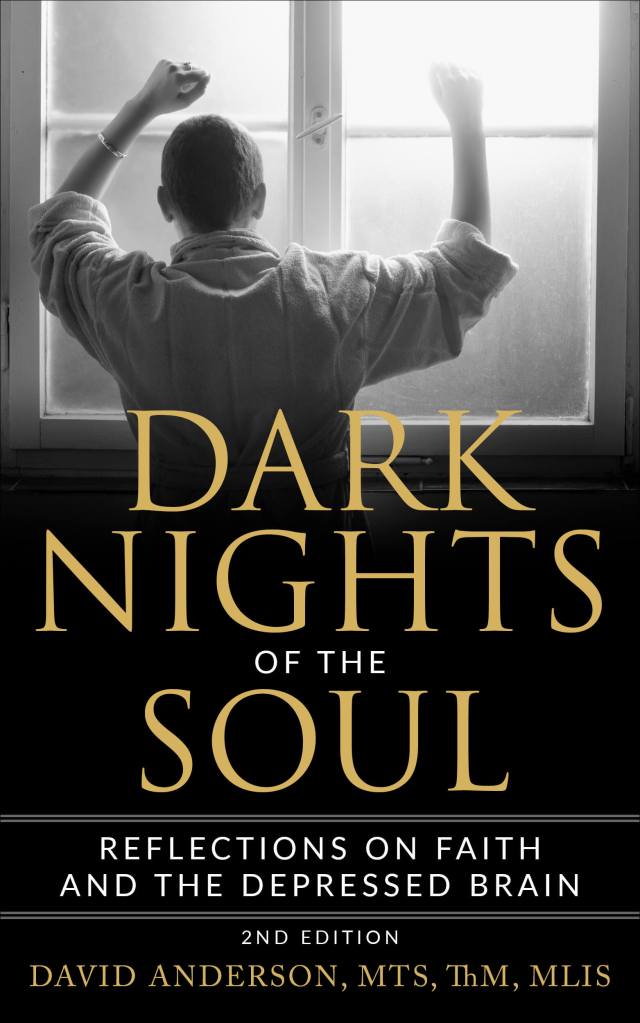
This is of course part of a promotion for my book, Dark Nights of the Soul: Reflections on Faith and the Depressed Brain. He made a really cool promo that I want to continue to use to cross promote his podcast and my book.
Like my conversation with Steve Pederson on The Dream Highway podcast (episode 26), it was a great experience for an introvert like me. I have talked a lot about living with clinical depression, but I have not talked much about being an introvert. Most people think introverts are shy and quiet, so you might be surprised to learn I enjoy interviews like this. But being “shy and quiet” is not the whole picture. Introverts tend to think a lot about big issues, like climate change, the state of the government, repercussions of policy and court decisions, what does freedom really mean, existential angst and such. Because of that, small talk is a challenge for us, so we often appear awkward in social situations.
This is what small talk feels like for an introvert.
But if you get us talking about something we are passionate about, we can talk all day. And I could have in both those cases, because I am passionate about writing and helping people struggling with depression. Fortunately for you, each episode is less than an hour.
A word about the YouTube channel
I set up a YouTube channel called Almost Ordained. Though I’ve had fun with it, I think I need to switch it to a podcast. I’ve been frustrated somewhat with aspects of video production. The last episode I filmed hasn’t aired, because the lighting was just out of control. Light, dark, light, dark … that’s what made me say, enough is enough. The episodes are still available to watch if you want to catch up on them. And I’m glad it was still up when Brother B sent me that promo, so I had a place to post it. But apparently, I don’t have the technical set up to make my own videos. Less can go wrong with audio, so I will give that a try.
That’s all for now. Until next time, remember these words from Matthew 7:12,
In everything do to others as you would have them do to you; for this is the law and the prophets.
On the radio at 100.9 FM (In the Muskegon, Michigan area).
On the “Tune In” app. If you don’t have it, you can follow this link to download the Tune In app. http://tun.in/sfh1j. They offer a premium service, but you won’t need it for this. Search for Muskegon 100.9 FM, and it should come up.
We will talk about some of the principles in my book about how I found out you can have clinical depression and not know it, and how I have been able to find happiness and faith in spite of a brain that is tilted towards darkness and depression.
I’ve got Billy Idol’s song “Blue Highway” playing in my head. Sometimes a song will just come into my head for no apparent reason. But then I remembered. My first podcast guest appearance was just released. And the podcast is called “The Dream Highway,” hosted by Steve Pederson. Dream Highway, Blue Highway … I don’t know if you see the connection, but my subconscious mind obviously does.
Social distancing at its best 😉
Anyway, Steve Pederson is a “musician, author, speaker, entrepreneur and family man [who] hosts this weekly podcast that helps you up-level your life.” In the podcast he wants you to “be inspired by teaching and interviews with people whose lives have been transformed. Hear the stories that have enabled them to overcome crippling obstacles and have propelled them towards their destiny. It’s all about real people overcoming real odds to realize their dreams.”
My end of the audio sounds like it’s cutting in and out at first. I think that might be because I couldn’t find my headset and had to rely on my computer’s microphone. It does seem to clear up as you go through, so please don’t give up on me.
I’ve thought about creating a podcast, maybe in conjunction with my YouTube channel. But for now, I am looking to be a guest on other podcasts. Last month, I took a class from Nancy Juetten on how to be a dream podcast guest. From our comments, Nancy saw a similarity in topics we wanted to specialize in and suggested we connect. After a brief email exchange, he encouraged me to fill out the guest application. That gave me a chance to be specific regarding what I wanted to talk about. I had my one-sheet after going through Nancy’s one week course. Just having that done and refined has given me more confidence in approaching podcast hosts looking for guests.
This is the first, but it won’t be the last podcast I do. In fact, there is an episode for another podcast already recorded that will be posted some time in December, and I’m looking for more.
I’m doing this as a way to promote my book. It will take time to know how effective it is as a marketing tool. All I can say now it was a great experience.
Steve and I had a great rapport, and I think that comes through in the episode. Some things we discussed:
Writing a contest-winning book on a depressed brain
The relationship between shame, faith and depression
The chemical imbalance controversy
The difference between situational and clinical depression
Some science-based ways to alleviate depression
Signs you may want to get tested for clinical depression
Depression is not a lack of faith or character
Faith should allow you to be human
Faith should encourage you to be honest with yourself and with God
The best career path is one that fits your personality, you have talent for, and you love doing.
It was one of those conversations I was sad it had to end, and I hope Steve will have me again when it’s time to talk about my next book.
The Secret about Introverts
On knowing your personality, the Meyers-Briggs test was helpful for me. I am an INFP on the scale. The most helpful information was knowing I am introverted rather than extraverted. You might be surprised that I enjoyed talking for these episodes. Here’s something you might not know about introverts. We may appear to be quiet, shy, or wanting to fade into the background. We are usually not good at small talk. But if you get us talking about something we are passionate about, we can talk all day.
I am passionate about faith that promotes mental health rather than tears it down, and I can’t thank Steve enough for letting me talk about it. Next time, I’ll have an extra headset in case one gets lost again.
As a writer and a Bible Geek, I get frustrated by verses like this:
Now the rest of the acts of Rehoboam, and all that he did, are they not written in the Book of the Annals of the Kings of Judah?
(1Ki 14:29 NRSV)
The author says this as if we could just go down to the local library to check this out, or search for The Book of the Annals of the Kings of Judah online. Apparently, he never envisioned a time when such a book would not be available to his readers.
Back in 1993, I went on an archeological dig organized by professors from Duke University, the University of North Carolina, and the University of Connecticut. (Good thing it wasn’t for basketball). The topic of theoretical sources like “Q” (which scholars say was a common source for the Gospels of Matthew and Luke) came up. Some students wondered why scholars would make up these sources if we don’t have any manuscripts of them. One professor pointed out about two-thirds of all ancient books we know of, we have no manuscripts for. We only know they existed because they are mentioned in manuscripts of books we do have, as in the example I gave above. If we had copies of them, who knows what more books we would learn about?
Among the books mentioned in the Bible that we have no copies of today are
The Book of the Wars of the Lord (Numbers 21:14)
The Book of Samuel the Seer (1 Chronicles 29:29)
The Book of Nathan the Prophet (1 Chronicles 29:29)
The Book of Gad the Seer (1 Chronicles 29:29)
The Records of the Prophet Shemaiah (2 Chronicles 12:15)
The Book of Iddo the Seer (2 Chronicles 12:15)
The Book of the Annals of the Kings of Judah (1 Kings 14:29)
And I have to include here Solomon was said to have written more than a thousand songs (1 Kings 4:32), yet only two are preserved in the book of Psalms (72 and 127), and of course the canonical Song of Solomon. The imagination boggles at the information lost because the Biblical authors assumed these sources would be preserved forever.
The Book of Jashar
One more of these is the Book of Jashar (also spelled Jasher). In Hebrew it translates as “The Book of the Upright” or “the Book of the Just Man.” It is mentioned in Joshua and 2 Samuel.
On the day when the LORD gave the Amorites over to the Israelites, Joshua spoke to the LORD; and he said in the sight of Israel, “Sun, stand still at Gibeon, and Moon, in the valley of Aijalon.”
And the sun stood still, and the moon stopped, until the nation took vengeance on their enemies. Is this not written in the Book of Jashar? The sun stopped in midheaven, and did not hurry to set for about a whole day.
(Jos 10:12-13 NRSV)
This is one of the most famous stories in the Bible, God making the sun stand still because Joshua prayed for it. Maybe you think this did not really happen. If so, I don’t blame you. But what I’m interested in is the mention of a book that we no longer have any copies of.
Then it is mentioned in reference to “The Song of the Bow,” which David likely composed, but again, we have no manuscripts.
[David] ordered that The Song of the Bow be taught to the people of Judah; it is written in the Book of Jashar.
(2Sa 1:18 NRSV)
So imagine my excitement when I found out there is a copy of something called “The Book of Jasher” today. Turns out it is not the same book as mentioned in the Old Testament. It is an eighteenth-century forgery that alleges to be a translation of the “lost” Book of Jasher by Alcuin, an eighth-century English scholar.
Another book by this same name, called by many “Pseudo-Jasher,” while written in Hebrew, is also not the “Book of Jasher” mentioned in Scripture. It is a book of Jewish legends from the creation to the conquest of Canaan under Joshua, but scholars hold that it did not exist before A.D. 1625. In addition, there are several other theological works by Jewish rabbis and scholars called “Sefer ha Yashar,” but none of these claim to be the original Book of Jasher.
So potentially, there were at least three or four copies of the Book of Jashar that turned out to be fake. But just out of curiosity, I got a copy of one of these on Kindle. It presented some intriguing possibilities for biblical fiction, as I had hoped.
Making Sense of Abraham Moving to Canaan
For example, Abraham’s first encounter with God is in Genesis 12. God just appears to Abraham and tells him to leave his father’s house and country and go to a land “that I will show you” (Gen 12:1-3), and he does it. I always wondered how Abraham how he could recognize the God called Yahweh or El Shaddai when the only gods he had been exposed to were the gods of Ur and Harran. This version of The Book of Jasher presents an interesting answer, even if it is speculation.
The Book of Jashar says Abraham already knew God when he went with his father’s family to Ur of the Chaldees, but his father worshipped the gods of Ur. Like his neighbors, his father had idols of Babylonian gods in his home. Abraham wanted to test the idols of his household. He prepared some savory meat (like Esau), placed it before them, and invited them to eat. Nothing happened. He invited them again. Don’t they smell that enticing aroma coming from the meat? Don’t they want to taste it? He sat for hours, waiting for them to eat this delicious food he had prepared for them. They didn’t eat. They didn’t answer him when he asked why they didn’t want to eat it. After mocking them in this way, he smashed the idols to pieces except for the biggest one.
His father was very angry at losing his gods. Abraham said it wasn’t him. The idols all reached for the meat he had prepared for them, but the largest idol grabbed an axe and smashed them to pieces, so he could have the meat for himself. His father told him to stop lying. The idols can’t reach, eat, taste, smell, speak, or grab an axe and destroy idols. Abraham was like, “Aha!” He had got his father to admit the idols were not gods. They were nothing but wood, metal, clay, or stone fashioned with human hands.
They all had to leave, because the king was angry with them. Abraham’s younger brother Haran gave his life to protect Abraham, so the family left the city. They settled in Harran, and eventually Yahweh appeared to Abraham and told him to leave his family and move to Canaan.
I don’t think that will accept Abraham’s offering either.
Helpful for biblical fiction. Sort of.
If I were to write a novel based on Abraham, that would present a believable scenario for how Abraham came to know the God he called Yahweh. There are many other examples like this that present intriguing possibilities for filling in some of the gaps in the Biblical narratives. The best stories were those associated with Abraham and his family.
But after Abraham, especially when it gets to the sons of Jacob, it goes too much into flights of fancy to be at all believable. For example, the sons of Jacob over and over again face armies in tens of thousands with one or two hundred and utterly destroy them. One infamous story from the Bible is when Simeon and Levi killed all the males in the city of Shechem to avenge their sister Dinah (Gen 34). There are no more battles in the Bible after that.
Do you know the difference between fiction and real life? Fiction has to make sense. It goes on to say while the Israelites were in Egypt, 150 Israelites killed 400,000 of Pharaoh’s army. That doesn’t make sense, because then, how could the Egyptians possibly have enslaved them, as the Biblical book of Exodus says? The book tries to explain it by saying they tricked the Israelites into making bricks in order to weaken them first. Then they enslaved them. But if 150 can kill 400,000 trained soldiers of the most powerful empire of the time, there is no way making bricks is going to weaken them enough to enslave them. There is no labor at all that could weaken them.
So it can be a source for Biblical fiction. But as with everything, you have to separate the wheat from the chaff.
Have you ever played Tom Swiftie? I’m referring to the word game many of us learned as children where you make a sentence in the format: (Statement) + Tom said + (punny adverb). Here are a few of my favorites.
“This lemonade needs more sugar,” Tom said sourly.
“I’m not good at darts,” Tom said aimlessly.
“I only have diamonds, clubs, and spades,” Tom said heartlessly.
“I dropped the toothpaste,” Tom said crestfallenly.
If you have fun with this, keep it out of your writing. The adverbs in these sentences, while good for making puns, can suck the life out of fiction. Steven King perhaps popularized this notion more than any other fiction writer. The Dorrance Publishing website has a page with 20 of Steven King’s top rules for writing. Numbers 3 and 4 concern (not using) adverbs.
3. Avoid adverbs. You need to do the work prior to using an adverb so that it isn’t necessary as a descriptor. If your characters are in a heated argument, you need to create the drama leading up to an exit so that you don’t need to say that the character slammed the door, forcefully. Forcefully should be redundant.
4. Avoid adverbs, especially after “he said” and “she said.” (Sorry, Tom S.) According to King, “While to write adverbs is human, to write ‘he said’ or ‘she said’ is divine.” You don’t need to add an adverb after “he said” or “she said.” Just keep it simple.
“Authors’ Rules for Writing: Stephen King
In his book, On Writing: A Memoir of the Craft, he gets even more critical. “I believe the road to hell is paved with adverbs, and I will shout it from the rooftops.”
Whether you are a fan of King or not, I believe the greatest reason for his success is his ability to paint vivid scenes and characters in the reader’s imagination. So we would do well to heed his advice. Why is he so down on adverbs? Let’s explore that for a few minutes.
#3 Avoid Adverbs
So what’s wrong with adverbs? As a kid who grew up on Schoolhouse Rock, I can still sing the chorus and most verses of “Lolly, Lolly, Lolly, Get Your Adverbs Here.” Now, as a writer, the experts tell me I should let Lolly keep their adverbs. As with most writing rules, when I first learned this, my first instinct was to rebel. What did I spend those Saturday mornings watching cartoons for if it’s to forget the grammar I learned?
“An adverb is a word, that modifies a verb …” or props up a weak verb.
But as with most writing rules, as I sit with it, it makes sense. In the last post, I talked about the importance of using strong verbs instead of weak verbs. This rule is a corollary of that. As King indicated in Rule #3, strong verbs make adverbs unnecessary and redundant. If Tom slammed the door, there’s no need to add “forcefully.”
Think of this sentence. She walked slowly. The adverb here props up the weak verb walked. How could we say that without the adverb?
Do you see how using a strong verb makes any adverb unnecessary or even redundant? Not only that, the strong verb paints a more vivid picture than the verb/adverb combination we used originally.
So the lesson here is watch out for verb/adverb combinations. When you see one, try to find a stronger verb.
#4 “He/She said,” No Adverb
Now we go after Tom Swiftie. King’s 4th Rule refers specifically to using an adverb with “he said” or “she said.” Again, if you do the other parts of your writing well, you shouldn’t need an adverb in that case. The action and dialog should make the emotion behind it clear without any adverbs. One of Elmore Leonard’s cardinal rules was you should never need any dialog tag other than said. I think it’s safe to say he would agree with King on this.
Consider this example. “That’s not funny,” he said angrily.
The dialog here does not clearly communicate anger, so the writer used the adverb, angrily. But as an article on Autocrit said, “An adverb in a dialogue tag means you probably have to rewrite the dialogue itself.” How could we change this dialog?
“That’s not funny, you disgusting pig,” he said. Now there’s no need for an adverb.
You can also use action if you prefer. He grabbed the joker by the throat. “That’s not funny,” he said. Or something simpler. “That’s not funny,” he said through clenched teeth.
Those are just some examples, hopefully enough to demonstrate that “said” with an adverb is not the most powerful way to convey emotion. And this is really part of the “Show don’t tell” rule. Instead of telling the reader what the character is feeling—angry, frustrated, happy, sad, etc.—show the emotion through action and dialog.
“To put it another way, they’re like dandelions. If you have one on your lawn, it looks pretty and unique. If you fail to root it out, however, you find five the next day… fifty the day after that… and then, my brothers and sisters, your lawn is totally, completely, and profligately covered with dandelions. By then you see them for the weeds they really are, but by then it’s—GASP!!—too late.”
Stephen King
Did you notice he used adverbs? Totally, completely, profligately. Yes they are adverbs, but they do not break the rules. You want to avoid verb/adverb combinations, and you want to avoid adverbs with dialog tags. His adverbs do not describe a verb but an adjective (“covered”). If you think covered is a verb, it can be. But in this sentence, it’s a past participle, which can be used as an adjective.
Bottom line, the goal is not to eliminate all adverbs. The goal is to make your writing vivid and compelling to the reader. And these two rules will help you do that.
Exercise
On your work-in-progress, pull up the search function (Find in MS Word). Search for ly. This will be at the end of almost all offending adverbs. If your adverb is paired with a verb, replace it with a strong verb that makes the adverb unnecessary.
If it is a Tom Swiftie (“he said adverb”, “she said adverb”) you can try two things.
Remove the adverb. Is the meaning still clear? Congratulations. You wrote it well but just didn’t know it.
If the meaning is not clear, add some action or make the dialog sharper until the adverb is unnecessary.
Verbs are for action. That may sound obvious. But so many writers seem to forget that when writing the action in their scenes (myself included). If your verbs are strong, your action will be too. I’m going to show you an example of what a difference strong verbs can make from my current Work in Progress (WiP).
I’m editing my manuscript called Through Fear of Death. It’s historical fiction based in ancient Rome in 96 AD. Valentinius is the senior guard at the Carcer, Rome’s main prison. In this scene, Silas has just been brought to the Carcer, along with other prisoners. Silas is a big man, so Valentinius takes it upon himself to escort him, leaving the other nonthreatening prisoners to his partner. Valentinius pushed him in the back, but only once. Here is how I wrote it originally.
He gave a little push in the prisoner’s back. The man did not put up any resistance or even look back at him. A good sign. He was not looking to make trouble.
Draft for Through Fear of Death
In the editing phase, I noticed the first two sentences could be tightened up. So I changed it to this.
He pushed the prisoner from behind. The man did not resist or even look back at him. A good sign. He was not looking to make trouble.
Draft for Through Fear of Death
Now the action is more vivid, because pushed is more direct than gave a little push. Did not resist is tighter than did not put up any resistance. Normally, you would not tell what the character did not do, but in this case it says something about Valentinius’s motive for pushing him. He’s gauging how the prisoner will react. No reaction, in his mind, is good.
Use Strong Verbs for Action
To keep the reader’s attention, you have to make the action in the scene vivid. This is why every fiction class says, Show don’t tell. In the first example, I followed that rule, but the action still wasn’t as vivid as it could be, which brings me to the next rule. The most important word for any action in a scene is the verb. Use strong verbs for action.
Get your story in action.
In the first version, I used push and resistance as nouns. That required me to use weak verbs, gave and put (up). Push and resist are stronger as verbs than nouns. If your verbs are weak, chances are you can replace them with stronger verbs. Your reader will notice and enjoy it more. They won’t necessarily say, “Great use of strong verbs.” But they will notice the action in your scenes leaps off the page, and that will keep them reading.
But I’ve read lots of books with weak verbs, and I liked them.
This is a common problem for beginning writers. They have read other authors breaking the rules. Classic authors, especially those who wrote before movies, TV, the Internet, video games, etc., could take their time unfolding action slowly, going into long descriptions of settings that may or may not have anything to do with the plot, showing off their fancy ways of putting words together, painstakingly describing every subtlety and nuance of a character’s expression or action, and telling, not showing. Authors today do not have that luxury.
I once read Dickens take an entire paragraph to describe how a woman raised her eyebrows. You might have read that and liked it, especially if you read a lot of classics. People accept that from Dickens, because he is required reading in just about every English literature curriculum. But today’s readers will lose patience if you take too long and too many words to get to the action or the point of a scene.
Knowing When to Show and When to Tell
Following the rules show don’t tell, and use strong verbs, I have shown the action rather than told it. He pushed the prisoner from behind. What was his motive for doing that? I have shown that. The man did not resist or even look back at him. A good sign. He was not looking to make trouble. He is not just being a bully. He wants to see how the prisoner reacts to it, so he can see how closely he needs to watch this big prisoner. This is a tactic he uses, not on every prisoner, but the ones who could challenge him. I’ve hinted at that, but I wanted to make the strategic aspect of this clearer, so I added a little exposition.
He pushed the prisoner from behind. It was a test he gave prisoners who might want to challenge him. The man did not resist or even look back at him. A good sign. He was not looking to make trouble.
Draft for Through Fear of Death
That’s a bit of telling, not showing. You hear show don’t tell all the time when you are learning how to write. But the truth is at some point, every story requires some telling. So it’s more like know when to show and when to tell. The main action in a scene should always be shown not told. But other aspects might be better told than shown. In general, I try to show as much through action and dialog as I can. Then, if I feel there is something the reader needs to know that I can’t quite show, I will do a little telling.
It was a test he often gave prisoners who might want to challenge him. I can’t show you every time he ever did this or the details of how he chooses which prisoners to push. But this tells you something about how he does his job. Initiating physical contact might be a problem for prison guards today. For ancient Rome, however, one push on a big man, for whom it could not do any real damage, to see how he reacts, would have been considered reasonable.
Breaking the Rules I Just Told You
It was a test he gave prisoners who might want to challenge him.
You might also think that sentence is not as tight as it could be. I tried tightening it a few times, but it did not quite work. Writing tight is not as important there, because it is not action (This point is arguable). It is technically called exposition. I’ll explain more about that in a future post.
If I can sum up, for the action in a scene:
Show, don’t tell as much as you can.
Use strong verbs.
Write tight.
Convey as much to the reader as you can through action and dialog without resorting to exposition.
When you must use exposition, make sure there is a purpose for it, keep it brief, and make it relevant to the character’s action and reaction.
Exercise: Look at a scene in your work-in-progress (WiP). Did you use strong or weak verbs for the action? Change any weak verbs to stronger ones and see if you like it better.
Announcements
Audiobook:
In the next couple of months, I will be working on an audiobook version of Dark Nights of the Soul: Reflections on Faith and the Depressed Brain.
Novel:
I am preparing my novel Through Fear of Death: A Novel of Ancient Rome to self-publish as an ebook. Afterwards, I will have print and audio versions available, but the ebook will come first. I’m looking for publication at the end of August, so I can enter it into this year’s Self-Published Ebook contest with Writer’s Digest. Hopefully, lightning can strike twice.
You will have the ability to sign up for exclusive updates leading up to these two publications. Details to follow.
The “Calvin and Hobbes” comic strip by Bill Watterson ran from November 18, 1985 to December 31, 1995. One recurring theme was his father telling six-year-old Calvin, “It builds character.” The things he said build character include:
Diarrhea
Bug bites
Camping
Numb toes
Starvation
Shoveling the walk
Playing sports (baseball)
Enduring cold weather
Food
Suffering a tough life
Learning to ride a bicycle.
So basically, any time Calvin had to do something he didn’t like, his father said, “It builds character.” One in particular stands out to me. Calvin complained that it was cold in the house.
Calvin: It’s freezing in here!! Why can’t we crank up the thermostat?!
Dad: Consuming less fuel is good for the environment and it saves money.
I imagine, like Calvin, the last thing you want to hear about this crisis is it builds character. So I won’t do that. I’ll let Paul do it.
And not only that, but we also boast in our sufferings, knowing that suffering produces endurance, and endurance produces character, and character produces hope …
(Rom 5:3-4 NRS).
Suffering produces endurance. Endurance produces character. Character produces hope. So Paul agrees with the dad. Sorry, Calvin.
But when we’re going through suffering or trials of any kind, it’s hard to see anything positive. It’s hard to “count it nothing but joy,” as James said (1:2). It’s hard to think about the perspective and maturity you will gain when all you want is for it to be over. After you go through a few trials, though, you can look back and see, “Yes, I am a better person for having gone through that.”
At some point, we all ask something like, if God loves us, why is there so much suffering? Why won’t God get rid of the Coronavirus? If God is love (1 Jn 4:8), why is God allowing all the chaos and suffering of this pandemic? We think love wants to maximize happiness and minimize suffering. And that is true, to an extent (Mat 7:9-11). But that is only part of the picture. My experience living with clinical depression and Irritable Bowel Syndrome has convinced me that God’s love cares more about our character than our happiness. I wouldn’t have chosen those trials and the crises of faith that came with them, but they made me more compassionate and wiser. They stripped away any what’s-in-it-for-me aspect of faith I had before. And they resulted in a WD Award Winning book.
I was pleased with how the front and back cover looked.
As wonderful as that is, what I really hope for is people telling me after they read my book, they got diagnosed, or they started counseling, or they now understand why their son, daughter, spouse, or parent acts the way they do. In other words, that it really helps others living with depression. That is often where perspective and wisdom happens. God allowed me to go through this, so I can help others who are going through the same thing.
A New Prayer for Perseverance
The only way your faith can mature is to go through trials and experience God’s faithfulness through them. James said it this way.
My brothers and sisters, whenever you face trials of any kind, consider it nothing but joy, because you know that the testing of your faith produces endurance; and let endurance have its full effect, so that you may be mature and complete, lacking in nothing.
If any of you is lacking in wisdom, ask God, who gives to all generously and ungrudgingly, and it will be given you.
(Jam 1:2-5 NRS)
In that spirit, I wrote this prayer I am using to get me through this, and I hope it helps you.
“God, you said through your servant James that the trying of my faith would produce perseverance and wisdom. I would rather you remove it from me. For that matter, I would rather You remove it from my family, from my neighbors, and from the world. I am facing the brutal facts, and they are overwhelming. But if You choose not to remove it immediately, I know there must be a reason. There must be a lesson in this, even if I can’t imagine what it is right now. I confess that I am lacking wisdom in this trial. You promised to give me this wisdom, the perspective I need, if I ask. So I ask You to give me wisdom to see as You see, and to use this until You choose to remove it. Amen.”
Don’t Call It “The New Normal”
I added the word “immediately” because God will remove this at some point. Or our medical experts will find a cure and/or vaccine. We can take some comfort in knowing historically, no pandemic lasts forever. The plagues of the 14th and 18th centuries did come to an end, as did the Spanish flu of 1918. That is why I refuse to use the words “new normal.” New normal implies this is what life is going to be like from now on. Social distancing, wearing masks and gloves, washing hands and sanitizing surfaces several times a day are all good for flattening the curve. And the sooner we get everyone on board with that, the sooner it will be over.
But it won’t be like this forever. One day, it will be safe to gather together again. We’ll be able to go back to church, movies, and concerts with our friends and family, and without masks. We’ll be able to shake hands and hug those we love. I and others will be able to seek out speaking engagements in person rather than on screen. But for now, the loving thing to do is to protect each other by stopping the spread of the virus however we can. Remember who you are doing this for. I socially distance from you, so I don’t have to socially distance from my wife. No offense, but I’d rather get close to her than to you.
So stay safe and six feet apart. If you can’t do that, wear masks and wash your hands. And remember the words of Paul and James I shared with you. They had it right. Suffering and the trying of our faith does produce perseverance, perseverance produces character, and character produces hope, so that the trying of our faith makes us mature and complete, lacking in nothing. Ask God for wisdom to see how this is forming your character to conform to the image of God’s Son, Jesus Christ. Because as bad as this may be, the only thing that could be worse is if we have to go through this and not learn what God wants us to learn from this trial.