In an earlier post, I talked about the first sign to look for in a false prophet. If they prophesy something in the name of the LORD, and it does not come to pass, the LORD did not speak that. They spoke presumptuously. They are a false prophet (Deut 18:20-22).
But what if what they say does come to pass? Could he/she still be a false prophet? The Old Testament warned the Israelites it is indeed possible. Deuteronomy 13:1-5 told the Israelites even if what the prophets or those who divine by dreams say comes to pass, but they tell you to follow gods other than the LORD who redeemed you from slavery in Egypt, you must not follow them. Any prophet who tells them to forsake the way of the LORD their God and follow other gods was to be put to death. As I said in another episode, ancient Israel was a theocracy, but we are a republic. We can’t put false prophets to death here, and I’m glad for that. Because of that, I’m going to focus more on the New Testament.
Jesus said, “And many false prophets will arise and lead many astray” (Mat 24:11 NRS). And again, “For false messiahs and false prophets will appear and produce great signs and omens, to lead astray, if possible, even the elect” (Mat 24:24 NRS). What stands out for me in this is:
False prophets will produce great signs and omens.
False prophets will lead many astray.
Even the elect, those who are saved, can be led astray.
So don’t think if you received Jesus Christ as your Lord and Savior, you can’t be fooled by false prophets, because you have the Holy Spirit within you. Oh yes, you can.
A Warning to the Galatians (and Us)
Paul said this to the Galatians.
“But even if we or an angel from heaven should proclaim to you a gospel contrary to what we proclaimed to you, let that one be accursed! As we have said before, so now I repeat, if anyone proclaims to you a gospel contrary to what you received, let that one be accursed!”
(Gal 1:8-9 NRS).
If it were anyone else, I would say, “What an egomaniac. He won’t let anyone say anything contrary to what he told them. That’s what cult leaders do.” But over the years, I have heard gospels contrary to what we received from Christ and the Apostles. They led me astray, so I understand why he gives such a dire warning about this. The members of the church in Galatia had the Holy Spirit. False prophets or false teachers came among them, and they were fooled. Don’t think it can’t happen to you.
And notice, Paul even says if we … proclaim to you a gospel contrary to what we proclaimed to you. He includes himself in this curse. He has shut the door on ever changing the gospel he first proclaimed to them. Ain’t gonna be no, “You know what? I was wrong. What I told you before wasn’t the real gospel. Let me proclaim a different gospel to you now.” No, he said if I ever do that, let me be accursed. That was how important it was to get this right.
And he also says … if an angel from heaven should proclaim a different gospel to you, let him be accursed. One would expect an angel to be able to produce some of the great signs and omens Jesus referred to. But if he proclaims a gospel different from what they received, they must not believe him or follow him. So is it possible that someone could produce signs and omens in Jesus’ name while proclaiming a different gospel? Absolutely.
When I Followed a Different Gospel
One church I was in was all about “the anointing,” which was supposed to manifest in signs and wonders, like the spiritual gifts of 1 Cor 12:8-10. In the vast majority of churches today, you are not going to see the kind of signs and wonders that are in the New Testament. Some people point to that and say, “That church is dead.” The implication is, “We’re not dead. We have the supernatural gifts. We have the anointing.”
I used to believe them. Now, I’m not so sure. If they really have those supernatural gifts of healing, miracles, signs, and omens, or whatever, as Jesus and the Apostles did, they should get the same results. But instead, when they fail to get those results, they make excuses that Jesus and the Apostles never had to make.
Our preacher referred to one particular televangelist in every sermon, and everyone in the church thought he was so anointed because of the healings he did, and the way people fell down in his services. It’s called being slain in the Spirit, and it’s quite common in charismatic and Pentecostal services. Anyway, our preacher was quoting this televangelist more than he quoted Jesus. That is always a bad sign. I mean, are we really getting the Gospel of Jesus Christ when he talks about some televangelist more than Christ?
Tithe or Die
The final straw for me came when he quoted the televangelist saying, “I can’t heal you, because you’re not tithing.”
I have read the New Testament, and the Gospels in particular, multiple times over my life. One thing I know for sure. Jesus NEVER told ANYONE, “I can’t heal you because you’re not tithing.” He never connected tithing with getting healed. He would go into towns, and every sick person who was brought to him got healed. Not everyone who tithed. Everyone period.
But here’s a trick question. What if after saying that, they had some signs and wonders and portents that came true? Should we believe them? If they claim to serve the Lord Jesus and tell us, “You must give me 10% of your income before God will answer your prayers,” remember the Lord Jesus never said that. Even if what you say comes true, I’m going to borrow from Deuteronomy 13 and say, you must not heed the words of those prophets who tell you to follow a Jesus that neither you nor your ancestors have known. Okay, Deuteronomy did not mention Jesus specifically. But if we call him Lord, the meaning is the same.
They will usually use Malachi to justify this. “But Malachi 3:9-10 says you are cursed with a curse because you are robbing God by not bringing your tithes. God can’t bless what is cursed.”
God can’t bless what is cursed? That’s not in the scripture. You just made that up. That’s what I mean that they make excuses Jesus never had to make. Jesus raised people from the dead. You can’t get any more cursed than that. Don’t tell me God can’t bless what is cursed. That is a gospel contrary to the one we as the body of Christ received.
To Lead Astray Even the Elect
Even if some of their prophecies come true, don’t follow them. Even if some people get healed, or they produce signs, omens, and wonders that make you gasp and think the anointing is on them, don’t follow them. And don’t give them your money, whether they call it tithes, offerings, or “sowing a seed.” The gifts of God cannot be purchased with money (Acts 8:18-20). If they claim you can be healed by giving them money or solve your financial problems by giving them money, that is a different gospel. Do not believe them. Do not follow them. And do not give them your money.
Yes, Jesus received money from those who wanted to support his ministry, but he never charged anyone for healing, miracles, or any blessings of the Holy Spirit. And the Apostles followed that example. Read the book of Acts or the letters of Paul, Peter, and John, and you will not find any example that they made people pay for the gifts of the Spirit.
And I can’t believe I have to say this, but if they speak hatred from the pulpit, that is not the Holy Spirit. Even if they prophesy things that come true, even if they show the signs and omens Jesus mentioned, remember Jesus also said these are the kind who will lead you astray.
The Holy Spirit Is Not Racist, Sexist, Homophobic, or Xenophobic
“Social distancing is for pansies.” Yes, a preacher actually said that. Not only is he putting the public health at risk. He’s using a homophobic slur to belittle anyone who follows social distancing guidelines from the CDC. That is not the Holy Spirit. That is not the anointing. In the late eighties, one of them “prophesied” that the homosexual community in the US would be destroyed in ’94 or ’95 by fire. And the congregation cheered.
It did not come true, so he failed the first test. That alone proves he is a false prophet.
He did not tell them to stop cheering, so he failed the “love test.” This is a different gospel. If you follow him, he will lead you astray.
The fact that they would cheer that means he has been failing to teach them the Gospel for a long time.
What do I mean by the “love test”? Jesus said our love has to extend even to our enemies. I don’t care if you think it’s a sin. I don’t care if you know it’s a sin. Every one of them is a person Jesus died for (Rom 5:8). You still have to love them, because he loves them.
The Holy Spirit is not racist, sexist, homophobic, or xenophobic. Anyone who preaches that in Jesus’ name is preaching a different Gospel. What if they do great signs and omens? It is still a different Gospel. I don’t care if an angel or some so-called apostle or prophet promises I will get those gifts of healing or prophecy that I used to chase after if I will follow them, that is a different Gospel, and I want nothing to do with it.
God Is Love
So we can recognize a different Gospel when we hear it, let’s remind ourselves what the Bible says about the love of God in 1 Corinthians 13.
If I speak in the tongues of mortals and of angels, but do not have love, I am a noisy gong or a clanging cymbal. And if I have prophetic powers, and understand all mysteries and all knowledge, and if I have all faith, so as to remove mountains, but do not have love, I am nothing.
(Verses 1-2)
Notice speaking in tongues, prophetic powers, understanding all mysteries, faith so as to remove mountains. These are some of the supernatural gifts they thought proved the Holy Spirit was in their midst. But Paul tells them signs and omens are nothing without the love of God.
If I give away all my possessions, and if I hand over my body so that I may boast, but do not have love, I gain nothing.
(Verse 3)
Giving 10% or even all your possessions to them is nothing without love. It won’t make God answer your prayers.
Love is patient; love is kind; love is not envious or boastful or arrogant or rude. It does not insist on its own way; it is not irritable or resentful; it does not rejoice in wrongdoing, but rejoices in the truth. It bears all things, believes all things, hopes all things, endures all things. Love never ends.
(Verses 4-8a).
Love rejoices in the truth, not lies, no matter how good they make you feel. False prophets have been lying to us a lot, especially about the Coronavirus.
But as for prophecies, they will come to an end; as for tongues, they will cease; as for knowledge, it will come to an end. For we know only in part, and we prophesy only in part; but when the complete comes, the partial will come to an end.
(Verses 8b-10)
Even when they had the supernatural gifts listed in 1 Corinthians 12, they did not make the congregation complete or “anointed.” Even at our best, we only know in part. Even when they prophesied, it was only in part. Love is the only thing that makes us complete.
When I was a child, I spoke like a child, I thought like a child, I reasoned like a child; when I became an adult, I put an end to childish ways. For now we see in a mirror, dimly, but then we will see face to face. Now I know only in part; then I will know fully, even as I have been fully known. And now faith, hope, and love abide, these three; and the greatest of these is love.
(Verses 11-13 NRS)
Jesus preached a Gospel of love so all-encompassing it left no one out, even people that we may wish were left out. That is the greatest challenge of following Jesus, but also the most rewarding. And if anyone comes to you with signs and omens but preaches a different gospel, you heard what Paul said. Let him/her be accursed.
Sorry this is a little late, but we had a little incident in our home.
I woke up on Palm Sunday. We weren’t going to church, because of the Coronavirus restrictions. But it was Palm Sunday. My wife and I decided to take advantage of the fact that many services are available online now, especially in response to Coronavirus. Particularly, my sister–a Presbyterian minister–had started filming her services at home to broadcast on Facebook and YouTube. My wife gathered some palm leaves, tied a ribbon around them, and taped them to the door.
Staying home on Palm Sunday
She made blueberry pancakes, and I made scrambled eggs. We were looking forward to a pleasant breakfast and my sister leading worship right in our home. While I was getting my plate together, my wife called out from the dining room. It almost sounded like the way she screamed when she saw a mouse, but there was something different about it. I figured it must be a critter of some kind.
She rushed back to the kitchen. I asked what it was, but she couldn’t even tell me. I went to see, and there in the middle of our dining room floor was a snake. Not a big one, it was only a little more than a foot long. But still, a snake. In our home. That cannot stand.
Perhaps the truest verse in the Bible is when God told the serpent there would always be enmity between women and snakes (Gen 3:15). She hates snakes, and I wasn’t thrilled about it either.
It started crawling for the china cabinet. I stepped on it before it got there. The front half was under the cabinet, so I figured that would block it from making a quick strike on my foot. But I was only wearing sandals. Maybe its head would come back out. So I lifted my foot, and it went under the china cabinet. Great! Now how are we going to get it out? Needless to say, Palm Sunday and worship were forgotten at that point.
You Will Trample the Serpent Under Foot?
Why didn’t I just keep my foot on the snake? I had stopped it from going under the china cabinet. And the Bible says, “You will tread on the lion and the adder, the young lion and the serpent you will trample under foot” (Psa 91:12).
I had it under my foot, just like the Bible says. Should I grab it at the bottom half and pull it out? I shouldn’t have been afraid to do it. After all, the Bible says, “And these signs will accompany those who believe: … they will pick up snakes in their hands, and if they drink any deadly thing, it will not hurt them; they will lay their hands on the sick, and they will recover” (Mar 16:17-18 NRS).
So I could just grab that snake and not worry about whether it was poisonous, and then take it deep into the woods outside my home and release it. That’s supposed to be one of the signs of a believer. While I had it under my foot, why didn’t I grab it? For the same reason I don’t drink cyanide, strychnine, or diesel fuel, even though this verse says it won’t hurt me. Folks, hear me when I say this. NOT EVERYTHING IN THE BIBLE IS SUPPOSED TO BE TAKEN LITERALLY.
So no, I’m not going to grab that snake with my bare hands because of a couple of Bible verses taken out of context. The point of Psalm 91 is not for you to go to the local zoo, climb into the lion’s cage, and jump on its back and say, “Look, I can trample a lion underfoot, because I believe in Jesus Christ.” Many Christians in the first century found that was not meant literally, in case you’ve forgotten.
So we were trying to figure out how to get him out from under there, and how to trap him once he did. While I kept an eye on the snake to be sure he didn’t leave and crawl under something else, my wife brought a Hello Fresh box, a rake, a paint roller, a broom and dustpan, a yardstick, and a pillow case for various ideas we had. I tried calling local pest removal services, but they were closed. Whether because of Coronavirus or that it was Sunday, I don’t know. Finally, I went to the best how-to source on the web, YouTube, and found this from a Tampa area pest control expert.
Glue traps. That was his advice. My wife went to the dollar store to get some.
Works on rats, mice, insects, and snakes (small ones at least)
Meanwhile, I wondered if we might need to move the china cabinet to force him out, so I removed everything from the top section. We never moved it. Instead, we put some glue traps under it. But how do we force the snake onto the trap? My wife fashioned a coat hanger and prodded it into the corner, where I had set a trap. Then its tail showed out the back. I folded another glue trap over its tail to make sure I had it. It was hard to pull out, because the front half was indeed stuck to a glue trap.
We caught the snake with glue traps
I thought about killing it, but the guy in the video reminded me a lot of snakes kill and eat other pests, like mice and rats. It didn’t look like any of the poisonous varieties of snakes in this area, so I was okay with letting it go. He said you could free it from the trap with vegetable oil. I tried the tail first (after going outside, of course). The snake worked its tail free, so one trap down. I took it deep into the woods and poured oil over it. Within a few minutes, he worked himself free and crawled away. Later, I found out it was a rat snake, so I’m glad I let him go.
Lessons for Coronavirus
I had never had to remove a snake from my house before. I didn’t know what to do, so how did I do it? By quoting Bible verses, or naming and claiming promises from the Bible? Truth is, I did quote this verse in my mind.
“You will tread on the lion and the adder, the young lion and the serpent you will trample under foot.”
(Psa 91:12)
But you already said not to take that verse literally, so what good was that supposed to do?
I said don’t take it literally. I didn’t say don’t meditate on it. I meditated on that verse the whole time I was trying to figure out what to do, the whole time I pulled the snake out and took it outside, and while I was pouring oil over it to release it. I wasn’t treating it as a promise that God was somehow obligated to put a force field around me and my wife, so the snake couldn’t touch us. “Come on, honey. We can just wait for it to come back out, and I’ll grab it then. Here’s two verses that say snakes can’t hurt us, because we’re believers. Don’t you believe the Bible?” How do you think that would have gone over?
I still put on whatever protective equipment I could: socks, shoes, long pants, and gloves. I didn’t expect that quoting that verse meant the snake couldn’t bite me. I meditated on it for one reason only: To keep myself calm through the process.
I listened to an expert, I did what the expert said, and it worked. I didn’t use the scripture as a substitute for expert advice, only as something to meditate on so I could stay calm. The author of this Psalm did not mean for it to be taken literally. It would help all of us to remember Psalms were originally sung. Songs and poetry most of the time are not meant to be taken literally. They are meant to move us emotionally. Emotions were running high with a snake in our house. This song was made for moments like this. It was meant to help you stay calm and trust God when you have to do something that scares you. And I can tell you in that way, it worked for me.
So with Coronavirus, just as with snakes, listen to the experts and follow their advice.
What Time I Am Afraid, I Will Trust in Thee
Psalm 91 is one of the most popular scriptures for promoting peace of mind in stormy circumstances, and with good reason. It is not a license to abandon common sense. As I heard a preacher today talking about his reasons for closing the church and moving services online, “Faith works best when it’s combined with common sense.” So with the understanding that this is not a “promise” that “obligates” God to protect you from Coronavirus by becoming your invisible hazmat suit, I invite you to meditate on these scriptures from Psalm 91 that I am meditating on for comfort and peace in the storm.
You who live in the shelter of the Most High, who abide in the shadow of the Almighty, will say to the LORD, “My refuge and my fortress; my God, in whom I trust.”
(Psa 91:1-2 NRS)
For he will deliver you from the snare of the fowler and from the deadly pestilence; he will cover you with his pinions, and under his wings you will find refuge;
(Psa 91:3-4 NRS)
You will not fear the terror of the night, or the arrow that flies by day, or the pestilence that stalks in darkness, or the destruction that wastes at noonday.
(Psa 91:5-6 NRS)
A thousand may fall at your side, ten thousand at your right hand, but it will not come near you.
(Psa 91:7 NRS)
Because you have made the LORD your refuge, the Most High your dwelling place, no evil shall befall you, no scourge come near your tent.
(Psa 91:9-10 NRS)
When they call to me, I will answer them; I will be with them in trouble, I will rescue them and honor them. With long life I will satisfy them, and show them my salvation.
I want to talk to the prophets of America. I know usually in December and January, you give a word to the faithful for the coming year. I have gone back and listened to what you predicted for 2020. One minister made it pretty easy. He asked 20 prophets to make predictions for 2020 and played them all. 20 prophets. I transcribed the program. Here is a word cloud I made from it.
What’s missing?
God
is big, no surprise. Going is big, probably because you were talking about what
God is “going” to do in 2020. Year is big, of course, because you were talking
about the new year. I also see America is prominent, again no surprise. I see
Gregorian at the bottom and Hebrew at the top to the right, because a couple of
them talked about the alignment of the year 2020 on the Gregorian calendar with
the year 5780 on the Hebrew calendar. Because 5+7+8+0=20. I’m sorry, but I don’t
call that an alignment. 20 is not the same number as 2020.
But
regardless of that, you know what I don’t see? Coronavirus, COVID-19, or pandemic.
No mention of a virus at all. Nothing that would even suggest what we’re going
through now. I know the Biblical writers knew nothing about viruses, but you
still could have used some Biblical term, like plague, or pestilence, or
disease. The word “shaken” or “shaking” should be on there. I did hear that a
few times. This could be called a shaking. But even then, the rest of their
message did not sound like they were anticipating this current crisis. One of
them did say we would see a shaking in the first four months. That is the
closest any one of them came to predicting this. And a couple of others
mentioned a “shaking like nothing before.” Again, that could be a reference to
what we’re experiencing now. But one of them specified “the soil will be shaken.”
That sounds more like an earthquake than a pandemic.
So
out of 20 prophets, who claim to hear directly from God and speak directly for
God the word for today, only a couple of them even hinted at what we are going
through now. And on top of that, one of them said she had just come from a
conference of 42 prophets from around the world. I didn’t get the transcript of
that. But if any of them saw a pandemic coming, she didn’t say so.
And
you see decade is prominent? Several of them talked about not only what the year
would bring, but also the decade, because this is the beginning of a new decade.
Except it’s not. The decade does not begin in 2020. It begins in 2021. Even if
you don’t know when the decade begins, God does. Why would God make a mistake
like that?
What
is this the year of? According to them, it’s the year of fire. The year of evangelism.
The year of the Father. The year of the voice. The year of the mouth. In reality,
it is the year of Coronavirus, the year of pandemic. Why didn’t that make it
onto your list of “Year of”s? Is it possible you heard a voice or saw a vision that
you thought was from God, but it wasn’t?
First Sign of a False Prophet
Back in Biblical times, this was how they detected a false prophet. This is from the English Standard Version (ESV).
… when a prophet speaks in the name of the LORD, if the word does not come to pass or come true, that is a word that the LORD has not spoken; the prophet has spoken it presumptuously. You need not be afraid of him.
(Deuteronomy 18:22 ESV)
Are
you going to curse me for pointing out that your prophecies are not coming true?
Go ahead. This verse says I need not be afraid of you. You prophesied miracles,
healings, and the manifest glory of God in worship, where people are gathered
together. They will even gather in stadiums, you said. Are people gathering
together now? No, because we have to maintain social distancing. Stadiums are
closed, along with businesses, and schools. Churches are closed and moving
their services online. They aren’t gathering together.
You
prophesied healings. Instead, people are getting sick at an alarming rate. You
prophesied prosperity. Look what’s happening to the economy. People are losing
jobs in record numbers. Does that sound like prosperity? You prophesied that
every dream would come true this year for God’s faithful. This is not what we
were dreaming.
How do we know the prophet is false? Deuteronomy 18:22 could not have summed it up any better. … if the word does not come to pass or come true, that is a word that the LORD has not spoken. You spoke words in the name of the Lord that the Lord did not speak. And since most of you were on that program because you’ve been doing this for years, I think it’s safe to guess that this is not the first time. These were not the first prophecies that did not come true, meaning, you spoke words in the name of the Lord that the Lord did not speak. You spoke presumptuously. Again, I ask, is it possible that you heard something or saw a vision that you thought was from God, but it wasn’t? It’s time to own up to that fact.
A Democracy, Not a Theocracy
What
was the penalty in ancient Israel for speaking false prophecies? According to Deuteronomy
18:20, the prophet was put to death. There are some indications in the Bible that
was not practiced consistently, but still, that was supposed to be the penalty.
Think about it. Speaking a word in the name of the Lord that the Lord did not
speak? That is taking the Lord’s name in vain, a violation of one of the top
ten commandments. We usually think of taking the Lord’s name in vain as saying
like, OMG! Or Jesus Chr…! But that is a minor offense compared to
false prophecies. When you speak in the name of the Lord, and God did not speak
to you? You speak in the name of the Lord presumptuously? That is much more
serious.
So
in ancient Israel, they were supposed to put someone to death for that. We can’t
do that here. Israel was a theocracy, and we are not. In a theocracy, you can
put someone to death for blasphemy or speaking the Lord’s name in vain. You can’t
do that in a democracy or republic. And personally, I’m glad for that. Because if
we were still living by that standard, I shouldn’t be alive today.
Redemption Is Possible
Sorry for scaring you with that talk of the death penalty, but I want you to get this is serious. And I want you to know redemption is possible. We are not in the theocracy of ancient Israel, so no one is going to stone you to death or put you in front of a firing squad. But you are still accountable to God for every careless or presumptuous word you utter in God’s name (Matthew 12:36-37). But redemption is possible.
I
did not get on stage or broadcast prophecies to the public, but I did say
things to people who came forward in church services seeking a word from God. And
I spoke in the name of the Lord. But looking back, I have to admit I had no
idea if it was the Lord or not. And sometimes, it was clearly not the Lord. How
do I know? Because it did not come to pass, or it led me or others to do the wrong
thing. I know what it is like to hear something and think it is from God and then
find out it wasn’t. It’s a really tough pill to swallow. It will make you
question everything you thought you knew about God. But even though it is scary
as hell, it’s a good thing when you own up to it.
I Spoke Presumptuously Too
I
used to belong to a church that encouraged people to flow in the gifts of the Spirit
according to 1 Corinthians 12:8-10. Part of your task as a believer, they said,
was to uncover which of those gifts was yours. I felt drawn to gifts of prophecy
and healing. I didn’t know if either of them was for me, but I thought if I didn’t
try, I would never know. I was cautious at first, but with practice I grew bolder.
One time, a young man came forward who I knew pretty well. We were both involved
in the youth ministry of the church. He had just been married, and he was
worried about being able to provide for both him and his wife, and potentially
children down the road, and he said he wanted some security. I could hear the
distress in his voice. I told him something like, “I hear the Lord saying,
security does not come from your job. Security only comes from trusting God. The
Lord will provide.”
Did
the Lord really say that? Or was I just parroting what I had always heard in
the church? “Trust God for your needs. God will provide, no matter what the
circumstances. Jehovah Jireh, the LORD will provide.” To this day, I don’t
know. I do know that even as I said it, I felt like a fraud. I was single. I had
never had to take care of anyone other than myself, and I was barely doing
that. Still, I had money coming in. I knew where it was coming from. I had
security. And whenever it looked like I might lose it, did I say, “That’s okay.
I trust God. God will provide. I’ll be fine.” Oh, no. I was scared spitless (as
in, when you get scared, your mouth gets dry). Who was I to “prophesy” to my
friend, “Don’t worry. Be happy. Trust God”? I didn’t know it for a fact, but it
sure felt like I had spoken in the name of the Lord presumptuously.
I
didn’t do much prophesying in the church after that. And when I did, I played
it a whole lot safer. I wouldn’t tell people to do things I wasn’t doing myself.
I Wasn’t the Only One
As I saw how people in that church were pursuing the gifts of the Spirit (see 1 Corinthians 12:1-11 for the full context), I became more and more disillusioned with the whole thing. I saw people prophesying things that did not come true. Not just church leaders, or members who believed they had the gift of prophecy. I’m including the televangelists they held up as being the most anointed people on earth, people like the ones on this “Prophecies for 2020” program. They “prophesied” things “under the anointing” that did not come true. They told people, “Your cancer is gone. Your arthritis is gone. Your MS is gone.” None of it came true. How many times did I go forward to get healed of my Irritable Bowel Syndrome? I can’t even remember. Guess what? Never healed.
Jesus himself told us, “And many false prophets will arise and lead many astray” (Matthew 24:11 NRS).
I
know you never thought you would be one of those false prophets. Neither did I.
You thought your gift of prophecy was real. So did I. But if you know deep down
you are a fraud, it’s time to come clean. Look at what you prophesied for 2020
and compare that with what is really happening. It doesn’t match. One “prophet”
even said on February 28, it would not become a pandemic. Did you miss the news?
It became a pandemic. You said God doesn’t do anything without first telling
God’s prophets. Why didn’t God give any of you a heads up?
Giving up Too Early?
You
might be thinking, “The year is not over. The good things I prophesied can
still come to pass.” Maybe so. At some point, we will get control of the
Coronavirus. We will be able to contain it, because of measures like shelter-in-place,
social distancing, and quarantines, and hopefully, because of new medicines and
vaccines. After that, we’ll see people gathering in churches and stadiums
again. When people know it’s safe to go out, not only for themselves but for
their elderly neighbors and relatives as well, they will start shopping and
spending money again. The economy will bounce back when people get back to work.
That’s not the prosperity you prophesied. That’s just the natural order of
things. You don’t get any credit for that. And besides, we don’t know if the
economy will be as strong as before, even after Coronavirus is gone. Some
businesses closed that might never reopen.
Where
are the healings you prophesied? The US now tops the world in number of Coronavirus
cases. We need those healings, and we need them now. Did you claim you were
anointed to heal with the same Spirit that anointed Jesus to go about healing
all who were oppressed of the Devil? Are you going to do like Jesus and go into
New York or California or one of the other hot spots and say, “Let all who are
sick come and be healed in the name of Jesus”? The fact that you’re not doing
that, that you have never done that, speaks volumes to me. If you do that and
have cures medically verified, then whatever I say about false prophets and fake
healers doesn’t apply to you.
The Truth Will Set You Free, But …
But
if you know you have prophesied things that did not come true, redemption is
possible. I won’t sugarcoat it for you. It will be painful. You know, when
Jesus said, “And you will know the truth, and the truth will make you free” (Joh
8:32 NRS), I think he should have added, “But first it will hurt a lot.” Here’s
what you need to do. 1) Confess; 2) Repent; 3) Get back to basics; 4) Embrace
uncertainty; 5) Focus on the Fruit rather than the Gifts.
Confess
If we confess our sins, he who is faithful and just will forgive us our sins and cleanse us from all unrighteousness.
(1 John 1:9 NRS)
You
will have to confess that you spoke presumptuously. You will have to admit you were
wrong. Not just to God, but to the people who have been watching you in church,
on YouTube, on TV, or whatever. See, I told you it would hurt. But the good
news is God is faithful. If you confess, God will forgive and cleanse you from
all unrighteousness. The people may or may not understand, but you have got to
get right with God before you can minister to them.
Repent
Jesus came to Galilee, proclaiming the good news of God, and saying, “The time is fulfilled, and the kingdom of God has come near; repent, and believe in the good news.”
(Mark 1:14-15 NRS)
Jesus
came to announce the Good News that the kingdom of God has come near. What is the
proper response? Repent. Repent means stop and turn around. Turn away from the
path you are on and follow the way of the Good Shepherd. That means you must
stop prophesying. In fact, you should give up your ministry entirely for a time,
so you can finally unlearn the errors you’ve been preaching.
“But
the Lord called me to preach and prophesy.”
Maybe. But did you or did you not prophesy falsely and presumptuously, even when you were sure it was the voice of the Lord? That shows how spiritually disoriented you’ve become. If you try to preach to people now, you are the blind leading the blind.
When I first started hearing the voice of the Holy Spirit, I was thrilled. I could hear God speaking to me. But then, the truth became unavoidable. That voice that for years I thought was the Holy Spirit within me was something else entirely. Was it the Devil, or was it my own imagination? I don’t know, but either way the result was the same. My whole world crumbled to the ground. But that was when my relationship with God really began. Because I finally learned to follow the truth, wherever it led. Even if I had to let go of some of my most cherished beliefs, I made a commitment to accept the truth.
I don’t care how deeply you feel it, or how sincerely you believe it, or how many Bible verses you quote. If the facts on the ground say it’s not true, it’s not true. We don’t need false prophets speaking from their own imagination, wishful thinking, Bible verses taken out of context, the devil, or whatever they are hearing. We don’t need to hear, “Peace, peace,” when there is no peace. We need the truth. That is the only thing that will set us free.
I know this hurts. Being a prophet has become part of your identity. It always hurts when we find out we are not what we thought we were. I’ve been there. But how can you effectively minister in the name of the Lord when you yourself are following a voice that is not of the Lord?
I think you should take a sabbatical, so you can get reoriented to the truth. But if you won’t do that, then at least tell the people since you prophesied things that did not come true, you are clearly not qualified to be a prophet. You will preach the Gospel, but you will not be giving any more prophetic words. Furthermore, there will be no more prophetic words in your services or prayer meetings from you or anyone else. There was no judgment in the Bible for not speaking false prophecies, only for speaking them.
“But
people will leave the church. We will lose money.”
Do you remember Jesus saying, “What good is it for someone to gain the whole world, yet forfeit their soul” (Mark 8:36 NIV)? God does not call ministers to scratch itching ears by telling them what they want to hear. God calls ministers to feed his sheep by making the truth of the Gospel known to them. I was so disoriented I didn’t even know what the Gospel was anymore, which brings me to the next step.
Get Back to Basics
Remember
this verse?
For God so loved the world that he gave his only Son, so that everyone who believes in him may not perish but may have eternal life.
(John 3:16 NRS)
Martin
Luther called this the Gospel in a nutshell. God loved the world so much that
God gave God’s only[-begotten] Son for us. Through Christ, we have eternal
life.
And
notice, it’s not about health, wealth, success, and making every dream come
true. Nothing about prophecies, healings, miracles, signs, or wonders. It’s
about receiving the gift of eternal life, which means life in relationship with
God. God loves us. That is the Gospel, and Gospel literally means “good news.”
Are we worthy of that love? Absolutely not. We have all sinned and fallen short of the glory of God (Romans 3:23). That is the reason God gave his only Son. “But God proves his love for us in that while we still were sinners Christ died for us” (Rom 5:8 NRS).
Our
relationship with God is broken because of sin. But Christ died so our sins
could be forgiven, and our relationship with God restored. That is eternal
life. And because our relationship with God has been restored, the kingdom of
God has come near.
And
eternal life does not just mean we go to heaven when we die, though that is
also part of the good news. Your relationship with God begins in this life and
will continue even after you die.
Paul
told it this way to the Corinthians.
“For I handed on to you as of first importance what I in turn had received: that Christ died for our sins in accordance with the scriptures, and that he was buried, and that he was raised on the third day in accordance with the scriptures.”
(1 Corinthians 15:3-4 NRS)
Christ
died for our sins. He was buried. He was raised on the third day. All in accordance
with the scriptures. God promised in the scriptures to send a Messiah, who
would bring righteousness and the kingdom of God to this earth. Jesus Christ
was that Messiah, who fulfilled God’s will according to the scriptures. How do
we know? He rose from the dead in accordance with the scriptures. Death did
not end his life, and it will not end ours. Nothing in all creation, not even
death, can separate us from the love of God in Christ Jesus (Rom 8:38-39).
Those
are the basics. When was the last time you preached a good sermon on that? You don’t
need any supernatural gifts of the Spirit to share the basics. Get to know them
again before you even think about taking the stage, the microphone, or the pulpit
again.
Embrace Uncertainty
When
I first had to face up to the fact that the brand of Christianity I was following
was wrong, I mean, not just wrong but egregiously wrong, I didn’t know what to
do. This scripture came to mind.
He has told you, O mortal, what is good; and what does the LORD require of you but to do justice, and to love kindness, and to walk humbly with your God?
(Micah 6:8 NRS)
The
gifts were not working for me, so I thought I had fallen out of favor with God.
I thought God was going to require some great sacrifice, and I didn’t think I
could go through with it. Praise God, I didn’t have to. Just as the angel
stopped Abraham from sacrificing Isaac, the Lord stayed my hand from making one
of the worst mistakes of my life.
God
wasn’t looking for any great sacrifice to prove how much I loved him. God didn’t
require me to obey every voice that said it was God without testing it first.
God wasn’t blocking gifts or blessings from me because I didn’t instantly obey
the voice I once thought was God but was beginning to question. God did not
want me inventing new doctrines that cause division based on a Bible verse here
or there that I or someone else took out of context.
What does God require of me and you? Do justice. Treat others with love and kindness. Walk humbly with your God. That’s all.
Now,
if you are used to thinking of yourself as a prophet, that last one will be the
most difficult. When you thought you were one of the chosen few mouthpieces of God
on earth, you walked with God but not humbly. After my great humbling, I had to
rebuild my faith starting from zero. Certainty was no longer a virtue. It was a
sin. If I was to continue walking with God, I had to completely redefine the
most basic terms for a life of faith, like faith, Gospel, discipleship,
obedience, the Holy Spirit, sin, holiness, the Word of God, salvation, healing,
redemption, the truth, etc. I had to admit I didn’t know what any of those
terms meant anymore, and I was going to have to learn from scratch. My walk with
God was now a limp. I could not even stand in faith without leaning on Jesus. That
may sound scary. You may think you want to avoid that at all costs. Truth is,
if it had been my choice, I wouldn’t have chosen to go through that. But I’m
telling you, that is where I learned what it means to walk humbly with God.
Some
people think faith means being certain about whatever you say. “The Bible says
it. I believe it. That settles it.” Or, “The Lord told me this.” “God told me
that.” “This is the word of the Lord for 2020.” And all the while, God is
saying, “Leave me out of this!”
Faith
is confidence or assurance, but it is not certainty. There is no humility in
certainty. You can’t learn and you can’t listen when you are certain of everything.
There is no way we as mortals can know everything, so embrace uncertainty. Try
walking humbly with God for a change.
Focus on the Fruit Rather Than the Gifts
I
can’t blame anyone for wanting the gifts of the Spirit listed in 1 Cor 12:8-10.
Gifts of healing, miracles, prophecy, speaking in tongues, interpretation of
tongues, words of knowledge, words of wisdom, they must have been spectacular
to see. What must it have been like not only to see them, but to wield these
gifts like Peter or Paul? I can only imagine what it would be like to actually
have and use these gifts. The key phrase there is, “I can only imagine.”
Even
though at times I thought I might have some of these gifts, I really never did.
It looked like I would almost get there, but I never quite made it. Over the
years, I have come to doubt whether these gifts really are for the church
today. Maybe they were just for Jesus and the first Apostles, because the
foundation of the church was still being laid.
But even if you do believe in these gifts for today, remember Jesus warned us that such gifts are not in and of themselves proof that the man or woman is of God. “For false messiahs and false prophets will appear and produce great signs and omens, to lead astray, if possible, even the elect” (Matthew 24:24 NRS)
When
it comes to false prophets, this is what he said. “You will know them by their
fruits” (Mat 7:16 NRS). We need to look for what the Bible calls the fruit of
the Spirit before we accept any signs and omens. What kind of fruit should
we look for?
By contrast, the fruit of the Spirit is love, joy, peace, patience, kindness, generosity, faithfulness, gentleness, and self-control. There is no law against such things.
(Galatians 5:22-23 NRS)
If
you give up on your so-called gift of prophecy, what should you do? Cultivate the
fruit of the Spirit, first in yourself, then in your ministry. They used to
tell me that a church without the gifts of the Spirit had no Holy Spirit and
therefore was dead. Now, when I look for evidence of the Holy Spirit’s presence
in a church, I don’t even think about the gifts. I look for the fruit of the
Spirit. When I see love, joy, peace, patience, kindness, generosity,
faithfulness, gentleness, and self-control, then I know the Holy Spirit is
present. And where the Spirit of God is, there is life.
Eternal
life, that is.
Paul’s Lesson about God’s Timing
Finally,
I’d like to say again if you realize you have prophesied falsely and are
willing to come clean with it, God bless you. I know it takes a lot of courage.
But I want to suggest again that you step down from whatever ministry you are involved
in. I’m speaking from experience. I know how disorienting this is, and you will
need time to rebuild your faith from the ground up.
If
you won’t listen to me, think about Saul of Tarsus. He persecuted the church
because he was absolutely certain that he was right, they were wrong, and God
was on his side. Then Jesus appeared to him on the road to Damascus and said, “No,
Saul. You’re the one who’s wrong.” I’m actually paraphrasing, but that’s
the gist of it.
Do
you get how disorienting and humbling that must have been for him? To go from
thinking he was absolutely right because he was standing for God and the
scriptures, to finding out he was absolutely wrong, and God and the scriptures
were not on his side? I have a pretty good idea. How long do you think it took
him after that to go on his first missionary journey? According to some New
Testament timelines I’ve seen, it was about thirteen years. What did he do
during that time? We get a hint of it in 1 Corinthians.
For I handed on to you as of first importance what I in turn had received: that Christ died for our sins in accordance with the scriptures, and that he was buried, and that he was raised on the third day in accordance with the scriptures …
(1 Corinthians 15:3-4 NRS)
So
this is the Gospel he preached. That Christ died for our sins, he was buried,
and he was raised on the third day, all in accordance with the scriptures. But he
wasn’t one of Jesus’ disciples before his death, so how did he know the Gospel?
Look what he said at the beginning of verse 3. For I handed on to you as of
first importance what I in turn had received.
He
had to receive the message of the Gospel from the disciples before he could
hand it over to the Corinthians, or to any of the cities he evangelized. After
this verse, he goes on to explain some of the details of how he learned from
them. If he had clung to his certainty that he was right in the face of
overwhelming evidence he was wrong, he never could have learned the good news
that would eventually turn him from Saul of Tarsus to Paul the Apostle.
Second,
even though the message of the Gospel was simple, the implications for a man
like Paul were staggering. I think it took him that long to come to a place
where he knew again what he believed, why he believed it, and what that meant
for his life. For him to try to take his place as a minister of the church
before then would have been a mistake. You believe in God’s timing, right? He
followed God’s timing. If he hadn’t, well, who knows? We might never have even heard
of Paul the Apostle.
Conclusion
There
are a lot of false prophets in the world today, just as Jesus warned us there
would be. Some ministers have taken it upon themselves to expose them. I think
that is important work. I have watched them on YouTube and learned a lot from
them. Some of these false prophets are definitely wolves in sheep’s clothing,
preying on people’s earnest desire to draw closer to God, taking their money in
exchange for words that feel good but hide them from the truth.
However, I know it’s possible some of them honestly believe they are speaking the Rhema words of God. I’ve been there myself. One of the good things that may come out of this crisis is that it is exposing false prophecies.
You
spoke only what you heard, but what you heard was not from God. You believed it
was. I understand that. You don’t want to admit you were wrong, not only this
time but also in times past, because that would mean the end of your prophetic
ministry. I understand how scary that is. Where I might have sounded harsh, it
was only because I wanted to break through that fear and stubbornness, so you
could see the truth. The truth will set you free, if you accept it. It will
hurt, but it will set you free.
Redemption is possible, if you follow the five steps I laid out for you: confess, repent, get back to basics, embrace uncertainty, and focus on the fruit of the Spirit. I know because I’ve been there. Even if you lose the world, you will find your soul. The false gods must be swept away before we can know the true God.
So, we are still in this Coronavirus crisis. Even though I work at home, not being able to do things I used to do outside the home has given me opportunity in other ways. This post was a rush job. I have been wanting to start a podcast, and I am using this opportunity to get that ready. I think it will be called The God Wrestler. The first series in it will be about faith in a time of Coronavirus.
There’s
my silver lining. But even so, I will admit all these Coronavirus restrictions
are a pain in the butt. I’m naturally introverted, so I don’t get out much
anyway. But I always liked knowing I could go out if I wanted to. And sometimes,
I want to. And since I have made mental illness and depression a focus in my
writings, I wanted to say something about how the Coronavirus shutdown can
affect people psychologically, and what you can do about it. In addition to all
the disruption to the economy and normal way of life for most people, Coronavirus
is causing an increase in stress, anxiety, and depression. Some of the reasons cited
are.
Isolation.
This
is the greatest risk factor for depression and anxiety. Even those of us who
are not quarantined can’t get out as much. Most public gatherings are cancelled.
Where I live, they haven’t enforced lockdowns where I live yet, but schools are
closed. Some businesses have closed voluntarily, and some are limiting
themselves to drive-through and delivery. Social distancing also limits our
interactions. My parents live in Hawaii. The people there are warm and
friendly. You greet friends or family with a hug and sometimes even a kiss on
the cheek. They’ve had to retrain themselves for social distancing. My wife and
I visited my father-in-law and spoke to him through glass. Not that we think we
have it, but just in case one of us picked it up somewhere.
Disruption of routine.
I
work from home, so this doesn’t affect me as much as many people. But if you
are used to going to work or school every day, and that is taken away—even temporarily—it
is disorienting. Since I work from home, it hasn’t hit me that way. They’re
recommending teleworking, and all my work is teleworking. But I once had a teaching
job. I was overworked and underpaid, but the daily schedule helped provide
structure to my time. There were familiar faces I saw and spoke to. I didn’t
know that was a comfort until I lost it.
Loss of money or business.
So
many businesses are closed or operating at reduced capacity. That means a lot
of people are laid off and not earning a paycheck. Or profits. The stock market
is down, way down. Losing money is stressful. Sorry for stating the obvious.
Uncertainty.
We
don’t know how long it will last. It will get under control at some point. But right
now, there is no cure, no vaccine, and no one can tell us when there will be
any. Each morning, more people are on lockdown or quarantine. Each morning, a
new list of businesses and public services are closed. When will the tide turn
and things begin to get back to normal? No one knows, and that is stressful.
And,
oh yeah, there is the looming spectre of a deadly, contagious disease that has already
infected tens of thousands of people in the US alone, hundreds of thousands all
over the world, and the numbers keep going up.
Well,
never fear. Your intrepid mental health blogger is here. Okay, I can’t do anything
about your job or the stock market or the disease itself. Sorry. I tried praying
it away like the preachers I used to watch on TV, but God hasn’t been
forthcoming in that manner. Which is why I say the preachers I used to
watch. To help with issues of depression, stress and anxiety, here are some tips
I gathered from the experts.
Maintain social connections.
You
may not be able to visit people as often, but you can still call them or
interact on social media. Many experts say social media and technology have
contributed to the rise in depression, anxiety, and polarization in our
society. I should do a post on that. But this time right now is where technology
really can help us maintain connections, so we don’t feel isolated. I’ve used
social media the last few years to keep up with family spread out all over the
state. You can continue to do that. Get on the phone with them. Smart phones
make video phone calls possible with Facetime, Skype, and similar apps. I don’t
use that much myself, but it helps when you’re alone to see a friendly and
familiar face. You can stay connected and still keep up your social distancing.
Don’t just text. Call them.
This
falls under maintaining social connections, of course. I saw this online from
someone calling themselves Dartagnan. “I talked to an old friend today on the
phone today for about an hour. No texting bullshit, just a real conversation.
Best time I’ve spent all week.”
Maintain self-care.
That
includes exercise, a proper amount of sleep, nutrition, and proper hygiene. I
guess we’re all thinking more about hygiene to prevent the spread of COVID-19. All
the hand washing and sanitizing. Studies have shown that when people stop
self-care, it’s both a sign of and a contributor to depression.
Stay informed, but don’t overdo it.
I
watch the news in the morning to see the latest progress of the disease. After about
half an hour to an hour, I’ve gotten everything I can from them, so I turn it
off. It’s important to know what’s happening and what new restrictions are in
place. But dwelling on it will not make you better informed. It will more
likely just make you anxious. And get your information from good news sources,
not social media. Rumors can spread faster than COVID-19, and nothing on SM is
fact-checked.
Do something creative.
Have
you been wanting to write a book? Or learn a musical instrument? Or another language?
Or start some hobby? And you are stuck at home and can’t go anywhere? Hello,
here’s an opportunity. I’ve been writing even more since the crisis started. Starting
the podcast I told you about is me taking advantage of the extra time I have on
my hands.
Prayer, meditation, and mindfulness.
Prayer
is connecting or communicating with the divine or your higher power, whatever
that means to you. Meditation is focusing on one thing to calm your mind.
Mindfulness is being aware of what is happening around you and inside you,
mentally and emotionally. All three have been scientifically proven to reduce
stress, depression, and anxiety.
Help your neighbors if you’re not sick.
Times
like these, we really need people to remember to love their neighbors as
themselves. One person in Boston left $1000 tip, because they knew it was the
waitress’s last night before she was laid off. My relative offered to do grocery
shopping for her elderly neighbors, because she knows going to public places is
a much greater risk for them than her.
Set a schedule.
I’ll
admit I’ve never been good at that. I’ve tried, but I just can’t get up at the
same time every morning or go to be the same time every night. I get started
writing, and I can just keep going for hours. That is actually good for my
mental health. But not so good in other ways, like exercising or maintaining a
schedule. But it is one of astronaut Scott Kelly’s recommendations.
Don’t give in to prejudice.
Since
the Coronavirus arrived here, there has been an increase in racist incidents
towards Chinese and Asian-Americans. That needs to stop. Don’t blame your neighbor
for this because of their country of origin, especially when the vast majority
of them were here before the Coronavirus.
Remember why you’re going to all this trouble.
Maybe
you’re sick of social distancing and staying home except for when you need to
get food or medicine. Maybe you don’t care whether you are putting yourself at
risk. Maybe you are young and healthy and think if you get it, you probably won’t
die. Statistically, you’d be right. But if you don’t practice things like
social distancing, you could spread it to someone not so young and healthy. Starting
at age sixty, chances of death go up significantly. Would you want anyone spreading
it to your parents or grandparents? Or to your brother or sister who is
undergoing cancer treatments? Then don’t take a chance on spreading it to
someone else.
If you think you need help, here are a few resources you can connect with by
phone or online.
While you are at home more, you might want something read or podcasts to listen to. I let you know at the beginning of this post I’m working on a podcast. I will share details with you. And I have a book out about my experiences with depression and finding faith in the midst of it. You can get it on Amazon, either in ebook or paperback. If depression is a concern for you or someone you love, I encourage you to check it out. And on this page, I recommend books from other authors that I found very helpful.
What’s happened so far is David has been protecting Nabal’s estate and flocks from outlaws. He asked for some food for him and his men. His request was perfectly within reason for that time, even if he had not been protecting Nabal’s estate. Nabal not only refuses David’s request. He insults David so egregiously that honor demands he take revenge. He tells his men to kill every male of his household. But Nabal’s wife Abigail is on her way to meet him. Let’s see how she handles this.
Abigail to the Rescue
When Abigail saw David, she hurried and alighted from the donkey, fell before David on her face, bowing to the ground. She fell at his feet and said, “Upon me alone, my lord, be the guilt; please let your servant speak in your ears, and hear the words of your servant.
1Sa 25:23-24 NRS
Your servant, spoken twice. This was not necessarily
literal. It was a common expression of humility to someone from whom you were
about to ask a favor. Or, as in this case, forgiveness. David used the same
language when he first made his request to Nabal (v. 8).
“My lord, do not take seriously this ill-natured fellow, Nabal; for as his name is, so is he; Nabal is his name, and folly is with him; but I, your servant, did not see the young men of my lord, whom you sent.
1Sa 25:25 NRS
For as his name is, so is he. She’s basically saying,
“Don’t listen to my idiot husband. He’s a fool, just like his name says. How
could you take anything the fool says seriously?”
“Now then, my lord, as the LORD lives, and as you yourself live, since the LORD has restrained you from bloodguilt and from taking vengeance with your own hand, now let your enemies and those who seek to do evil to my lord be like Nabal.
1Sa 25:26 NRS
My lord, Heb adoni, refers to David. The
LORD, whenever this appears in all capital letters, it refers to the divine
name for God, sometimes represented with the letters YHWH.
Since the LORD has restrained you from bloodguilt,
now that was smooth. She is talking to David as if he has already granted her
request not to take vengeance with his own hand. Also, this subtly reminds
him God is watching him now.
And now let this present that your servant has brought to my lord be given to the young men who follow my lord.
1Sa 25:27 NRS
This present, see vv. 18-20.
Please forgive the trespass of your servant; for the LORD will certainly make my lord a sure house, because my lord is fighting the battles of the LORD; and evil shall not be found in you so long as you live.
1Sa 25:28 NRS
The LORD will certainly make my lord a sure house, a promise that Nathan repeats to David, in more detail, after he has taken the throne (2 Sa 7:11-16). Abigail is not referred to as a prophet, but she is doing a pretty good job here.
Because my lord is fighting the battles of the LORD. What could be a higher compliment to a pious warrior like David? The LORD sees what you have done. You have fought for righteousness and against the enemies of the LORD. That includes the fighting he did to protect people like her and Nabal’s servants from those out to harm them. Even if her idiot husband doesn’t see it, she does. And more importantly, God does.
Appealing to His Better Angels
Evil shall not be found in you so long as you live.
It didn’t quite turn out that way, but the reference to a sure house certainly
did. I think this was typical language petitioners would use toward a king. If
so, she is subtly reminding him of the destiny God has for him. He should
consider his actions in light of God’s promises to him.
If anyone should rise up to pursue you and to seek your life, the life of my lord shall be bound in the bundle of the living under the care of the LORD your God; but the lives of your enemies he shall sling out as from the hollow of a sling.
1Sa 25:29 NRS
If anyone should rise up to pursue you and to seek your life, Saul, for example. This was also typical of blessings for a king. God (or “the gods” in other cultures) will keep you from harm and cut down your enemies.
You are under the care of the LORD your God. Therefore, anyone who would be your enemy is already defeated. In other words, David, you know better than to take vengeance into your own hands when the LORD has already promised the throne to you. Don’t incur bloodguilt on someone who is already as good as dead.
According to All the Good the LORD Has Promised
When the LORD has done to my lord according to all the good that he has spoken concerning you, and has appointed you prince over Israel, my lord shall have no cause of grief, or pangs of conscience, for having shed blood without cause or for having saved himself. And when the LORD has dealt well with my lord, then remember your servant.”
1Sa 25:30-31
Her whole plea is couched in getting David to look at this decision in light of God’s promises to him. Remember, David, What you do today will stay on your conscience for the rest of your life. Think about the day when God has appointed you prince over Israel. You know the day is coming when the LORD has done…all the good he has spoken concerning you. Do you want to remember this as a day when you brought bloodguilt on yourself? Or do you want to remember this as the day you were the bigger man, because you trusted in God’s promises to you?
This is another reason I don’t believe this was David’s normal way of operating. If he was already known for killing every male when people refused to give what he asked, her appeal to his conscience would have been meaningless. What good could it possibly do to talk of avoiding bloodguilt if he already had bloodguilt?
My Lord, Remember Me
Your final words are the most important. They are what people most often remember. She says, Remember me when the LORD has dealt well with you. Normally, it does not go over well to ask a favor when you seek forgiveness. But it’s smart the way she does it. At the same time she asks him for kindness, she reminds him that God would one day fulfill God’s promises to him. When God has made you king of Israel, I ask you to remember me. What did the thief say to Jesus? “Jesus, remember me when you come into your kingdom” (Luk 23:42 NRS). It’s almost word-for-word what Abigail said to David 1,000 years before.
Later, David’s son Solomon would write, “A soft answer turns away wrath, but a harsh word stirs up anger” (Pro 15:1 NRS). I wonder if he was thinking about this incident at the time. Nabal stirred up anger with his harsh words. Abigail turned it away. Abigail sounds like she has had a lot of practice turning away wrath with soft answers. No wonder considering who she’s married to. And just as Nabal knew what insults would hurt David, Abigail knew what to say to David to bring him back to his senses. She is a good teacher for this, so let’s see what we can learn from her.
How to Apologize to Men Ready to Kill
For anyone who has to turn away wrath, Abigail has given a great model. She was humble and apologeticthroughout. In ancient Israel, to ask someone for forgiveness, you must apologize and also acknowledge that you (or someone associated with you) were wrong. It was common for people in these situations to refer to the offended party as “my lord,” and themselves as “your servant.” It was often not literally true, but it was a powerful way to humble yourself to them. Abigail refers to David as “my lord” and herself as “your servant” throughout her petition to David. In this case, she may have been thinking literally, because she believes he will be king one day.
She came bearing gifts. A “peace offering” for them did not always guarantee the person would accept an apology, but it was a way to put your money where your mouth is, so to speak. She brings the food David asked for initially. Without this, I don’t think any apology would have been strong enough to stop David.
She separated herself from her husband. She tells David, “I, your servant, did not see the young men of my lord, whom you sent” (v. 25). The implication is if she had been there, she would have given them what they asked. She called her husband a fool for the way he acted, which in this case was appropriate. This not only separates her from her husband’s insults, it also blunts the impact of his words. What is an insult from a fool? It is empty and meaningless.
She spoke to him as if he had already granted her
request, without being pushy or presumptuous. The worst mistake people
often make when they apologize is to presume they have forgiven you before they
actually forgive you. It works in her case, however, because the way she does it
is not presumptuous. “Now then, my lord, as the LORD lives, and as you yourself
live, since the LORD has restrained you from bloodguilt and from taking
vengeance with your own hand, now let your enemies and those who seek to do
evil to my lord be like Nabal” (v. 26). She slips it into the middle of her
apology, making it subtle, almost subliminal even. She appeals to his piety, …as
the LORD lives…since the LORD has restrained you…. And she follows it with
a curse on David’s enemies, even including her husband. This reminds him God is
not only watching him. God is watching Nabal as well. God knows the wrong he
did to you, so trust God to execute justice on him and all your enemies.
She appreciated what he had done up until now. “The
LORD will certainly make my lord a sure house, because my lord is fighting the
battles of the LORD” (v. 28). What did she mean? It could be referring back to
when he led the armies of Israel into battle. I believe it also included the
fighting he did to protect her husband’s estate from outlaws. In the minds of
the people in that time, a good and just king protected the weak from the
lawless. At any rate, the greatest compliment David could hear was that the
work he did pleased the LORD, and Abigail gives him that pat on the back.
She let him know she believed in his destiny as much as he
did. God had promised to make David king of Israel. Regardless of his
present circumstances, this was his destiny. Nabal’s insults attacked that very
promise that must have been sustaining David through these years of looking
over his shoulder. David’s anger made him lose sight of the destiny he was
working towards. Abigail reminded him, several times in this petition, God’s
promises are true. The insults of a fool cannot negate them. She painted the
picture of his destiny in such vivid language it drove the wrath out of him.
She appealed to his conscience. Conscience actually is a powerful motivator to those who have one. If you read chapter 24 of 1 Samuel, you know David’s conscience could make him absolutely miserable. I don’t know if Abigail knew about this event, but she brought up his conscience at the end. She told David on the day when he becomes king, “my lord shall have no cause of grief, or pangs of conscience, for having shed blood without cause or for having saved himself” (v. 31). When you take the throne, won’t that day be much happier if you don’t have any grief or pangs of conscience?
She urged him to consider his actions in light of God’s
promises. Everything she said to him was in the context of the time “when
the LORD has done to my lord according to all the good that he has spoken
concerning you, and has appointed you prince over Israel.” David, you know what
God has promised you. You know God will fulfill all the good he has spoken
concerning you (v. 30). God has been watching you and seen the good you have
done (v. 28). God has also been watching my fool of a husband (vv. 25-26, 29).
Don’t you think you can trust God to execute justice on your behalf? And may
the LORD do so to all the enemies of you, my lord.
A Soft Answer Turneth Away Wrath
Were these words effective on David? You’d better believe
it. He told her what he had planned, but because of her, the plan has changed.
He accepted her gift and called off the raid he ordered (vv. 32-35). His men
probably were not happy about that, but they obeyed. Listen to what he tells
her.
“Blessed be the LORD, the God of Israel, who sent you to meet me today! Blessed be your good sense, and blessed be you, who have kept me today from bloodguilt and from avenging myself by my own hand!” For as surely as the LORD the God of Israel lives, who has restrained me from hurting you, unless you had hurried and come to meet me, truly by morning there would not have been left to Nabal so much as one male.”
1Sa 25:32-34 NRS
He sees her as a messenger from the LORD, the God of Israel. He tells her she can go back to her house in peace, because “I have heeded your voice, and I have granted your petition” (v. 35).
I think there is enough evidence here to prove Nabal’s wealth and success had nothing to do with him and everything to do with his clever and beautiful wife. She showed she was capable of rebuilding the bridges he burned. Her words were wise, not only for David but for us. We all need a voice like hers when we lose our temper to bring us back to our senses.
A Fool’s Reward
Her words were prophetic as well. God made David prince of Israel and established a sure house for him. God fulfilled all the good God had promised concerning David, just as she said God would. As for her husband, her words about him also came true. He looked like he was sitting pretty, getting drunk on fine wine and feasting like a king, all without paying David for services rendered (v. 36). But the next morning, Abigail told him what she had done. Here is what happened.
In the morning, when the wine had gone out of Nabal, his wife told him these things, and his heart died within him; he became like a stone. About ten days later the LORD struck Nabal, and he died.
Abigail told Nabal about her encounter with David. She probably stressed how he and every male that belonged to him would be dead right now if it weren’t for her. She might have even told him next time he angers a powerful man like David, she will not save him. She will just let him reap what he sowed. Whatever she said, it appears to have been enough to scare him to death, if that’s possible.
David and Abigail “Mourn”
David, I’m sure, will respond with appropriate and pious
respect for the dead. I’m kidding, of course.
When David heard that Nabal was dead, he said, “Blessed be the LORD who has judged the case of Nabal’s insult to me, and has kept back his servant from evil; the LORD has returned the evildoing of Nabal upon his own head.”
1Sa 25:39a NRS
Well, I can’t blame him too much for that. He had withheld himself from exacting revenge by his own hand, because Abigail urged him to trust the LORD. He trusted, and the LORD both avenged him and kept him from evil. David never received any blessing without thanking the LORD. It probably also served as an object lesson in how to deal with Saul. Saul stood between him and the throne and sought his life, but the LORD would take care of it when the time was right.
And now, Abigail is single, and David made a promise to
remember her (v. 31).
Then David sent and wooed Abigail, to make her his wife. When David’s servants came to Abigail at Carmel, they said to her, “David has sent us to you to take you to him as his wife.”
1Sa 25:39b-40
Is that too soon? Abigail is a newly grieving widow. Common decorum says she should wait an appropriate amount of time before she can accept David’s proposal. Surely, she is going to send a message back to David that though she would love to marry him, it is too soon. She respectfully asks if he would be so kind to give her time to finish her period of mourning first. You know I’m kidding, right?
Sympathy for the Fool?
She rose and bowed down, with her face to the ground, and said, “Your servant is a slave to wash the feet of the servants of my lord.”
1Sa 25:41
Talk about a colloquialism. Not only does she follow the custom of saying she is David’s servant. She also says she will wash the feet of David’s servants. A pretty convoluted way of saying, “Yes, yes, a thousand times yes.”
Perhaps we could say in our own colloquialism, “David’s wish is my command.”
Abigail got up hurriedly and rode away on a donkey; her five maids attended her. She went after the messengers of David and became his wife.
1Sa 25:42 NRS
Got that one wrong too. I don’t begrudge them their happiness, but I keep thinking they should feel just a little bad for Nabal. Yes, he was a fool, mean and surly, so ill-natured that no one could speak to him. He could not have been easy for Abigail to live with all those years. It was probably an arranged marriage, so she had no choice. And David’s only dealings with him were not pleasant (to say the least). But still, you shouldn’t celebrate when someone dies, should you?
Okay, I’m not exactly shedding tears for him either. Maybe I’m thinking I should have more sympathy for him. It’s hard to feel bad for him, even though I think I should. After all, when his parents named him “Fool,” how could you expect him to turn out to be anything but?
Happily Ever After … Sort of
In spite of that, both of them have reason to be excited. She gets to marry the future king of Israel (not to mention a man who can be reasoned with, for a change), and he gets to marry a clever and beautiful woman who will enhance his reputation in that territory. After their encounter, how could he not be in love with her? It looks like it could be the beginning of a great love story. Unfortunately, royalty and romance don’t go together in the ancient world. Like most kings, he will have more than one wife. In fact, it begins in the very next verse.
David also married Ahinoam of Jezreel; both of them became his wives.
1Sa 25:43 NRS
David and Abigail probably had a great honeymoon before he married Ahinoam of Jezreel. In Geraldine Brooks’s The Secret Chord, one thing I think she got right is despite David having multiple wives, Abigail remained a favored wife and one of his most trusted advisors until she died. Perhaps she was even a maternal figure for him, sort of like Camilla to Prince Charles. It’s not quite “happily ever after” as we think of it. But if you were a king, or married to a king, it was the most you could hope for.
There is one more matter to complicate this story. David was
married to Saul’s daughter, Michal. In David’s absence, Saul has given her to
another man (v. 44). Right now, David is probably not thinking about that. But
when David takes the throne, what to do about Michal will be an issue he can’t
ignore. Just a little bit of foreshadowing to end the chapter.
Conclusion
As a writer, I am really impressed with how richly human these characters are. David and Abigail are exceptionally gifted in different ways, David as a warrior and leader, Abigail as a negotiator and businesswoman. Not to mention, she doesn’t get enough credit for her prophetic gifts. It’s easy to see how their abilities will complement each other. She will make David a wiser and more just king. Yet both of them show they can be frustrated. David had been running from Saul for years. When Nabal compared him to a fugitive slave, all his frustration boiled over.
As for Abigail, I think all those years of cleaning up Nabal’s messes came to a head. We’re not told exactly what she said to Nabal, but it scared him enough that it was the last thing he heard. Maybe a weak heart, combined with clogged arteries from his feasting and drinking, made it possible for her words to upset him so much it killed him. And maybe she knew it could happen, but no one can prove it.
I don’t want to condone even a possible murder. If this was her acting out years of frustration, and it led to an accidental death, I don’t blame her. But if she knew her words would kill him, I find that a little chilling. Truth is, though, most people cheer when the villain dies.
Nabal was not only a fool. He was the worst kind of villain to ancient Israelites. A rich man who gained all his wealth from the efforts of others (Abigail, his shepherds and servants, David, and probably more), yet acted as if he had earned it all. A man of obscene wealth who kept it all for himself. A man who could feast like a king, let others around him go hungry, and sleep like a baby. A man who acted as if basic hospitality would drive him to poverty when he really had more than enough for everyone. To be fair, his parents named him “Fool.” We should think about what it must have been like growing up with everyone calling him “Fool.”
Not the Godfather
This is not David.
Hopefully, I have made the case that the way we see David in this episode is not how he normally operated. Did you think David and his 600 men were the only outlaws riding around? They weren’t. If they were, I would believe the theory of David running a protection racket was most likely true. But since there were other gangs of outlaws, it served David and his men better in the long run to protect people from bandits than to act like bandits themselves. Did you think when he told Nabal nothing was missing from his flocks while he and his men were around, he meant, “You owe us because we didn’t take anything”? No, he meant nothing was missing because they protected Nabal’s property from bandits.
I can only conclude this idea of him operating a protection racket came from not understanding the historical background David and these other characters lived in.
This is what happens when you read the Bible out of your own experience rather than its original context. Context includes historical and cultural background. It includes translating from the original languages. Our own context may suggest David was running a protection racket. The original context says he was more like an informal police force protecting landowners and ordinary folk from theft and harm. David and Abigail were already interesting characters. Getting to know them in the text and the context has made them ten times as interesting to me as before.
One way I like to combine my love of Bible study and writing is with character studies of fascinating Biblical figures. David is one of the most interesting characters in the Bible. One particular story from 1 Samuel 25 tells us a lot about him and a woman who eventually became his wife. I am reposting it because it seems like a good time to bring it back. This is the first of a three-part series.
When you hear David and _______, what do you fill in the
blank with? Or rather, who do you fill in the blank with? Probably David and
Goliath, perhaps David’s most glorious moment. Maybe you think David and Bathsheba,
definitely not David’s most glorious moment. Have you heard of David and Nabal?
The story of David’s dealings with Nabal (1 Samuel 25) is
one of the most controversial episodes from David’s time before he became king.
Many commentators read it this way: David asks a rich man named Nabal for some
food for his men, so they can have a feast. When Nabal refuses and insults him,
David totally overreacts and almost commits a mass murder. He tells his men to
kill every male of Nabal’s household. Only the intervention of Nabal’s wife,
Abigail, prevents him from slaughtering many innocents.
This is true for the most part. However, many people read
this as David’s M.O. He would first ask for what he needed. If they gave it to
him, no harm would follow. If they did not give it to him willingly, he and his
men would ride roughshod over everyone, kill all the males, and take everything
they could carry. Among those who present that view are Geraldine Brooks, author
of The
Secret Chord. This is an excellent work of Biblical Fiction concerning
David, written from the perspective of Nathan, David’s court prophet and close
adviser.
In The Secret Chord, while David is on the run from
Saul, he gathers together a band of men, in part for his protection, and in
part because leading warriors is something he’s good at. If you have an army,
one of the most urgent and constant questions is how are you going to feed
them? According to Brooks, he does to everyone what he does to Nabal: He asks
and waits. If they give him the food he needs, he leaves them in peace. If not,
he kills all the males of the household. The reason is more than just revenge. He
wants to send a message to all he will encounter, “Give us what we want, or
there will be no mercy.”
Was this David’s M.O.?
This was an old tactic among armies in the ancient world. Wholesale
slaughter of one city creates terror in the surrounding areas. The next city might
not even resist if they know how dire the consequences will be. And even if
they do, a terrified enemy is much easier to defeat. His men, David tells
Nathan, are his first responsibility. He will do “whatever is necessary” to
feed them and care for them.
In many ways, Brooks did a wonderful job of fleshing out David’s story. However, when it comes to the question of whether or not this is how David normally operated, I have a different take on it. This is the only text where we see David behave this way, so let’s take a look at it.
Nabal the “Fool”
There was a man in Maon, whose property was in Carmel. The man was very rich; he had three thousand sheep and a thousand goats. He was shearing his sheep in Carmel. Now the name of the man was Nabal, and the name of his wife Abigail. The woman was clever and beautiful, but the man was surly and mean; he was a Calebite.
(1 Sam 25:2-3 NRS)
Nabal means “fool” in Hebrew (v. 25). You have to wonder what kind of parents would name their son “Fool.” It also says he was a Calebite. It’s hard to know whether this was a significant detail or not. Every culture has its racial and ethnic stereotypes. Were they known for being surly and mean? (Cf. 30:14; Jos 14:13; 15:13). Whether or not he is typical of Calebites, we will see in this story he lives up to the name his parents had given him.
David heard in the wilderness that Nabal was shearing his sheep.
1 Sam 25:4
This is an important detail. Shearing the sheep for sheepherders and goatherders was like the harvest for farmers. This is when they get paid for the work they’ve done. They have plenty, they will usually celebrate with a feast, so this is when they are normally most generous. But, as we’ve been told, Nabal was surly and mean.
A Peaceful Delegation
So David sent ten young men; and David said to the young men, “Go up to Carmel, and go to Nabal, and greet him in my name.
“Thus you shall salute him: ‘Peace be to you, and peace be to your house, and peace be to all that you have. I hear that you have shearers; now your shepherds have been with us, and we did them no harm, and they missed nothing, all the time they were in Carmel. Ask your young men, and they will tell you. Therefore let my young men find favor in your sight; for we have come on a feast day. Please give whatever you have at hand to your servants and to your son David.'”
1 Sam 25:5-8
Look at verse seven for a minute: …we did [your
shepherds] no harm, and they missed nothing, all the time they were in Carmel.
Why do people think this is referring to some mafia-style protection racket? I
suppose if you have Godfather movies on the brain, this might sound like
a veiled threat. But the rest of the chapter makes it clear: They missed
nothing, does not mean “We didn’t take anything, so you owe us.” It means
David and his men protected them from bandits, who would have taken anything
they wanted by force.
Let’s pause for a minute and notice a few things:
David did not approach Nabal with all 600 of his men brandishing swords, which would clearly have been a request “they could not refuse.” He sent a delegation of ten. That doesn’t sound like he’s looking for wholesale slaughter.
His greeting and request could not have been more polite, not like common bandits would ask.
He asks at a time when Nabal has plenty, so it will not place any hardship on him.
He reminded Nabal of the protection he had given his men and flocks before this. Since Nabal has reaped the benefits of David’s protection, was it unreasonable to ask him for help when he needed something?
The bandits who roamed the land, looking for easy plunder, would not have been so polite. They were the reason why Nabal’s sheep and goat herders appreciated David’s protection.
He asked on a feast day, when it was tradition to share your bounty with those in need.
On a Feast Day
Why does David mention they have come on a feast day?
In Hebrew, the phrase is yom tob, literally, “a good day.” However, the
Brown-Driver-Briggs Lexicon (BDB) says yom tob sometimes refers to a “festal
day,” or a feast (cf. Est 8:17; 9:19, 22; Zec 8:19).
Here’s an example from the Book of Nehemiah. On the festival of Rosh Hashanah, the priest, Ezra, reads the entire copy of the Torah to the people, and they have interpreters to help people understand. The people weep, probably because they know they have disobeyed it. But Ezra is quick to tell them this festival is not about putting a guilt trip on them. It’s a time to celebrate and thank God for all the ways God has blessed us.
Then he said to them, “Go your way, eat the fat and drink sweet wine and send portions of them to those for whom nothing is prepared, for this day is holy to our LORD; and do not be grieved, for the joy of the LORD is your strength.”
Neh 8:10
A festal day, a day that is holy to our LORD, is a
day for celebration. It’s a day to enjoy your bounty and share it with those
for whom nothing is prepared. The Law of Moses even told them to collect a
tithe for that purpose.
Every third year you shall bring out the full tithe of your produce for that year, and store it within your towns; the Levites, because they have no allotment or inheritance with you, as well as the resident aliens, the orphans, and the widows in your towns, may come and eat their fill so that the LORD your God may bless you in all the work that you undertake.
Deu 14:28-29
And again in Deuteronomy,
When you have finished paying all the tithe of your produce in the third year (which is the year of the tithe), giving it to the Levites, the aliens, the orphans, and the widows, so that they may eat their fill within your towns, then you shall say before the LORD your God: “I have removed the sacred portion from the house, and I have given it to the Levites, the resident aliens, the orphans, and the widows, in accordance with your entire commandment that you commanded me; I have neither transgressed nor forgotten any of your commandments:
Deu 26:12-13 NRS
Part of the purpose of the tithes was to make sure everyone would have something to eat on the religious holidays, or as is said in our passage, a feast day. Those who had an abundance were supposed to share with the poor and needy on the feast days. David and his men were needy. Try feeding 600 men, plus their wives and children, in the middle of a wilderness if you don’t believe me.
This is said today as part of the Passover Seder:
“This is the bread of affliction that our ancestors ate in the land of Egypt. Whoever is hungry, let him come and eat: Whoever is in need, let him come and celebrate the Pesach”.
(Haggadah)
I know this comes from a time long after David. But like most traditions in the Haggadah, they were well known among the Jews and Israelites long before they were written down. I don’t know if this was part of the Passover Seder in David’s time, but the spirit of it was in their culture. You see it in the tithes they collected for the Levites, the aliens, the orphans, and the widows. They should never go hungry but especially on a festal day. David’s request for some food, so he and his men could celebrate a feast, just like Nabal (who was enjoying a feast fit for a king, v. 36), was consistent with the spirit of the Law of Moses regarding feasts. That’s why he makes a point of saying it’s a feast day.
The Fool Responds
So David’s men make the request and wait. In vv. 10-11, we
get Nabal’s response.
But Nabal answered David’s servants, “Who is David? Who is the son of Jesse? There are many servants today who are breaking away from their masters. Shall I take my bread and my water and the meat that I have butchered for my shearers, and give it to men who come from I do not know where?”
(1Sa 25:10-11 NRS)
Nabal says, “Who is David?” as if he were a nobody. He likens David to a fugitive slave – because he ran from Saul. He compared David to an outlaw, the very kind of people David and his men protected Nabal’s flocks and herders from.
He said David and his men “Come from I do not know where.” He called them aliens. They really weren’t, but calling them this made him even more culpable. What does the law in Deuteronomy 26:13 say again? “Then you shall say before the LORD your God: ‘I have removed the sacred portion from the house, and I have given it to…the resident aliens.’” If they are resident aliens, as he said, the Torah specifically requires him to share his abundance with David and his men, even if they had not protected him all year.
For a guy who claims not to know David, he seems to know
exactly what insults will wound him the most.
Of course, David is furious. He orders 400 of his men to come with him while 200 stay with the baggage. Why? They need to protect their own stuff from bandits (see ch. 30).
Quick, Tell Abigail
The 400 who came with David were out for blood. Fortunately for
Nabal’s household, one servant told Abigail.
But one of the young men told Abigail, Nabal’s wife, “David sent messengers out of the wilderness to salute our master; and he shouted insults at them. Yet the men were very good to us, and we suffered no harm, and we never missed anything when we were in the fields, as long as we were with them; they were a wall to us both by night and by day, all the while we were with them keeping the sheep.
(1Sa 25:14-16 NRS)
One of Nabal’s herders says he had felt safe because of
David’s protection. Back in verse seven, David’s envoys told Nabal, “Now your
shepherds have been with us, and we did them no harm, and they missed nothing,
all the time they were in Carmel.” Was this as a description of David’s
mafia-style “protection” business? “You got some nice sheep and goats here. Would
be a shame if something happened to them.”
I might be open to that kind of interpretation if it weren’t
for two factors:
David and his merry band of outlaws were not the only armed nomads in the area. If they had been, that interpretation would be likely. However, the land of Israel was notorious for bandits. It was a great territory to operate if you were a criminal. Because of the many caves, you and your gang could hide from the authorities, if they ever happened to show up (which many times they did not).
The eyewitness report of the young man who tended Nabal’s flocks. He said they were very good to us…we suffered no harm…we never missed anything…as long as they were with us. They were a wall to us both by night and by day, so no bandits could slip past them and steal from us. Does that sound even close to what you would say about mafia henchmen coming to collect their “rent”?
Now let’s hear the rest of his testimony.
Now therefore know this and consider what you should do; for evil has been decided against our master and against all his house; he is so ill-natured that no one can speak to him.”
1Sa 25:17
See? You were gonna skip that, weren’t you? How did he
know evil has been decided against our master and against all his house?
Because that’s how David operated.
No, that’s how bandits operated. How did he know David was planning evil against them? Because he saw his master take good from David and reward him with evil (v. 21). He knew David and his men were skilled warriors. He heard the insults Nabal hurled at him, and yes, David had his pride. He could not let such insults go unpunished. Any fool would have known that. That is, any fool except Nabal, a man so ill-natured that no one can speak to him. I bet the young man tried, but it was like trying to reason with a brick wall.
I imagine he had a lot of experiences like this: His master
acting like an ass, and no one could tell him to shut up. He had learned where
to go when his master was mean and surly. We’ve already been told Abigail,
unlike her husband, was smart (v. 3). She knew what to do. Whenever you see
a fool like him somehow rich, it has to be one of two reasons: 1) he inherited
it; or 2) he has a clever wife who covers for his idiocy.
She gathered together enough for a feast for David and his
men, loaded it on donkeys, and sent them ahead of her. She did not tell her
husband, of course (vv. 18-19). Duh! We already know she’s no idiot.
Evil Is Coming
Next, we find out exactly what evil David has planned
against Nabal and all his house.
Now David had said, “Surely it was in vain that I protected all that this fellow has in the wilderness, so that nothing was missed of all that belonged to him; but he has returned me evil for good. God do so to David and more also, if by morning I leave so much as one male of all who belong to him.”
1Sa 25:21-22
Most modern translations clean up the language. However, if
we go back to a time before such sensibilities about cursing in a holy book, this
is how the King James Version renders that last verse.
So and more also do God unto the enemies of David, if I leave of all that pertain to him by the morning light any that pisseth against the wall.
1Sa 25:22 KJV
Better not let David catch you, boys.
In other words, any male—man or child—who is old enough to stand up to urinate, is good as dead. And now we are back to the question, was this David’s normal way of supporting himself and his men while he was on the run from Saul? So far we’ve seen not only David but Nabal’s own servant say he had been protecting Nabal’s men and flocks, so no. This was not his M.O. The next questions I think need to be answered are,
What was he doing instead?
Why did he change his mind here?
What Was He Doing Instead?
This is my take. I haven’t seen anyone else say this. But if
David was not taking what he wanted by brute force, how did he support himself
and his men? I think the answer is in what he had done for Nabal up until this
point. He protected honest farmers, herders, and villagers from outlaws, and in
return they gave him and his men the food they needed. Ever heard of Barzillai?
Probably not. We don’t meet him until the second book of Samuel, but his
history with David went back to these same days before he became king.
Barzillai was a very aged man, eighty years old. He had provided the king with food while he stayed at Mahanaim, for he was a very wealthy man.
(2Sa 19:32 NRS)
He had provided the king with food. David protected Barzillai, and Barzillai fed David. I don’t think he was the only one. There were humane reasons for it, and practical reasons on both sides. Men like Barzillai needed protection from bandits, who will kill anyone who stands in their way and take everything. David and his men needed food, so you gave them what they needed, and they would protect you from the bandits. If you hired guards, you would have to feed and pay them anyway, so this was not unreasonable.
For David, it helped him keep practicing his leadership and
military skills. It also built support for him among the people. Saul either could
not or would not protect them from outlaws. David did, and they would remember
that when he became king.
In his King Arthur trilogy, Bernard Cornwell wrote the story of Arthur from the perspective of Arthur’s friend, Derfel. In the first volume, The Winter King, one of my favorite scenes is where Arthur explains to Derfel why they can’t just rush into villages and slaughter and plunder anytime they have a disagreement with the people.
It’s easy for us, he tells Derfel, to come in and take whatever we want and kill whoever we want. We have swords, shields, armor, and horses. They don’t. We are trained to fight. They aren’t. But there’s an unspoken agreement between us. We fight to protect them, because they can’t fight for themselves. In return, they grow the food that feeds us, produce the clothing we wear, and forge the armor and weapons we use to fight. As long as they know we are on their side, we don’t have to take what we need. They’ll either give it or sell it to us.
I think that is the kind of ethic David was trying to live
by, and that he was trying to teach his men to live by. Which brings us to the
second question.
Why Did He Change?
This is not an apology for David. I am not interested in defending the indefensible. I am, however, interested in understanding his state of mind at the moment. Writers need to understand their characters’ motivations, whether they agree with them or not. In David’s case, I think he felt pressure in a number of ways to behave like a bandit and outlaw. He resisted successfully for a while, but this was the moment when many factors came together at once and pushed him over the edge. Those factors were:
The death of Samuel (1 Sam 25:1).
It was a rough world.
A “Biblical” concept of justice
His men wanted him to do this
Building frustration over having to hide like a criminal
Insults that touched his own insecurities
Let’s look at each of these factors in turn.
The Death of Samuel
Just before this story begins, we are told,
Now Samuel died; and all Israel assembled and mourned for him. They buried him at his home in Ramah. Then David got up and went down to the wilderness of Paran.
1Sa 25:1
Anyone can feel lost after the death of a mentor. Samuel was
the one who started David on his journey that had taken him from being a shepherd
to being commander of the king’s armies. Samuel had been with the people when
they demanded a king. Against his better judgment, he accepted their pleas and
anointed Saul. But after an act of disobedience, Samuel told Saul the LORD had
rejected him as king. Since kings ruled for life, he could not remove Saul from
the throne. That didn’t stop Samuel from calling David out of the fields and anointing
him as king, even though Saul was still alive.
After defeating Goliath, David caught the attention of Saul,
who brought him into the palace. He made David an officer in the army, where he
quickly rose up the ranks and became a commander. Saul probably did not know
Samuel had anointed David (they would keep that a secret for obvious reasons),
but he still saw David as a threat. His jealousy over David’s rising popularity
led him to put a price on David’s head, which was why David was hiding out in
the wilderness.
That is a greatly oversimplified summary of how David got into the situation we see him now. All of that was to say Samuel’s death had to have affected him. All of Israel mourned for Samuel, and David probably mourned him more than most. The man who anointed him king was now dead. He had been on the run from Saul for years at this point. How does that make sense if the LORD had chosen him to be king? Samuel’s death probably left him with some unresolved questions.
It Was a Rough World
We’ve already noted bandits roamed throughout the countryside.
You could barely travel from one city to another without running into them. The
men David would have attracted could easily have fallen in with one of these
gangs. They knew the ways bandits and outlaws operated. They accepted David’s
leadership, but he had to be strong to keep their respect.
He told his men they would kill “every male of all that belongs to him,” but he did not invent that expression. It was already well known, both as a saying and as a tactic, among the outlaws and armies. I’m not saying he was right. I’m saying it was a rough world, and people sometimes sink to the lowest level of their world when they are under pressure.
“Biblical” Justice
David’s reasoning was, “We protected all that belongs to him. Now, we will kill all that belongs to him.” We wouldn’t call that justice, to kill the innocent of an entire household because one man returned evil for good. But there are parts of the Bible that show for people of that time, that kind of logic partially defined justice for the Israelites. For example, here’s an early pronouncement against men who abuse widows and orphans.
You shall not abuse any widow or orphan. If you do abuse them, when they cry out to me, I will surely heed their cry; my wrath will burn, and I will kill you with the sword, and your wives shall become widows and your children orphans.
(Exo 22:22-24 NRS)
If you abuse any widow or orphan, I will kill you. Then your wives shall become widows and your children orphans. It is the same kind of logic David used to justify what he was about to do. Over time, that attitude would change. In the later prophets, like Jeremiah, you see the people, and God, coming around to an idea that people should pay for their own sins, not for their masters’ or their parents’. To Israelites of that time, however, there was justice in what David was planning.
His Men Wanted It
This is another example of what a rough world it was. He was leading rough men. They respected him, but his hold on them was tenuous (1 Sa 30:1-6). I’m sure they were watching to see if David was strong enough to do what was “necessary” when someone tried to take advantage of David’s decency.
When David announced his plan, did any of his men say, “Wait a minute, David. Don’t you think that’s a little extreme? Of course we’re gonna kill Nabal, but come on now. We know the young men who watched his flocks. They’re good people”? No. I bet they were excited, like, “This is what we’ve been waiting for! Every man, strap on his sword!” At a time when David needed a voice of reason, there were none.
Rising Frustration That Came to a Head
David was supposed to be king. God sent Samuel years ago to
anoint him. Why was he still having to hide out in the wilderness? In most
nations, when one man believed the gods have made him king, he claimed it by
killing the current occupant of the throne. David could not do that, and he
could not send someone else to do it. His conscience would not allow him to lift
his hand against the LORD’s anointed (1 Sa 24:5-6). Yes, the LORD had rejected
Saul as king. That was why Samuel anointed David to take his place. But as far as
David was concerned, once God anointed someone, that anointing never left. Even
though Saul was trying to kill him, David could not defend himself like he would
against any other enemy. So basically, he was waiting for Saul to die by God’s
hand. Today, we would call it natural causes.
Now Samuel was dead. Maybe some questions he had been
carrying in his heart became more urgent. If God has anointed me king of
Israel, why must I live like a fugitive? Why would God anoint me before I could
take the throne? Maybe Saul found out. Of course. That is the reason why Saul
thinks I want to kill him. And why he will never believe I mean him no harm. There
is nothing I can do to change that, so why did God put me in this position? How
long will I have to wait before God fulfills his promise to me?
How long, O LORD? Will you forget me forever? How long will you hide your face from me? How long must I bear pain in my soul, and have sorrow in my heart all day long? How long shall my enemy be exalted over me?
(Psa 13:1-2 NRS)
Pressure was building inside him, and it only took one fool to say the wrong things to make that volcano blow.
Insults that Touched His Own Insecurities
I mentioned before that Nabal knew exactly what insults would wound David the deepest. He compared David to a fugitive slave, because he was hiding from his master, Saul. That wasn’t true, of course. Even though God had made him a rival to Saul’s throne, he always tried to do right by Saul. He couldn’t bring himself to kill Saul, even when God gave him into his hands (ch. 24). But this could be interpreted in a bad way. He was living like a fugitive and an outlaw, despite his best intentions. It was a sore point for David, a scab no wise person would pick at. But what do you expect from a man whose name means “Fool”?
Nabal said, “Who is David?”
David thought, “Who am I? I’m the one who’s been protecting everything
that belongs to you, your young men, and your flocks.”
Nabal said, “Who is the son of Jesse?”
David thought, “Oh, so he insulted my father too?”
Nabal said, “Shall I take my bread and my water and the meat
that I have butchered for my shearers, and give it to men who come from I do
not know where?”
David thought, “The reason you have this abundance of bread and water and meat is because my men and I have been protecting you. Without us, bandits would have taken all of it. And after all that, you talk as if I don’t even have a right to be here in the whole territory of Maon? I was anointed king of Israel. This whole nation is mine. I’ll show you who has a right to be here, and who doesn’t!”
This was a crossroads for David. If he had gone through with
his plan, I don’t think it would have stopped with Nabal. I think it would have
changed his character forever. The irony would have been he would have
become exactly what Nabal accused him of. But remember, Abigail was already
working behind the scenes to clean up her idiot husband’s mess—again (I guarantee
this was not the first time she had had to do just that). What she did to
assuage David’s anger was positively brilliant. I will pick up with that in the
second part of this character study.
And no, I don’t feel guilty about bragging, because it took (not telling how many) years for me to be able to say that. Winning an award from Writer’s Digest is a dream come true, and I plan to milk it for all it’s worth. When you are trying to make writing your career, you should take advantage of anything that makes you stand out from your competition. So I guess, that’s my first piece of advice. Now here is some other things I’ve learned through the process.
Writing
is both an art and a craft. As a craft, there are rules to good writing style.
The art sometimes calls you to break the rules, but know the rules before you
break them. That’s the difference between a professional and an amateur.
Learning
how to write well will ruin reading for you (at least temporarily), and frustrate
the snot out of you when you see bestselling authors breaking the rules. Learn
anyway. An amateur breaks the rules because they don’t know them. Professionals
know the rules. So when they break them, they have determined they are gaining
something more than they lose by breaking the rules.
Chances
are, you want to write because you fell in love with your own writing. At some point,
you will reread it and realize (if you haven’t already) it is not nearly as
brilliant or original as you first thought. That’s okay. We all have to go
through that before we uncover our true brilliance and originality.
Find
a critique group.
My upcoming novel would never have been publishable without it. The first draft
was riddled with signs of amateurism: weak verbs, unrealistic action and
dialog, unnecessary words, a prologue, too much exposition, head hopping, too
many exclamation marks, and telling when I should have been showing. The folks
in my critique group not only pointed out these errors (some of which I didn’t
even realize were errors). They also demonstrated ways to fix them.
Your writer’s voice = your passion + good writing style. No one can teach you passion, but they can teach writing style. I had plenty of passion, but my writing style was not where it needed to be. I read Writer’s Digest magazine. I took fiction writing courses to learn the craft. So at first, don’t worry about your writer’s voice. Learn how to use the rules of style, a.k.a., the craft first. When you combine that with your passion, then you will find your voice.
Even the greatest writers were amateurs once. It’s hard for me to imagine Flannery O’Connor or Ron Rash were ever amateur writers. But we all start out with more desire and passion than skill. The best example I ever saw was from my first critique group. The others in the group were more advanced than I was in using the elements of style, and their work was much more enjoyable to read than mine as a result. One man in particular, Ricky, gave great examples of “show don’t tell,” realistic action and dialog, and I fell in love with the characters, which is always what you want from your readers. More than anyone in the group, he had a style I wanted to emulate.
We
always emailed our chapters ahead of the critique session. One week, he
accidentally sent a chapter from his first draft. Let’s just say it was as amateurish
as anything I brought to the group. The dialog and action were not realistic. I
couldn’t connect with the characters at all. To see how much he had improved
since then was the greatest encouragement I could have received. If he was this
bad at the beginning, and he could improve like this, so could I. The reason he
got so much better was he learned the elements of style and how to apply them. That
made all the difference for him, and for me as well.
Never
stop learning. That’s
the most important rule for great writing and a great life. I don’t think I’m a
great writer. I think I am a good writer, but I can become a
great writer as long as I keep learning and practicing. And I hope I always
think that way.
So now, my writer compatriots, you beginners have some things to learn, just like I did, just like Ricky did, and just like your favorite author did. So lose those rookie mistakes. I don’t care how much you love them. As Hemingway said, sometimes you have to kill your darlings. Here’s another article for further help. Top Signs of Amateur Writing.
Speaking
of Hemingway, here’s a bonus lesson from him. As he was getting started as a
writer, he traveled with a foot locker. Inside that foot locker was his entire
collection of unsubmitted manuscripts. On one flight, the foot locker got lost.
How do you think he felt? If I lost all my manuscripts, I would be devastated. But
later he said it was the best thing that could have happened to him. With all
of his amateur writing gone, he became a professional from that moment on.
If you want to reach your potential as a writer, keep learning the craft, keep practicing, submit your manuscripts to critiques from people you trust, revise, and repeat. One day, you might write that heartbreaking work of staggering genius you know is inside you.
My fifth principle of recovery says, “Never trust a chemically imbalanced brain, even if it is your own.” The post below is an excerpt from my award-winning book, Dark Nights of the Soul: Reflections on Faith and the Depressed Brain. It was originally posted to a blog called “Fawns of Naphtali.” Strange name, I know. It became a chapter in my book, and it explains how my experience with antidepressant (AD) medication taught me clinical depression has a voice. You must learn to identify and neutralize it if you want to recover and live a happy and fulfilling life. Here is how I did it.
Medication and the Voice in My Brain
Taking medication for depression is still controversial for some people of faith. When a psychiatrist first recommended it for me, I had some reservations. However, he had just told me I tested high for depression in every possible way, so I took his advice. There is no doubt it has helped me. Sometimes I have wondered if it’s really working, especially at times when I have been sad, moody, anxious, just fill in the blank with any negative emotion.
I can still say, though, that medication does make a difference for me. I don’t care what Tom Cruise said. I know because a couple of times, I have changed medications. When you change from one anti-depressant (AD) med to another, you first have to wean yourself off of your current med. That usually takes 2–4 weeks. Then you can start taking the new. It can take up to two weeks for the new medication to start taking effect. During that transition, those depressed thoughts you had forgotten about can come back.
The first time, I had suicidal thoughts. I can’t say it was the first time, but it was more frequent and intense than ever. Is the new med not working?
My doctor said it was a low dose and suggested trying a “medium”dose. Within a few days, the suicidal thoughts stopped. That medium dose worked for me. But without that doctor helping me, I might have thought it was the wrong medication.
The second time was more recent. Bad thoughts came but in a different way. Instead of feeling depressed in the way we usually think of (deep and persistent sadness, suicidal thoughts, etc.), it came in a way I had forgotten: Anger. I was angry much of the day. Angry at family and friends over past slights that my balanced brain had forgiven long ago. Angry at the world for the state it’s in and the downward spiral we seem to be in. Unreasonably angry. But when the new medicine kicked in, I was back to being happy. And I am proud to say I did not take my anger out on anyone, even the ones I felt angry towards.
Now some of that anger might not have been unreasonable, especially about the sorry state of the world. So then, why did I not act out my anger or my suicidal thoughts during those times? Before I started transitioning medications, I made a crucial decision. Until I know if the new med is good for me and until I get my brain normalized again with either the new or return to the old, I WILL NOT BELIEVE THAT VOICE IN MY HEAD.
Russell Crowe plays Nobel Prize winning Mathematician John Forbes Nash, Jr., who was found to be paranoid schizophrenic. He had more than just a voice in his head. He had full on hallucinations of three people telling him all these conspiracies around him. When he was diagnosed and got medication, the hallucinations disappeared. However, he was having difficulty with the side effects.
He decided to go off the medication. But those imaginary people will come back.
Yes, but this time he will know they are not real, and he will absolutely refuse to believe them. It was not easy. Those hallucinations had a life of their own. They tried really hard to convince him to listen to them. But he remained resolute. You are not real. I won’t listen to you. I won’t believe anything you say.
Because of past experience with Depression, I knew I needed to reject, ignore, and otherwise neutralize those thoughts TEMPORARILY. Let’s review what happened in these two instances.
I stopped taking AD medication.
The Voice in my head that fuels my Depression went from being a surly kitten to a roaring tiger.
When the new AD medication kicked in, the Voice calmed down and the bad thoughts sunk back to a normal level.
What is going on? In earlier posts, I’ve talked about the chemical imbalances that exist in a clinically depressed brain. It is a medical condition where your brain can’t produce normal levels of “happy chemicals,” and so the “stress chemicals” overwhelm it. Medication helps your brain produce more happy chemicals, so it gets balanced. When your brain chemistry is balanced, your emotional state can get back to normal — in a good way.
That last experience changing meds really drove that home for me. The Voice in my head didn’t bother me when I was on meds. But when I was in that transition phase, the Voice came back with a vengeance. Now that I’m on meds again, the Voice is gone. And that’s when it hit me like a revelation of Biblical proportions. THAT VOICE IN MY HEAD IS THE PRODUCT OF A CHEMICALLY IMBALANCED BRAIN.
If you have that Voice too, let that last sentence sink in. That Voice in your head that tells you, “I’m no good. I’ll never get anything right. I’m a burden to everyone who loves me,” or even worse, “No one loves me.” Or if you pray or try to live by faith, the Voice will tell you, “There is no God. God hates me. God has given up on me, and I don’t blame Him. I’m like the tree that bore no fruit, so God has cut me off. I’m cursed.” Or maybe you have that angry voice, like I just experienced. And you believe it, don’t you? IT’S THE PRODUCT OF A CHEMICALLY IMBALANCED BRAIN.
And the problem isn’t so much the voice itself, but that we believe it so readily. At some point, in thinking about this, I was amazed at how anything we hear inside our head, we just believe it. We don’t question it, we don’t evaluate it, we just accept whatever it says, even when it has no basis in reality.
“Everyone hates you.” Oh really? 7.5 billion people in the world, and every single one of them hates you? Oh you just meant everyone in your school or in your town. But still, how many people is that, a few hundred? A few thousand? A few hundred thousand if it’s a major city? How could every one of them hate you? Simple logic should tell you that’s not even possible. But you believe it. Because it comes from your head, so it must be true, right? Wrong!
Are you telling me my head is lying to me? That’s exactly what I’m telling you. THAT VOICE IN YOUR HEAD IS THE PRODUCT OF A CHEMICALLY IMBALANCED BRAIN.
Or if it’s that angry voice, it might be saying, “They’re disrespecting me. They think I’m an idiot. They never listen to me. They’re idiots. They don’t care about me, so screw ’em all.” (Again, that’s as politely as I can say it). And again, IT’S THE PRODUCT OF A CHEMICALLY IMBALANCED BRAIN.
And bottom line, don’t believe a chemically imbalanced brain, even if it’s your own. You’re just as likely to get the truth from a Magic 8-Ball. Yes, it might tell the truth occasionally, but you’d better ask some questions before you accept that it’s right this time.
I suppose this begs the question, If you can’t believe your own mind, what can you believe? How do you know what the truth is? There is no simple answer to that, and anyone who tells you there is is setting you up for failure. But now I have posted on all five of my principles for recovery. Here they are to review.
God is for your recovery and healing, not against it (Isa 53:3–5).
God will not kick you when you’re down (Isa 42:2–3).
Some churches and spiritual leaders are good for recovery, and some are bad. Make sure you know the difference.
With the right help — spiritually, psychologically, emotionally, and perhaps medically — you can live a happy and fulfilling life.
Never believe a chemically imbalanced brain, even if it is your own.
In my last post, I introduced my fourth principle for recovery: With the right help, you can live a happy and fulfilling life. For most depressed people, getting the right help begins with testing. I talked about standard testing for depression in the last post. If your depression is bad enough, you may need testing for more specific types. At my mother and sister’s suggestion, I got tested for clinical depression. At the time, I don’t think the standard tests I’ve read about would have caught it in my case, so I’m glad I took their advice.
Getting Tested for Clinical Depression Was Different
If
you are considering getting tested for clinical depression, I can tell you a few
things you probably won’t find online. I won’t give away too much. Part of the
effectiveness of the testing comes from going in fresh. But in many ways it was
not what I expected.
It Was Not Talk Therapy or Psycho-Therapy
It
did not involve talking about my emotions or childhood. It did not involve my
history, or how I’ve been feeling the last few weeks, or trying to determine if
there’s a particular reason for depression, or if it is just always there regardless
of any reason. Someone observing would not have thought it had anything to do with
depression. The psychologist (I say psychologist, but I don’t know exactly what
his title was) gave me various tasks to do and questions to answer. After each
task, he asked why I did it that way or why I concluded what I did.
The
only thing I recognized as “psychiatric” was the Rorschach inkblot test. You’ve
probably seen it on TV. They show an inkblot, and you tell them what it looks
like. On TV, they usually say a bat or a rabbit or something simple. My answers
were much more elaborate. In fact afterwards, I asked if I could get copies of
them, because I thought I saw scenes that could be used in a fantasy or sci-fi
story. Turns out they are copyrighted, a trade secret, or something like that. In
other words, they’re not available to the public.
It Takes More Time
With the standard question-and-answer tests I’ve seen, I can’t imagine them taking long. That kind of testing was made for something more general. It is one step in a process for your doctor to determine if you need treatment for depression or something else. The test I took was to look specifically for clinical depression. It took around two or maybe three hours. The time it takes for each person varies, because there is no time limit for the tasks. So if you took the kind of test you see online, and it only took a few minutes, that was not a test for clinical depression. There is a difference between situational depression, which usually does not take long to identify, and clinical depression.
Trust the Process
Like
I said, you might not see what the questions and tasks you’re given have to do with
depression. Clinical depression is not about how you feel or how you’ve been
feeling the last two weeks or more. It is a condition of the brain. One thing
about your brain. It is always with you no matter where you go, what you do,
what’s happening to you, or who you’re with. Your brain is unique. But if you
have clinical depression, it is there in your brain. And just like your brain,
it is always with you, no matter how you feel. Even if you don’t feel
depressed at this time in your life, you still could have clinical depression.
After
the process was over, I realized the tasks and questions the psychologist gave
were designed to give him a window into how my brain works. That is the only way
to detect clinical depression. Somehow, the psychologist has to see your brain
at work, how it processes information, and how it responds to various challenges
and stimuli. That’s why he asked me to explain my thought processes each step
of the way. Each answer gave him a little more data about how my brain worked.
Disorientation
When
it was over, I set a follow-up appointment to get the results. The psychologist
said I could bring someone in with me if I wanted. My sister was happy to do
it. She should have been, since she roped me into it in the first place. So she
was there when the psychologist gave me the news: “You tested high for
depression in every possible way.”
The
world stood still. It was so shocking I didn’t know how to respond. If he had said
anything else, like I tested moderate to severe in every possible way, or I tested
high in half the ways, I would not have been surprised. But high in every possible
way? How was that possible? I only felt mildly depressed. How could I
have tested high in every possible way? That would not have been the
case with one of those standard online tests. I’m not denigrating them. I’m
just saying diagnosing clinical depression as opposed to situational depression
is much more involved than that.
As
I adjusted to the shock, the next thing I felt was shame. Because I am a Christian.
What Will This Do to My Testimony?
I
had struggled mightily with depression in the past. But I always thought it was
in specific episodes. I was depressed in college. I was depressed during and
after my first year of Divinity School. I was depressed when I turned thirty,
and I was nowhere near where I was supposed to be in life. And each time, I said,
Jesus delivered me from it.
If
you are a Christian, you might have picked up the message that you should be
able to overcome depression by faith alone, because Christ is all sufficient. He
is all you need for peace of mind. You’ve heard others give that testimony. You
wanted it to be your testimony.
Do
you see the joy on my face? It’s because of Jesus.
Since
I found Jesus, I don’t get the blues.
I
can’t be depressed, because the joy of the Lord is my strength.
Too blessed to be depressed.
For me, all of that went away with my diagnosis. I wanted that testimony to show people what a difference Jesus made in my life. But I also learned long ago that in my relationship with God, honesty is much more important than having “the right testimony.” Honestly, as much as I wanted it, that was never my testimony. But there was still a part of me that thought it should be my testimony.
Here’s what you need to understand. Christ is all-sufficient when it comes to salvation, forgiveness of sins, and eternal life. When we get to heaven, we probably will never be depressed again. But when it comes to life on earth, we will sometimes need help from people, whether it’s warm bodies to carry things when you move, doctors and nurses to bring you back to health from sickness or injury, or mental health professionals to help you diagnose and treat mental illness. Christ is not at all offended if you need help from a professional, whether your illness is physical or mental.
Getting Reoriented
The
psychologist explained clinical depression is a condition of the brain. It
means my brain does not produce enough natural antidepressants, like serotonin,
dopamine, and norepinephrine. It’s a natural condition and nothing to be
ashamed of. A diabetic has a pancreas that can’t produce insulin. There is no
shame in that. It says nothing about that person’s faith or lack thereof. If my
brain doesn’t produce normal levels of “happy chemicals” (as I call them), I shouldn’t
be ashamed of that either. It can happen to anyone, regardless of what kind of
faith they have.
Just
like there is treatment for diabetes, there is treatment for clinical
depression. That usually starts with antidepressant (AD) medication and
counseling. Counseling, I had no problem with. But I had some resistance to medication.
***DISCLAIMER:
In the medical field, the effectiveness of AD medication is being seriously
questioned. Just keep in mind, any psychotropic drug affects each person differently.
My experience might be the same as yours, and it might be totally different. You
should never take one without a recommendation from a doctor or mental health professional.
And you need to pay attention to how it affects your thoughts and emotions,
especially in the first few days or weeks. Before you start taking AD
medication, be sure you know what to do if your condition doesn’t improve or
gets worse.***
With
that disclaimer, I’ll tell you why I took it, and why I’m glad I did.
Okay,
but remember, I had just tested high for depression in every possible way. The diagnosis
of clinical depression meant I had been living with depression my whole life
and did not even know it. If that is not severe depression, what is? If my
diagnosis had not been so extreme, I would not have even considered it. I would
more likely have accepted counseling and tried doubling down on faith
confessions, positive thinking, motivational messages, and meditating on
scripture. I’m not saying those things were not effective for me. They kept me
going in some of my worst and darkest moments. But I had been doing all that for
almost two decades, and I still tested high in every possible way. That realization
took down most of my resistance.
There
was also the comparison with the diabetic. He/she needs to take insulin, because
their body can’t produce it. If my brain doesn’t make normal levels of “happy
chemicals,” taking medication for that is no different.
She Is So Much Nicer Now
This
was also where having my sister there was helpful. She knew some things I didn’t.
For example, she knew of a relative who had recently started AD medication. “She
is so much nicer now,” I said. Oh, and another who was moody and had a volatile
temper. “That was depression?” I had never made that connection before with him
or myself.
In
the past, I had chalked up my own moodiness to “artistic temperament.” But it had
never occurred to me that was a sign of depression. This is one way you can
be depressed and not know it. You know some of the signs, but not all of them.
Like here, I knew I was moody and temperamental, but I didn’t connect that with
depression. And seeing how much nicer that one relative was with medication, I thought
maybe it wouldn’t be a bad thing for me.
Perfectly Timed for College
The
psychologist also told me clinical depression usually gets its worst between
late-teens and early-twenties. Bang! That was totally true for me. At first,
that was connected to a crisis of faith. But even after that crisis was resolved,
I still had this malaise I couldn’t shake. It was so hard for me to get
motivated for anything back then. I thought it was the work of the devil.
Finally, I realized, it was the work of my chemically imbalanced brain.
Furthermore,
whenever I had a crisis of faith, depression always accompanied it. So how do
you know if this is the situational depression of a dark night of the soul, or
clinical depression felt more intensely because you’re wondering, “What the
hell is God doing to me?” You don’t without getting tested.
What about “Artistic Temperament”?
I
wanted to be a writer. Let’s face it. Some of the greatest writers and artists
in history were very moody and temperamental. I can’t diagnose them, but it’s
likely most of them had clinical depression or similar mental illness. But is
that where their genius came from? Was depression the muse that inspired their
work that we still celebrate today? What if they could have taken AD medication
so as not to be tormented with those dark thoughts and emotions anymore? Would that
have made them less creative?
Many
times, depression compelled me to write something. It was therapy before I began
therapy. If I lose that, will I lose some of my creativity or my urge to write?
Can I really be an artist without the temperament?
The
psychologist’s answer was, in effect, yes, I could. Since I started AD
medication, I’ve been able to go back to some of those dark places when I needed
to without being caught up in the darkness myself. I can write about the
insanity I experienced without re-experiencing it. And I still feel the urge to
write, even when I don’t feel depressed. In fact, the most depressing thing for
me is to go a few days without writing. That’s when I really get moody and temperamental.
So if you are a creative or artistic type, I can tell you taking AD medication
has not dampened my creativity one bit. In fact, now I have so many ideas, there
aren’t enough hours in a day for me to write them all.
One More Tip No One Told Me
So
I had the results of the test. I had the beginnings of a plan for recovery. I accepted
the diagnosis and agreed to medication. The psychologist recommended a pastoral
counselor for me, because I knew I would need help with some of the theological
issues I still had. I left with a copy of the report, and my sister and I sat
down in a coffee shop to talk more about the implications of all this.
One
thing I remember from the conversation was the relationship between depression
and anxiety. In addition to depression, I seemed to be more anxious than people
around me. My sister said that depression and anxiety were located close to
each other in the brain. If you have issues with one, it’s common to have
issues with the other. That reminds me of Chris Cornell. He took Ativan for anxiety,
but in some of his interviews he also talked about depression. The good news is
if you treat one effectively, it often helps the other. That has been true of
me, and I wish it had been true for Cornell.
Overall,
after adjusting to the shock, it was one of the most enlightening days of my
life. My recovery began that day. But there was one thing I wish someone had told
me. Don’t read the results of your test. Normally, I’m the type of
person who would say, “If you have the test, read it. The more information you
have about your condition, the better.” This is an exception. That report was
the most depressing thing about myself I have ever read.
You
don’t need to read it to know what you need to. Ask the psychologist who tested
you about the results, what they mean, and what kind of treatment you need. Don’t
throw it away. Keep a copy of it in case you need to make a disability claim. But
don’t read it unless for some reason you absolutely have to.
Life after AD Medication
Back
in college, I had this voice in my head that was so negative and so condemning,
it felt like it came straight out of the pit of Hell. I could cast it out in
Jesus’ name. Temporarily. But anytime I failed, or my prayers weren’t answered,
the voice returned. And in some ways, I felt I deserved it, because I still
didn’t have enough faith (whatever that means). In the Word of Faith, they tell
you that voice is a demon or the Devil. And then, it changed from the Devil to
Jesus, beating me up for not having “enough faith” to get what I prayed for.
Fortunately,
I did learn not to associate that voice with either one of them. I had an
incredible Epiphany that drove it away for a couple of years. But eventually,
it came back. After a few days on medication, that voice went away for me. I
don’t know if there really are such things as demons or Satan, but I do know
this. If a pill can make it go away, it’s not a demon. For that matter, it’s
not Jesus either. It’s a mental illness.
Here’s
another thing that happened. I used to think I had ups and downs like everyone
else. I could be happy or sad, stressed or at peace, friendly or misanthropic. But
even when I was happy, there was this underlying sadness I couldn’t get rid of.
I never felt like I belonged anywhere, even among friends. I thought it was
normal, because that was how my brain worked. When I started AD medication, those
feelings finally went away. From that, I learned that however your brain works,
you will think it’s normal because everything about your experience is processed
through your brain. If your brain is naturally tilted toward depression, it
will color all your experience with that brush. That was why I didn’t recognize
it as depression except when it got really bad.
Takeaways
That
leads into my fifth principle for recovery: Never believe a chemically
imbalanced brain, even if it is your own. I will dive into that in my next
post. Until then, here are your takeaways.
Situational depression is much
easier to recognize than clinical depression. Situational depression is about
how you feel. Clinical depression is a medical condition.
Because they are different, the
testing for each is different.
Testing for depression is only one
part of a process to determine if you need treatment for depression or
something else.
If your family and friends think
you are sad or depressed even when you don’t, you should seriously consider
testing for clinical depression.
Sadness and lack of motivation are
not the only signs of depression. Anger, moodiness, and a quick, extreme temper
are also signs.
Like any medical condition,
clinical depression has nothing to do with faith or the lack thereof. Don’t believe
anyone who tells you faith should be all you need to treat it.
AD medication is normally for severe
or clinical depression. Research has not confirmed effectiveness for less
severe kinds of depression.
If you have severe depression, it’s
no sin to try AD medication.
Like other psychotropic drugs, AD
medications affect everyone differently. Before you take it, make sure you know
what to do if your depression gets worse after taking it.
You do not have to read the results
of your test. Just follow the advice of the one who tested you, and you’ll be
on your way to recovery.
Grace
and Peace to you.
P.S. I’ve talked about how my sister and mother encouraged me to get tested. You might be wondering about my father. He recently confessed to me that he thought I had problems with depression too, but he did not know how to talk to me about it. So it’s official. Everyone in my family knew I was depressed before I did (see Takeaway #4). But that in a nutshell is why I’m writing these posts and why I wrote my book Dark Nights of the Soul: Reflections on Faith and the Depressed Brain. I’m sharing what my clinical depression looked like as best I can, in the hopes that A) someone undiagnosed will see themselves in it and be prompted to get help, or B) someone who cares for a depressed person can use it to help share their concerns.
My
fourth principle for recovery from depression says, “With the right help,
you can live a happy and fulfilling life.”
Getting
the right help first requires proper diagnosis. If you think you are depressed,
your doctor can help with screening to see if you need therapy.
***Disclaimer:
I am not a doctor or licensed therapist. Any advice I’m offering is based on research
and personal experience. Unlike WebMD articles, it has not been vetted by
professionals.***
I
think the way I can be most helpful is not as a professional but as a bridge
between the professional and layperson. I am a layperson myself but with personal
experience of clinical depression and treatment for it. If you think my
experience might inform you, keep reading.
Should I Get Tested?
The
American Psychiatric Association (APA) has a list of symptoms of major
depression. You could look at that, but these two questions might make it
simpler:
During the past month, have you
been bothered by feeling down, depressed, or hopeless?
During the past month, have you
been bothered by loss of interest or pleasure in doing things?
If
you answer “yes” or “some” to one or both of these, it’s a good idea to talk to
your doctor about being tested for depression. Information about how they test
is available online. However, I don’t think you should look into testing beforehand
more than this. If your doctor wants to ask more questions, I think it’s best not
to prepare for it ahead of time. Just answer the questions honestly and leave
the diagnosis to the professionals.
Is It Depression or Something Else?
First,
however, your doctor will probably want to eliminate any physical causes of
your symptoms. There are a number of conditions with symptoms similar to
depression, including
Hypo- or hyper-active thyroid. If
your thyroid gland is too active not active enough
Nutritional deficiencies,
especially vitamin-D or calcium
Certain types of cancer or tumors
Hormone imbalances
Anemia
Cushing’s disease (a disorder of
the adrenal gland)
Head trauma
Multiple Sclerosis (MS)
Stroke
Syphilis
Certain medications, e.g.,
corticosteroids
Withdrawal from certain medications
(for example, steroids, amphetamines, OTC appetite suppressants, or
anti-depressant medications)
Some of these you probably already know if they apply to you. Others you will probably have to be tested for. Consult your doctor about which tests are appropriate for you. The most common physical causes of depression have to do with the brain and nervous system, thyroid and endocrine system, or sometimes a nutritional deficiency such as Vitamin-D or calcium.
And
here’s a couple of tidbits I learned from personal experience. Many types of
depression are related to a serotonin deficiency. So is Irritable Bowel
Syndrome. So if you have IBS, chances are you will be depressed too. Also, if
you recently had heart surgery, many post-op patients experience depression.
Depression Testing
If
your depression is not related to any physical causes like the ones listed
above, the doctor should screen you for depression. This will involve answering
some questions that may make you uncomfortable. But as usual, you should answer
your doctor honestly if you want an accurate diagnosis. Doctor-patient
confidentiality is there for a reason.
There
are several testing options your doctor can choose from. I’m not going to
explain them because, unlike when you were in school, I think it’s best to go
into these tests without “preparing” for them. Your doctor needs honest
answers, not the ones you scripted beforehand. If further treatment is needed,
he/she can advise you on the next steps.
Self/Online Testing
There
are tests available online, including one called “3 Minute Depression Test.” Tests
like these are convenient, private (unless you’re being hacked), and often free.
That can be a good place to start. However, that is hardly enough for a
diagnosis of major depression or any of the possible physical causes. Getting
the right help will involve seeing a doctor at some point. And after that, you’ll
probably need to see a therapist or counselor for a while. I don’t see how any
self test can tell you if you need it. But if the results prompt you to talk to
your doctor, then it’s served a purpose.
I
think this sums up the standard advice on getting tested. However, this kind of
screening is about situational depression, not clinical depression. We need to
think of that as something separate from standard screening for depression.
Testing for Clinical Depression
The
questions in most screenings are about how you have been feeling recently. Getting
tested for clinical depression is different. When I got tested, the therapist did
not ask anything about how I was feeling. The test involved going through
different tasks and explaining why I did it this way. So it is about how your
brain responds to different puzzles and challenges. This makes sense, because clinical
depression is not about how you are feeling at the moment or in the past few
weeks. It is about how your brain works. This is why clinical depression is
harder to detect than situational depression. It requires a trained professional
test for it.
When
I was diagnosed, I only felt mildly depressed. It seemed odd to me that my
mother and sister were pushing me to get tested. There were times in my life
when I had much worse depression, so why are they bringing it up now? I would
have said at the time that I was mildly depressed. And why not? I was in
my early thirties, unemployed, and never had a girlfriend. Who wouldn’t be at
least a little depressed? I didn’t think depression was something that needed
to be addressed before finding a job. But my sister said to me, “I have always
experienced you as being depressed.”
That
got my attention. She has known me for a long time. She knew things about me no
one else did. The same is true of my mom. If they are seeing something, maybe I
should at least look into it. Since I was unemployed, my mom agreed to pay for
it. The testing took about two or three hours, which is another reason why I don’t
think a three minute test is enough for diagnosis. I’m not saying don’t use that
tool if you suspect you are depressed. Just remember it is only one step in the
process of being diagnosed.
Wouldn’t You Know If You Are Depressed?
Not
necessarily. Remember I said I only felt mildly depressed when I got
tested? Here is how the therapist summed up the results. “You tested high
for depression in every possible way.”
What?
High in every way? How is that possible?
I only felt mildly depressed. On a scale of one to ten, I was at a two, maybe three. And still, I tested high in every possible way. This was probably the greatest shock of my life. And it’s how I learned the difference between situational depression and clinical depression. The therapist explained to me that the brain naturally produces antidepressant chemicals like serotonin, dopamine, and norepinephrine. When it doesn’t get enough of these chemicals, you have clinical depression. While situational depression is about how you feel over a period of a few weeks or sometimes months, clinical depression is a condition of the brain. No matter how you feel—happy, sad, hopeless, confident, angry, peaceful—it is always with you.
While
you may think you have highs and lows like everyone else, your lows are lower
because of your brain chemistry. While situational depression is usually triggered
by something that got you down, with clinical depression, you can be depressed
even when you know you have no reason to be. Again, that is because of your
brain chemistry. It’s not your fault, and it is treatable.
It’s important to note not everyone who is depressed is clinically depressed. While some experts question a definition of depression that is based on brain chemistry, I still believe it was a major factor in my case. It was hard to take in at first. But once I accepted it, the path to recovery became much clearer.
Next Post: Getting Treatment
So
I had my diagnosis, clinical depression. The next step was to get treatment. That
usually means medication and counseling. I’ll talk about that in more detail in
the next post.
To
sum up so far,
Getting help for depression will most likely involve your doctor and a counselor. Understand they each have different roles to play.
Your doctor can test for various physical illnesses that could be behind your depression symptoms. Treating anything that comes up from that might clear up your depression.
Your doctor can screen you for depression and tell you if the tests indicate a need for further treatment. He/she cannot give professional counseling but may be able to recommend a counselor to you.
Only a trained mental health professional can test specifically for clinical depression. If your doctor (or mother or sister) recommends testing for it, take his/her advice, even if you don’t think depression is that serious a problem for you at the moment.
A mental health professional cannot test for physical illnesses. That’s something for your doctor.
Your doctor might recommend counseling. However, you don’t need a doctor’s order to get counseling. If you feel like you need it, you are probably right.
Even if you don’t feel like you need counseling or testing, but people close to you who have your best interests at heart think you do, consider that they may be right. I didn’t get tested for clinical depression because I felt like I needed it. I got tested because my mother and sister thought I needed it.



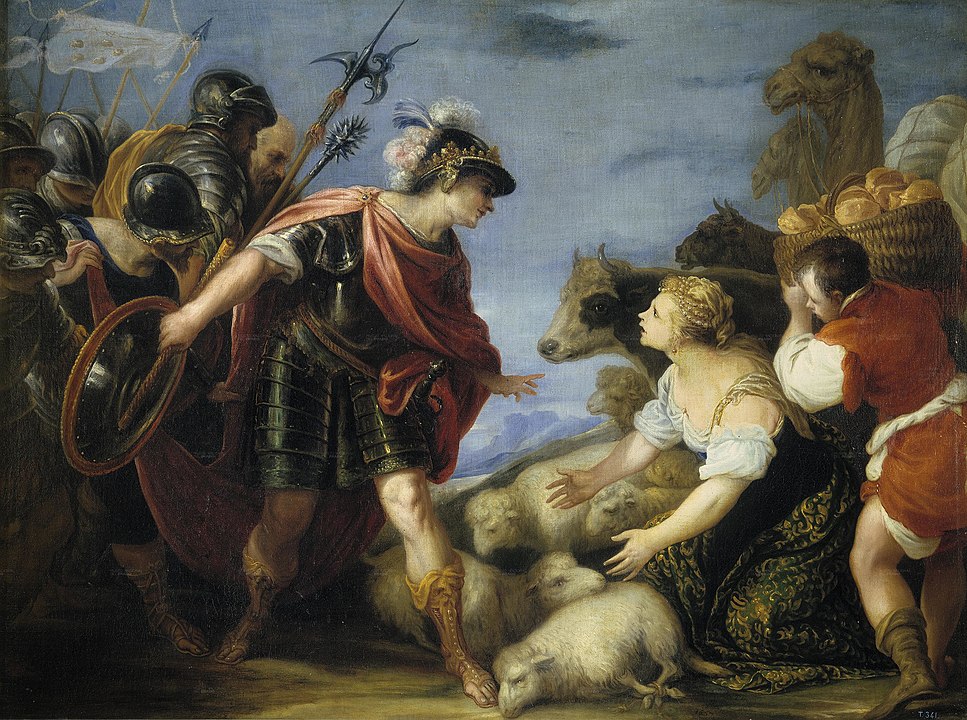






 David Anderson