This blog post was originally posted December 1, 2016. Then it became part of my book, Dark Nights of the Soul. The holidays are upon us, so I’m posting this excerpt to remind folks not to forget to give thanks during the Christmas season. I want to encourage everyone to shop stores that are closed on Thanksgiving day.
Sometime in December, probably multiple times, I expect
to hear about the “war on Christmas,” because someone said Happy Holidays
instead of Merry Christmas. Has anyone noticed there has been an ongoing war on
Thanksgiving?
I remember when stores would wait until after
Thanksgiving to play Christmas music and put up Christmas decorations. Black
Friday marked the beginning of the Christmas shopping season. Now, it’s the day
after Halloween. This year, on November 1, I was in a discount grocery store.
It was sunny and almost 80 degrees outside, not even a hint of snowflakes, and
I heard “Sleigh Bells” through the store speakers. I wanted to shout, “This is
just wrong, people! It’s still more than three weeks until Thanksgiving!”
And a few years ago, stores started opening on
Thanksgiving day. Really? You can’t wait until Black Friday for your big sale?
Good or Bad for Business?
A USA Today article showed the state of the debate
from the business side. On one hand, there is the question about whether it
makes business sense. Instead of resulting in more sales and profits, the
numbers suggest Thanksgiving Day sales dilute the sales and purchases of Black
Friday. So you are open on this holiday, but overall you are not making any
more money. On the other hand, some believe being closed on Thanksgiving will
soon be outdated. Most stores used to be closed on Sunday. Now shopping and
running errands on Sunday is normal. Will the same thing happen with
Thanksgiving?
“As long as shoppers want to make purchases on
Thanksgiving, stores will continue to accommodate them,” one professor said.[1]
Either way, however, it comes down to a business
decision. Retailers need to maximize the Christmas shopping season any way they
can. If you don’t make it at Christmas, you don’t make it. I understand that.
But do you have to make your employees sacrifice a major holiday and the last
chance to spend meaningful time with their families before the Christmas rush?
Why Am I Talking about This on a Blog about Faith and Depression?
Because gratitude and giving thanks are powerful
antidotes to depression and perhaps the most important (and underrated) acts of
faith. Think about a time when you were truly grateful from the bottom of your
heart. When gratitude overwhelmed you. Were you depressed then? Did it even
occur to you that you could possibly be depressed at that moment? That’s what I
mean about it being a powerful antidote. You can’t be depressed when you are
truly thankful.
We have a day set aside to give thanks for our
blessings and the blessings of this nation: the fourth Thursday of every
November. And every year we ignore it, trivialize it, and treat it as a speed
bump in our rush to get started shopping for Christmas. Black Friday is
threatening to take over Thanksgiving altogether. Taking even one day out of
the shopping season to stop, remember our blessings, share them with our
families, and be thankful is treated as a waste of time, and even worse, a
waste of money.
Isn’t that a perfect metaphor for our lives? We
rush and rush to acquire more stuff and buy the love of our families and never
stop to be grateful for what we already have. Sounds like the perfect recipe
for depression.
So this year I am going to support Thanksgiving by
doing my Christmas shopping only at stores that close on Thanksgiving Day. And
I will wait until after Christmas before I shop any stores that were open on
Thanksgiving. The only way this will change is if consumers prove to these
companies that it really makes no business sense to try to make people shop
when we should be giving thanks.
If the only prayer you ever say in your entire life is thank you, it will be enough.
It was very important that Isaac have a wife. That has been done. The next episode is written like an archive record according to my NRSV Study Bible (Genesis 25:1-18). This is an example of how the Bible was not written simply by divine dictation. The authors had written and oral sources they used and maybe edited as well. The archive gives Abraham’s marriage to Keturah, their descendants, his death and burial, and the descendants of Ishmael.
Another Wife, Whose Name Was Keturah
Abraham took another wife, whose name was Keturah. She bore him Zimran, Jokshan, Medan, Midian, Ishbak, and Shuah.
(Gen 25:1-2 NRS)
Another wife, and he had six children with her. I assume this was after Sarah’s death, and after Isaac married Rebekah (Genesis 24:66-67). This would make him over one hundred forty years old. It took one hundred years for him to have one child with Sarah. Now he has six with his new wife in just a few years, relatively.
Not sure why he felt the need for it. He was too weak to travel in the previous chapter, but then he’s healthy enough to marry again and start bearing children to another woman? Again, the details of Abraham’s story are not always consistent. But if we allow that he had another revival of health, like the one that produced Isaac, what will become of these children?
Jokshan was the father of Sheba and Dedan. The sons of Dedan were Asshurim, Letushim, and Leummim. The sons of Midian were Ephah, Epher, Hanoch, Abida, and Eldaah. All these were the children of Keturah.
(Gen 25:3-4 NRS)
The sons of Midian are the most significant of this group. Moses’s father-in-law, Jethro, was a Midianite. Despite that, they often tried to thwart the Israelites during their wandering in the Wilderness (Num 22:4; cf. Jdg 6:1).
Abraham gave all he had to Isaac. But to the sons of his concubines Abraham gave gifts, while he was still living, and he sent them away from his son Isaac, eastward to the east country.
(Gen 25:5-6 NRS)
Abraham gave all he had to Isaac. We saw how stingy Sarah was about giving anything to Hagar and Ishmael, even food and water, when she sent them away. Abraham gave nothing to his other sons as far as inheritance. But he gave them gifts while he was still living. I think, without Sarah to oppose him, he was probably more generous with these gifts than he was with Hagar and Ishmael. But Sarah’s word, “The son(s) of the slave woman will not inherit with my son,” prevailed (21:10).
The sons of his concubines; why does it give the plural, concubines? Hagar was called both Abraham’s wife and his concubine. The same is happening with Keturah. Maybe that means both Hagar and Keturah. Did he give any gifts to Ishmael after Sarah died? As a writer, I would like to play with that possibility and imagine Ishmael’s reaction when he receives the gifts.
An Old Man Full of Years
This is the length of Abraham’s life, one hundred seventy-five years. Abraham breathed his last and died in a good old age, an old man and full of years, and was gathered to his people.
(Gen 25:7-8 NRS)
One hundred seventy-five years was believed to be an above average, but still normal, life span in the age of the patriarchs.
Abraham breathed his last …. There are a number of English expressions that come from the Bible (see v. 17; 49:33). I think this might be one of them.
…and died in a good old age, an old man and full of years. This is the fulfillment of the promise God made him in the covenant. “As for yourself, you shall go to your ancestors in peace; you shall be buried in a good old age” (Gen 15:15 NRS).
…and was gathered to his people, a biblical euphemism for death and burial. Cf. Gen 25:17; 35:29; 49:29, 33.
Isaac and Ishmael Buried Him
His sons Isaac and Ishmael buried him in the cave of Machpelah, in the field of Ephron son of Zohar the Hittite, east of Mamre, the field that Abraham purchased from the Hittites. There Abraham was buried, with his wife Sarah.
(Gen 25:9-10 NRS)
Despite his troubled history with his father, Ishmael was there to bury him with Isaac. In the cave of Machpelah…the field that Abraham purchased from the Hittites. See 23:16-18. He was buried there with his wife Sarah.
There is a lot left out, particularly any tension between Isaac and Ishmael. Compare that with all the detail of how Abraham bought this cave as a family burial plot, or how Abraham’s servant vowed (TMI there), went to Haran, and brought back a wife for Isaac. Those conversations are recorded in detail. There is literally nothing of the conversation between these two half-brothers. The archivists who recorded this were not concerned with that. They were only concerned with the facts: How old Abraham was when he died, where he was buried, and who was there.
After the death of Abraham God blessed his son Isaac. And Isaac settled at Beer-lahai-roi.
(Gen 25:11 NRS)
Beer-lahai-roi, the place where the angel of the LORD saved Hagar when she was still pregnant with Ishmael (16:10-14), is where Isaac settled. Did Ishmael see this as one more thing his half-brother took from him?
The Twelve Princes of Ishmael
These are the descendants of Ishmael, Abraham’s son, whom Hagar the Egyptian, Sarah’s slave-girl, bore to Abraham.
These are the names of the sons of Ishmael, named in the order of their birth: Nebaioth, the firstborn of Ishmael; and Kedar, Adbeel, Mibsam, Mishma, Dumah, Massa, Hadad, Tema, Jetur, Naphish, and Kedemah. These are the sons of Ishmael and these are their names, by their villages and by their encampments, twelve princes according to their tribes.
(Gen 25:12-16 NRS)
This is the fulfillment of God’s promise to Abraham …
As for Ishmael, I have heard you; I will bless him and make him fruitful and exceedingly numerous; he shall be the father of twelve princes, and I will make him a great nation.
(Gen 17:20 NRS)
… and Hagar:
The angel of the LORD also said to her, “I will so greatly multiply your offspring that they cannot be counted for multitude.”
(Gen 16:10 NRS)
Ishmael had twelve sons, who became twelve princes according to their tribes, like Jacob later. The descendants of Ishmael are called Ishmaelites and Hagrites (Psa 83:6; 1 Chr 5:19). The names are also recorded in Chronicles, along with each of their descendants (1 Chr 1:29-43).
The Handmaid and Her Son
Depending on the situation, Hagar is referred to as Abraham’s wife, concubine, or Sarah’s slave girl. It reminds me of how Offred was treated by the Waterfords in The Handmaid’s Tale. Fred sometimes wanted a relationship with Offred and at times engaged in activities outside the bounds of her role as a “concubine,” almost like he wanted her to be a second wife. Serena treated her at best like a concubine and at worst like a slave girl. The impression I get from the texts regarding Hagar is pretty much the same in her relations with Abraham and Sarah.
The Ishmaelites were known as nomads, but they also had villages and encampments, like the Dothraki in Game of Thrones. {Yeah, I’m a nerd. You got a problem with that?}
From Havilah to Shur
(This is the length of the life of Ishmael, one hundred thirty-seven years; he breathed his last and died, and was gathered to his people.)
They settled from Havilah to Shur, which is opposite Egypt in the direction of Assyria; he settled down alongside of all his people.
(Gen 25:17-18 NRS)
Ishmael’s death is recorded in archival fashion similar to
Abraham’s (cf. vv. 7-8). They settled from Havilah to Shur. Just prior
to King David, this territory was settled by the Amalekites (1 Sam 15:7).
The land of Havilah has several possible locations, as this map indicates.
Havilah shown in modern Yemen, Saudi Arabia, and Somalia.
Here, it appears to be the territory in present day Saudi
Arabia and Yemen. It is mentioned as part of the Garden of Eden, where the
river Pishon once flowed (Gen 2:11). A ancient source called Pseudo-Philo said
this land exported jewels to the Amorites, who used them in making their idols.
Shur means “wall.” The location is given as opposite Egypt.
They settled from Havilah to Shur, which is opposite Egypt in the direction of Assyria; (Gen 25:18 NRS)
In the direction of Assyria would indicate the northeastern
border of Egypt, as Easton’s Bible Dictionary (1893) says.
Shur is “a part, probably, of the Arabian desert, on the north-eastern border of Egypt, giving its name to a wilderness extending from Egypt toward Philistia (Gen. 16:7; 20:1; 25:18; Ex. 15:22). The name was probably given to it from the wall which the Egyptians built to defend their frontier on the north-east from the desert tribes. This wall or line of fortifications extended from Pelusium to Heliopolis.”
The Egyptians are his people, because his mother was Egyptian.
The land of Shur borders Egypt to the northwest. Isaac and his descendants are
his people, because they have the same father. The land of Havilah borders the
Negeb desert, where Isaac settled. Is this location information only?
There is another possible definition of this sentence. It
could read “He fell down in opposition to all his people,” according to my NRSV
Study Bible note. This is reflected in some translations.
“He settled in defiance of all his relatives” (Gen 25:18 NAS).
“And they lived in hostility toward all the tribes related to them” (Gen 25:18 NIV).
Alongside of, or against His People?
Like the word “opposite” in English, the Hebrew phrase `al-penei can be benign, “alongside,” or “facing towards.” In that sense, it would only mean they share a border, like Georgia is opposite Alabama and South Carolina. Or it can carry the more malevolent sense of being “in opposition to” or “at odds with.” It is used twice in this verse, where the Ishmaelites settled “opposite” Egypt and “all his people.” Did they simply live alongside Egypt and Isaac (later part of Israel)? Or is this referring to the hostile relations they had at times with both Egypt and Israel?
My conclusion is this verse means the Ishmaelites shared a
border with Egypt and Isaac’s land, which would later become part of the nation
of Israel (See Translation Notes). However, there are other texts that indicate
hostile relations between the Ishmaelites and their neighbors. Even the name
Shur (meaning “wall”) refers to a border wall Egypt built for protection against
raids from its neighbors, who could be the Ishmaelites, or alternatively, the Hyksos or the Amalekites (1 Sam
15:7). Kedar and Nebaioth (two tribes of Ishmael) sometimes were hostile to the
nation of Israel (Isa 21:16-17; 60:7; Jer 49:28; cf. Gen 28:9; 36:3).
So perhaps the double meaning of `al-penei is intentional.
During times in their history when relations were friendly or at least neutral,
it would mean “alongside of.” During times when relations were antagonistic, it
would mean “in hostility.”
The End
Abraham’s saga began with a genealogy (Gen 11:10-32) and now ends with a genealogy (25:12-18). “The emphasis here is on the secondary lines of Abraham’s—those displaced by Isaac” (HC Study Bible, 25:1-18 note). We have his children by Keturah and the descendants of Ishmael. This completes the character study of Abraham, Sarah, Hagar, Ishmael, and Lot and his daughters, based on the Biblical material. There are other sources we could consult about them: Rabbinic commentaries, the Koran, archeology, and Ancient Near Eastern Texts (ANET). But the Biblical material has given us quite a bit. There are others I’m not naming, like Isaac and Rebekah, because their stories have not finished.
For Writers: Choosing a POV Character
If I were to make a work of fiction based on these stories, I would look for a Point of View (POV) character. Abraham would be difficult. Even though he’s the main character, and he was there for all of it (except his death and burial), it’s a bit daunting to try to get inside the head of someone who plays such a big role in the Bible. Sarah would be difficult for the same reason, and because after going through this story in detail, I have less sympathy for her overall. Notice, I didn’t say no sympathy. I said less sympathy. I would want to portray them both honestly, flaws and all, not excusing their bad behavior at times, but trying to make the reader sympathize with them in spite of that.
Most of my favorite biblical or historical fiction is not from the POV of one of the big names but rather from someone close to them. Eliezer of Damascus would be a good candidate in that vein. Or one of the unnamed slaves of Abraham or Sarah. Or one of the co-religionists, who followed Abraham and Sarah from Haran because they worshiped the same god. If I chose Hagar or Ishmael, I would have to make the story about them, with Abraham and Sarah as secondary characters, who could recede into the background after they were sent away. I would have a hard time making Hagar the POV character. She is much more fascinating than I realized. But I feel Margaret Atwood has already done a great job capturing all the complexities of her character in June/Offred. {Disclaimer: Atwood never claimed June was based on Hagar, but I say the similarities are undeniable.}
Who would you choose as a POV character? Would you choose more than one (that will make it more difficult to publish today, just so you know)? Personally, I know I couldn’t do Abraham’s whole story from Ishmael’s point of view (He was only with his father for about seventeen years). But he would make a great POV character at least for the time he was with Abraham and Sarah.
“Props” for Ishmael
I think Ishmael would make a fascinating character, because I haven’t seen a serious in-depth story done of him as biblical fiction, and because he is the unwanted stepchild in this story. A troubled childhood has so much potential for character development. It could not have been easy growing up knowing he was his father’s plan B. Plan C, actually, because before he was born, Abraham had made his servant, Eliezer of Damascus, his heir in lieu of a son of his own issue (Gen 15:2). As his stepmother, Sarah probably loved him until Isaac was born. What happens to Plan C when Plan A suddenly becomes reality? If he picked on Isaac a little, it was probably the frustration of losing Abraham and Sarah to their natural son.
That rough childhood prepared him for life in the wilderness (Gen 21:20). All that happened to him, fair or not, made him into the man he became: a wild ass of a man, strong, fiercely independent, and able to survive harsh conditions. Those details alone are enough to create a fascinating character.
Conclusion
I will save any further conclusions for the next post. I
thought I already knew these characters, but they have all surprised me again
and again on this extended in-depth character study. I hope you got something
out of it as well.
Translation Notes
I include these notes for people who (like me) love dissecting the original languages. If that’s not your bag, I put the pertinent information in subheadings and bold text.
Hol8596 שָׁכַן (shakan) Settle or dwell. {verb qal waw consec imperfect 3rd person masculine plural}
It looks like there is a puncta extraordinaria over “Shur.” In some cases, this can indicate a significant difference, as you saw if you read my post on Lot’s Daughters. However, none of the commentaries pointed it out here, so it’s probably not important. My guess is it only calls for a defective spelling (without the vav).
`al-penei, lit. “against the face of.” Halladay’s
lexicon says,
15. in the face of, in the sight of, before 2S 1518; in front of 1K 63; opposite to Gn 2319; against = to the disadvantage of Dt 2116.
(pg 294)
BDB says,
(d) of localities, in front of, mostly (but not always: v. GFM:Ju., p. 351) = east of, 1 K 6:3 the porch in front of, etc., v:3, 7:6, 8:8, 2 Ch 3:17, Ez 42:8; Gn 16:12 על־פני כל־אחיו ישׁכן (cf. 25:18 b), perh. (Di al.) with collateral idea of defiance;
The “collateral idea of defiance” is most significant. He could have been both alongside of his people and in defiance of them.
Hol838 אַשּׁוּר (‘ashur) a proper noun referring either to the city of Asshur or (most likely in this case) the territory of Assyria; “directional heh” at the end makes it “to Asshur” or “to Assyria.”
In the direction of Assyria, lit. “as you go to Assyria” (or “to Asshur”).
Hol975 בּוא (bo’) Go in, come, or arrive. {verb qal infinitive construct; suffix 2nd person masculine singular}
BDB says,
e. † in phr. עַד־בּוֹאֲךָ עַזָּה Ju 6:4 cf. 11:33, 1 S 17:52, 2 S 5:25, 1 K 18:46 (עַד־בֹּאֲכָה) until thou comest to = as far as; so also בּוֹאֲךָ (בֹּאֲכָה) alone, = as far as, or in the direction of, Gn 10:19, 10:19, 10:30, 13:10, 25:18, 1 S 27:8 (all sq. ךָה loc.) 1 S 15:7; so לְבאֹ חֲמָת Nu 13:21, 34:8, Ez 48:1, cf. Ez 47:15 (in a different connexion לָבוֹא אפרתה Gn 35:16, 48:7);
…he settled down alongside of all his people. (Gen 25:18 NRS)
`al-penei, see above.
kal-’echav, lit. “all his kindred.”
The wording is almost the same as 16:12, the only difference being the verb is shakan “to settle” rather than naphal “to fall.” There, the footnote reads:
The same phrase is used of the lands of Ishmael’s descendants in 25:18. It can be translated “in opposition to” (Deut 21:16; Job 1:11; 6:28; 21:31), but here more likely means that Ishmael’s settlement was near but not in the promised land.
-YouVersion, NABRE Gen 16:12 note
He “Fell” or He “Settled”?
Naphal, lit. “he fell (down or upon),” can carry the meaning
of death (1 Sam 31:8; Deut 21:1; Jdg 3:25). In fact, it was translated that way
in the King James Version, … he died in the presence of all his brethren.
(Gen 25:18 KJV). John Calvin commented that was how most
translations read it in his time.
The NRSV is consistent with most modern translations, where the verb is understood to mean “he settled (down),” or perhaps “he fell upon,” as in “he raided” or “he plundered,” rather than “he died.” Though it is a consensus, it appears to be a recent development.
Halladay’s lexicon says naphal can mean “fall,” in both literal and metaphorical senses. This can include “fall upon,” as in “make a raid” or “attack” (Jos 11:7; Job 1:15).
Hol5626 נָפַל (naphal) “abs. make a raid Jb 115; … settle oppositeGn 2518.”
However, with `al-penei, it means “settle opposite.” BDB also believes naphal here means “settle Gn 25:18 (J).”
So while naphal can in certain contexts mean “raid” or “die,” these two Hebrew lexicons believe it carries the benign sense of settling in a place opposite all his people.
This could also apply to Genesis 16:12, which is perhaps best translated, … alongside all his kindred shall he encamp (Gen 16:12 NAB), rather than … and he shall live at odds with all his kin. (Gen 16:12 NRS). See https://www.bible.com/bible/463/GEN.16.nabre, note on v. 12.
In the last post, Abraham returned to Kiriath-arba to bury Sarah (Genesis 23). It is one of the most poignant scenes in the entire Bible, not just in how it shows his grief but also for how the “Sons of Heth” in Kiriath-arba show friendship and kindness to him. I also started talking about the search for a wife for Isaac (Genesis 24). It is a long chapter. I wanted to break it up, so this post would not be quite as long.
So far, we saw Abraham was too old to make the journey, and he wanted Isaac to marry a woman from his own kindred in Haran. However, he did not want Isaac to go there himself. Apparently, he was afraid if Isaac went to Haran, he would stay there, like his father Terah had done. So he sent his oldest and most trusted servant to the city of his brother Nahor to find a wife for his son Isaac.
The servant swore to do as he asked, but with one caveat. If the woman was not willing to come back with him, he would be released from the oath. Abraham agreed (Genesis 24:1-9). That’s where we pick up the story.
Will Ten Camels Be Enough?
Then the servant took ten of his master’s camels and departed, taking all kinds of choice gifts from his master; and he set out and went to Aram-naharaim, to the city of Nahor.
He made the camels kneel down outside the city by the well of water; it was toward evening, the time when women go out to draw water.
(Gen 24:10-11 NRS)
Then the servant took ten of his master’s camels and departed, taking all kinds of choice gifts from his master; and he set out and went to Aram-naharaim, to the city of Nahor. (Gen 24:10 NRS)
Aram-naharaim, appears to be another name for Haran (Gen 11:31). He made the camels kneel down, because you have to do that to dismount from a camel. I remember that from my past trip to Israel.
Outside the city by the well of water, usually the first stop for a traveler. They would naturally be thirsty. It was toward evening, the time when women go out to draw water, you would want to go when the sun was not so brutal during the day. But I thought the time for drawing water was in the morning. Anyway, it was the ideal time for the servant to see some of the women of Haran. But how will he know who he should ask to be the wife of his master’s son?
WWAD?
What would Abraham do? Ask the LORD.
And he said, “O LORD, God of my master Abraham, please grant me success today and show steadfast love to my master Abraham. I am standing here by the spring of water, and the daughters of the townspeople are coming out to draw water. Let the girl to whom I shall say, ‘Please offer your jar that I may drink,’ and who shall say, ‘Drink, and I will water your camels’– let her be the one whom you have appointed for your servant Isaac. By this I shall know that you have shown steadfast love to my master.”
(Gen 24:12-14 NRS)
I’ve heard of “putting fleece before the LORD.” It refers to
Gideon’s call. God told Gideon to attack the Midianites, because they were
oppressing the people of his tribe. He wanted a sign to be sure it was really
God, so he said,
“I am going to lay a fleece of wool on the threshing floor; if there is dew on the fleece alone, and it is dry on all the ground, then I shall know that you will deliver Israel by my hand, as you have said.”
And it was so. When he rose early next morning and squeezed the fleece, he wrung enough dew from the fleece to fill a bowl with water.
(Jdg 6:37-38 NRS)
How will Gideon know this is really God speaking to him? He will lay fleece on the threshing floor. In the morning, if the ground around it is dry, but the fleece is wet, he will know it’s the LORD. And it was so.
The servant appears to be doing something similar. He will ask a girl for a drink of water, which almost any girl in that society would have given. If she offers water for his camels as well without him asking, he will know that you have shown steadfast love to my master. In other words, she is the one God has chosen for Isaac.
There Was Rebekah
Before he had finished speaking, there was Rebekah, who was born to Bethuel son of Milcah, the wife of Nahor, Abraham’s brother, coming out with her water jar on her shoulder.
(Gen 24:15 NRS)
We were introduced to this part of Abraham’s family tree in Genesis 22:20-24. Nahor (Abraham’s brother) and his wife (and niece) Milcah had eight children, Bethuel being one of them. Bethuel was the father of Rebekah, ergo Abraham was her great uncle. She was then Isaac’s cousin, either second cousin first removed, or first cousin second removed. I have a hard time keeping that straight. She fits the criteria Abraham gave the servant.
Of course, incestuous marriages like this would later be forbidden in the Law of Moses. But for Abraham’s family, marrying in the family seems to have been preferred.
What does Cersei have in common with Sarah?
The girl was very fair to look upon, a virgin, whom no man had known. She went down to the spring, filled her jar, and came up.
Then the servant ran to meet her and said, “Please let me sip a little water from your jar.”
“Drink, my lord,” she said, and quickly lowered her jar upon her hand and gave him a drink.
(Gen 24:16-18 NRS)
She was very fair to look upon, always a bonus. It may seem sexist to think in those terms, but isn’t the princess in every fairy tale beautiful? And, to be fair, the prince who wants to marry her is always rich.
A virgin, whom no man had known. Okay, this is sexist. Women were expected to be virgins when they married. For most men, this was very important. But did the man himself have to be a virgin? No. It was a patriarchal society, so there were some double standards.
My lord, not literally. It was a polite way to address someone. Here, I picture him receiving the cup from her and hesitating. He waits for her to offer water to his camels. He looks expectantly at her. She smiles at first but then raises one eyebrow as if she’s thinking, “Why are you looking at me like that?” He sighs, drinks the water and hands the cup back to her.
When she had finished giving him a drink, she said, “I will draw for your camels also, until they have finished drinking.”
(Gen 24:19 NRS)
The Daughter of Bethuel Son of Milcah, Whom She Bore to Nahor
Good thing he had finished drinking, because he would have spit it out when she said this. God has not only been faithful but extremely prompt. He had seen her even before he had finished praying and run to meet her. And yes, she is the one.
So she quickly emptied her jar into the trough and ran again to the well to draw, and she drew for all his camels. The man gazed at her in silence to learn whether or not the LORD had made his journey successful. When the camels had finished drinking, the man took a gold nose-ring weighing a half shekel, and two bracelets for her arms weighing ten gold shekels, and said, “Tell me whose daughter you are. Is there room in your father’s house for us to spend the night?”
She said to him, “I am the daughter of Bethuel son of Milcah, whom she bore to Nahor.”
(Gen 24:20-24 NRS)
She had already passed his “fleece” test, but he’s still watching her to learn whether or not the LORD had made his journey successful. He doesn’t make his move until the camels had finished drinking. This might indicate why Abraham entrusted this task to him. He knew this servant would be as diligent in examining the woman as Abraham himself.
Rebecca draws water for Abraham’s servant
She is beautiful and kind. That’s enough for him to offer a few of the gifts he had brought to win the girl’s favor. What did she think when she saw them? When women drew water for thirsty travelers, they did not expect gifts for it. It was just normal hospitality.
He asks to spend the night at her father’s house. Again, this was within the hospitality customs of the time. She didn’t need the gifts for that. He wants to know about her family. She introduces herself as the daughter of Bethuel son of Milcah, whom she bore to Nahor. Instead of her own name, she gives the name of her father, grandmother, and grandfather. Ancestry was usually traced through the fathers, so I think it’s unusual that she includes her grandmother, Milcah. But the servant knows all of these names as relatives of his master. She has passed not only his “fleece” test but also met his master’s requirements.
A Place to Spend the Night
She added, “We have plenty of straw and fodder and a place to spend the night.”
(Gen 24:25 NRS)
So he can stay with her family tonight and tell them the
purpose of his journey. I can only imagine his excitement.
The man bowed his head and worshiped the LORD and said, “Blessed be the LORD, the God of my master Abraham, who has not forsaken his steadfast love and his faithfulness toward my master. As for me, the LORD has led me on the way to the house of my master’s kin.”
(Gen 24:26-27 NRS)
He wasted no time thanking Abraham’s God for his success. Rebekah
knows something big is about to happen to her.
Then the girl ran and told her mother’s household about these things.
(Gen 24:28 NRS)
I’m not sure, but I think it is unusual to call it her mother’s household rather than her father’s. In her novel The Red Tent, Anita Diamant presents the women of Dinah’s family as more autonomous than one would expect in a patriarchal culture. In subtle ways, this story seems to be raising that as a real possibility.
And Let Me Introduce You to My Brother, Laban
Rebekah had a brother whose name was Laban; and Laban ran out to the man, to the spring. As soon as he had seen the nose-ring, and the bracelets on his sister’s arms, and when he heard the words of his sister Rebekah, “Thus the man spoke to me,” he went to the man; and there he was, standing by the camels at the spring.
(Gen 24:29-30 NRS)
As soon as he had seen the nose-ring, and the bracelets on his sister’s arms… he went to the man. This hints at Laban’s greed, which later will play into the story of Jacob.
“Thus the man spoke to me.” He hasn’t told her much so far. He asked for water for himself. He asked who her family was and if he could spend the night. She heard him thank his god, called Yahweh, for steadfast love and faithfulness to his master. And she knows his master is of her kin (v. 27). What does all of that mean? He hasn’t told her yet. But Laban saw that gold jewelry, and suddenly he was eager to meet the man.
He said, “Come in, O blessed of the LORD. Why do you stand outside when I have prepared the house and a place for the camels?”
So the man came into the house; and Laban unloaded the camels, and gave him straw and fodder for the camels, and water to wash his feet and the feet of the men who were with him.
(Gen 24:30-32 NRS)
Blessed of the LORD. The patron deity of Haran was the moon god, Sin.
Cylindrical seal of King Ur-Nammu, dating to about 2100 BC. The king is commissioning a governor. The god Sin is represented by a crescent moon.
He offers standard hospitality to the servant and the men who were with him. This is the first time the story mentions anyone accompanying the servant. Although, for a long journey like this and taking ten camels with him, you would expect him to have some men with him, preferably some of his master’s trained soldiers.
I Will Not Eat until I Have Told You My Errand
Then food was set before him to eat; but he said, “I will not eat until I have told my errand.”
He said, “Speak on.”
So he said, “I am Abraham’s servant. The LORD has greatly blessed my master, and he has become wealthy; he has given him flocks and herds, silver and gold, male and female slaves, camels and donkeys. And Sarah my master’s wife bore a son to my master when she was old; and he has given him all that he has.
(Gen 24:33-36 NRS)
Again, I can only imagine the servant’s excitement as he speaks. He can’t even eat “until I have told my errand.”
I am Abraham’s servant. Last time they saw Uncle Abe, he was named Abram. Did they know God had changed his name to Abraham? It’s possible. There was a line of communication with him somehow (Gen 22:20-24).
Just like fairy tales have the beautiful princess, they also have the rich prince who wants to marry her. We don’t like to think of marriage being about such superficial things, but it still doesn’t hurt, does it?
“Tale as old as time/ Song as old as rhyme/ Beauty and the Rich Prince.”
The servant says his master has become wealthy … and he has given [Isaac] all that he has. I’m sure Laban is happy to hear that, especially when he hears that Uncle Abe sent him to find a wife of “his father’s house,” and “of his kindred” (vv. 3-4, 37-38). Sister Rebekah fits that description. The servant goes on to tell the details of what Abraham told him, what he had prayed, and how Rebekah checked all the boxes (vv. 39-49). Except there is one more box that needs to be checked. Two actually.
Telephoning
“I said to my master, ‘Perhaps the woman will not follow me.’
“But he said to me, ‘The LORD, before whom I walk, will send his angel with you and make your way successful. You shall get a wife for my son from my kindred, from my father’s house. Then you will be free from my oath, when you come to my kindred; even if they will not give her to you, you will be free from my oath.’
(Gen 24:39-41 NRS)
Originally, Abraham told the servant he would be free from the oath “if the woman is not willing to follow you” (24:8).
Even if they will not give her to you, you will be free from my oath. This is the one detail the servant added (cf. vv. 3-27; 34-49). In recounting his oath to Abraham and the journey that led him to Rebekah, the servant told the story just as it happened, except they never discussed the possibility that her family will not give her to you.
This is an example of how and why telephoning occurs as stories are repeated. He is speaking to the male leaders of the household, Bethuel (her father) and Laban (her brother). It probably occurs to him then, “Oops! I didn’t ask my master what happens if her family will not let her go.”
But like Rebekah, they also have veto power over this. Adding this detail is his recognition that he needs their approval in order for his mission to be a success. Is it technically an exact literal retelling? Mostly, but not quite. Is it consistent with the spirit of the agreement, that if the party (or parties) concerned do not agree to the proposal, he is released from the vow? Yes. He cannot control their choice any more than he can control Rebekah’s.
The Thing Comes from the LORD
Then Laban and Bethuel answered, “The thing comes from the LORD; we cannot speak to you anything bad or good. Look, Rebekah is before you, take her and go, and let her be the wife of your master’s son, as the LORD has spoken.”
(Gen 24:50-51 NRS)
The thing comes from the LORD. That was obvious to everyone, considering how the LORD brought Rebekah to him as he was praying. They tell him he can take her and go, and let her be the wife of your master’s son. Is this them saying, “We are the men of the house, and you, Rebekah, must do whatever we say”? Or is it them saying, “You have our blessing in this matter,” because they recognize that the LORD has spoken? I think it’s the latter, mainly because of what happens next.
When Abraham’s servant heard their words, he bowed himself to the ground before the LORD. And the servant brought out jewelry of silver and of gold, and garments, and gave them to Rebekah; he also gave to her brother and to her mother costly ornaments.
(Gen 24:52-53 NRS)
My NRSV Study Bible note says these gifts are not a bride-price (v. 53 note). It is proper for him to give more gifts to Rebekah, and also to her brother and her mother, even though he still can’t be sure if Rebekah will come with him. The first necessary step has happened. An agreement has been made with her family, so it is time to celebrate. The gifts are extravagant, but his master can afford it.
We Will Call the Girl and Ask Her
Then he and the men who were with him ate and drank, and they spent the night there. When they rose in the morning, he said, “Send me back to my master.”
Her brother and her mother said, “Let the girl remain with us a while, at least ten days; after that she may go.”
But he said to them, “Do not delay me, since the LORD has made my journey successful; let me go that I may go to my master.”
They said, “We will call the girl, and ask her.”
(Gen 24:54-57 NRS)
Her brother and her mother. Again, even though the father was the final authority in the previous night’s negotiations, the mother still has a say in what happens to her daughter. And though the text does not mention her until now, this indicates she was probably there at the negotiations and nodded her agreement before her father spoke.
The servant anticipated having to get the girl’s agreement. It might seem a little late now to ask her. But in Biblical times, negotiations for the terms of a wedding always took place with the families first. We have seen the result of that. After the families of the boy and girl reached an agreement, the girl had to give her approval. So the possibility the servant raised with Abraham was still there. She could still say no.
And they called Rebekah, and said to her, “Will you go with this man?”
She said, “I will.”
(Gen 24:58 NRS)
Yes! The servant must have been ecstatic when he heard that. Imagine if she had said no. After all the signs that the LORD had blessed his mission and given him success, she could still have derailed the whole thing. But she said yes. Now there is nothing to stop him from delivering a bride to his master’s son. Not just any bride, but one that the LORD and his master together chose for him.
What Made Rebekah Agree to This?
On the face of it, it sounds crazy. We learn later that she is sixteen, significantly younger than Isaac. At the time, that was not unusual. Still, she is leaving her country, her kindred, and her father’s house to go to a foreign land (does that sound familiar?) and marry a man she has never met. What convinced her? Was it the extravagant gifts the servant showed? She knew that was just the tip of the iceberg. Clearly, his master had wealth to spare. I’m sure the servant talked up his master’s son. Maybe he said he is not only heir to his father’s wealth but his mother’s good looks as well.
I think more than anything, it was the uniqueness of this situation. She was exactly what his master told him to look for. He prayed for her to appear, and there she was. I admit sometimes it is hard to believe in God. But if this happened to you, it would be hard not to believe in God. The people of her home city worshipped the moon god Sin. But what had Sin done for her? Nothing like this, I’m sure. The LORD sent this servant to call her to be the wife of this man, who clearly had the LORD’s favor.
Who Are All These Camels For?
So they sent away their sister Rebekah and her nurse along with Abraham’s servant and his men.
(Gen 24:59 NRS)
Most rich young women at the time had a nurse, a female slave to tend to their needs. Rebekah needed a camel for her to ride as well. They don’t tell us how many men accompanied the servant, but it had to be less than eight, to be sure the woman could ride back, along with whatever she needed.
And they blessed Rebekah and said to her, “May you, our sister, become thousands of myriads; may your offspring gain possession of the gates of their foes.”
(Gen 24:60 NRS)
That is the same blessing God pronounced over Isaac and his offspring (22:17). She will become thousands of myriads. God already promised that to Isaac and all of Abraham’s descendants. May your offspring gain possession of the gates of their foes. Their wish for her, in other words, is that her enemies will have no power over her offspring. Again, this is what God promised through the angel who stopped Abraham from sacrificing him.
Then Rebekah and her maids rose up, mounted the camels, and followed the man; thus the servant took Rebekah, and went his way.
(Gen 24:61 NRS)
So it’s not just her nurse, but her maids. How many? Going back to the number of men, I’m guessing there was the servant and four men, each one riding a camel and leading another. That would leave five camels for Rebekah, her nurse, her maids, and her belongings.
Isaac Meets His Bride
Now Isaac had come from Beer-lahai-roi, and was settled in the Negeb. Isaac went out in the evening to walk in the field; and looking up, he saw camels coming.
(Gen 24:62-63 NRS)
Beer-lahai-roi, see Gen 16:6-16. If he had come from here and was settled in the Negeb, that indicates he was not with his father, whom we last saw at Kiriath-arba (cf. 23:2ff). The text does not say where Abraham was when he sent the servant on this mission, so we can only assume he was still there.
The servant has returned, and it looks like his journey was a success. All the camels are either mounted or loaded with baggage.
And Rebekah looked up, and when she saw Isaac, she slipped quickly from the camel, and said to the servant, “Who is the man over there, walking in the field to meet us?”
The servant said, “It is my master.”
So she took her veil and covered herself.
(Gen 24:64-65 NRS)
“Oh, he’s my husband.” She can’t let him see her before the
wedding, so she took her veil and covered herself. Cf. Gen 29:20-25.
And the servant told Isaac all the things that he had done.
(Gen 24:66 NRS)
And that was quite a story. If Isaac had any doubt she was the one for him, it was gone after the servant told him everything that happened. He was forty, and she was sixteen, which for us today would be a problem. But again, it was not uncommon for this time.
He Brought Her into His Mother’s Tent
Then Isaac brought her into his mother Sarah’s tent. He took Rebekah, and she became his wife; and he loved her. So Isaac was comforted after his mother’s death.
(Gen 24:67 NRS)
Isaac brought her into his mother’s tent. Rebekah brought the servant to her mother’s household. It was there she learned about Isaac, so this is a nice full-circle moment.
This is another one of those humanizing moments, like I talked about in the last post. Writers, you should pay attention to this. We learned in Genesis 23 that Isaac was thirty-six when his mother died. We learn in the next chapter he was forty when he married Rebekah (25:20). It’s been four years, and he still lives in his mother’s tent. He still needs to be comforted. I haven’t lost my either of my parents, but if you have, you probably understand why he still mourns.
He took Rebekah. “Wait, we can’t talk about sex.” I always find it ironic that Christian literature often avoids talking about sex, but the Bible has no problem talking about it. In this particular case, it is not long or detailed, but it is one of the most beautiful “love scenes” in the Bible. He brought her into his mother’s tent. He took her. She became his wife. He loved her. She comforted him.
This is an example of how sex becomes making love. And in the right circumstances, with the right person, it can be a source of comfort for the wounds we carry in our hearts. It is also the perfect closure for an episode that began with Sarah’s death (23:1-2). We see her presence still looms large in Isaac’s life. And in a subtle way, it gives us a sense that she would be happy with how this worked out for her son.
And for this story’s original audience, this was the moment when both their ancestry and the bloodline of the Messiah was secured for one more generation. They didn’t have a child yet, but Isaac and Rebekah would become the parents of Jacob and his twin brother, Esau.
For Writers: Self-Editing
You can (and should) get someone to edit your work. But before that, do as much self-editing as you can. One thing to look for is whether you gave the details the reader needs when they need them. At first, we are told the man goes with ten camels and all kinds of choice gifts. Later, we are told there are men with him, though not how many. The reader has one picture in their head. I wondered at first how one man could lead ten camels. Then they have to erase that picture to account for more men on the camels.
How many men? If we know that, we can guess how many camels are carrying men, since each man can only ride one camel. It was probably less than ten men, because some of the camels carried gifts. But the image would have been clearer if he had said how many men were riding. Instead, we have these men magically appear beside him in Bethuel’s tent.
And then we have this.
And Rebekah looked up, and when she saw Isaac, she slipped quickly from the camel, and said to the servant, “Who is the man over there, walking in the field to meet us?”
(Gen 24:64-65a NRS)
When she saw Isaac, she slipped quickly from the camel. It sounds like she hopped off the camel while it was still moving, and immediately started talking to the servant. That would be a neat trick. Most people would wait for the camels to stop and kneel down (like the servant did, v. 11). And that’s probably what happened. But the way it was written made it sound like something else. You don’t want to make the reader stop to try to figure out what you mean. Make it clear from the beginning how many men are coming with the servant. Make it clear that the camels have stopped and knelt down before she “slips quickly from the camel.” The reader can fill in the rest of the details.
Translation Notes
It’s Charan, not Haran.
I have to correct an earlier mistake. In the post “Abraham’s Field of Dreams,” I noted that the city Abraham’s family moved to had the same name as his brother who died. That’s not true. It looks the same in English. But in Hebrew, the name of the city is Charan (with a cheit). It probably means “parched” (Hebrew) or “road” (Assyro-Babylonian). The “ch” is not pronounced like “church.” There is no equivalent in the English alphabet. It’s like the sound you make when you’re hocking up phlegm, as in “Chanukah,” or “chutzpah.”
Haran, Abraham’s brother, is spelled with a hei,
which sounds like an “h.” It probably means “mountaineer.” Har is Hebrew
for mountain.
That you have shown steadfast love … (Gen 24:14 NRS).
כִּי־עָשִׂ֥יתָ חֶ֖סֶד (Gen 24:14 WTT)
Whenever you see “steadfast love” in the NRSV, the Hebrew word is probably chesed. When it follows the verb `asah, Halladay’s lexicon renders it “show loyalty.” In this context, it would mean loyalty or faithfulness.
The servant is there on a crucial task for his master. He knows all the difficulties the LORD overcame in giving Abraham and Sarah a son. But it will all be for naught if Isaac does not have a wife, so he can continue the covenant and the bloodline to the next generation. He has seen the LORD show chesed to his master in many ways. Since so much depends on the success of this mission, he is asking the LORD to show “loyalty” (or “steadfast love” in the NRSV) to him now.
Hol2710 חֶסֶד noun
common masculine singular absolute homonym 2
‘asâ chesed show loyalty Gn 2123; [24:14].
Hol6607 עָשָׂה verb qal perfect 2nd
person masculine singular homonym 1
A Half-Shekel … Ten Shekels
A gold nose-ring weighing a half shekel, and two bracelets
for her arms weighing ten gold shekels (24:22).
A shekel weighs about 0.4 oz., or 11.34 grams. The gold nose-ring would be about 0.2 ounces (5.67 grams). The bracelets would be 4 ounces, or a quarter-pound (113.4 grams).
… His Steadfast Love and His Faithfulness (24:27 NRS)
חַסְדּ֛וֹ וַאֲמִתּ֖וֹ (Gen 24:27 WTT)
“Steadfast love,” in Hebrew, chesed. “Faithfulness,” in Hebrew ‘emet. Halladay’s lexicon notes when paired together, chesed and ‘emet means “lasting loyalty, faithfulness,” or “lasting kindness.” The idea is God’s faithfulness and loyalty [to his master] never wavers or ends.
Hol609 אֱמֶת noun
common feminine singular construct suffix 3rd person masculine singular
“hesed we’emetlasting kindness Gn 2449; a) of God 2427, b) of men 2449.” See also “hesed we’emet Gn 2427•49 lasting loyalty, faithfulness;” (chesed, p. 111).
Hebron, a.k.a., Kiriath-arba, located about 20 miles south of Jerusalem.
He and Sarah have some history there. After he and Lot separated, he settled there at the Oaks of Mamre nearby (Gen 13:18). They were living there when he had to rescue Lot from the kings of Goiim (Genesis 14:1-15).
Sarah lived one hundred twenty-seven years; this was the length of Sarah’s life. And Sarah died at Kiriath-arba (that is, Hebron) in the land of Canaan; and Abraham went in to mourn for Sarah and to weep for her.
(Gen 23:1-2 NRS)
One hundred twenty-seven years, so Abraham is one
hundred thirty-six, and Isaac is thirty-six.
Kiriath-arba, named for Arba, the greatest of the Anakim (Gen 14:15). The last time we saw Abraham and Sarah in this area, Abraham hosted three angels before they went to Sodom (Genesis 18). This was when Sarah heard the angel of the LORD promise she would have a son and name him Isaac. Abraham was ninety-nine, and Sarah was ninety. They had moved to Beer-sheba by the time Isaac was born (Gen 20:1; 21:1). So it’s been thirty-six or thirty-seven years since then.
Though they have not been here in a while, the place has
some memories for them. Perhaps he came because he Sarah asked him to bury her
here.
Find the Anachronism
Abraham rose up from beside his dead, and said to the Hittites, “I am a stranger and an alien residing among you; give me property among you for a burying place, so that I may bury my dead out of my sight.”
The Hittites answered Abraham, “Hear us, my lord; you are a mighty prince among us. Bury your dead in the choicest of our burial places; none of us will withhold from you any burial ground for burying your dead.”
(Gen 23:3-6 NRS)
The Hittites, a bit of a misnomer. The Hittites, like
the Philistines, did not show up here until several centuries later. The Hebrew
is literally “sons of Heth,” meaning “pre-Israelite inhabitants of Palestine”
(HC NRSV 23:3 note; see also 10:15). On the history of the Hittites in the region,
see Eze 16:3, 45.
I am a stranger and an alien residing among you. Kindness to the stranger and alien was always important to Abraham and his sense of right and wrong. Even Lot, who seems to have been corrupted by living among the Sodomites, never forgot that. My HarperCollins NRSV study note says “Ownership of burial land is a crucial step in establishing legal residence” (23:1-20 note). We are starting to see the of fulfillment of God’s promise to give the land of Canaan to Abraham’s descendants. Abraham has the well of Beer-sheba, and now the cave of Machpelah.
A Hero’s Welcome
Even though Abraham has not been there in decades, the sons
of Heth have not forgotten him. They speak to him with the same respect he
shows them. When Abraham rescued Lot from kidnappers, I wonder if some of their
children were among the others he rescued. That seems the most likely
explanation for calling him a mighty prince among us.
Bury my dead. He doesn’t say, “bury my wife.” The phrase
suggests a legal formula.
Abraham rose and bowed to the Hittites, the people of the land. He said to them, “If you are willing that I should bury my dead out of my sight, hear me, and entreat for me Ephron son of Zohar, so that he may give me the cave of Machpelah, which he owns; it is at the end of his field. For the full price let him give it to me in your presence as a possession for a burying place.”
Now Ephron was sitting among the Hittites; and Ephron the Hittite answered Abraham in the hearing of the Hittites, of all who went in at the gate of his city, “No, my lord, hear me; I give you the field, and I give you the cave that is in it; in the presence of my people I give it to you; bury your dead.”
(Gen 23:7-11 NRS)
Even though Ephron seems to know him well, Abraham speaks
almost as if he doesn’t recognize him. Entreat for me…, also suggests a
legal formula or ritual.
Abraham wanted the cave of Machpelah to bury his dead.
He knows Ephron son of Zohar owns this land. The names are Semitic, not
Hittite. Cf. 26:34; 2 Sa 11:3.
All who went in at the gate of the city, where business
transactions often took place. This is likely a formal description of the
elders of the city, who judged or decided official matters. The way they speak,
especially Abraham, sounds very formal, as if this were a familiar ceremony to
the sons of Heth.
Abraham offers to buy it for the full price, because
he needs a burying place. But instead, Ephron offers to give it to him.
He’s being very generous.
Listen to Me! No, You Listen to Me!
Then Abraham bowed down before the people of the land. He said to Ephron in the hearing of the people of the land, “If you only will listen to me! I will give the price of the field; accept it from me, so that I may bury my dead there.”
Ephron answered Abraham, “My lord, listen to me; a piece of land worth four hundred shekels of silver—what is that between you and me? Bury your dead.”
(Gen 23:12-15 NRS)
Business in the Middle East almost always involves haggling.
Usually the buyer tries to argue down the price, and the seller argues for
more. But here Abraham wants to pay more, and Ephron is trying to give it away.
Abraham wants to give the price of the field, so that I may bury my dead
there. Ephron says he can bury his dead there. But he doesn’t want to take
any money. “I give it to you,” he says. “Bury your dead.”
A piece of land worth four hundred shekels of silver…,
Ephron must be fairly wealthy, because four hundred pieces of silver was
nothing to sneeze at. It only took thirty pieces of silver for Judas to sell
out Jesus.
What is that between you and me? This is something
you say to someone who has been a friend for a long time. He’s saying, “Four
hundred shekels of silver is nothing compared to our friendship. Just take it.
It’s yours. Bury your dead.”
An Agreement Is Reached
Abraham agreed with Ephron; and Abraham weighed out for Ephron the silver that he had named in the hearing of the Hittites, four hundred shekels of silver, according to the weights current among the merchants.
(Gen 23:16 NRS)
Abraham agreed, lit. heard. Cf. vv. 6, 11, 13; Translation Notes. Ephron was willing to give him the land for free, but Abraham still insisted on paying. This reminds me of the time when King David wanted to secure the Ark of the Covenant on Mount Zion. A man named Araunah was keeping it on his threshing floor. David wanted to buy the land to build an altar to the LORD and make burnt offerings there, before taking the Ark to the place God had chosen. Araunah recognized how important this was not just to David but to the whole nation. He offered his threshing floor to David for free, like Ephron did for Abraham. But David said,
“No, but I will buy them from you for a price; I will not offer burnt offerings to the LORD my God that cost me nothing.”
(2Sa 24:24 NRS)
I think Abraham felt the same way. He had been married to
Sarah for a hundred years, maybe a little more, and he did not want to bury her
in a place that cost him nothing.
So the field of Ephron in Machpelah, which was to the east of Mamre, the field with the cave that was in it and all the trees that were in the field, throughout its whole area, passed to Abraham as a possession in the presence of the Hittites, in the presence of all who went in at the gate of his city.
After this, Abraham buried Sarah his wife in the cave of the field of Machpelah facing Mamre (that is, Hebron) in the land of Canaan. The field and the cave that is in it passed from the Hittites into Abraham’s possession as a burying place.
(Gen 23:17-20 NRS)
Abraham has secured a burying place for his wife and
himself. He will later be buried in the same cave (Gen 25:9-10; 49:29-32). And
he got more than just the cave. He got the trees in the field too. In
the last post, I talked about Abraham planting a tree. Here, he and Sarah
wanted to claim a burial plot with trees around them. I bet they appreciated
trees more than most people today, considering they spent a lot of time in the
desert. Trees gave beauty, shade, and sign of life in the land.
For Writers: Humanizing Your Heroes
This scene is great for humanizing Abraham. We see him grieving
the death of his wife. He knows exactly where he wants to bury her. The text
doesn’t say Sarah requested this, but it’s not hard to imagine she did. We see
his friendly relations with the people of Kiriath-arba. Though Abraham is a
stranger and an alien among the Sons of Heth, they regard him as “a mighty
prince among us.”
The text says, “He rose up from beside his dead” (23:3). He is
still keeping her corpse. I see no indication how long this is, but he goes
straight from a vigil beside her corpse to the sons of Heth. He says he wants
this place to bury Sarah “so that I may bury my dead out of my sight” (23:4). Do
you feel the pain in that? I sure do.
His negotiation with Ephron is the opposite of normal
bartering. The seller tries to give it away, but the buyer insists on paying
fair market value. But it is exactly the kind of negotiation that would happen
between friends. Ephron recognizes Abraham’s loss. He is in a position to offer
a special kindness to his friend. “You need to bury your wife, so go ahead.
Take the field. It’s yours. Don’t worry about payment. Between you and me, this
is nothing.” But Abraham can’t bring himself to accept it. He cannot bury his
wife in a plot of land that costs him nothing. It’s a very touching moment.
A mighty prince like Abraham of course becomes known for
doing great things. I think their favor and friendship to Abraham goes back to
the incident where Abraham rescued Lot from the kings of Goiim. Abraham was
actually living among the Oaks of Mamre nearby when this happened. I believe
some of these Sons of Heth were among those taken captive. That is why they
called him “a mighty prince.” And it’s possible that among them, his legend has
grown greater in his absence.
But heroes need some humanity for the audience to connect with
them. This is the kind of scene and humanization that will help your readers
connect with your characters.
Finding a Wife for Isaac
In the next chapter, Abraham finally gets around to finding
a wife for Isaac. It is a long chapter, so I’m going to start it in this post.
Isaac was thirty-six when Sarah died. Abraham still has not found a wife for him. He seems to be dragging his feet, considering how important it is to continue the bloodline of Isaac. I used to think the death of Sarah lit a fire under him to get moving—well, of course, give him time to mourn first—but it would be another four years before Abraham decided it was time to get his son hitched, so he could have a grandson (Gen 25:20). With the lifespans for Abraham and his family typically being in the mid- to late- hundreds, maybe this was not so unusual. And God gave Isaac to him and Sarah when they were in their nineties, so maybe he did not think about it much.
Now Abraham was old, well advanced in years; and the LORD had blessed Abraham in all things.
(Gen 24:1 NRS)
Abraham was old, well advanced in years. This could
be the reason. We are told later Isaac was forty, which would make Abraham one
hundred forty (Gen 25:20). If he was close to dying, that would explain why he
felt now was the time to find a wife for Isaac. He would want to be sure that
was taken care of before he was dead and buried. But he went on to live to one
hundred seventy-five (Gen 25:7). It doesn’t sound like he should be on his
death bed yet.
Under His Thigh? Blessed Be.
Abraham calls in his most trusted servant and charges him
with finding a wife for Isaac. He makes the servant swear in an unusual manner.
This is another example of how different cultural practices can make us
uncomfortable when we see them for the first time.
Abraham said to his servant, the oldest of his house, who had charge of all that he had, “Put your hand under my thigh and I will make you swear by the LORD, the God of heaven and earth,
(Gen 24:2-3a NRS)
Say what??? Put your hand under my thigh? That almost sounds like sexual harassment. But that is not what Abraham has in mind. My HarperCollins NRSV study note says “Near the organs of procreation, signifying the solemnity of the oath that follows.”
Abraham has some very specific ideas about the kind of woman
he wants for Isaac, so here’s the vow.
“…that you will not get a wife for my son from the daughters of the Canaanites, among whom I live, but will go to my country and to my kindred and get a wife for my son Isaac.”
(Gen 24:3b-4 NRS)
One requirement is he does not want Isaac to marry a Canaanite woman. The local girls aren’t right for his son. The servant has to go to my country and to my kindred and get a wife for my son Isaac.” He does not want a shiksa for a daughter-in-law. I have a feeling, if Sarah were alive, she would say the same thing. Remember how George explained “shiksappeal” to Elaine in this scene from Seinfeld, the “Serenity Now” episode?
No shiksa for Isaac.
His country could be in Ur of the Chaldees or Mesopotamia in general. But when he says he wants the servant to go to his kindred and get a wife for Isaac, that means going to Haran, where his brother Nahor still lived. The Hebrew word for kindred (moledeth) refers specifically to a blood relative, so he wants a woman from his brother’s family. Remember, Abraham was married to his half-sister, Sarah. The woman the servant would bring back would most likely be Isaac’s cousin. This kind of incestuous marriage would later be forbidden in the Law of Moses. But to Abraham and his family, marrying within the family appeared to be not only accepted but preferred.
Cersei: That’s cute.
The servant said to him, “Perhaps the woman may not be willing to follow me to this land; must I then take your son back to the land from which you came?”
Abraham said to him, “See to it that you do not take my son back there. The LORD, the God of heaven, who took me from my father’s house and from the land of my birth, and who spoke to me and swore to me, ‘To your offspring I will give this land,’ he will send his angel before you, and you shall take a wife for my son from there. But if the woman is not willing to follow you, then you will be free from this oath of mine; only you must not take my son back there.”
So the servant put his hand under the thigh of Abraham his master and swore to him concerning this matter.
(Gen 24:5-9 NRS)
Abraham seems to have conflicting desires for his son. He
does not want Isaac to take a wife among the people where he lives. However, he
does not want Isaac going back to their country, where an acceptable wife could
be found. So he sends his servant to go without Isaac and entrusts the choice
to the LORD, the God of heaven.
He trusts God with this, because God was the one who took
me from my father’s house and from the land of my birth and … swore to me, ‘To
your offspring I will give this land.’ That explains why he does not want
Isaac to go there himself. They were already in the land God promised them. There
is no place in the kingdom of heaven for those who, after beginning to follow
the LORD, turn back to where they were before.
[The LORD] will send his angel before you. The
servant has been around his master long enough to know he is a prophet (Gen
20:7), so that should make him feel better about his prospects for success.
However, the servant recognizes he could make the journey, find a woman
suitable for Isaac, and she could still veto his choice. Abraham tells him if
that happens, he is off the hook as far as this vow goes. Apparently, even in
this patriarchal society, the woman did have some control over who she married.
In that case, Abraham will have to come up with a plan B.
What will happen to the servant when he gets to Haran? Will he
find a wife suitable for Isaac? Will she agree to leave her country and kindred
and go back with the servant? Will she marry Isaac sight unseen and become part
of the bloodline of the Messiah? Tune in next week and find out, same Bat-time,
same Bat-channel. (Or, to state the obvious, you could read the rest of Genesis
24).
Oak of Mamre (Quercus calliprinos), called a Palestinian
Oak, the most common tree in the modern nation of Israel. Sometimes mistakenly
translated “terebinth,” which is actually a different tree.
“In the Bible, oaks were associated with power, strength, or longevity in the sense of long life. The great oaks of Mamre symbolized Abraham’s long life. A Palestinian oak near Hebron, called Abraham’s Oak, is thought to be over 850 years old.”
Kiryat Arba or Qiryat
Arba (Hebrew:
קִרְיַת־אַרְבַּע),
lit. “Town of the Four.”
Arba in Hebrew is “four.” It is also the name of the father of Anak, founder of the Anakim. Anak, who was believed to have been a giant, had three sons, Sheshai, Ahiman, and Talmai, also believed to have been giants (Jos 15:13-14). If Arba here means “four,” then this could mean the town of the four giants. Or it could refer to the four patriarchs who are buried there: Abraham, Isaac, Jacob, and Adam. Adam’s placement here does not come from the Bible but from a Rabbinic tradition called the Zohar.
“Abraham agreed with Ephron” (Gen 23:16 NRS). וַיִּשְׁמַ֣ע (WTT). qal waw consecutive masculine singular. Halladay gives one possible translation as “heed,” which matches “agree with” in this translation.
8737 שָׁמַע
1. hear: abs. Is 12; w. acc.: s.one speak Gn 276, voice 310, trumpet Je 419 … listen to s.one Ez 37; w. acc. of thing (content of message) Ps 1326; w. kî 2S 1126; w. indir. qn. Ju 711; w. dir. qn. w/o introduction Dt 92; — 2. listen to s.thg Am 523, abs. Gn 275; listen (& agree) 238; w. °el Is 463, … Pr 834; … gladly hear 2S 1936; — 3. heed (a request) Gn 1720; 306, … 1611; — 4. hear > obey Ex 247;… Gn 2218, … 287; abs. be obedient 2K 1411; — 5. hear = understand: obj. … Gn 117; … — 6. š¹ma± bên try, examine (as a judge) Dt 116; distinguish 2S 1417.
We first met Abimelech in one of the “wife-sister” episodes. (Follow the link, you can scroll down to the subheading Abimelech King of Gerar: Another Unwitting John?) After sending Hagar and Ishmael away, Abraham encounters him again (Genesis 21:22-34).
At that time Abimelech, with Phicol the commander of his army, said to Abraham, “God is with you in all that you do; now therefore swear to me here by God that you will not deal falsely with me or with my offspring or with my posterity, but as I have dealt loyally with you, you will deal with me and with the land where you have resided as an alien.”
And Abraham said, “I swear it.”
(Gen 21:22-24 NRS)
The Bible identifies five Philistine cities: Gaza, Ashdod, Ashkelon, Ekron and Gath. Gerar is identified as part of “the land of the Philistines” in the time of Abraham.
Abimelech was king of Gerar at that time. Why is he so keen to make Abraham an ally, even though he resides there as an alien? He had taken Sarah into his palace, because Abraham told him she was his sister (didn’t mention she was his wife). God appeared to him and told him the only reason God did not kill him was he did not know Sarah was his wife. God told Abimelech to return Sarah to her husband and ask him to pray for God to forgive him. That was how he concluded God is with you in all that you do.
Since God is with Abraham, and he almost lost his life
because Abraham had dealt falsely with him, he wants to be sure Abraham
understands I have dealt loyally with you, so you will deal [loyally]
with me. When he first came there, Abraham thought people in this area had
no fear of God. Clearly, they do now. Either he wants to remind Abraham he
dealt loyally with him, or he wants to be sure Abraham understands, “You know
how you told me Sarah was your sister but didn’t tell me she was your wife? Don’t
ever do that again. You may have thought we don’t fear God, but you know better
now.”
Yes, Abimelech, and by the Way…
When Abraham complained to Abimelech about a well of water that Abimelech’s servants had seized, Abimelech said, “I do not know who has done this; you did not tell me, and I have not heard of it until today.”
(Gen 21:25-26 NRS)
When Abraham complained to Abimelech… A better translation would be, But Abraham complained to Abimelech… (NAS), or Abraham, however, reproached Abimelech (NAB; see Translation Notes). Abimelech says he didn’t know about it. He also says, you did not tell me. Why? I understand why he wants to be sure Abraham knows he did not order that or even know about it. It was the same defense he gave to God. “I did not know. He did not tell me.” It was true then. I guess we have to assume it is true now as well.
Artist’s rendering of Abraham’s Well, 1855
Certain Details Left out
So Abraham took sheep and oxen and gave them to Abimelech, and the two men made a covenant.
Abraham set apart seven ewe lambs of the flock. And Abimelech said to Abraham, “What is the meaning of these seven ewe lambs that you have set apart?”
He said, “These seven ewe lambs you shall accept from my hand, in order that you may be a witness for me that I dug this well.”
Therefore that place was called Beer-sheba; because there both of them swore an oath.
(Gen 21:27-31 NRS)
It is not clear at first that they are making covenant. Or maybe for them, it was clear when Abimelech asked him to swear to me here by God. I’m not sure how this particular covenant ceremony works. Abraham took sheep and oxen and gave them to Abimelech. Did they cut them in half and each walk between in turn, swearing the terms of the covenant (Gen 15:9-21)? If so, why did Abraham set apart seven ewe lambs of the flock? Maybe they slaughtered them for the covenant.
But then why did he say, “These seven ewe lambs you shall accept from my hand,” as if they were a gift? Did he give them or slaughter them? Which animals were slaughtered and how? That was normally how a covenant would be sealed. Was the agreement sealed with the gift of oxen and sheep, or the gift of the seven ewe lambs?
This is one of the difficulties in reading not just the
Bible but any text from a culture that is markedly different from ours. I bet
the original audience was so familiar with this type of covenant that the
author did not need to explain those details to them. So unless archeologists
find some more specific accounts of similar ceremonies, those details are lost
to us.
They Invoked the Seven
But however they ratified the covenant, setting apart seven ewe lambs was important to this origin story of how Beer-sheba got its name. In Hebrew, be’er = “well,” and sheba` = 1) seven; 2) oath. The oath was sealed by setting apart seven ewe lambs. This is one of those moments that makes the Hebrew text much more intriguing than the translation. The fact that sheba` is the root of both “take an oath” and the number seven indicates there was probably an ancient connection between seven and giving an oath. One of my professors said in the ancient Canaanite (or other local) pantheon, there was a team of seven gods associated with oaths, sort of like in Greek mythology, there were three fates and three furies, who were for the most part inseparable. To “invoke the seven” meant to make an oath.
First it says Abraham gave Abimelech sheep and oxen in order
to secure his claim to the well. Then Abraham says, “These seven ewe lambs
you shall accept from my hand, in order that you may be a witness for me that I
dug this well.” That’s what makes the details of the ceremony confusing. What
did he give to Abimelech? Were any of the animals slaughtered for the ceremony?
Once again, I think I may be confused because the original
audience did not need these details explained to them.
From Oral to Written
Maybe there were two accounts of this story, one where
Abraham gave an unspecified number of sheep and oxen, and one where he gave
seven ewe lambs. The author did not want to choose one and leave out the other,
so he put them both in, i.e., looks like another doublet.
The terms of the covenant are 1) they will each deal
truthfully and loyally with each other, and 2) Abimelech recognizes this well
belongs to Abraham. And once again, they are at peace.
Therefore that place was called Beer-sheba. Abraham
and Abimelech get credit for naming the place. Later, as with the wife-sister
episode, we have almost the exact same story between Isaac and Abimelech (Gen
26:26-33). Isaac is given credit there for naming the place Beer-sheba, and it is
also based on an oath between him and Abimelech of Gerar. Even the name of
the commander of his army, Phicol, is the same in the Isaac account. Pharaoh
was the title not the name for the king of Egypt. Abimelech could similarly
be a title not a name. But could Phicol be the title of the commander of the
army? I doubt it.
When they had made a covenant at Beer-sheba, Abimelech, with Phicol the commander of his army, left and returned to the land of the Philistines.
Abraham planted a tamarisk tree in Beer-sheba, and called there on the name of the LORD, the Everlasting God. And Abraham resided as an alien many days in the land of the Philistines.
(Gen 21:32-34 NRS)
Beer-sheba was an important location in the Negev Desert.
It marked the southern extent of the land of Canaan. The biblical site is
believed to have been at Tel Be’er-sheva, which is a few kilometers east
of the modern city. Archeological excavations indicate it became a major city
in the tenth century BC, with streets laid out in a grid and separate areas for
administrative, commercial, military, and residential use. This again is
centuries after Abraham. Archeologists found evidence for settlements as early
as the fourth millennium BC, but
there appears to be a gap in settlement from about 3200-1100 BC.
Tel Beer-sheva archeological site
It appears to be the earliest planned city in the region. “From Dan to Beersheba” became a common expression for the entire cultivated land of Israel. Several wells were dug there, many of them attributed to Abraham and Isaac.
On the banks of the Nahal Beersheva (the main wadi of Beersheba)
The river on the map is called the Nahal Beersheva. It is actually a wadi, so it is dry during the summer months. However, the wells plus a cistern to collect water during the wet months ensure water supplies year round. Its water sources made it a target for conquest, and it was destroyed and rebuilt many times.
The most commonly held belief is they came from Crete in the
twelfth century BC. They settled mostly along the Mediterranean coast in the
area today called the Gaza Strip. The most famous Philistines from the Bible
are Delilah
and Goliath.
This type of anachronism might give us a clue to when the stories were first written down, at a time when the Philistines were active in the area. Another possibility the Rabbis propose is that “the Philistines” Abraham encountered were actually a different people than the ones who dominated the Israelites during the time of the Judges.
Abraham Planted a Tree…
A tamarisk tree most likely refers to the Tamarix aphylla species, typically found in northern Africa and western Asia. It grows needles instead of leaves (the meaning of aphylla) and can grow to a height of fifty feet. It is also called an athel tree, athel pine, or salt cedar (because it excretes salt on the needles, making them sometimes appear white). The shade provided coolness and increased the moisture in the air underneath. As the dew collected on the needles in the morning, they could provide a source of salt. As the moisture evaporated during the day, it would cool the shade even more.
Abraham planted a tamarisk tree in Beer-sheba, and called there on the name of the LORD, the Everlasting God. (Gen 21:33 NRS)
Most other times when Abraham called on the name of the LORD, he built an altar. This is the only place where the Bible says Abraham planted a tree. It think it is significant that this takes place after Isaac was born. Planting a tree is something you do not just for yourself but for future generations. Now that he has secured his claim to this well, the tree will provide shade not only for himself but for Isaac, his children, and grandchildren.
…and Called on the Name of the LORD
Abraham…called there on the name of the LORD, the
Everlasting God. There is obviously a special meaning to this. Beersheba later
became a major cultic center of Israel.
Replica of a Four-horned altar found at Tel Be’er Sheva
The LORD spoke to Hagar, Isaac, and Jacob there. When Abraham called on the name of the LORD, it was probably under that tree. Calling on the name of the LORD, along with creating physical landmarks to worship the LORD (altars or a tree), may have referred to his actions to make the LORD known to his neighbors. We also have this from the NET translation notes,
Heb “he called there in the name of the LORD.” The expression refers to worshiping the LORD through prayer and sacrifice (see Gen 4:26; Gen 12:8; Gen 13:4; Gen 26:25). See G. J. Wenham, Genesis (WBC), 1:116, 281.
NET, tn 64.
The Everlasting God
In Hebrew, this is ‘elolam (See Translation Notes). Olam does not always mean “eternal” or “everlasting,” but as an attribute of God, I think it is appropriate to translate it that way. A comma separates “the everlasting God” from the LORD. That indicates he uses this phrase to describe the God he has come to know as Yahweh, “the LORD.” I wonder, though, if this could be a name for God, the LORD God Everlasting.
Olam can also be spatial, meaning “the world,” or “the universe.” On that note, I will close with this from Matthew Henry.
In calling on the Lord, we must eye him as the everlasting God, the God of the world, so some. Though God had made himself known to Abraham as his God in particular, and in covenant with him, yet he forgets not to give glory to him as the Lord of all: The everlasting God, who was, before all worlds, and will be, when time and days shall be no more. See Isa. xl. 28.
Commentary on Genesis 21:33.
PSA: Easiest Way to Plant a Tree (or Several) Like Abraham
The earth has become so politicized that too many Christians treat caring for the land, air, and water as completely opposite from worshiping God. How did that happen? Abraham planted a tree AND called on the name of the LORD, probably from under that same tree. Why not? Didn’t God create trees and call them good (Gen 1:12)? You do believe God created heaven and earth and everything in it (plants, animals, land, water, and humans), don’t you?
We’ve cut down a lot of trees in the last century, but here’s an easy way to help replace some of them. The Arbor Day Foundation has a new campaign. For each dollar you donate, they will plant a tree. Their goal is to raise $20 million to plant 20 million new trees. Go to teamtrees.org or #teamtrees, and like Abraham, for just a few dollars you won’t even miss, you can leave something that will benefit the earth, your children, grandchildren, and generations to come.
“How we gonna breathe without them trees?”
Translation Notes
וְהוֹכִ֥חַ
אַבְרָהָ֖ם (Gen 21:25 WTT) But Abraham complained…. The vav
at the beginning is translated “When” in the NRSV and ESV. That makes it sound
like this could have taken place at a later time. But, however,
or then makes it clearer that Abraham said this following Abimelech’s
request.
The verb yakach is a hiphil perfect 3rd
person masculine singular. It means to complain, reprove, or reproach.
Hol3332 יכח
hif.: pf. –1. set s.one right, reprove: a) abs. Jb 3212; b) w. acc. Is 113; w. l® Is 114; c) w. ±al (+ person) reproach s.one for s.thg Jb 195, w. °el go to law with Jb 133; w. b® requite s.thg 2K 194.
Halladay
The LORD. When the “Lord” appears in all capital letters, it refers to “the divine name,” YHWH, pronounced Yahweh. Most Jews do not speak or write the divine name out of reverence. They will often use the Hebrew word for “Lord” (Adonai) or “the Name” (Ha-shem) instead.
The everlasting God, Heb ‘el `olam. אֵ֥ל עוֹלָֽם׃ (Gen 21:33 WTT).
El is the most common word for “God” in the Hebrew Bible. Olam, translated here “everlasting.” As an attribute of God or part of God’s name, it could refer to either God’s eternal nature or the scope of God’s sovereignty as “the world” or “the universe.”
Lot may have been fooled
the first time his daughters got him drunk, but not the second.
Lot’s daughters somehow knew
they were part of the bloodline of the Messiah.
Lot deliberately isolated
his daughters, so he would be their only option for continuing the bloodline.
That is a much different impression you get from reading the English translation. There, it looks like the daughters got him so drunk he did not know what happened, and that they foolishly believed they and their father were the last people on earth. But the Rabbis who put together the Genesis Rabbah saw things in the Hebrew text I would never have seen.
They conclude Lot was not as drunk as we thought because there
is a dot over the last word in the verse. According to the Rabbis, the dot over
the last word changes the meaning of the end of Genesis 19:33 from “[he did not
know when she lay down] or when she arose,” to “[he did not know when she lay
down], but he knew when she arose.” That changes Lot from clueless to
complicit. (See Translation Notes).
They conclude the daughters knew they were part of the bloodline
because the elder said to the younger, “so that we may preserve offspring
through our father” (Gen 19:32 NRS), not “so that we may keep a child alive
from our father.” They say this means their concern was not just to have a
child but to “preserve offspring,” i.e., the bloodline of the Messiah.
The Rabbis point to this verse, “Whoever isolates himself seeks
his own desire” (Pro 18:1 ESV). Lot isolated himself with his daughters. They conclude
Lot had it in mind to have children through his daughters when he took them to
live in a cave in the hills.
The Rabbis make Lot look a lot worse, and his daughters look
a lot better, than any English version of this passage. This is maybe the
greatest example of “lost in translation” I have ever seen. I’m not sure I
agree with all the Rabbis’ conclusions. But considering they had a lot more
experience than I do in reading the Hebrew texts of the Bible, they know the
editorial marks I don’t, and they know subtleties and nuances in the text I don’t,
I can’t dismiss any of it.
All of that is to say if it was confusing how I started
out as if I was going to conclude one thing about Lot and his daughters and
then went in an entirely different direction, sorry. I wish I could promise
that will be the last time I do that, but…anyway, on to the next lesson.
Now Sarah said, “God has brought laughter for me; everyone who hears will laugh with me.” And she said, “Who would ever have said to Abraham that Sarah would nurse children? Yet I have borne him a son in his old age.”
(Gen 21:6-7 NRS)
A joyous moment for Abraham and Sarah. Isaac, whose name
means “he laughs,” was the heir God had promised them finally manifest (18:13-15).
But what did it mean for Hagar and Ishmael?
How Dare He Play with My Son!
The child grew, and was weaned; and Abraham made a great feast on the day that Isaac was weaned. But Sarah saw the son of Hagar the Egyptian, whom she had borne to Abraham, playing with her son Isaac. So she said to Abraham, “Cast out this slave woman with her son; for the son of this slave woman shall not inherit along with my son Isaac.”
The matter was very distressing to Abraham on account of his son.
(Gen 21:8-11 NRS)
The ceremony for a child being weaned was a big deal
back then, maybe comparable to a bar mitzvah today.
But Sarah saw the son of Hagar the Egyptian … playing with her son Isaac. Why would playing with her son make Sarah go to such an extreme as cast out this slave woman with her son? The Hebrew verb tsachaq comes from the same root as “laughter” or “to laugh.” The same root is used for Isaac’s name, meaning “He laughs.” In the form used here, it can mean “playing,” like children often play and have fun together. Or it could mean “laughing at, making fun of, making sport of, or mocking,” as the Philistines did to Samson.
And when their hearts were merry, they said, “Call Samson, and let him entertain us.”
(Jdg 16:25 NRS)
Let him entertain us is the key phrase here. They had already robbed Samson of his strength and blinded him. Now, they wanted to take advantage of his vulnerability and “make sport of him.” In context, that looks like the most likely way to interpret playing with her son Isaac. Have you ever seen a Jewish mother’s wrath when someone messes with her child? You don’t want to be on the receiving end of that.
But in this case, Ishmael is her son too. Or is he? Now that Sarah has a son that came from her own issue, Ishmael is the son of this slave woman. It sounds like Ishmael sensed Sarah never truly accepted him as her son. And between him and Isaac, Isaac has more claim to her, even though legally Sarah is his mother. Maybe he took out his frustration on Isaac and gave Sarah the excuse she wanted to break with him and Hagar, in order to protect Isaac’s inheritance.
The Matter Was Very Distressing to Abraham
But Abraham still thought of Ishmael as his son. He
did not want to cast them out. Sarah, though, once she makes up her mind, will
not budge. Being a prophet, Abraham would seek a word from God.
But God said to Abraham, “Do not be distressed because of the boy and because of your slave woman; whatever Sarah says to you, do as she tells you, for it is through Isaac that offspring shall be named for you. As for the son of the slave woman, I will make a nation of him also, because he is your offspring.”
(Gen 21:12-13 NRS)
So God tells him to do whatever Sarah says to you. I
don’t think that made him feel any better about it, but when your wife and
God are both telling you the same thing, you’d better do what they say. I’m just
saying.
“As for Ishmael, I have heard you; I will bless him and make him fruitful and exceedingly numerous; he shall be the father of twelve princes, and I will make him a great nation. But my covenant I will establish with Isaac, whom Sarah shall bear to you at this season next year.”
(Gen 17:20-21 NRS)
The Child of the Promise
Abraham has to let Ishmael go, but God will not abandon him. God promises again to make Ishmael a nation. But Isaac was the child of the promise. He was the one God would establish God’s covenant with. He was the one Abraham’s offspring would be named for. And as we know today, he was the one through whom the Messiah would come into the world. God had a plan and a destiny for Ishmael too, but it was apart from Abraham and Sarah. And God had also hinted to Hagar the same thing.
“He (Isaac) shall be a wild ass of a man, with his hand against everyone, and everyone’s hand against him; and he shall live at odds with all his kin.”
(Gen 16:12 NRS)
He shall live at odds with all his kin. He was at
odds with his half-brother, Isaac, and that put him at odds with Sarah. Their tent
was no longer big enough for everyone.
So Abraham rose early in the morning, and took bread and a skin of water, and gave it to Hagar, putting it on her shoulder, along with the child, and sent her away. And she departed, and wandered about in the wilderness of Beer-sheba.
(Gen 21:14)
Beer-Sheba is in the northern part of the Negev
Desert. The town is named for a well Abraham is said to have dug (Gen 21:25)
and was the southern border of the land Israel occupied when Joshua led them
in. It has a wadi that runs nearby in winter but is dry in the summer. Given Hagar’s
difficulty finding water, I’m guessing this is the summer.
Bread and a skin of water? That’s all? He sends them into a desert with only a skin of water and bread. Sounds like the exact opposite of the generous hospitality he showed the angels. How much you want to bet that was Sarah? The son of this slave woman shall not inherit along with my son Isaac.
When the water in the skin was gone, she cast the child under one of the bushes. Then she went and sat down opposite him a good way off, about the distance of a bowshot; for she said, “Do not let me look on the death of the child.”
And as she sat opposite him, she lifted up her voice and wept.
(Gen 21:15-16 NRS)
If they had died, I’d say the blood would have been mainly on Sarah’s hands. As for Abraham, God told him to do whatever Sarah told him in this matter. I still think he could have pushed for at least two or three water skins, or at least go where they could sell Hagar and Ishmael to someone who wouldn’t cast her out into the wilderness. But then when Abraham died, Ishmael might have come back to claim part of his inheritance. Sarah was having none of that.
“God Hears”
But God had promised Ishmael would not only survive but
become a great nation with twelve princes. He cannot die here.
And God heard the voice of the boy; and the angel of God called to Hagar from heaven, and said to her, “What troubles you, Hagar? Do not be afraid; for God has heard the voice of the boy where he is. Come, lift up the boy and hold him fast with your hand, for I will make a great nation of him.”
(Gen 21:17-18 NRS)
And God heard the voice of the boy. This plays off
the meaning of Ishmael’s name (“God hears”). We were told what Hagar said, but
not what Ishmael said. Still, God heard his voice. Did he say anything, or did
he just cry out because he was suffering and afraid? But God speaks to Hagar
and promises again to make a great nation of him.
Then God opened her eyes and she saw a well of water. She went, and filled the skin with water, and gave the boy a drink.
(Gen 21:19 NRS)
Then God opened her eyes and she saw a well of water. The well was there, but she didn’t see it. There is a powerful metaphor there. She cried out to God in her distress, and salvation was right there all along. But she couldn’t see it until God opened her eyes.
God Was With the Boy
God was with the boy, and he grew up; he lived in the wilderness, and became an expert with the bow. He lived in the wilderness of Paran; and his mother got a wife for him from the land of Egypt.
(Gen 21:20-21 NRS)
God was with the boy. God kept all God’s promises
concerning Ishmael, even though he was not the one God chose to continue
Abraham’s line and Abraham’s covenant. Being Abraham’s child was enough to
secure a blessing from God.
He lived in the wilderness, and became an expert with the
bow. See 16:12.
His mother got a wife for him from the land of Egypt.
Hagar was Egyptian, so that was a natural choice.
…and he grew up. Wait a minute! He grew up? I thought he was already grown!
Hmm. Something amiss here.
How Old Was Ishmael When This Happened?
According to the story so far, Abraham had Ishmael when he was eighty-six and Isaac when he was a hundred. So Ishmael was fourteen years old when Isaac was born. This happened when Isaac was weaned, which would make him about two or three. That would make Ishmael sixteen or seventeen when it says he and his mother were cast out. That makes no sense in this story. Did you notice these details?
He…took bread and a skin of water, and gave it to Hagar, putting it on her shoulder, along with the child…she cast the child under one of the bushes.
(Gen 21:14-15 NRS)
The Hebrew word for “child” here is yeled, which can mean “child, offspring, son, youth, or little child.” Since Abraham put him on Hagar’s shoulders and she cast him under a bush, it seems like it should be translated “little child” in this case. But at sixteen or seventeen, he would not have been a little child. He would have been considered already an adult in that society. Could Ishmael have been a midget?
Sorry. Could it be Ishmael was a little person? And by the
way, what happened to him being “a wild ass of a man”—strong, fiercely
independent, and able to survive harsh conditions? He should have been the one
finding the well for his mother. Except he wasn’t a man yet. After Hagar gave
him water, it says,
…and he grew up;
(Gen 21:20 NRS)
So he was a normal size child, and I think it’s safe to
assume he grew up to be a normal size adult—after this incident. He
was a little child, small enough for Abraham to place him on Hagar’s shoulders,
small enough for her to carry on her shoulders, and small enough for her to
cast him under a bush. Sixteen or seventeen years old is out of the
question. He was more like three or four, possibly five. It looks like we
have another doublet.
Another Doublet?
One example of a doublet I’ve already shown is the “wife-sister” episodes (Gen 12:10-20; 20:1-18). This happens when the same story is passed down orally in different locations over several generations. It will essentially be the same story but with some variations in the details. This is the second story of Hagar leaving Abraham and Sarah. In both stories, Sarah drives Hagar to leave, and when it looks like she will die, an angel appears and rescues her at a well. The angel also makes promises from God concerning Ishmael.
It looks like the story of Abraham originally had Ishmael
just a year or two older than Isaac. That changed when this author spread
out the birth of Ishmael and the birth of Isaac timewise, making Ishmael’s age
a serious logistical problem for this episode. Why did the author place it here?
Because, despite those problems, this is where it makes the most sense to the
story as a whole. The tension between Sarah and Hagar and Ishmael came to a
head after Sarah had a son of her own.
Why didn’t the author clean up those details that don’t fit Ishmael
for the whole story? My best guess is he did not want to change this tradition,
because it was sacred. So he placed it where it had the best dramatic effect. And
that applies not only to this episode but to all cases where we find these logistical
difficulties. He had more than one version of most if not all these stories
about Abraham, and he wanted to put them together into one narrative without
changing the traditions he received. The result, anytime you do that, is you
will have some inconsistencies in the details.
What Does It Mean?
Ishmael is supposedly sixteen or seventeen when this episode
takes place, but the episode itself is told as if Ishmael is at least three
years old but no more than five, maybe six. I’ve explained why I think this is
the case. But this is an example of why we can’t just say, “Believe the
Bible, everything literally, word for word.” Sometimes, the literal word
contradicts itself. Which are we to believe literally, that Ishmael was a
little child of three to six years old, or that he was a young man of sixteen
to eighteen? I’ve shown you they are both in the Bible. I can’t believe
both, so which one do you say I have to believe?
In cases like this, I take my sister’s approach and go deeper. What did the story mean to the original audience? Why did the author write it this way? If it really happened, which version is more likely? What if it didn’t really happen? Yes, I do consider that possibility, especially when the details of the story don’t make sense. But whether it happened or not, the fact is this is how the story was passed down to us. Why is it here? What are we supposed to learn from the story itself?
Why is it here? It is an origin story for nations Israel
encounters who claim Ishmael as their ancestor (Gen 25:12-18). What are we
supposed to learn from it? I see the lesson in what God says to Abraham and
Hagar.
Whenever God appears in the Abraham saga, it is for three reasons: to make promises, to keep promises, and to maintain the bloodline of Abraham or the Messiah. We see all of these playing out in this story. God said Ishmael’s destiny would take him away from Abraham and Sarah, and this is the fulfillment. God told Abraham and Hagar Ishmael would become a great nation, and we see the fulfillment here as well. And even though Ishmael is not part of the Messiah’s bloodline, God pronounces blessings over him because he is Abraham’s offspring. So the lesson here, as I said about the wife-sister episodes, is God keeps God’s promises, even if, as in this case, it is to someone who would often be hostile to Israel over the years.
An Allegory
In his letter to the Galatians, Paul uses this story as an allegory (4:21-31). He tells the Galatian Christians through faith in Christ, they became Abraham’s offspring, children of the promise, like Isaac. But when they submitted to the circumcision party, they left the life of the spirit for the life of the flesh, i.e., righteousness by works of the Law. They became children of the slave, like Ishmael. The point he is making is,
So then, friends, we are children, not of the slave but of the free woman.
(Gal 4:31 NRS)
That is why as Gentile Christians, they do not have to
become Jewish in order to follow Christ.
What if this story never really happened? Does that negate Paul’s lesson? Absolutely not. (Or in Greek, me ginoito). Because the story itself, as Paul uses it, is an illustration of a spiritual truth, which is why he called it an allegory.
For by grace you have been saved through faith, and this is not your own doing; it is the gift of God–not the result of works, so that no one may boast.
(Eph 2:8-9 NRS)
That is true whether the illustration “really happened” or
not.
Translation Notes
Playing with her son Isaac. Gk Vg: Heb lacks with
her son Isaac, so it was probably understood given Sarah’s reaction.
8119 צָחַק [8120] (Hebrew) (Strong 6711) 2. sport, play Gn 21:9 (E) Ex 32:6 (J); make sport for Ju 16:25 (BDB, 850).
(1905f) מִשְׂחָק (mischaq) object of derision (Hab 1:10)….Sarah insists that Ishmael be driven away because he was “mocking” Isaac al ( Gen 21:9). The RSV innoccuously renders this participle “playing.” Yet in the light of Gal 4:29, on Ishmael’s persecuting Isaac, KJV, ASV, NASB, NIV prefer mocking. Observe that the Hiphil of sahaq (2Chr 30:10) describes the mockery by Israelites of the Northern Kingdom at Hezekiah’s invitation to share in the Passover at Jerusalem. (TWOT)
Yeled = “the child” (Gen 21:14, 15)
Hol3340 יֶלֶד
יֶלֶד: יָֽלֶד; pl. יְלָדִים, cs. יַלְדֵי (4 ×) & יִלְדֵי (Is 574), sf. יְלָדָיו, יַלְדֵיהֶם: — 1. boy, male child: a) Gn 423; b) pl. boys, children Gn 3026; = fetus (in a miscarriage) Ex 2122; (pg 135)
Na`ar = “the boy.” (Gen 21:20)
Hol5604 נַעַר (ca. 230 ×): נָֽעַר, sf. נַעֲרוֹ, נַעַרְךָ; pl. נְעָרִים, cs. נַעֲרֵי, sf. נַעֲרֵיהֶם: marriageable male while still single: — 1. boy, youth Gn 194; — 2. young man, pl. young people Gn 1424; 400 °îš-na±ar 1S 3017; — 3. boy, (man-)servant: of Abraham Gn 223, weapon-bearer 1S 141; pl. Jb 115; can write Ju 814; military, i.e. personal retinue 1S 213•5; (Strong)
Gadal = “he grew up”
וַיִּגְדָּ֑ל (Gen 21:20 WTT; vayyigdal) {verb qal waw consec imperfect 3rd person masculine singular}
Hol1442 גָּדַל (gadal)
1. grow up, become great Gn 218•20; wayy¢lek…h¹lôk w®g¹dôl 2S 510 « h¹lak 4,
cf. g¹d¢l;
— 2. be great 2S 726, of God 2S 722; — 3. become
wealthy Gn 2435; — 4. become important Gn 4140;
g¹dôl b®±ênê is valuable for 1S 2624.
***Advisory: This post touches on topics of incest, child
sacrifice, and prostitution. You’ve been warned***
In the
previous scene, two angels told Lot he and his family needed to run to the
hills for safety, because they were about to destroy all the cities of the Plain.
Zoar (previously called Bela), however, was spared because Lot asked if he
could go there instead of the hills. Lot’s wife looked back and turned into a
pillar of salt. Lot is left now with only his two daughters. We pick up the
story from there.
Now Lot went up out of Zoar and settled in the hills with his two daughters, for he was afraid to stay in Zoar; so he lived in a cave with his two daughters.
(Gen 19:30 NRS)
He settled in the hills… and lived in a cave. That’s
what he was trying to avoid earlier (vv. 19-22). I got the feeling earlier Lot
did not want to go back to non-urban living. I imagine his daughters were
not thrilled about it either. But he was afraid to stay in Zoar. The people
there must have been as bad as Sodom. Now they are living in a cave with no one
else around.
Not If You Were the Last Man on Earth!
And the firstborn said to the younger, “Our father is old, and there is not a man on earth to come in to us after the manner of all the world. Come, let us make our father drink wine, and we will lie with him, so that we may preserve offspring through our father.”
(Gen 19:31-32 NRS)
I hardly know what to say now. Why does the firstborn
daughter propose this to the younger? She says, “There is not a man
on earth to come in to us….” Some commentators say this shows how important
the command to “be fruitful and multiply” was. It was so important to
people in the ancient world to procreate and pass on their name to the next
generation, more so than today. Everyone was expected to bear children unless
they physically couldn’t. They had to be sure their family would survive after
their deaths, even if it meant they had to sleep with their father. All of that
is true. But was fooling their father into making them pregnant the only
option?
They say there is not a manon earth. True,
they had witnessed widespread devastation upon the whole plain of the Jordan. Did
they really think this was the whole earth? Even if it was, Zoar survived. Were
there no men in Zoar? If not, why was Lot afraid to stay there? Of course there
were men in Zoar. Lot moved them out of the city, but that didn’t mean they
couldn’t sneak off, hang around and pretend to be prostitutes like Tamar (Gen
38:13-26).
Why didn’t they share their concerns with their father? Could it be they did not trust their father after he almost threw them to the wolves (v. 8)? That would be understandable. But they never voice any such concerns when they hatch this plan. Compare that to the detail about Tamar’s motivations to trick her father-in-law into sleeping with her, because he would not honor his obligations of Levirate marriage to her (Gen 38). And even with that consideration, their only concern appears to be to preserve offspring, even if it has to be through our father.
There are no other men living in their cave, but that cave
is not the whole earth. At this point, I am tempted to joke that they must have
been teenagers, because they think anything outside the world they know doesn’t
exist. Sorry, I couldn’t resist.
What if they were correct? Women sometimes say of a certain man they would not date him if he were “the last man on earth.” What if Lot really was the last man on earth? And they were the last women on earth? If he dies without impregnating them, the whole human race dies with them. And they felt pressured to do it quickly, because our father is now old. In that case, their plan probably would be justified. But they are not the last people on earth, are they?
The Daughters’ March to Folly
In her book, The March to Folly: From Troy to Vietnam, Barbara W. Tuchman analyzes some of the greatest acts of folly nations have committed in history. She defines folly as having three characteristics:
The leader/nation pursued a course of action clearly against their
self-interests.
The actions prompted warnings from wise people, but they were
ignored.
A clear and reasonable alternative existed.
Was this clearly against their self-interest? Yes, but if
they were stupid enough to believe their father was the last man on earth, they
probably never thought that far ahead. Did they ignore warnings against it? No
one could warn them, because they did not share their plans with anyone. Even
so, I believe they still had a warning. I believe (this is just me) they must have
had a still small voice inside them saying, “You don’t have to do this. The
world is a big place. Find another man.” Did a clear and reasonable alternative
exist? YES! In fact, several alternatives existed.
For one thing, they could have shared their concerns with their father, as I said before. I don’t mean, “Father, there is no man on earth to come in to us after the manner of all the world. Will you do it, so we can have children?” They could have eased into it, like, “It looks like we are the last people on earth. Are we?” Maybe they didn’t know the destruction was targeted against specific cities, not the whole earth, but Lot did. So he could have told them, “No, we are not the last people on earth.”
“But where is a man who can produce offspring for us?”
He could have told them, “There are men beyond Zoar and
beyond these hills. In fact, Uncle Abraham and Aunt Sarah are out there in Canaan.
They will certainly be able to find husbands for you.”
They could have found men in Zoar, as I said before. If Lot forbade them, they could have got him drunk (first part of the plan). Then instead of sleeping with him, they could have gone back to Zoar for a night and snuck back before he was the wiser. Even that would have made more sense than what they planned. They could have asked to go to Haran, where Uncle Nahor still lived, or to find Uncle Abraham. Either of their great-uncles could have found men suitable as fathers and husbands.
But for some reason, they think the only option to “be fruitful and multiply” is to use wine as a “date rape drug” on their father. In spite of clear and reasonable alternatives, they went through with their folly.
So they made their father drink wine that night; and the firstborn went in, and lay with her father; he did not know when she lay down or when she rose.
On the next day, the firstborn said to the younger, “Look, I lay last night with my father; let us make him drink wine tonight also; then you go in and lie with him, so that we may preserve offspring through our father.”
So they made their father drink wine that night also; and the younger rose, and lay with him; and he did not know when she lay down or when she rose. Thus both the daughters of Lot became pregnant by their father.
(Gen 19:33-36 NRS)
I wonder what they told their father when he saw they were
pregnant. Next, we get to the point of this story.
An Origin Story of Two Rival Nations
The firstborn bore a son, and named him Moab; he is the ancestor of the Moabites to this day. The younger also bore a son and named him Ben-ammi; he is the ancestor of the Ammonites to this day.
(Gen 19:37-38 NRS)
This begs the question, what kind of children will come from
a union like this? Their names even hinted of ignoble origins. Moab means “from
the father,” or perhaps even “from her father.” Whose father? Oh yeah. And
it echoes the phrase “through our father” in verses 32 and 34 (Moabinu).
Ben-ammi means “Son of my people.” ‘Ammi can refer specifically to a
father’s relatives or one’s particular tribe, so it is often associated with
close family ties. Only one man there is of her people. What happened when Lot
heard the names, remembered the nights they got him drunk, and put two and two together?
(AWKWARD!)
So this is an origin story of the Moabites and Ammonites. Moab and Ammon were two ancient enemies of Israel. This story portrays them as being founded in folly and sexual licentiousness, and that was in line with stereotypes the Israelites had of their neighbors east of the Jordan River and the Dead Sea.
Don’t Know Much about Moabites
The territory of Moab lay east of the Dead Sea. The capital
was Dibon. The Israelites encountered them during their forty years wandering
in the wilderness (Numbers 22-25). Balak son of Zippor was king at the time. To
sum up, Balak and the people were afraid of the Israelites, so Balak hired the
prophet Balaam to curse them. That backfired. The LORD spoke through him, and
the curse turned into a blessing. When Balak was like, “I paid you to curse them,
not bless them,” Balaam said, “Must I not take care to say what the LORD puts
into my mouth?” (Num 23:12 NRS).
When that didn’t work, they sent their women to seduce them.
The Israelite men slept with the women and bowed down to their gods. They yoked
themselves to their chief god, Baal of Peor (Num 25:3). Yes, this is after they
received the Ten Commandments, and God almost wiped them out when they built a golden
calf to be their god. This is what Moses told them after that incident.
You shall not make a covenant with the inhabitants of the land, for when they prostitute themselves to their gods and sacrifice to their gods, someone among them will invite you, and you will eat of the sacrifice.
(Exo 34:15 NRS)
Yet for all this, they broke the first commandment again in a big way. They did all of that with the women of Moab, most likely the cult prostitutes of Baal of Peor. Not only that, when Moses told them to stop, they refused.
God sent a plague that started killing the Israelites. As it spread, the people came to the tent of meeting to repent before the LORD. But one man, Zimri son of Salu, flaunted God and his people by taking his woman into his tent right in front of everyone. Phinehas, one of Aaron’s grandsons, took it upon himself to stop the plague. He charged into the tent with his spear and killed them both in the same stroke. (So they were having sex right at that moment.) That is when the plague stopped. Once again, Game of Thrones has got nothing on the Bible.
This became a cautionary tale for every generation of Israelites
and Jews. What kind of opinion do you think they had of the Moabites? They were
treacherous, idolatrous, and sexually amoral. If anyone asked why they were
that way, just look at their origin story. They are the product of incest
between father and daughter, so what do you expect?
Don’t Know Much about Ammonites
The territory of Ammon was east of the Jordan River, between the valleys of Arnon and Jabbok, in the modern nation of Jordan. They once occupied the fertile eastern banks of the Jordan River, along with the Moabites, but Sihon king of the Amorites drove them out. Perhaps their greatest infamy was that they introduced their god Milcom, a.k.a. Molech, to the Israelites. His image showed the face of a bull and arms outstretched to receive babies for sacrifice. And like their god, the Ammonites themselves were cruel (1 Sam 11:1-2; Amo 1:13). Again, Game of Thrones has got nothing on the Bible.
You shall not give any of your offspring to sacrifice them to Molech, and so profane the name of your God: I am the LORD. (Lev 18:21 NRS)
So when the young generation asked what kind of people would do this, they could remind them of the origin story. The Ammonites, like the Moabites, were the product of incest between father and daughter. Whether or not the story of Lot and his daughters was true or another urban legend, I don’t know. But it was the kind of story they would tell young people to warn them not to intermarry with the Ammonites and Moabites, because they would entice them to bind them to their gods (Exo 34:16; Deu 7:3-4; Jos 23:12-13). The distrust of the Moabites and Ammonites was so great Moses forbade them from joining “the assembly of the LORD” for ten generations (Deu 23:3-4).
The LORD forbade the Israelites from sacrificing children to
Molech or to any gods, including himself. That was supposed to be one of the
lessons of when Abraham offered Isaac to the LORD. The angel stopped him,
saying,
Do not lay your hand on the boy or do anything to him; for now I know that you fear God, since you have not withheld your son, your only son, from me.
(Gen 22:12 NRS)
They would use this story to teach their young ones, “This
is why we don’t sacrifice our children like people of other nations do.” But there
is evidence from the Hebrew Bible they did it anyway (Lev 18:21; 20:2-3; Deu
12:31; Jdg 11:30-31; 1 Kg 11:7, 33). In fact, even the valley of Hinnom outside
of Jerusalem had a shrine to Molech.
Blood Is (Still) Thicker Than Water
But in spite of all this, Moses told the Israelites not to harass or make war with Moab or Ammon, because God said, “I will not give you any of its land as a possession, since I have given Ar as a possession to the descendants of Lot” (Deu 2:9; also v. 19 NRS). The Bible does not tell us how and when God made this promise to Moab and Ammon. Why would God do this? God blessed Ishmael and Esau because they were descendants of Abraham. Lot was not Abraham’s descendant, but he was kin by blood.
It’s never stated outright, but God seemed to have a stake
in protecting anyone belonging to Abraham’s family. God promised the land of
Canaan to Abraham’s descendants through Isaac, but God also provided land for the
descendants of Moab, Ammon, Esau (Deu 2:5), and Ishmael (Gen 17:20), despite
their inhospitable treatment of the Israelites (Num 20:18; Deu 23:4).
This is an example of the grace of God. One definition of grace is “unmerited favor.” We saw how God strong-armed Abimelech in order to protect Abraham and Sarah, even though their behavior was unworthy of a prophet and his wife. Unmerited favor. God granted favor to Ishmael, Moab, Ammon, and Esau, even though they were not worthy.
To make promises to Abraham (usually through a covenant).
To keep promises to Abraham
To protect the bloodline of the Messiah.”
For God to tell Israel certain land did not belong to them because God promised it to someone else is in keeping with a God who keeps promises. And it is also in keeping with protecting the bloodline of the Messiah. Even though they were not Abraham’s seed, Moab would one day become part of the bloodline through Ruth (see below). This has led some Jewish commentators to portray Lot’s daughters in a much more positive fashion. On verse 32, Genesis Rabbah 51:8 says:
R. Tanhuma in the name of Samuel: “What is written is not, ‘So that we may keep a child alive from our father,’ but rather, ‘so we may preserve offspring through our father.’ That is to say, the king-messiah, who will come from another source.”
Sometimes in reading these Rabbinic commentaries, I feel a little stupid. I don’t see the difference between “So that we may keep a child alive from our father” and “So we may preserve offspring through our father,” but an article on The Torah website explained it this way:
According to this understanding, the daughters may not believe that they are part of the only family left on earth, but intuit that it is essential that Lot’s line continues, since the king-messiah is destined to come from this line.
Wow! I did not see that coming. Talk about things getting lost in translation. If they somehow intuited Lot’s line had to continue for the Messiah to be born, that would mean they were not just a couple of silly teenagers who showed extremely poor judgment. They were prophets who knew this unseemly act really was necessary. And (if the Rabbis are correct), it changes everything I said about their folly earlier.
Was it against their self-interest? Yes, but they understood the sacrifice they were making so that the Messiah could come into the world. Were there any warnings against it? No. When that still small voice spoke to them and said, “You can find another man,” they would have answered, “The Messiah has to come through our father. Now that Mother is gone, we are his last chance.” Did a reasonable alternative exist? If the issue was not just whether they would have children but whether all the pieces of the Messiah’s lineage would be in place, then no. And there is even evidence in the Hebrew text that Lot might have taken them away from Zoar to isolate them in a cave, so that the daughters would have no other alternative (Genesis Rabbah 51:8-9).
“On the basis of what is said in the following verse: ‘He who separates himself seeks desire’ (Prov. 18:1), it is clear that Lot lusted after his daughter” (Genesis Rabbah 51:9).
Considering how conservative the Rabbis were about sex, I’m surprised they take such a positive view of Lot’s daughters. But one thing is clear. The Rabbis recognize that through Moab, Lot became a branch in the family tree of the Messiah, and they judge Lot’s daughters through that lens. It was because of Ruth that her ancestor, Moab, had to be born, so let’s see how she becomes part of the most important lineage in the Bible.
Forbidden Fruit Is Sometimes a Good Thing
In the time of the judges, an Israelite named Elimelech brought his wife, Naomi, and two sons to Moab to escape a famine (Rut 1:1), which indicates sometimes relations with Moabites and Ammonites were friendly. Ruth, a Moabitess, married one of Elimelech’s sons (despite Moses’ prohibition). When Elimelech and both his sons died, Ruth’s mother-in-law, Naomi, decided to go back to her hometown of Bethlehem, alone. She urged Ruth to go back to her family, because there was no way as a widow she could take care of Ruth. But Ruth wondered who would take care of Naomi, so she insisted on going back with her. Her promise to Naomi has become one of the most famous expressions of loyalty in all of literature.
“Do not press me to leave you or to turn back from following you! Where you go, I will go; where you lodge, I will lodge; your people shall be my people, and your God my God. Where you die, I will die– there will I be buried. May the LORD do thus and so to me, and more as well, if even death parts me from you!”
(Rut 1:16-17 NRS)
Your people shall be my people, and your God my God. Jews call this type of conversion being “born again.” Because first, you are born as part of one people, and the gods of your people become your gods. It was that way in the ancient world, and Jews were no exception. Therefore, most Jews are simply born that way. But what if a Gentile wants to convert to Judaism? That means accepting the Jewish people as his/her own people and the Jewish God as his/her God. Thus, a convert is “born again” as a Jew.
Lie with her and give her a son, so she will have a share in her son’s inheritance.
Marry her, and accept the obligations that come with it.
Ruth asks Boaz for option 2 based on his kinship with Naomi. There is one other man who is closer kin and has the first right of redemption. But Boaz convinces him not to claim it, clearing the way for him to marry Ruth.
So Boaz took Ruth and she became his wife. When they came together, the LORD made her conceive, and she bore a son.
(Rut 4:13 NRS)
And she bore a son, that was always the most important result of a Levirate marriage. However, since she became his wife, their relationship did not end there. And here’s the surprise ending. She became the great-grandmother of David, thus placing her in the chain of ancestry of the Messiah (Rut 4:17). For her loyalty to Naomi, the women of Bethlehem praised Ruth.
Then the women said to Naomi, “Blessed be the LORD, who has not left you this day without next-of-kin; and may his name be renowned in Israel! He shall be to you a restorer of life and a nourisher of your old age; for your daughter-in-law who loves you, who is more to you than seven sons, has borne him.”
(Rut 4:14-15 NRS)
More to you than seven sons is truly remarkable
praise for any woman, let alone a Moabitess, in such a patriarchal culture.
The next-of-kin, or “kinsman-redeemer” (see Translation Notes) refers to the son Ruth bore through Boaz, who loved Ruth not just for her outer beauty but recognized her inner beauty in how she cared for Naomi, his relative.
May his name be renowned in Israel! Considering his great-grandson would be King David, no one could deny that blessing came true. But it would not have happened if he had not had the courage to defy convention and marry a foreign woman, a Moabite no less.
Undoubtedly, the character of any Moabite or Ammonite would
be suspect to the Jews until proven otherwise. They needed a story like this
to show them the danger was not in marrying someone of the wrong ethnicity, race,
nationality, or skin color. The danger was in marrying a woman who embodied the
morality of Moabite or Ammonite culture. Ruth’s actions showed she was a valorous
woman (Pro 31:10ff), no matter who her ancestors were.
וּבְק֗וּמָֽהּ׃ (Gen 19:33 WTT; ubiqumah) The dot over the qaph is an editorial mark called a Puncta Extraordinaria. It possibly changes the meaning from “[he did not know when she lay down] or when she arose,” to “[he did not know when she lay down], but he knew when she arose.”
Goel: The kinsman-redeemer.
גֹּאֵ֖ל (Rut
4:14 WTT) (go’el) = “Next-of-kin.”
In form, this is a masculine singular participle of the verb ga’al, meaning “to redeem.” Go’el in the NRSV is translated “next-of-kin,” but in other translations it is rendered “redeemer.” The term was often used in a specialized sense of the obligation of the nearest male kin to redeem a family member from slavery, to buy back family property lost through debt, and—in this case—to deliver a male relative’s widow from childlessness by marrying her and giving her a son. When used in the context of the obligations of the nearest male kin, I believe “kinsman-redeemer” is the best way to translate it.
make a claim for a person or thing > reclaim him/it, redeem; — 2. duty of the male relative of s.one who has died leaving a childless widow to deliver her from childlessness by marriage Ru 44•6, the man in question being called go’el, deliverer Ru 220.
-Halladay, p. 53.
Moab = “from (the) father”
The meaning of the name Moab is not certain. The name sounds like the Hebrew phrase “from our father” (מֵאָבִינוּ, me‘avinu) which the daughters used twice (vv. Gen 19:32, Gen 19:34). This account is probably included in the narrative in order to portray the Moabites, who later became enemies of God’s people, in a negative light.
Meaning: Moab = “of his
father” n pr m 1) a son of Lot by his eldest daughter 2) the nation
descended from the son of Lot n pr loc 3) the land inhabited by the descendants
of the son of Lot
Origin: from a prolonged form of the prepositional prefix m- and 01; from (her [the mother’s]) father; (TWOT – 1155 [emphasis mine]).
The name Ben-Ammi means “son of my people.” Like the account of Moab’s birth, this story is probably included in the narrative to portray the Ammonites, another perennial enemy of Israel, in a negative light.
Meaning: Ben-ami = “son of my people”
1) son of Lot, born to his second daughter, progenitor of the Ammonites
`Ammon = “tribal”
A nation believed to have originated from Ben-ammi.
Strong’s Data:
05983
עַמּוֹן `Ammown {am-mone’}
Meaning: Ammon = “tribal”
1) a people dwelling in Transjordan descended from Lot through Ben-ammi
`am = “people”
6342 עַם
I עַם: sf. עַמִּי; pl. sf. עַמָּיו, עַמֶּיהָ, עַמֶּיךָ: [father’s brother, f.’s relative >] relative: sg. in name, Gn 1938; coll. father’s relatives Je 3712; pl. father’s relatives: Gn 258.
6343 עַם
II עַם: עָֽם, הָעָם; sf. 1. (a whole) people (emphasis on internal ethnic solidarity) Gn 116;…people to whom s.one belongs: benê ±ammim fellow-countrymen Lv 2017;… — 3. oft. not a whole people but a portion: people, inhabitants:…people attached to an individual Gn 328….
When morning dawned, the angels urged Lot, saying, “Get up, take your wife and your two daughters who are here, or else you will be consumed in the punishment of the city.”
But he lingered; so the men seized him and his wife and his two daughters by the hand, the LORD being merciful to him, and they brought him out and left him outside the city. When they had brought them outside, they said, “Flee for your life; do not look back or stop anywhere in the Plain; flee to the hills, or else you will be consumed.”
(Gen 19:15-17 NRS)
Lot seemed to recognize the urgency of the situation before.
So why did he linger?
And Lot said to them, “Oh, no, my lords; your servant has found favor with you, and you have shown me great kindness in saving my life; but I cannot flee to the hills, for fear the disaster will overtake me and I die. Look, that city is near enough to flee to, and it is a little one. Let me escape there–is it not a little one?–and my life will be saved!”
(Gen 19:18-20 NRS)
If he runs to the hills, Lot is afraid the disaster will
overtake me and I die. How far outside the city do they have to go to be
safe? It doesn’t say. But for some reason, he thinks he will be safe in a city
(just a little one) nearby (and it’s just a little one). What does he really
fear, the disaster that could overtake him, or surviving after the disaster?
And why is it so important that the city is a little one? Maybe he
thinks the rampant wickedness he saw in Sodom only happens in big cities.
It sounds like Lot has become all “city-fied.” He knew what it was to live as a nomad when he was with uncle Abraham. But he has left the nomadic and herding lifestyle for the glamour, stability, and security of a city. He has gotten so used to city life, he does not think he can survive alone in the hills. I can relate to that. My greatest fear is the loss of civilization. I would not do well living off the land. If God told me to leave my home right now and flee to the hills, because God had sent angels to destroy my city (which really is just a little one), I think I would ask if I could go to a nearby city instead.
He said to him, “Very well, I grant you this favor too, and will not overthrow the city of which you have spoken. Hurry, escape there, for I can do nothing until you arrive there.” Therefore the city was called Zoar.
(Gen 19:21-22 NRS)
Zoar means “little.” Remember, Lot said it’s a little
city. Every city back then had a story about how it got its name. It was called
Bela before (Gen 14:2), but Lot gets credit for giving it the name Zoar.
I grant you this favor too, and will not overthrow the
city of which you have spoken. Originally, the plan was to destroy the
whole plain and everything in it (v. 17). Lot appears to have saved the city of
Bela. If he wants to rename it Zoar, let him.
I can do nothing until you arrive there. Does this mean Sodom would have been spared if Lot had just squatted there? I don’t think so. The city was going to be destroyed no matter what Lot did. The angel is impressing on him he needs to hurry if he wants to escape with his wife and daughters.
The sun had risen on the earth when Lot came to Zoar.
Then the LORD rained on Sodom and Gomorrah sulfur and fire from the LORD out of heaven; and he overthrew those cities, and all the Plain, and all the inhabitants of the cities, and what grew on the ground. But Lot’s wife, behind him, looked back, and she became a pillar of salt.
(Gen 19:23-26 NRS)
The cities in all the Plain were Sodom, Gomorrah,
Admah, Zeboiim, and Bela, a.k.a. Zoar (Gen 14:2; Deu 29:23). All but Bela/Zoar
were destroyed.
But Lot’s wife…looked back and became a pillar of salt. Today, there is a pillar salt formation on the coast of the
Dead Sea called (you guessed it) “Lot’s Wife.”
Daddy, what is that?
That pillar jutting up at the top is twenty meters high, so
very unlikely this is her.
I got to swim in the Dead Sea on my Israel trip back in
1993. If you love floating on your back, this is the place. The salt content is
so high you can’t sink, even if you try. That can create some
fascinating salt formations. It’s not hard to imagine how people could have
seen semi-human looking formations at some point.
Remember Lot’s wife. Those who try to make their life secure will lose it, but those who lose their life will keep it. (Luk 17:32-33 NRS)
People remember Lot’s wife, even today. Sounds like Lot’s wife would not count among the “ten righteous” either. The angels warned them not to look back (v. 17). What is that about? Did God punish her for her disobedience? That’s a harsh punishment for a small offense. I mean, people stop to look at a car crash or a train wreck. Why not fire raining down from heaven?
Maybe it was the natural consequence of looking on that fire and brimstone raining from heaven. If you stick your finger in an electric socket, God doesn’t punish you with a great shock. That is the natural consequence of it. But how can looking at fire turn you into salt? People have seen fire and brimstone rain down when an active volcano spews it into the air. They don’t turn into a pillar of salt. However, the bodies recovered from Pompei sort of look like they are covered in salt. Could it be that when she stopped to look back, she got covered in volcanic ash? I don’t know how feasible that is. It’s just a thought.
I can see an origin story in this, but I’m having a hard time coming up with any moral lesson from a woman turning into a pillar of salt. When it comes to theological and moral lessons, I’ll take Jesus’ help any day. Does he have anything to say about this?
Jesus’ Commentary
In one episode from Luke, he tells the Pharisees what the coming of the Kingdom of God will not be (Luk 17:20-24). And he says the Son of Man will have to suffer and die first (17:25). Then he talks about what it will be like.
Just as it was in the days of Noah, so too it will be in the days of the Son of Man. They were eating and drinking, and marrying and being given in marriage, until the day Noah entered the ark, and the flood came and destroyed all of them.
Likewise, just as it was in the days of Lot: they were eating and drinking, buying and selling, planting and building, but on the day that Lot left Sodom, it rained fire and sulfur from heaven and destroyed all of them — it will be like that on the day that the Son of Man is revealed.
(Luk 17:26-30 NRS)
He compares the coming of the Kingdom of God to the days of Noah, when God sent a flood because all of humanity had become too wicked. And the day Lot left Sodom was the same kind of situation. They were eating and drinking, buying and selling, marrying and being given in marriage, as if they did not have a care in the world. Then in a moment, they were destroyed by flood and fire respectively. This, he said, is what it would be like when the Son of Man is revealed. That actually makes me nervous about praying, Thy kingdom come. But there is a reason I’m referring to this.
On that day, anyone on the housetop who has belongings in the house must not come down to take them away; and likewise anyone in the field must not turn back. Remember Lot’s wife. Those who try to make their life secure will lose it, but those who lose their life will keep it.
(Luk 17:31-33 NRS)
Here we are. He refers not only to Sodom but Lot’s wife. He uses them as a cautionary tale to say, when the Son of Man is revealed, there will first be disaster and total destruction, like Sodom. Do not go back into your house for your belongings. If you are in the field, do not turn back to the city. Do not look back, like Lot’s wife did. Just run away. Get the [&#&^%] away from there as fast as you can! NOW!
Run to the hills, Lot! Run to the hills, people of Jerusalem!
When disaster comes, your only thought should be to run
away. Rescue any family members you can, but don’t worry about the possessions
you left behind. Don’t worry about the life you built. That life is over. Remember
Lot’s wife. She has become an object lesson in what not to do in that
situation. Those who try to make their life secure will lose it, but those
who lose their life will keep it.
Remember Lot’s Wife
What does this say about Lot’s wife? Verse 33 indicates she was so attached to the life she built in Sodom. Jesus loved to use verbal irony, and this is one of his most famous examples. She looked back because she could not let go of her life and lost it as a result. Normally, I would say this is speculation. The text of Genesis does not say why she looked back. But this is coming from Jesus. When a man predicts his own death and resurrection, and pulls it off, I tend to believe what he says.
Most traditions agree the lesson of Lot’s wife is about not becoming too attached to your life in a particular setting. That place and the life you love—the city, the nation, your neighbors, your home, your job—could be gone in an instant. When disaster comes, run from it and leave everything behind. Don’t cling to your old way of life. Yes, you will have to start over. That is difficult for anyone. But save your life first. Then worry about rebuilding.
70 A.D.
I tell you, on that night there will be two in one bed; one will be taken and the other left. There will be two women grinding meal together; one will be taken and the other left.”
[Other ancient authorities add verse 36, “Two will be in the field; one will be taken and the other left.”]
Then they asked him, “Where, Lord?”
He said to them, “Where the corpse is, there the vultures will gather.”
(Luk 17:34-37 NRS)
Okay, I looked for help from Jesus to explain Lot’s wife. He did well up to this point. But I have to admit, he lost me on that last bit. Where the corpse is, there the vultures will gather? What is that supposed to mean? I’m not even going to guess, so I’ll only comment on what he said before that.
Some people read this passage as a description of the Rapture. I don’t. He is saying it will be dangerous for anyone who stays in the city. I think sayings like this need to be read in light of the destruction of Jerusalem in 70 A.D., less than a generation after Jesus’ crucifixion. In the days leading up to that, they should have been preparing to flee the city. Luke points to this elsewhere more explicitly, again quoting Jesus:
“When you see Jerusalem surrounded by armies, then know that its desolation has come near. Then those in Judea must flee to the mountains, and those inside the city must leave it, and those out in the country must not enter it; for these are days of vengeance, as a fulfillment of all that is written.
“Woe to those who are pregnant and to those who are nursing infants in those days! For there will be great distress on the earth and wrath against this people; they will fall by the edge of the sword and be taken away as captives among all nations; and Jerusalem will be trampled on by the Gentiles, until the times of the Gentiles are fulfilled.”
(Luk 21:20-24 NRS)
And again,
As he came near and saw [Jerusalem], he wept over it, saying, “If you, even you, had only recognized on this day the things that make for peace! But now they are hidden from your eyes.
“Indeed, the days will come upon you, when your enemies will set up ramparts around you and surround you, and hem you in on every side. They will crush you to the ground, you and your children within you, and they will not leave within you one stone upon another; because you did not recognize the time of your visitation from God.”
(Luk 19:41-44 NRS)
It might be hard to understand why Jesus would describe the destruction of the Holy City in such graphic language, but this is what it was like when an enemy broke through the city walls. Jesus keeps warning the people of Jerusalem destruction is coming, because they did not recognize the things that make for peace. They did not recognize the time of their visitation from God. Neither did the people of Sodom.
Throughout its history, Jerusalem killed the prophets and stoned those who were sent to the city to warn it (Luk 13:34). They thought no one could touch them because the temple of the LORD was in their city. They knew God had destroyed cities, like Sodom and Gomorrah, for violence and oppression. The irony is they never believed it could happen to them. So it looks like we have the reason why Lot’s wife looked back, and how Jesus used it to warn the people of Jerusalem what to do when the Romans come to destroy the city.
Sodom and Lot’s wife became cautionary tales for the Jews, lasting to Jesus’ day and beyond.
Origin Myths/Origin Stories/Creation Myths
Everywhere around the world people tell stories about how the universe began and how humans came into being. Scholars, namely anthropologists and ethnologists, call these tales “creation myths”, “origin myths,” or “origin stories.”
Some origin stories are based on real people and events, while others are based on more imaginative accounts. Origin stories can contain powerful, emotional symbols that convey profound truths, but not necessarily in a literal sense.
I like to think of them as “imaginative stories to teach a theological and/or moral lesson.” Lot’s wife is not a story about the creation of the universe or of humanity, like Genesis 1-3 or the Babylonian Enuma Elish. But all cultures also have stories of the origins of things like cities, nations, ethnic groups, and natural creatures and wonders.
Why do spiders spin webs?
Greek mythology included a story about the origin of the spider. A woman named Arachne was so skilled at weaving, she challenged the goddess to a contest. Her hubris became so great, Athena could not tolerate it anymore, so she turned her into a spider. To the ancient Greeks, it explained the origins of the spider and why the spider is so skilled at weaving its web. To this day, biologists call spiders Arachnids.
Creation myths like these usually contain a theological and/or moral lesson as well. Like many Greek myths, Arachne is a cautionary tale against hubris. No matter how great you think you are, your power and skill are nothing compared to the gods and goddesses. They are immortal, and we are mortal. To compare your greatness to theirs is not only stupid, it’s deadly. That was the theological and moral point of most Greek myths.
Where did that salt pillar come from?
Hebrews were no different in this regard than Greeks or Babylonians. Their children would have asked questions about that big pillar on Mount Sodom, for example. Stories like these did double duty. They answered questions like, where did that salt pillar come from? They also contained important life lessons for their culture.
“Mount Sodom, a salt rock plug, is located in the South-East corner of the Dead Sea. Its slopes are covered with formations of salt that appear to look like pillars. The pillars are often referred to and pointed out as “Lot’s wife” in reference to the biblical tale.”
So the question to ask is not whether it really happened. The question is, what is the theological and/or moral point of it? That is true not only for the Bible but many stories from the ancient world. Here are the theological and moral points of the story that I think the original audience would have picked up from the story of Sodom and Lot’s wife.
An origin story for those almost human looking salt pillars.
An origin story of how the once fertile plain of the Jordan
became desolate and lifeless.
God will judge a people favorably for hospitality and justice,
and unfavorably for injustice and inhospitality.
When the iniquity of a people is complete, God’s wrath is severe
(Gen 15:16). But before then, God will take any opportunity to save them.
When it’s time to leave a bad situation, just leave and don’t
look back.
Your life can be turned upside down at any moment. Don’t get too
attached to the life you have now.
For early Christians, Lot’s wife became a metaphor for one who leaves
the faith because of persecution or the cares of this world (cf. Mar 4:16-19;
Mat 13:20-22; 19:23-24; Luk 8:13-14; Eph 4:22-24; Heb 10:38-39; Rev 2:10).
More for Writers: A little more irony
When Abraham and Lot split from each other (Genesis 13), Abraham gave Lot his choice.
“If you take the left hand, then I will go to the right; or if you take the right hand, then I will go to the left.”
(Gen 13:9 NRS)
Abraham does not care which land he gets. He only wants peace
with his nephew. Lot is more practically minded.
Lot looked about him, and saw that the plain of the Jordan was well watered everywhere like the garden of the LORD, like the land of Egypt, in the direction of Zoar; this was before the LORD had destroyed Sodom and Gomorrah. So Lot chose for himself all the plain of the Jordan, and Lot journeyed eastward; thus they separated from each other.
(Gen 13:10-11 NRS)
The garden of the LORD, no doubt, refers to the Garden of Eden (Gen 2:8-15). They had just seen how well watered the land of Egypt was along the Nile (Gen 12:14-20). Considering his servants just quarreled with Abraham’s servants over whose waters were whose, a land that is well watered everywhere would naturally be enticing. This seems to imply that Abraham trusted God for his needs, while Lot focused on what looked more naturally favorable.
I may be in the minority, but I don’t fault Lot for that. Any
shepherd or farmer would prefer a land that is well watered to one where you
can find water, but you have to search diligently for it. I don’t believe trusting
God means you don’t choose the land that is better for your flocks and herds.
However, since we have seen this story play out, the irony of that choice is now obvious. His decision turned into a disaster for him and his family. He chose the plain of the Jordan because it was fertile. But that was before the LORD rained fire and brimstone on the whole area (Gen 13:10). After that, the entire land and every living thing, all the people and everything that grew on the ground, was reduced to smoke and ash. Again, this sounds like an origin story. How did a land that was once fertile and well watered become so desolate? God overthrew the cities, because the cry of its victims became too great.
That understanding of God’s justice and righteousness remained important to Abraham’s descendants throughout the Bible. It led God to rescue them from bondage in Egypt. It also led to judgment against them. When the outcry of the poor, the slave, the stranger, the alien, the widow and orphan in their own nations became too great, God passed judgment on Israel and Judah. This became another irony as the oppressed became the oppressors, and God eventually punished them just as God punished Sodom, Gomorrah, and Egypt, the difference being by enemy armies rather than natural disaster.
What’s Next for Lot and His Daughters?
It looks like things have gotten as bad as they can for Lot.
His household is not as righteous as his Uncle Abraham had hoped. Six possibly
righteous are down to three—Lot and his two daughters.
Next week, I will continue this series on Sodom and Gomorrah.
This next scene is one of those moments that has made me say many times, Game
of Thrones has got nothing on the Bible. It involves incest. You can decide
if that makes you want to read it or not.
Hol5329 נבט verb hiphil waw consec imperfect 3rd person feminine singular apocopated … 2. w. prep.: a) w. °aµr¹yw look behind onesf. Gn 1917, m¢°aµr¹yw 1926;
Natab means to look at. But when paired with the
preposition ‘acharayv, it means “to look back” or “look behind oneself.”
Some commentators try to make it mean more than that, but I’m not convinced.
Pillar, on the other hand, might have a deeper
meaning.
Hol5658 נְצִיב noun
common masculine singular construct homonym 1
I נְצִיב: pl. בִים(י)נְצִ: — 1. pillar (of salt) Gn 1926;
— 2. (military) post, garrison 1K 419. (pg 244)
Netzib means pillar, as in pillar of salt (or marble or whatever). It can also refer to a military post or garrison (1 Sa 10:5; 2 Sa 8:6). It can refer to a person, as in a deputy or officer (1 Kg 4:19; 2 Ch 8:10). The website Got Questions says,
The image of Lot’s wife standing watch over the Dead Sea area—where to this day no life can exist—is a poignant reminder to us not to look back or turn back from the profession of faith we have made, but to follow Christ without hesitation and abide in His love. Cf. Eph 4:22-24.
This story of Lot’s wife turned a natural salt formation
into a “sentinel” reminding us not to turn back from Christ, but to “abide in His
love,” as the above quote said. I have my doubts about whether it “really
happened” but not about the object lesson.
***Advisory: This post touches on topics of homosexuality and
rape. You’ve been warned.***
The last time Abraham saw Lot, he had to rescue him from
enemy kings. Lot settled in what are called the cities of the Plain (Sodom,
Gomorrah, Adman, Zeboiim, and Bela). The kings of those cities when to war
against the kings of Shinar, Ellasar, Elam, and Goiim. One battle went badly
for the kings of the Plain, and Lot was captured along with others. To get a
sense of how wealthy Abraham was, he led his own trained men, 318 of them, in a
surprise raid that defeated the four kings, rescued Lot and the other
prisoners, and brought back all the treasure the four kings had taken (Genesis
14:1-16).
This is the only scene where we see Abraham as a military
commander, but he obviously had some experience in this area. He had hundreds
of trained men, so these are not just shepherds and cowboys who pick up
a sword or spear only when called to war. They were soldiers. And he
successfully led a nighttime raid. Any military expert will tell you that is
not easy, especially when you don’t have night vision goggles. I really wish we
could have seen more of this side of Abraham.
After that, Abraham probably hoped his nephew would join up
with him again. Lot chose to stay in Sodom, and that decision would come back
to bite him.
The two angels came to Sodom in the evening, and Lot was sitting in the gateway of Sodom.
(Genesis 19:1a)
The LORD is no longer with the two angels. We were told
the LORD went his way (18:33). It appears the LORD was not there to
visit Sodom but to share his plans with Abraham. Why was Lot sitting in the
gateway of Sodom? The text does not tell us, but could it be because he wanted
to protect any strangers who came to stay in the city?
When Lot saw them, he rose to meet them, and bowed down with his face to the ground. He said, “Please, my lords, turn aside to your servant’s house and spend the night, and wash your feet; then you can rise early and go on your way.”
They said, “No; we will spend the night in the square.”
But he urged them strongly; so they turned aside to him and entered his house; and he made them a feast, and baked unleavened bread, and they ate.
(Gen 19:1b-3 NRS)
Notice how similar Lot’s invitation to these strangers is to Abraham’s (Gen 18:2-5).
Both begged them to turn
aside to their house and not pass them by.
Both addressed the
strangers as “my lord(s).”
Both referred to themselves
as “your servant.”
Both offered to wash their
feet.
Both offered them sleep or
rest.
Both prepared a feast for
them.
This must have been a standard way of offering hospitality
in their culture.
When the angels said, No, we will spend the night in the square, Lot insisted (compare Judges 19:15-20). And like Abraham, he made them a feast. That is still typical of the hospitality the Bedouin.
Don Belt, wrote in National Geographic, he was “short, slim, dark—and had face as fierce as a shrike, with a pointed beak and sharp little beard thrust forward like a dagger.”
He baked unleavened bread (or rather, his wife did) because it was late. There wasn’t time to let the bread rise.
But before they lay down, the men of the city, the men of Sodom, both young and old, all the people to the last man, surrounded the house; and they called to Lot, “Where are the men who came to you tonight? Bring them out to us, so that we may know them.”
(Gen 19:4-5 NRS)
The purpose of this scene is to show what it looks like when an entire city of people has become so evil God has no choice but to destroy them all. If there are any righteous in the city, even as few as ten, God will spare the city for their sakes. Now, all the people to the last man surrounded the house. In most any place, you would say there are some good people and some bad. Not in Sodom. There is no one righteous, no, not one (Psalm 14:2).
Inhospitality in Sodom
Bring them out to us, so that we may know them. In
case you have never heard the phrase, “to know someone in the Biblical sense,”
they were not asking for an introduction.
I haven’t seen you around here before. What is your name?
How long are you staying? Overnight? So you’re traveling. Where are you headed?
Beer-sheba? Great! If you see my Uncle Ziklag, say hello.
No! They did not want to know who they were. They wanted to
know them “in the Biblical sense.” This has led many people to mistakenly think
this story is about homosexuality. It’s not. It’s about inhospitality. That
will become clear as we work our way through the story.
Lot went out of the door to the men, shut the door after him, and said, “I beg you, my brothers, do not act so wickedly. Look, I have two daughters who have not known a man; let me bring them out to you, and do to them as you please; only do nothing to these men, for they have come under the shelter of my roof.”
(Gen 19:6-8 NRS)
Okay, this is another moment where I have to reiterate, I am not defending his actions or motivations. I am trying to clarify a cultural practice that is significantly different from ours. When the men’s intentions toward his guests are clear, Lot offers his two daughters to them in their place. That is hard for us to understand. Why would he do that? Because, as he said, they have come under the shelter of my roof.
Ancient Hospitality
Remember how Abraham and Lot gave almost the exact same
invitation to the angels. Think about the culture that taught its people, when
you see a traveler passing by your home, immediately offer hospitality to them.
Take them in. If they refuse, insist. Give them the best food you have, wash
their feet, and give them whatever they need to refresh themselves.
Their sense of right and wrong in many ways was based on how they practiced hospitality. One corollary of that was when you take a stranger into your home, your duty to protect them was even greater than protecting your family (cf. Judges 19:23-24).
If a conflict occurs the host is expected to defend the guest as if he were a member of his family. One Bedouin told National Geographic, “Even if my enemy appears at this tent, I am bound to feast him and protect him with my life.”
Another sacrifice he is making. His daughters are virgins and betrothed. One of the most sacred duties of a father was to keep his daughters virgins until their wedding night. Men in that society wanted to marry virgins. The contract for marriage would have been rendered null and void. If they survive, the daughters will not only lose the men they are promised to. Their chances of finding any husband would be slim to none.
You may not agree that he should have offered his daughters this way. I don’t blame you. In fact, I hope you don’t agree with it. I’m just saying this is what their culture taught. And their hospitality really is beautiful under normal circumstances. In the next verse, I want you to think of how someone from that culture would view the response from the men of Sodom.
And just in case anyone is thinking this, Lot did not offer
his daughters to them because it is morally better to rape women than men. Rape
is rape, and it is always wrong.
But they replied, “Stand back!” And they said, “This fellow came here as an alien, and he would play the judge! Now we will deal worse with you than with them.” Then they pressed hard against the man Lot, and came near the door to break it down.
(Gen 19:9 NRS)
This would be the epitome of evil to those from a culture like Abraham and Lot’s. And it would have been shocking to the story’s original audience, even more than today.
Now we will deal worse with you than with them. Lot, so far, has shown exemplary hospitality to the angels. The men of Sodom, on the other hand, wanted to exploit them to gratify their own base desires. The law of Moses repeatedly told the Israelites to be kind to the alien who lives among them. Now, they despise Lot for being an alien. He tries to meet his duty to protect his guests, and their response is to deal worse with you than them. To see just how bad their intentions were, see Judges 19:25.
This fellow came here as an alien, and he would play the
judge! But in this case, it is not Lot who will judge them.
But the men inside reached out their hands and brought Lot into the house with them, and shut the door. And they struck with blindness the men who were at the door of the house, both small and great, so that they were unable to find the door.
(Gen 19:10-11 NRS)
The angels came to see if the cry against Sodom and Gomorrah was as great as they heard. There is no more benefit of the doubt. They had heard with their ears. Now they see with their eyes. They rescue Lot and his daughters by striking the men with blindness. The author of Hebrews said not to neglect hospitality to strangers, for thereby some have entertained angels unawares (Heb 13:2). The men of Sodom showed inhospitality to angels unawares, and that cannot end well for them.
But what about homosexuality?
This is what most people think of when they hear Sodom and Gomorrah. The term Sodomy comes from this story. Kind of makes it ironic that the Village People, a group with such obvious appeal to gay men, would record a song about it. I’d really love to know the “Behind the Music” story on that.
I have avoided linking this story with homosexuality, and that was deliberate. As a reminder, let’s look at that passage again.
But before they lay down, the men of the city, the men of Sodom, both young and old, all the people to the last man, surrounded the house; and they called to Lot, “Where are the men who came to you tonight? Bring them out to us, so that we may know them.”
(Gen 19:4-5 NRS)
You’re probably thinking, “You already said they wanted to know them in the Biblical sense. How is that not homosexuality?” The same way when a man rapes a woman, it’s not about heterosexuality. It’s about rape. Rape is wrong no matter what the gender.
This scene follows the hospitality of Abraham and Lot to the
angels. What would be the complete opposite of that? Harm, torture, humiliate,
then kill. They did not just want to have sex with them. It wasn’t just, “Ooh,
those men are so hot!” They wanted to torture and humiliate them. Why? Because they
could.
Travelers are vulnerable. They don’t know anyone there. They don’t know the area, the customs, and may not know the language. Taking advantage of someone’s vulnerability to gratify your own urges, and taking pleasure in their suffering, are the worst impulses humans have. This story depicts an entire people who have given free rein to those impulses.
In the world at that time, the greatest humiliation you could inflict on a man was to use him as a woman. There are ancient depictions of conquering armies (I don’t remember who, but I’ve seen them) bending the enemy soldiers over and taking them from behind. The message is clear. We not only defeated them. We utterly humiliated them. We made them our “bitches.” That was what the men of Sodom wanted to do.
WWJD?
My final proof comes from Jesus himself. When he sent the Twelve out to the towns of Galilee and Judea, he told them what to do if they receive them, and what to do if they don’t. Then he described what would happen on the day of judgment to those that don’t extend hospitality to them.
If anyone will not welcome you or listen to your words, shake off the dust from your feet as you leave that house or town. Truly I tell you, it will be more tolerable for the land of Sodom and Gomorrah on the day of judgment than for that town.
(Mat 10:14-15 NRS)
Whenever Jesus talked about the sin of Sodom and Gomorrah, he referred to inhospitality, not homosexuality. Refusing hospitality to Jesus’ disciples, he said, was an even greater sin than refusing hospitality to angels. They knew what happened in the latter case.
I know that sounds harsh. But what I want you to see here is in their world, the worst sin is inhospitality, not homosexuality. And not just for the Hebrews. The ancient Greek myth of Baucis and Philemon hits the same themes of ordinary people welcoming Zeus and Hermes into their home, unaware that they are entertaining gods. They are rewarded for their hospitality, while their town is punished for its inhospitality.
As modern readers, this should be a reminder that these stories did not come from a modern world. That means in some ways their values will be different, and in some ways they will be the same. Their ethic of hospitality was much more generous than ours. Their ethic of kindness to the alien and stranger was much more serious than ours. You cannot understand the Biblical story of Sodom and Gomorrah without understanding that.
Did Abraham miscalculate?
Then the men said to Lot, “Have you anyone else here? Sons-in-law, sons, daughters, or anyone you have in the city–bring them out of the place. For we are about to destroy this place, because the outcry against its people has become great before the LORD, and the LORD has sent us to destroy it.”
So Lot went out and said to his sons-in-law, who were to marry his daughters, “Up, get out of this place; for the LORD is about to destroy the city.”
But he seemed to his sons-in-law to be jesting.
(Gen 19:12-14 NRS)
In the last post, I raised the question of whether each member of Lot’s household could have counted towards the “ten righteous.” The last time Abraham saw Lot, he had flocks and herds, and servants and herdsmen to manage them. He might not have had his daughters yet. If they were betrothed to men, but never married, they probably would have been in their young teens. Abraham might have been thinking, “Lot, his wife, his servants and herdsmen, and maybe a son or two. That’s at least ten.”
But Lot is no longer a herder. He’s a city-dweller. He did not need the servants and herdsmen anymore, so he let them go. Now, they are down to Lot, his wife, two daughters, and two sons-in law (not married but promised to his daughters). And even among them, there are serious doubts they could count if they were not part of Lot’s household. The (soon to be) sons-in-law think Lot is jesting. If being righteous includes recognizing when and how God is moving, they just failed.
Here is more irony. What Abraham thought must have been at least ten was at most six, now down to four. Clearly, it is time for Lot to leave, and anyone he has in the city: his wife and two daughters are all who have any chance of escaping the wrath of God. In part 3, we’ll see how they fare. Spoiler: Not well.
Translation Notes
האֶחָ֤ד בָּֽא־לָגוּר֙ (Gen
19:9 WTT)
This one came to sojourn…
Hol1494 גּור verb qal infinitive
construct homonym 1
stay as foreigner and sojourner (« g¢r) Gn 2123•34;
Gur is in the infinitive form, which is usually to
+ verb. To sojourn or to stay as a foreigner, is how that
would work in English. However, we don’t always have to be so literal. An
infinitive can also be used as a noun. So other translations say, “This man,”
they said, “came here as a resident alien” (Gen 19:9 NAB). “This one
came in as an alien,” (Gen 19:9
NAS). “This fellow came here as a foreigner,” (Gen 19:9 NIV). All of
these are legitimate translations.
In a previous post, I talked about the time the LORD visited Abraham and
Sarah with two other unidentified men (Genesis 18:1-15). Later, the two are
identified as angels (19:1). During that visit, the LORD reiterated the promise
to Abraham that he and Sarah would have a son by this time next year. Sarah
laughed because she was ninety years old. The LORD reprimanded her for laughing,
which doesn’t seem fair because any one of us would have laughed too. But this let
her know God was serious. God made a promise, and God will keep it.
Now I want to pick up from that point. The men are about to
leave, and as Abraham walks with them, he learns the purpose of this visit to
earth.
Then the men set out from there, and they looked toward Sodom; and Abraham went with them to set them on their way. The LORD said, “Shall I hide from Abraham what I am about to do, seeing that Abraham shall become a great and mighty nation, and all the nations of the earth shall be blessed in him?
(Genesis 18:16-18 NRS)
Who is the LORD talking to? I would assume the two angels accompanying Him. It’s interesting that God raises this question with them while Abraham is listening. God reiterates the promise that he will become a mighty nation, and all nations of the earth shall be blessed in him. This is directly connected to the promise of a son through Sarah (18:10). It is strange, I know, that God waited until he was ninety-nine, and she was ninety, to do this. I’ve discussed the reasons why I think God fulfilled the promise this way.
God asks (rhetorically) if God should hide God’s plans from
Abraham, then answers.
“No, for I have chosen him, that he may charge his children and his household after him to keep the way of the LORD by doing righteousness and justice; so that the LORD may bring about for Abraham what he has promised him.”
(Gen 18:19 NRS)
Abraham is God’s covenant partner, the one God chose to build God’s own nation out of, and therefore, God chooses to share God’s plans with him. This is the most important Bible verse you have never heard of. God promised here and other times to make Abraham a great nation, and through that nation, all nations of the earth would be blessed. But God never specified what that blessing would be until now. Here in this verse, we learn why God approached Abraham and made covenant with him. Why it was so important that he have a son with Sarah. Why he called Abraham to become the founder ofa great and mighty nation.
Do you see the answer? That he (Abraham) may charge his children
and his household after to keep the way of the LORD by doing righteousness and
justice.
God wanted Abraham to teach righteousness and justice
to his children and his household. Righteousnessand justice are
two of the most important words in the Old Testament, and they are often paired
together. They were the standard by which all nations were judged, both by the
people and God. Does the nation act with justice, in its laws and how it enforces
them? Do its people know and do what is right (called righteousness)? That is
how you know it is a nation that keeps the way of the LORD.
But much of the world does not know or follow the way of the
LORD. Injustice, corruption, exploitation, and oppression are the norm for them
(as we will see in Sodom). How can God teach them? By building up and blessing
Abraham, a man who has just treated him with righteousness and justice. A man
who was kind to strangers and aliens, probably because he was a stranger and
alien himself. A man who showed the LORD and his two companions exemplary
hospitality. God wants this man, who knows the way of the LORD, to teach it
to his children and his household, so they can be an example to the world
around them. The nations of the earth will see, through Abraham and his
seed, what it means to do righteousness and justice.
When God made covenant with Abraham, the goal all along was
to establish righteousness and justice in the earth. Abraham and his seed were the
vessel God chose to teach and do it. You may argue with me that Abraham wasn’t always
righteous and just, and neither were his descendants. But you cannot deny
that was God’s goal in calling Abraham and his descendants to be God’s people.
How do I know? It says so right in that verse: That he may charge his children
and his household after to keep the way of the LORD by doing righteousness and
justice.
God did not only say that to Abraham. God said it several
times in the Torah and the Prophets. That was the purpose of God in delivering the
seed of Abraham from bondage in Egypt. That was the purpose of all those 613
commandments in the law of Moses. That was the purpose in establishing Israel as
a nation. When Israel did not live up to that purpose, God punished them, first
by splitting the nation into a northern kingdom (called Israel or Ephraim) and
a southern kingdom (called Judah). When they still did not follow the way of
justice and righteousness, God handed over both of the kingdoms to foreign
powers. God looked for justice from them but saw bloodshed. God sought righteousness
but heard a cry of distress (Isaiah 5:7).
I said before I am interested in learning these characters’
motivations, including God’s. Now you know the primary motivation driving God
in calling Abraham and visiting him and having him do all these crazy things:
to establish righteousness and justice through him, his children, and his
household, so they can bring that blessing to all nations.
Changing the Mood: You’re up, King James
Normally, I don’t use the King James Version as my base
text. But I really like how this next scene reads in the KJV.
And the LORD said, “Because the cry of Sodom and Gomorrah is great, and because their sin is very grievous; I will go down now, and see whether they have done altogether according to the cry of it, which is come unto me; and if not, I will know.”
(Gen 18:20-21 KJV)
Okay, right now, you’re probably thinking, “What do you mean, ‘I will go down now and see…and if not, I will know’? You’re God. Don’t you know everything?”
The traditional understanding of God is that God is omnipotent, omnipresent, and omniscient. I believe that, but the fact is when you read the Bible, there are some stories where God appears not to be omniscient. I don’t recall who said this, but I agree with someone who said, in effect, we should read them as imaginary stories to make a theological point. As such, we should not expect it to follow perfect doctrine. Instead, we should ask, what is the theological point?
Sodom and Gomorrah were on the southeast coast of the Dead Sea
Remember God said righteousness and justice were the reason God chose to make covenant with Abraham. Then God said, the cry of Sodom and Gomorrah is great, because their sin is very grievous. Therefore, the sin should be read as injustice and unrighteousness. God chose to share this information with Abraham. How will Abraham respond?
And the men turned their faces from thence, and went toward Sodom: but Abraham stood yet before the LORD. And Abraham drew near, and said, “Wilt thou also destroy the righteous with the wicked? Peradventure there be fifty righteous within the city: wilt thou also destroy and not spare the place for the fifty righteous that are therein? That be far from thee to do after this manner, to slay the righteous with the wicked: and that the righteous should be as the wicked, that be far from thee: Shall not the Judge of all the earth do right?”
(Gen 18:22-25 KJV)
God did not say God would completely destroy Sodom and
Gomorrah, but somehow Abraham inferred it. Abraham uses God’s concern for
justice and righteousness in interceding for the city. God never told Abraham
God is the Judge of all the earth, but again, somehow Abraham has
inferred that as well. As such, [far be it] from thee…to slay the righteous
with the wicked. Because shall not the Judge of all the earth do [what
is] right(eous)?
And the LORD said, “If I find in Sodom fifty righteous within the city, then I will spare all the place for their sakes.”
(Gen 18:26)
Imagine you are in a situation where you have to tell your
boss something, but you know if you offend him/her, you may be fired. Now imagine
you have to tell this to a king who, if he doesn’t like what you are saying,
could say, “Off with your head.” That is how Abraham speaks to God, and it is effective.
Notice how Abraham is so tactful with God. Calling him the
Judge of all the earth. Saying that be far from thee to do what is
unrighteous. Some would call this flattery. I look at it as appealing to the
better angels of God’s nature (which I know is a theologically incorrect
statement, but you get what I mean). And he adds that he himself is but dust
and ashes. Flattery (or appealing to better angels) mixed with self-loathing
usually made a king more favorable to you.
And Abraham answered and said, “Behold now, I have taken upon me to speak unto the Lord, which am but dust and ashes: Peradventure there shall lack five of the fifty righteous: wilt thou destroy all the city for lack of five?”
And he said, “If I find there forty and five, I will not destroy it.”
(Gen 18:27-28)
So even though the city has thousands of people, Abraham is
still not sure the LORD will find that many. He begins the process of bringing
that number down, still being tactful.
And he spake unto him yet again, and said, “Peradventure there shall be forty found there.”
And he said, “I will not do it for forty’s sake.”
And he said unto him, “Oh let not the Lord be angry, and I will speak: peradventure there shall thirty be found there.”
And he said, “I will not do it, if I find thirty there.”
(Gen 18:29-30)
Abraham seems to sense he is close to pushing his argument
too far, so he says, Oh let not the LORD be angry, and I will speak. It’s
like he’s asking permission because he’s afraid God will get angry if he keeps this
up, but he keeps it up anyway. I love how Abraham is both deferential and
persistent. This is why I like reading this scene in the King James. The formal,
old-fashioned language seems to fit that mood.
And he said, “Behold now, I have taken upon me to speak unto the Lord: Peradventure there shall be twenty found there.”
And he said, “I will not destroy it for twenty’s sake.”
And he said, “Oh let not the Lord be angry, and I will speak yet but this once: Peradventure ten shall be found there.”
And he said, “I will not destroy it for ten’s sake.”
And the LORD went his way, as soon as he had left communing with Abraham: and Abraham returned unto his place.
(Gen 18:31-33)
So Abraham has successfully negotiated generous terms for
Sodom and Gomorrah with the LORD, the Judge of all the earth. The LORD only has
to find ten righteous in the city, and despite the outcry of injustice
and unrighteousness, the LORD will spare the whole city for the sake of ten
righteous. Cities were smaller then than today. But still, Sodom probably had
thousands of inhabitants, maybe up to ten or twenty thousand. Surely, there are
at least ten righteous in even the most wicked city, right? Especially knowing
Lot is there. Besides my nephew, the LORD only has to find nine more
righteous. How hard could that be?
That is probably what Abraham thought. However, this is written
to people who already know how this story ends. They know Abraham had to negotiate
that number down even further than that. Despite Abraham’s intervention, Sodom
and Gomorrah are doomed.
Why Did He Stop at Ten?
It’s clear Abraham had experience in negotiating with earthly monarchs. His flattery mixed with self-loathing is perfect for that. And the smartest thing he did was before he started negotiating specific terms, he appealed not only to God’s greatness and majesty as the Judge of all the earth. He also appealed to what God himself said was his concern regarding Sodom and Gomorrah: righteousness and justice. Is it righteous or just to slay the righteous with the wicked? Of course not. Surely, you as the Judge of all the earth will do what is just, won’t you? I see a lot of similarities with how Abigail negotiated with David to stop him from killing every male of her household.
In addition, before Abraham knew of God’s plans regarding Sodom and Gomorrah, God spoke of Abraham as a partner with whom he would not take such action without first telling him. That may have been because Abraham’s nephew Lot was in Sodom, and God did not want to take action that would affect him without warning.
“Let there be no strife between you and me, and between your herders and my herders; for we are kindred.
9 Is not the whole land before you? Separate yourself from me. If you take the left hand, then I will go to the right; or if you take the right hand, then I will go to the left.”
(Genesis 13:8-9 NRS)
God just acknowledged a special relationship with Abraham, so Abraham knew he could push his argument a little farther than was comfortable.
It looks like he stopped at ten because he was afraid of making the LORD angry. However, there is no indication in the text that the LORD was getting angry. Each time he asks, God says, “I will not destroy it for thirty’s sake…for twenty’s sake…for ten’s sake.” It doesn’t say God spoke angrily or looked angry. It just says God said it. Abraham’s fear might have come from his dealings with earthly monarchs, whose anger was deadly and could flare in a second. If so, this is a great use of irony from the author. The courtly experience that made Abraham a successful negotiator with God Almighty also made him stop short of where he needed to end his negotiation.
It’s like looking for righteousness and justice in Sodom and Gomorrah.
What Is the Theological Point?
I said earlier, this should be read as an imaginative story with
a theological point. So what is the point? Here is what I see.
God wants people to
treat each other with righteousness and justice. When they do not, God gets
angry. Because the cry of injustice is great against Sodom and Gomorrah,
God has come to investigate before passing judgment. When God punishes a people
or a city, it is not on a whim. It is because their injustice and unrighteousness
have become so great to make it irredeemable.
God’s mercy is great,
but so is God’s justice. God seems to want Abraham to give a reason why
Sodom and Gomorrah should be spared. Abraham gives a good reason. It is not
righteous and just to destroy the righteous with the wicked. As long as there are
a certain number of righteous people in the city, you should not destroy it. And
God agrees to those terms. They just needed ten righteous people, or maybe
righteous men (see Translation Notes), and the city would be spared. In the
minds of the audience, if there are not ten righteous in the whole city, they probably
deserve to be destroyed.
Part of the role of a
prophet is to intercede for those marked for destruction. God calls Abraham
a prophet (20:7). When we read the prophets, we see them at times petitioning
God to change God’s plans for destruction. Moses did the same. And sometimes, God
listened and spared the people.
A few righteous people
might be enough to save even a wicked city. This is a long standing tradition
in Judaism. God does not want to destroy the righteous with the wicked. Therefore,
even a relatively small number of righteous people can stop the LORD from
destroying an unjust people. Because of them, God’s patience is long. But earlier,
God told Abraham when the iniquity of a people is complete, they are marked for
destruction (Gen 15:16). If that is the case in Sodom and Gomorrah (and the
audience knows it is), they are doomed.
For Writers: Irony
As I pointed out, the author makes excellent use of irony in this scene. How do you keep the reader or audience engaged when they already know the ending? Irony is one method that works well in that situation. In literature, there is verbal irony, situational irony, and dramatic irony.
Verbal irony is when the intended meaning of a word or phrase is the opposite of the stated meaning. For example, in Robin Hood, what do they call the biggest Merry Man? Little John. And I think Pilate was being ironic when he posted the sign on the cross that read, “Jesus of Nazareth, King of the Jews.” There is actually a double irony here. While he thinks he is being ironic, the audience sees it as the truth.
Situational irony is when the characters and audience know the irony of the situation. One good example is “The Gift of the Magi” by O. Henry, arguably the king of irony. In this story, a young wife and husband have no money to buy Christmas gifts for each other. The wife sells her hair, so she can buy a gold chain for her husband’s watch. The husband sells the watch, so he can buy combs for his wife’s hair. When the gifts are revealed, both they and we see the irony. Or in “The Rime of the Ancient Mariner,” Coleridge says,
“Water, water, everywhere,
Nor any drop to drink.”
Samuel Taylor Coleridge, The Rime of the Ancient Mariner
The characters are in danger of dying of thirst in the
middle of the ocean. Again, the characters and the reader both see the irony.
Dramatic irony is when the audience knows the irony, but the characters do not. For example, Juliet says this to her nurse after seeing Romeo, “Go ask his name: if he be married. My grave is like to be my wedding bed” (Act 1, Scene 5). The audience knows she will indeed die on her wedding bed, but Juliet, of course, does not.
I would call this scene with Abraham and God dramatic irony. Abraham does not know the irony (yet), but the audience does, because they know Sodom and Gomorrah will be destroyed. This bit of irony makes you wonder, What if Abraham had kept negotiating? Could the city have been saved?
There is also irony in that God wanted people to do righteousness and justice. In the next scene, however, the audience knows God will encounter the epitome of injustice and unrighteousness in Sodom. Abraham showed proper hospitality to God, but in Sodom they practice gross inhospitality. So the irony continues into the next scene.
When they already know the ending
One thing writing coaches have taught me is you don’t want
to give away the ending. That takes away the tension for the reader. Will
Sodom and Gomorrah survive God’s judgment? No. What else do you have?
But for some kinds of writing, you can’t avoid the fact that the reader knows the ending. The audience already knows the ending in this case, but the author manages to keep them engaged. I think that is because of the levels of irony he has built in. When we see Abraham come so close to saving Sodom and Gomorrah, it makes their ending even more tragic. Not necessarily a shame, but tragic. So here are a few links to help you learn more about it.
…to keep the way of the LORD by doing righteousness and justice;
(Gen 18:19 NRS)
Two of the most important words in the Hebrew Bible are tzedakah
(righteousness) and mishpat (justice). They are often paired together.
Righteousness generally means doing what is right, or conducting yourself rightly with other people and with God. I think that is likely what it means here. Abraham did what is right by welcoming the strangers and showing hospitality. However, there is another meaning Holladay’s Lexicon gives for this verse particularly: Justice (of a human judge) Gn 18.19.
Mishpat is normally the word for justice, but sometimes tzedakah can mean justice as well. In fact, when paired together, they are synonymous. But that note “of a human judge” might explain why God is discussing God’s plans with Abraham. God wants to see how Abraham responds, because if he and his household are to keep the way of the LORD, they must know how to do righteousness and justice. God allows Abraham to play the role of an advocate for a moment to see how he will apply righteousness and justice to this situation.
Mishpat can mean justice in a general sense. It also often has the connotation of legal proceedings and lawsuits being brought to court, as in the Justice system. This would further indicate Abraham’s role as an advocate in this case. He did well as a righteous advocate. Unfortunately, he just did not know how bad things had gotten in Sodom.
Did Abraham Mean Ten Righteous Men or Ten Righteous People?
And Abraham drew near, and said, Wilt thou also destroy the righteous with the wicked?
(Gen 18:23 KJV)
Abraham uses tsaddiq to refer to “the righteous.” The
word is masculine in form. That in itself does not mean he was referring to men
only. A masculine form sometimes includes male and female. Those in a man’s household—wife,
children, servants, and slaves—were extensions of him (18:19), so their
righteousness was tied to his. All of Abraham’s household was bound by the
covenant he made with God (17:10-16). What does that mean in relation to this? Did
each person of a household (men and
women, free and slave) count indivitually, or did it have to be ten righteous free
men? Since this was a patriarchal society, I tend to think it was free men
only.
On the other hand, if each member of Lot’s household could potentially count towards the “ten righteous,” Abraham might have thought Lot’s household was enough. Lot’s household and possessions became so great that he and Lot had to separate (Gen 13:5-9). Lot chose the fertile land of the plains of Jordan and ended up in the city of Sodom (Gen 13:10-12). Lot had herdsmen for his flocks. If they could count toward the ten, all the more likely the city would be spared. Could his wife and children count? He had two daughters. Sons would have been better, but perhaps they could still count toward the ten.
Maybe Abraham stopped at ten because he was thinking each member
of Lot’s household would count. He did not know, however, even if they counted,
Sodom was doomed. And this would be one more layer of irony.
According to the Cry
I will go down now, and see whether they have done altogether according to the cry of it, which is come unto me
(Gen 18:21 KJV)
7278 צְעָקָה
. cry of wailing, call for help Gn 1821; loud & bitter cry.
Holladay, p. 309.
The cry, in Hebrew tze`akah. I amplify this as
“a cry of distress,” because that is usually the meaning of tze`akah.
Notice there is only one letter difference between this and tzedakah
(righteousness). Isaiah (5:7) used this in his pun where God looked for
righteousness (tzedakah) but heard a cry (tze`akah). A lack of
righteousness allowed oppression, affliction, and injustice to flourish, which
led to a great cry from the people. Notice the similarity in language when God
calls Moses.
And the LORD said, I have surely seen the affliction of my people which are in Egypt, and have heard their cry by reason of their taskmasters; for I know their sorrows; and I am come down to deliver them out of the hand of the Egyptians
(Exo 3:7-8a KJV)
I have seen the affliction of my people…and have heard their cry by reason of their taskmasters…I am come down to deliver them…. The word for cry here is tze`akah as well.
In Egypt, God saw the afflicition the Israelites suffered. God heard their cry. God came down to deliver them. It is the same pattern when God spoke to Abraham, to Moses, and to Isaiah. Remember this when we explore the story of Sodom and Gomorrah next week.



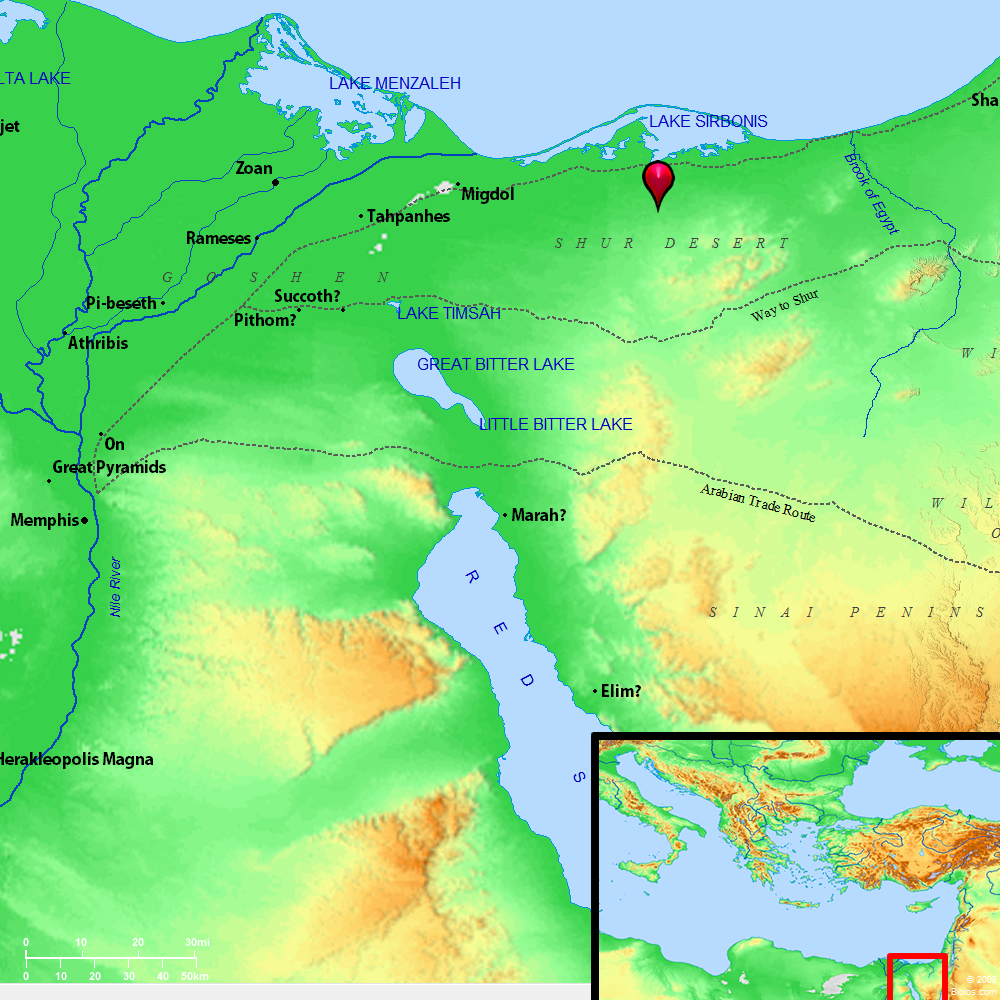
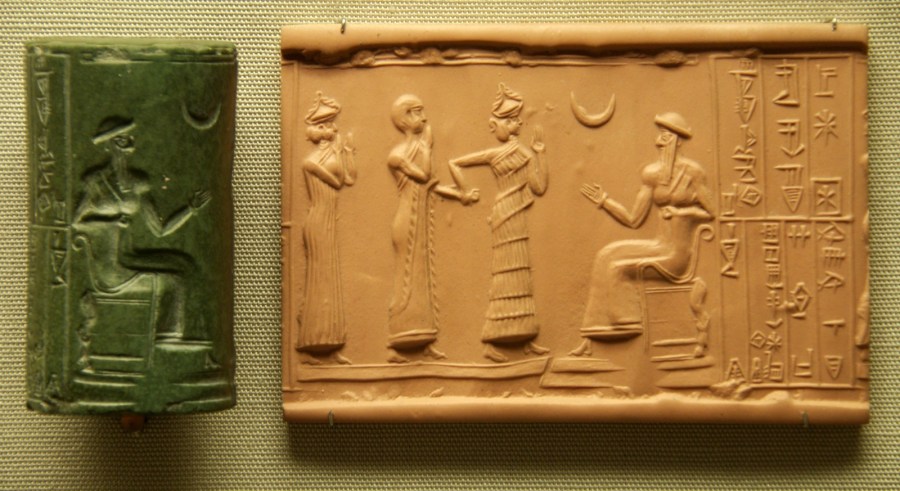





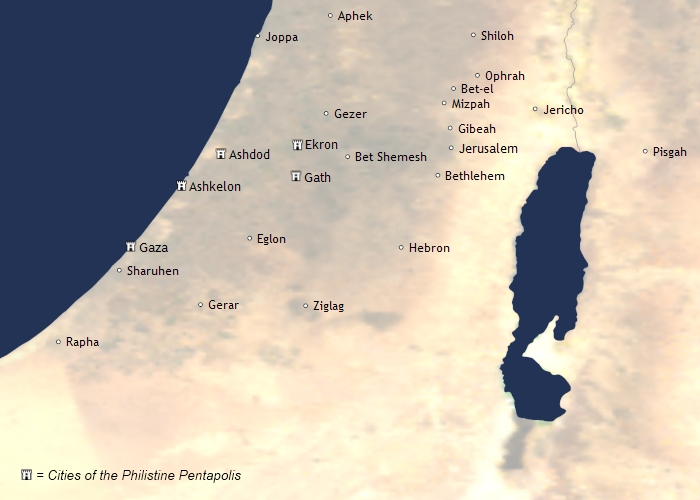
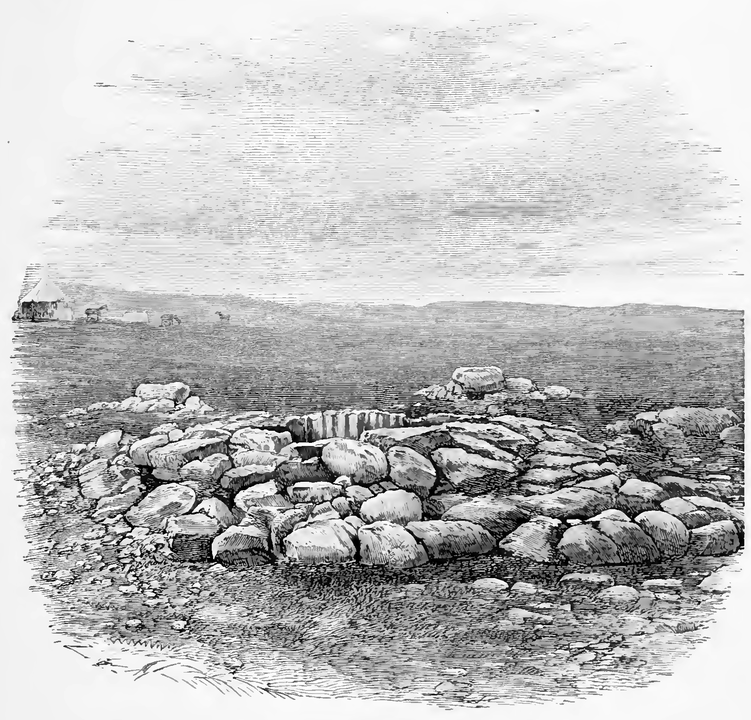


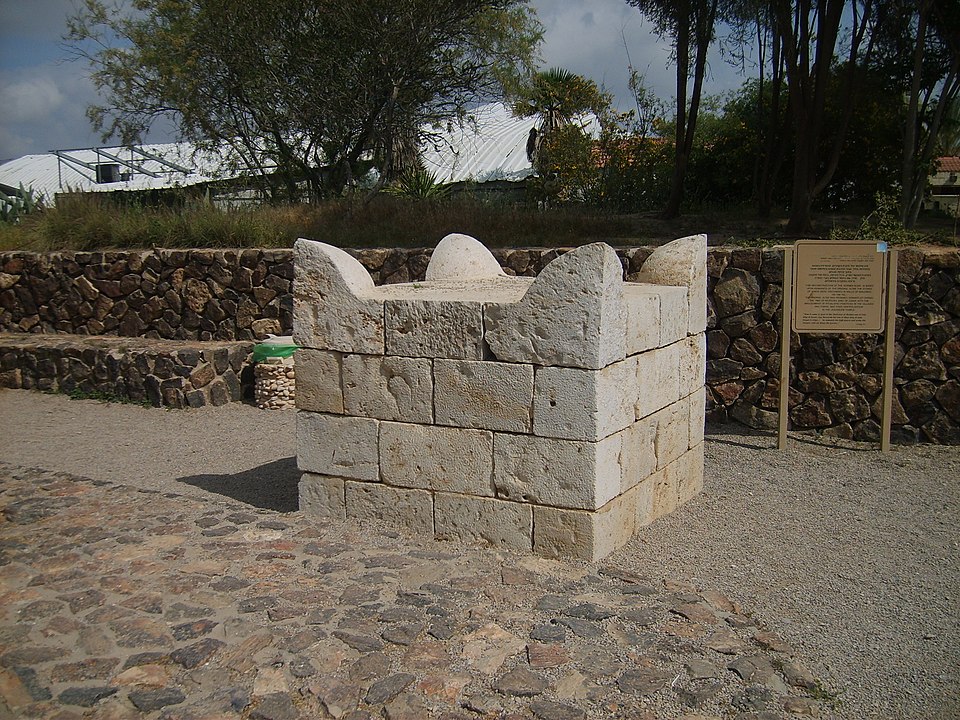


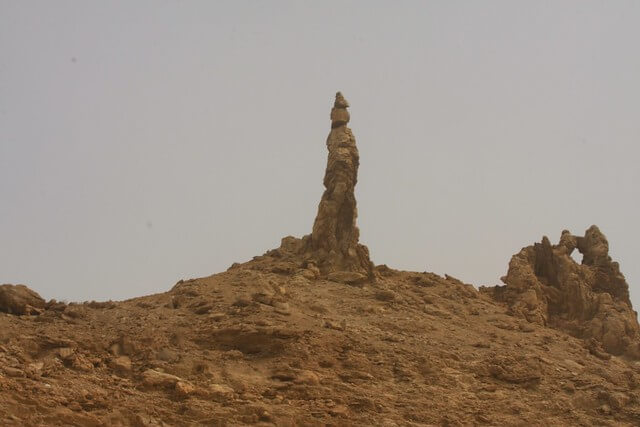


 David Anderson